The Biomimicry Examples Database

Discover Nature's Best Designs

Explore 181 biomimicry examples and case studies, each traced from the organism to the design principle behind it.

181 examples·13 categories·Free access

Best Examples

The Best Biomimicry Examples

Ranked across five criteria: biomimicry link, ease of application, wide applicability, Life's Principles and benefit to humanity.

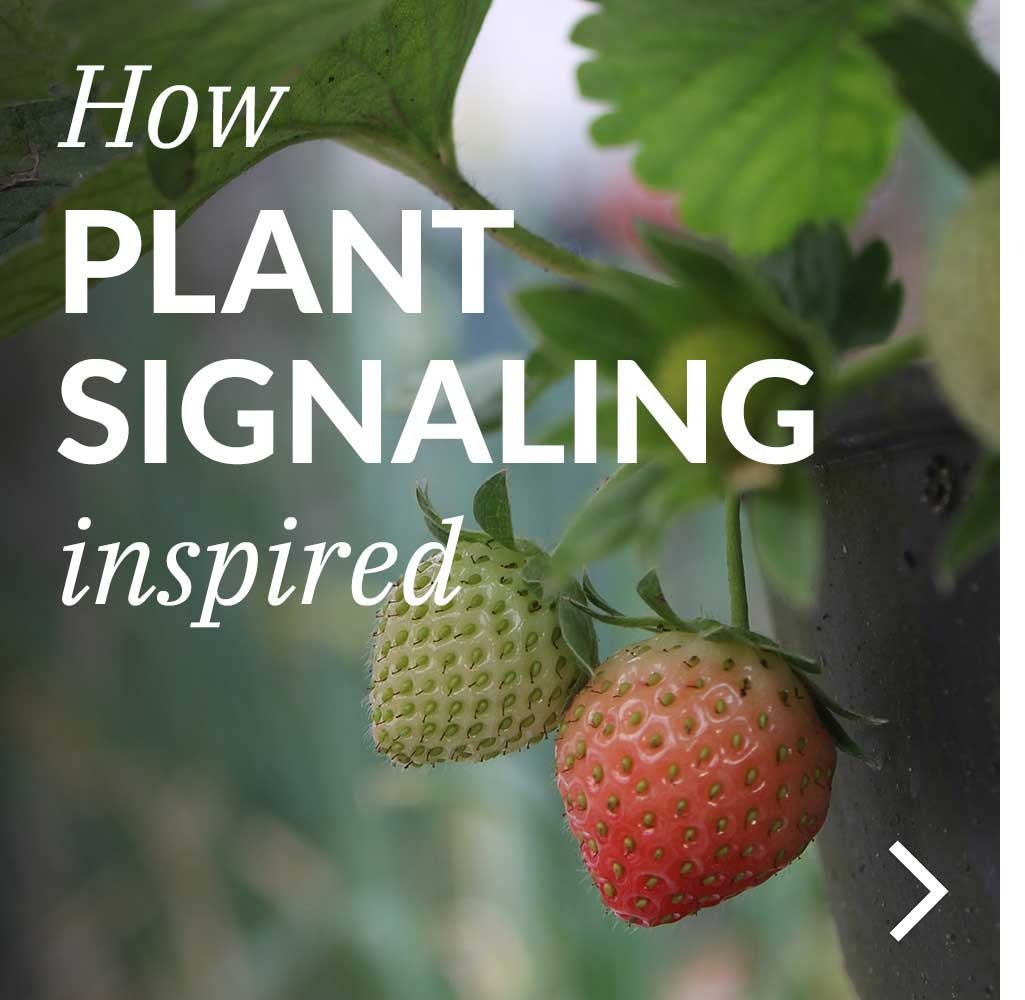
Biological inspiration for GreenPod Labs - Volatile Signaling Food Preservation
Human application for GreenPod Labs - Volatile Signaling Food Preservation
Product Design

Plant volatile signaling systems

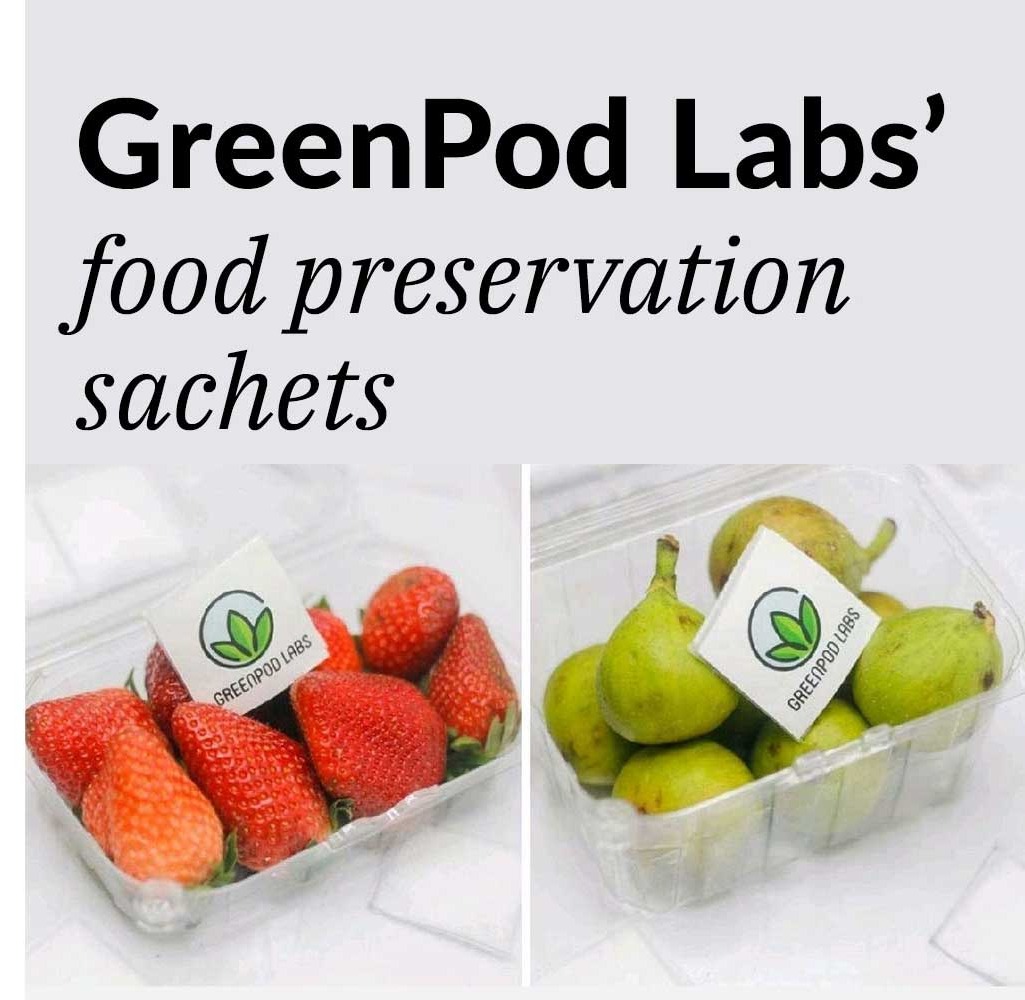
GreenPod Labs - Volatile Signaling Food Preservation

Plant volatile emission patterns inspire bio-based food preservation sachets that extend shelf life without synthetic chemicals.

  • ✿Inspired by: Plant volatile signaling systems
  • ⚡︎Function: Produce spoils through ripeness synchronisation with pathogenic infection; growers and distributors must balance rapid turnover against f...
  • ▣Company: GreenPod Labs
  • ◉Where: India
See full biomimicry example
Biological inspiration for Amphico - Lotus Leaf PFAS-Free Water Repellency
Human application for Amphico - Lotus Leaf PFAS-Free Water Repellency
Materials

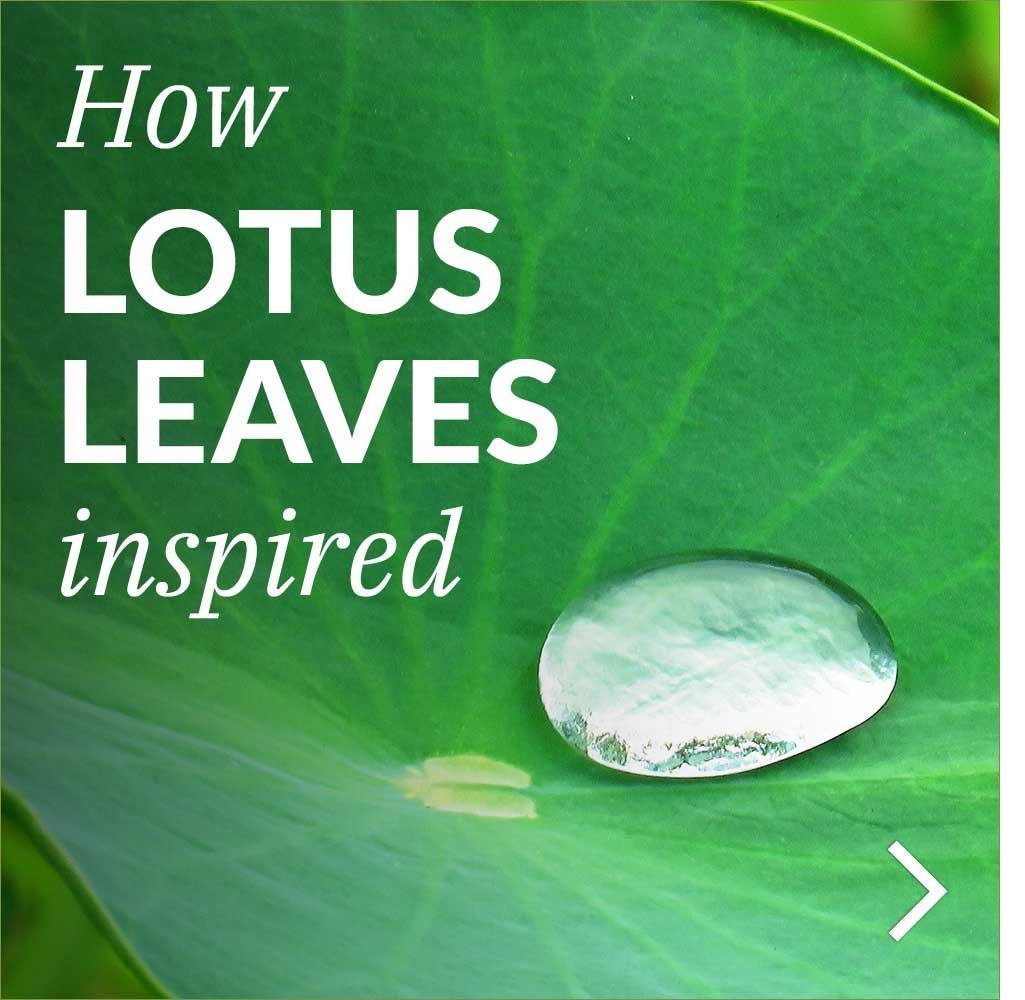
Lotus leaf (Nelumbo nucifera) surface structure

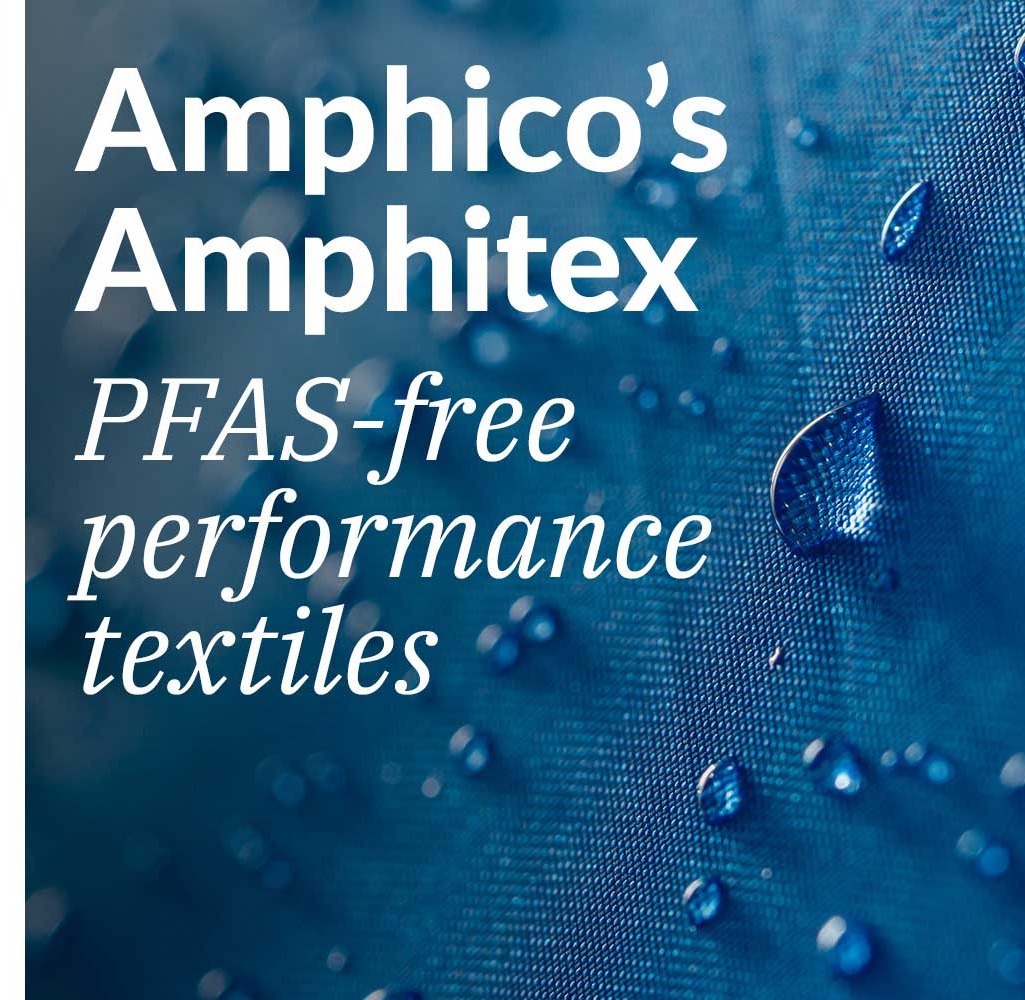
Amphico - Lotus Leaf PFAS-Free Water Repellency

Lotus leaf surface microstructure inspires PFAS-free, durable water-repellent textiles (Amphitex), eliminating persistent environmental pollutants.

  • ✿Inspired by: Lotus leaf (Nelumbo nucifera) surface structure
  • ⚡︎Function: Lotus leaves must shed water and debris to prevent fungal colonisation and maintain gas exchange. They overcome wettability through multi...
  • ▣Company: Amphico
  • ◉Where: UK
See full biomimicry example
Biological inspiration for Morpho Butterfly Structural Colour: No-Dye Fabrics
Human application for Morpho Butterfly Structural Colour: No-Dye Fabrics
Product Design

Morpho butterfly (Morpho rhetenor)

Morpho Butterfly Structural Colour: No-Dye Fabrics

The Morpho butterfly's iridescent blue wings contain no blue pigment — the colour is created entirely by microscopic structures that interfere with light. This inspired a range of structural colour technologies that could eliminate toxic textile dyes entirely.

  • ✿Inspired by: Morpho butterfly (Morpho rhetenor)
  • ⚡︎Function: Color production through light interference
  • ▣Company: Qualcomm (Mirasol display); Lexus; structural colour researchers
  • ◉Where: USA
See full biomimicry example
Biological inspiration for Velcro: Burdock Plant Hook Attachment
Human application for Velcro: Burdock Plant Hook Attachment
Product Design

Burdock plant (Arctium sp.)

Velcro: Burdock Plant Hook Attachment

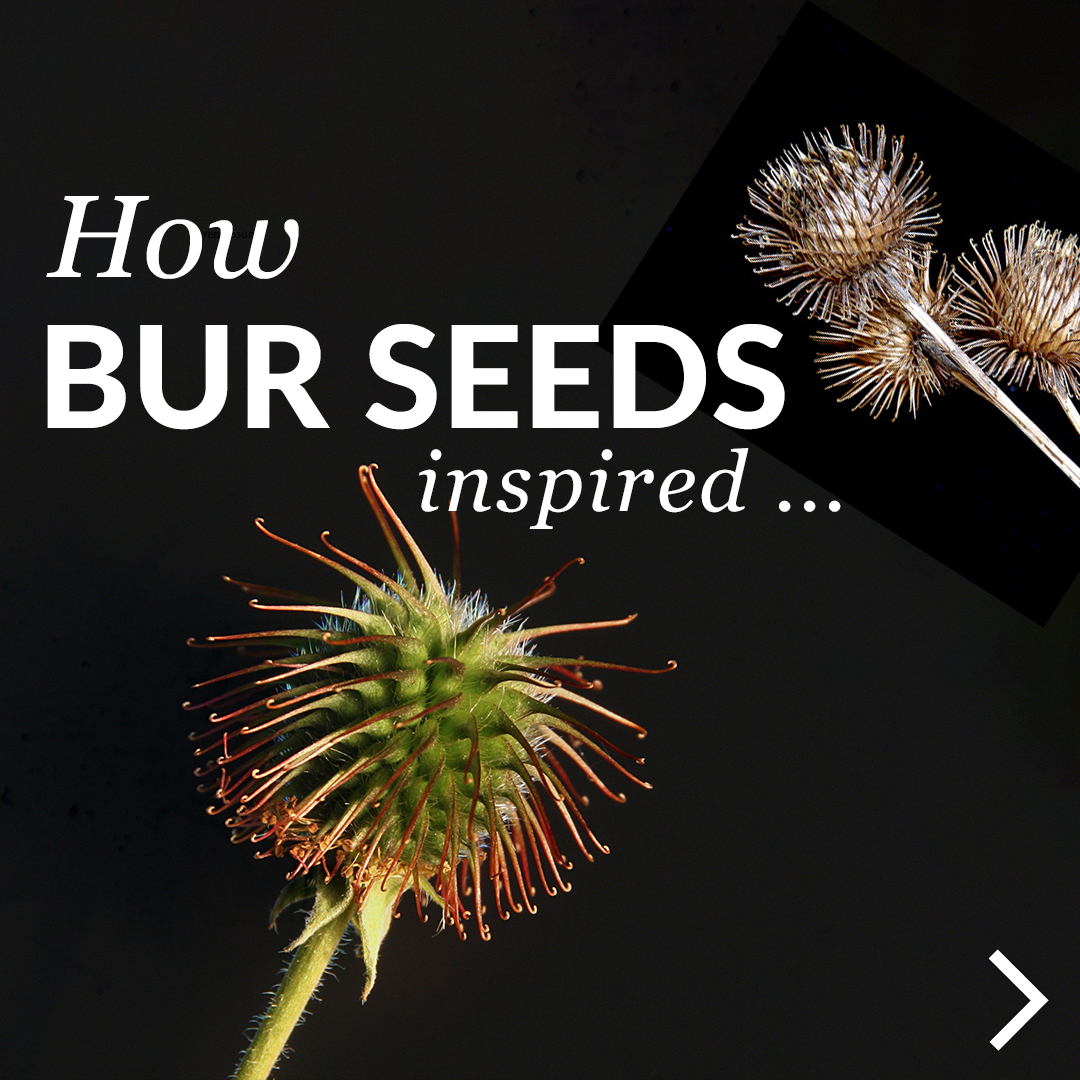
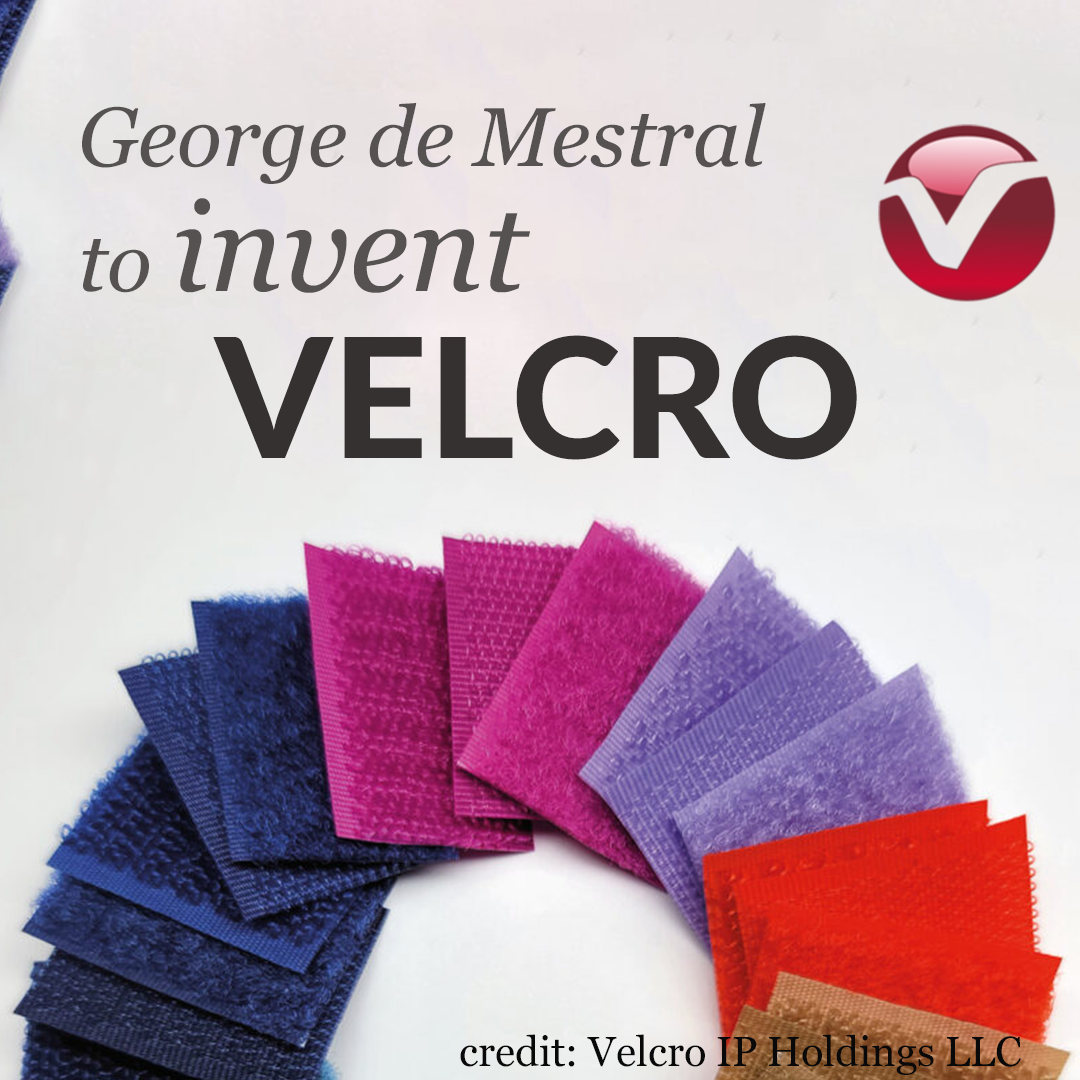
The invention of Velcro — one of the most commercially successful products in history — came directly from Swiss engineer George de Mestral observing how burdock burrs clung to his dog's fur through thousands of tiny hooks that caught on microscopic loops in the fur.

  • ✿Inspired by: Burdock plant (Arctium sp.)
  • ⚡︎Function: Mechanical attachment and adhesion
  • ▣Company: George de Mestral / Velcro Industries
  • ◉Where: Switzerland
See full biomimicry example
Biological inspiration for Lotus Leaf Self-Cleaning Surfaces: Superhydrophobicity
Human application for Lotus Leaf Self-Cleaning Surfaces: Superhydrophobicity
Product Design

Sacred lotus (Nelumbo nucifera)

Lotus Leaf Self-Cleaning Surfaces: Superhydrophobicity

The lotus leaf is covered in microscopic waxy bumps that make water form perfect spheres and roll off instantly, carrying dirt with them. This "lotus effect" has been commercialised in self-cleaning building materials, textiles, medical devices, and solar panels worldwide.

  • ✿Inspired by: Sacred lotus (Nelumbo nucifera)
  • ⚡︎Function: Water and dirt repulsion
  • ▣Company: Sto-Lotusan, Schoeller
  • ◉Where: Germany
See full biomimicry example
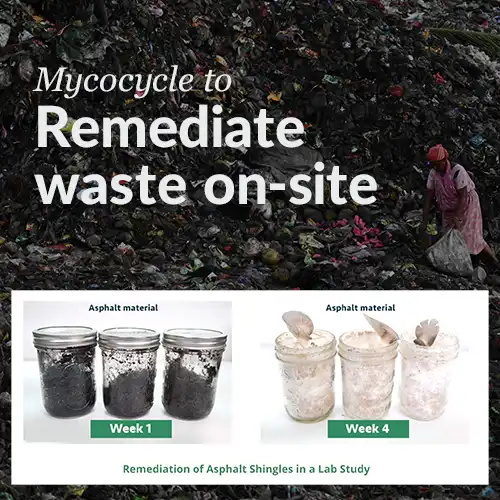
Biological inspiration for Mycelium-Based Building Materials
Human application for Mycelium-Based Building Materials
Architecture

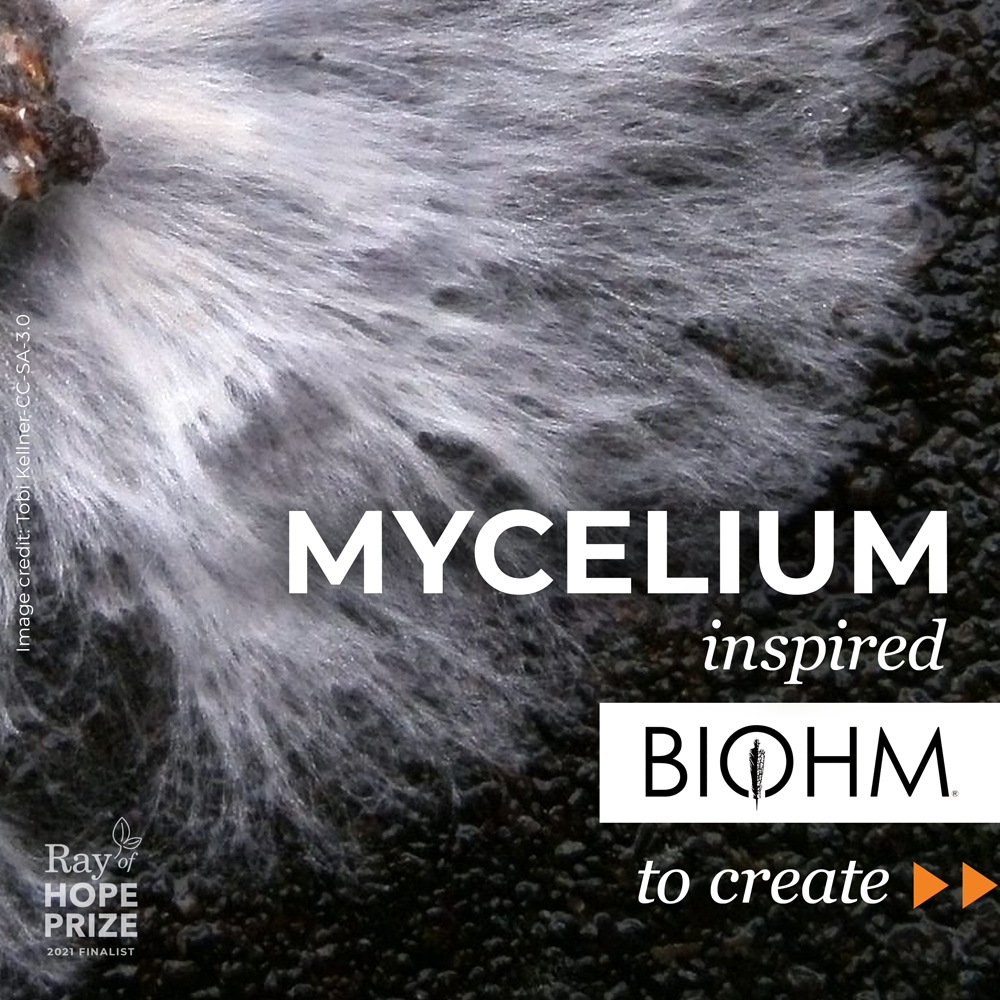
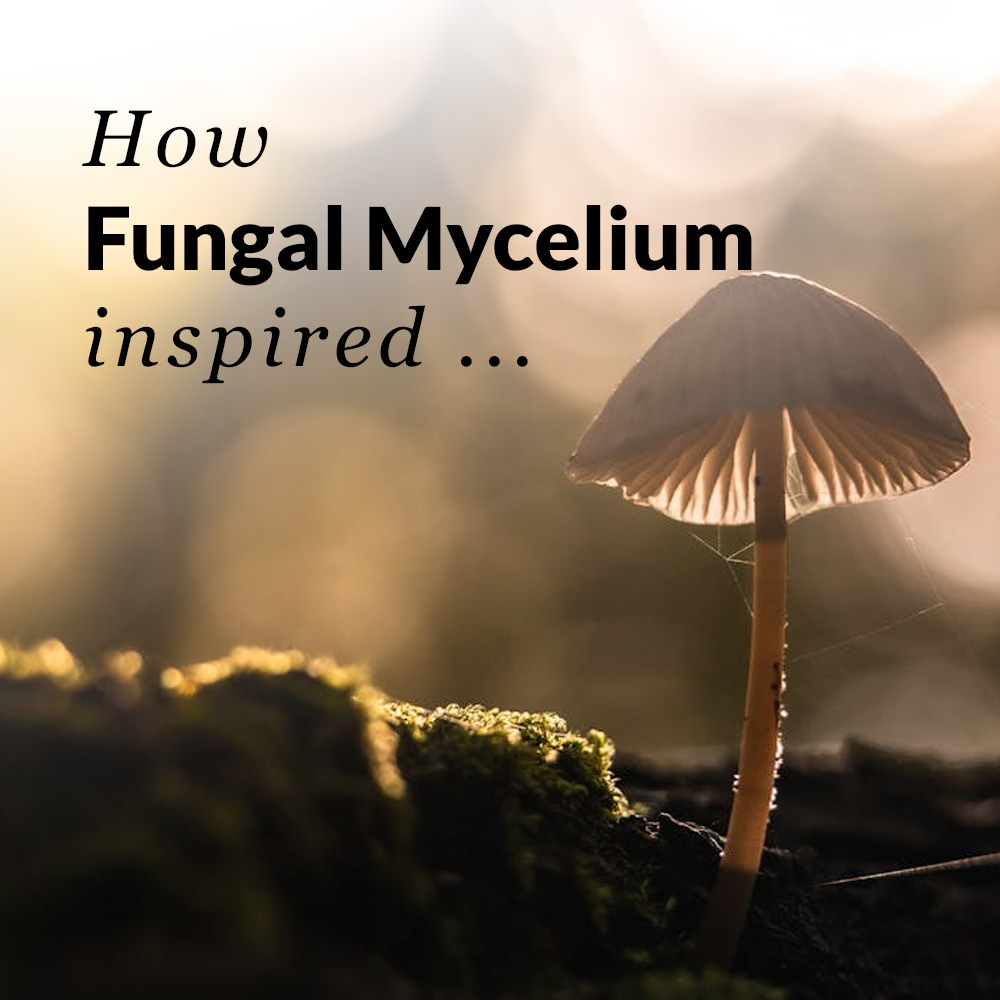
Mycelium (fungal networks, various species)

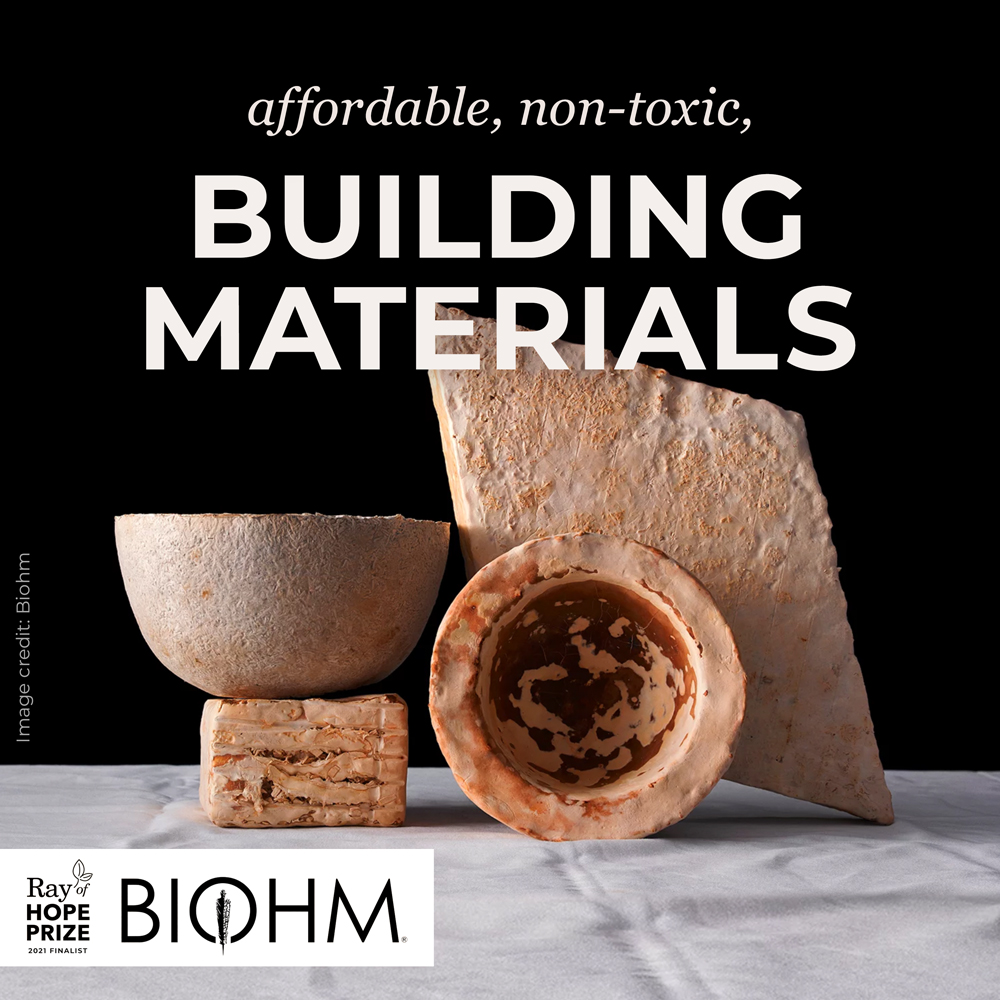
Mycelium-Based Building Materials

Biohm developed mycelium-based building materials that are affordable, non-toxic, fire-resistant, and fully biodegradable. These materials function as insulation, structural panels, and acoustic treatments in sustainable building design.

  • ✿Inspired by: Mycelium (fungal networks, various species)
  • ⚡︎Function: Structural support, insulation, acoustic absorption
  • ▣Company: Biohm
  • ◉Where: USA
See full biomimicry example
Materials

Mycelium (fungal networks, various Basidiomycete species)

Mycelium-Based Sustainable Packaging

Ecovative Design engineered mycelium-based packaging materials that are completely compostable and biodegradable. Mycelium (fungal root networks) grows as a natural binder, creating foam-like structures that replace plastic packaging.

  • ✿Inspired by: Mycelium (fungal networks, various Basidiomycete species)
  • ⚡︎Function: Protective cushioning and structural binding
  • ▣Company: Ecovative Design
  • ◉Where: USA
See full biomimicry example
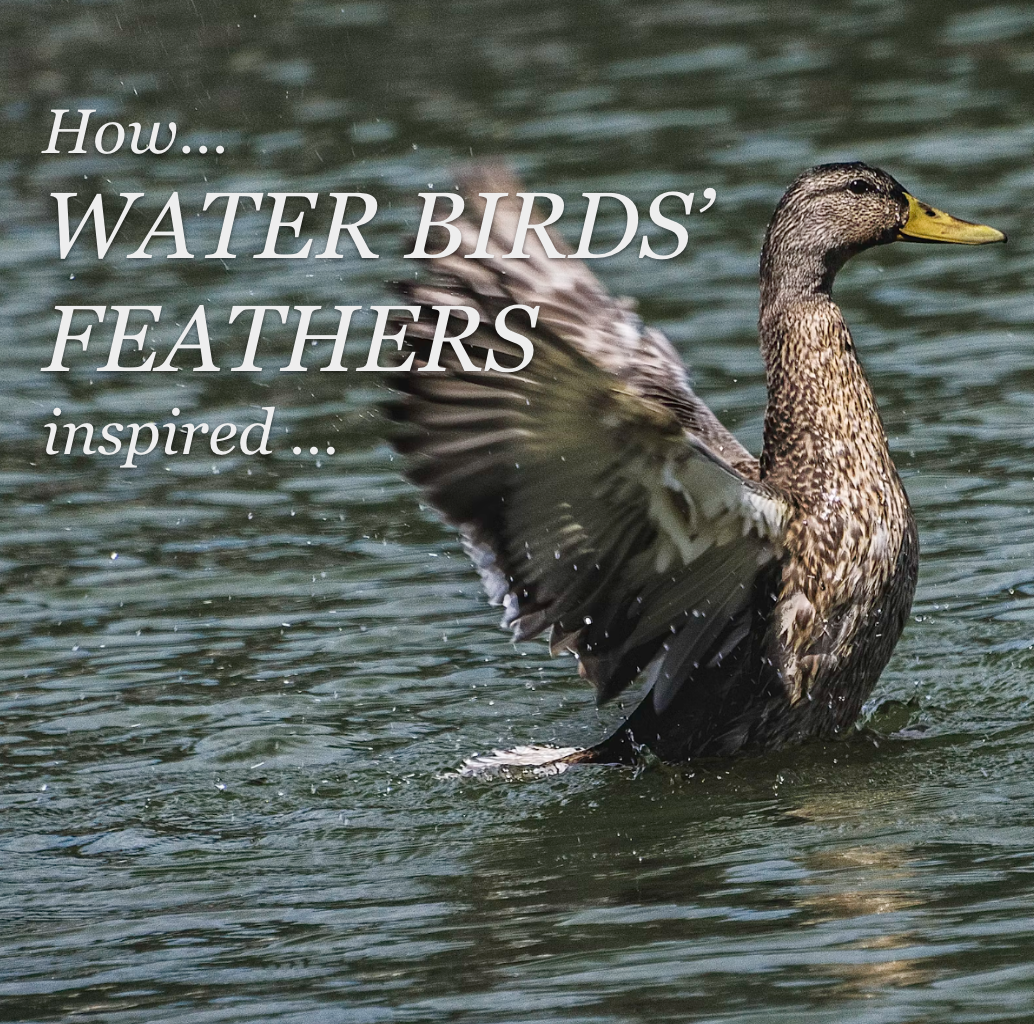
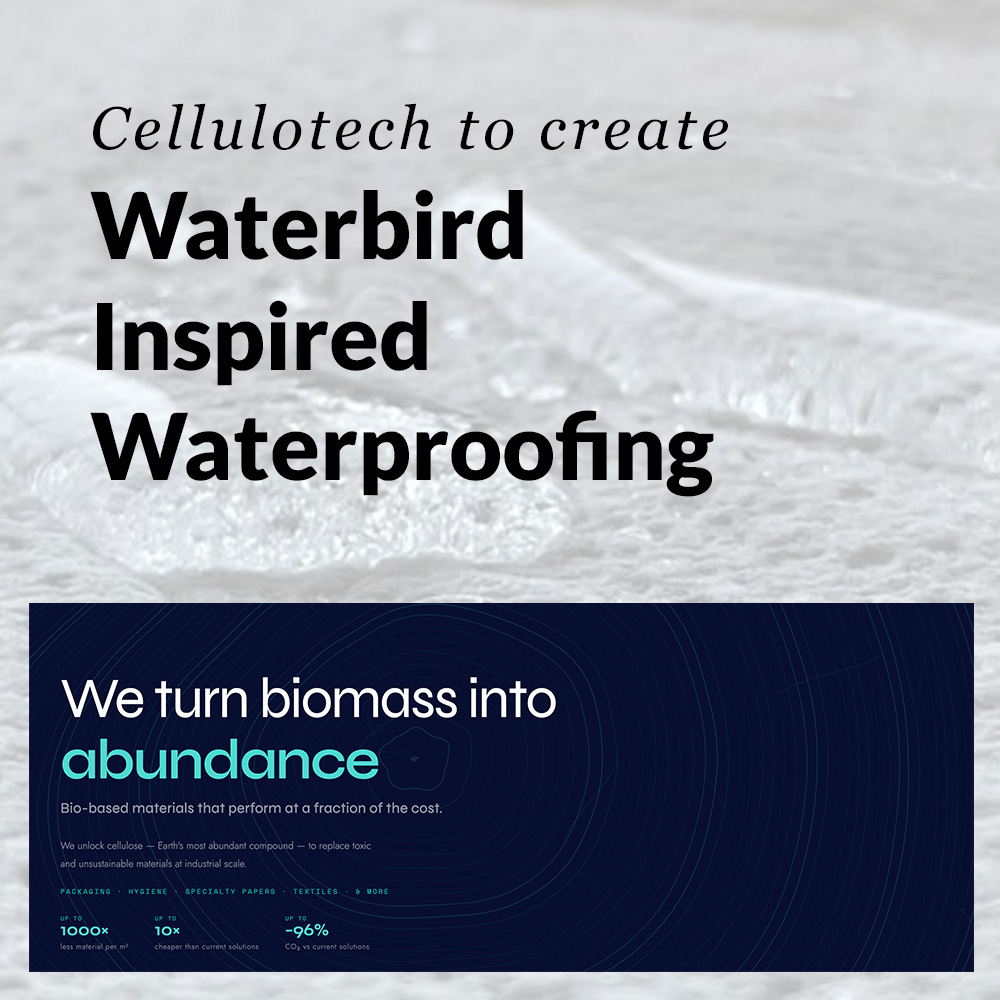
Biological inspiration for Eco-Friendly Waterproofing for Paper Products
Human application for Eco-Friendly Waterproofing for Paper Products
Materials

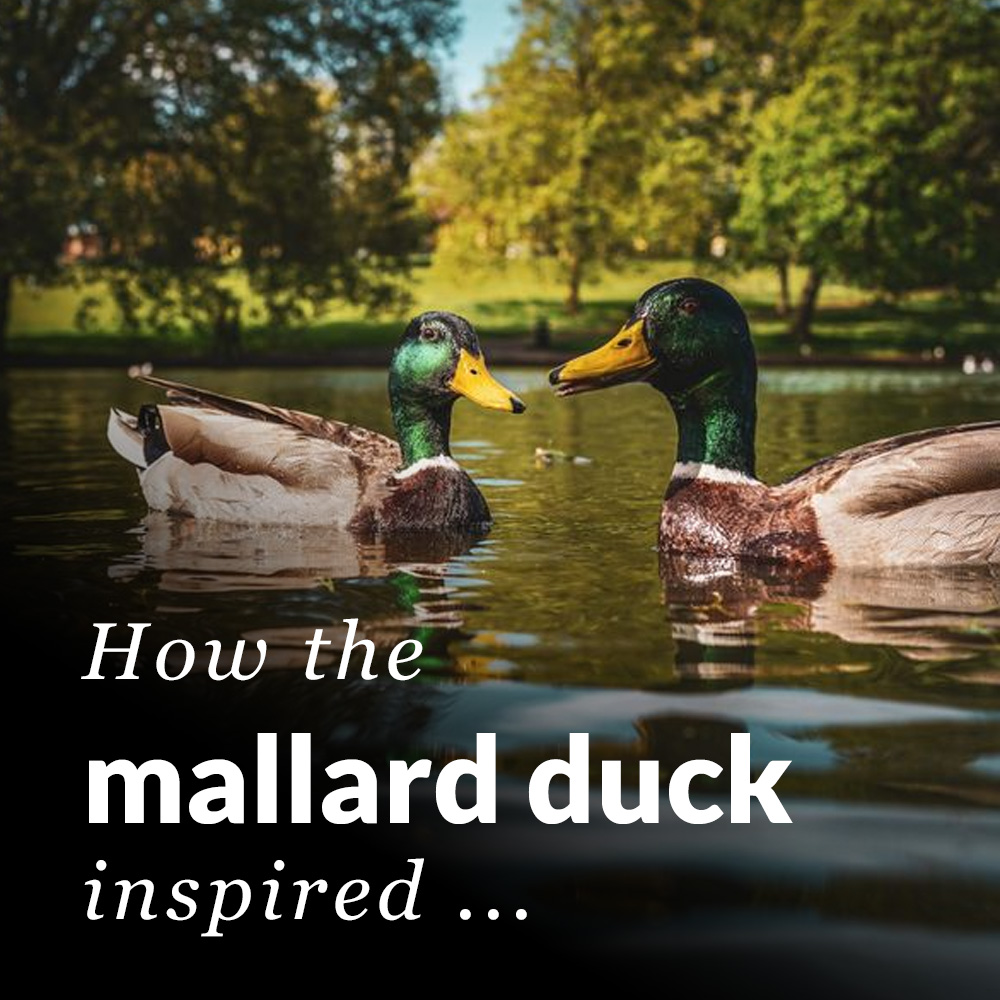
Waterbirds (uropygial gland preen oil)

Eco-Friendly Waterproofing for Paper Products

Cellulotech's chromatogeny process mimics waterbird preen oil by grafting nanoscale fatty acid molecules onto cellulose fibres, making paper and cardboard superhydrophobic while preserving full recyclability and biodegradability.

  • ✿Inspired by: Waterbirds (uropygial gland preen oil)
  • ⚡︎Function: Paper and cardboard must repel water and grease to be useful in packaging, yet conventional waterproofing coatings destroy the recyclabil...
  • ▣Company: Cellulotech
  • ◉Where: Vancouver, Canada
See full biomimicry example
Biological inspiration for Ecovative Design
Human application for Ecovative Design
Product Design

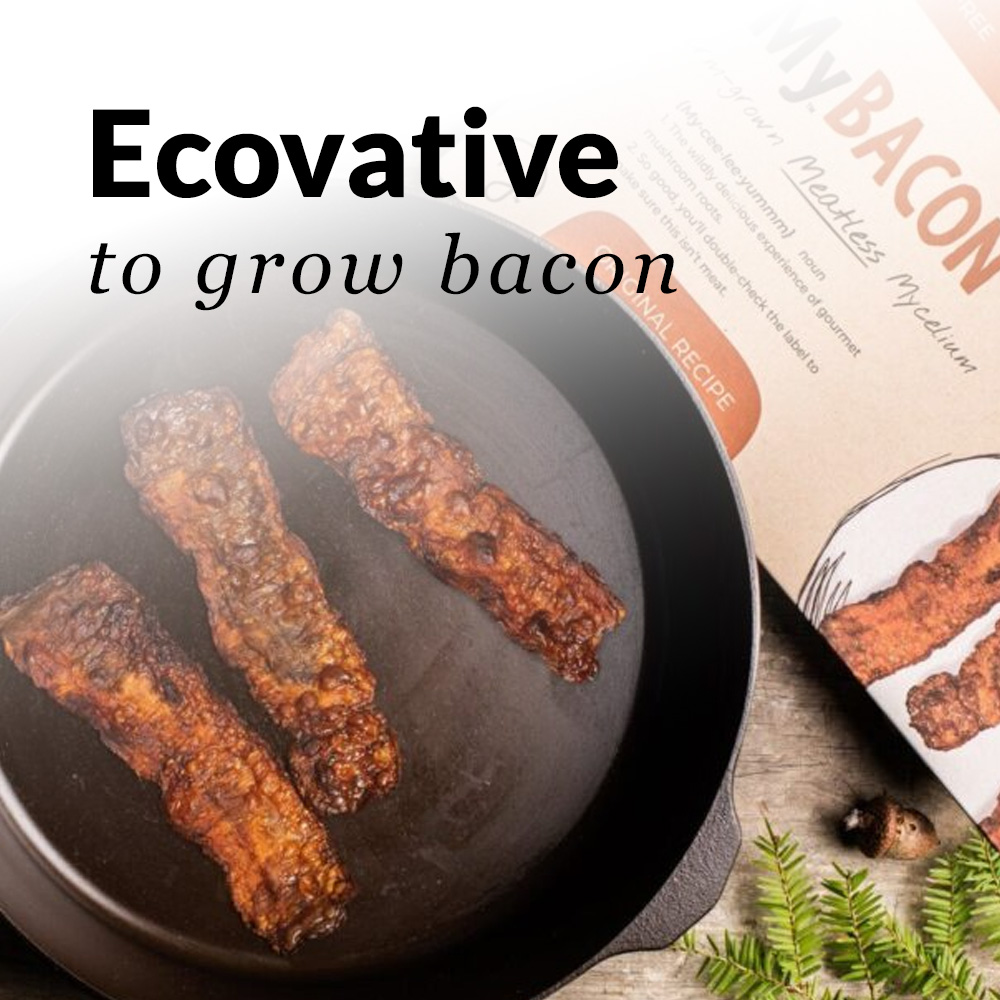
Fungal mycelium (Ganoderma and other species)

Ecovative Design

Ecovative Design grows packaging, leather, and foam from fungal mycelium fed on agricultural waste, replacing petroleum-based polystyrene and plastics with materials that are home-compostable in 30–45 days and produce 90 % fewer greenhouse gas emissions.

  • ✿Inspired by: Fungal mycelium (Ganoderma and other species)
  • ⚡︎Function: Protective packaging and cushioning materials must absorb shock, insulate, and be lightweight, yet expanded polystyrene achieves this thr...
  • ▣Company: Ecovative Design
  • ◉Where: Green Island, New York, USA
See full biomimicry example
Biological inspiration for SLIPS: Slippery Liquid-Infused Porous Surfaces
Human application for SLIPS: Slippery Liquid-Infused Porous Surfaces
Materials

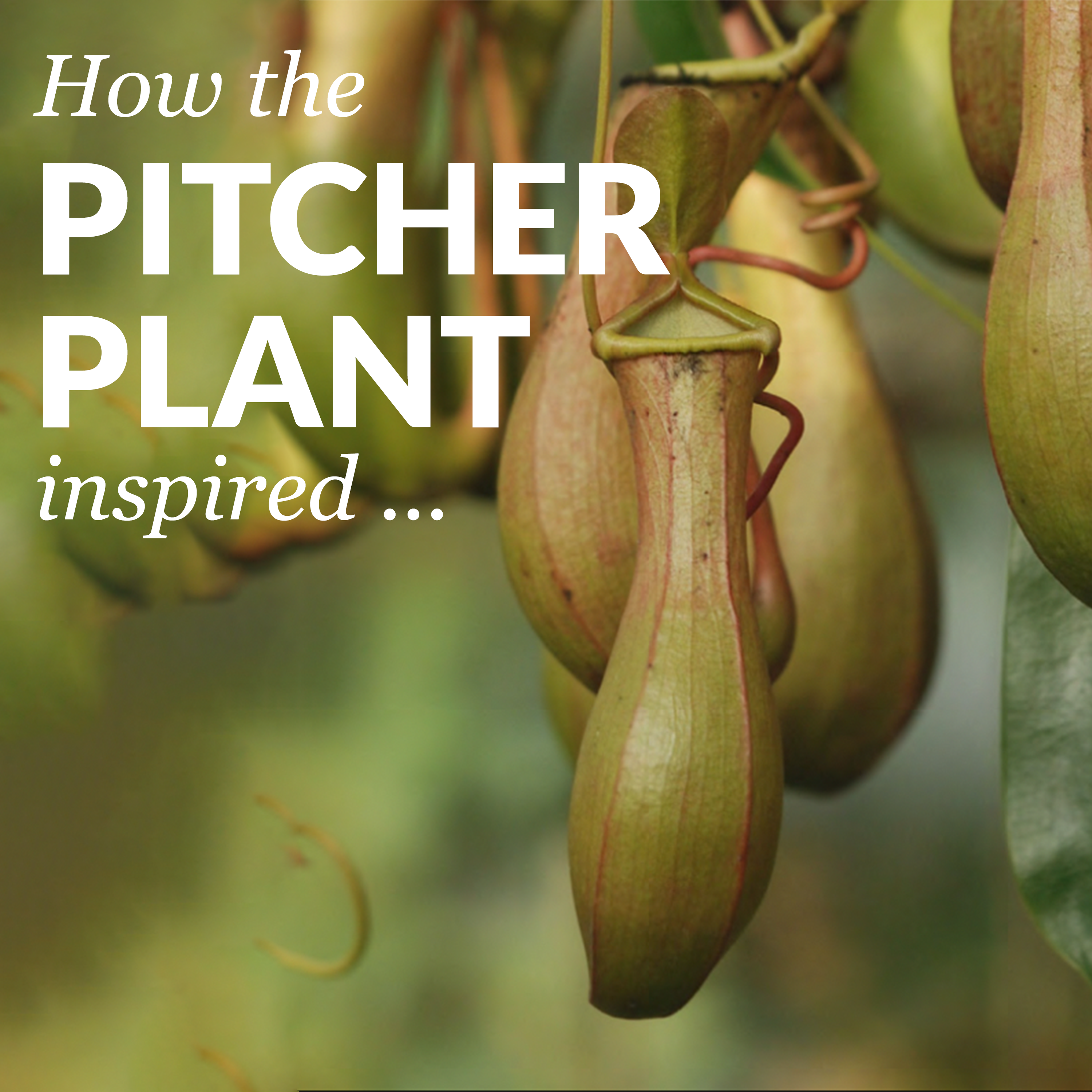
Pitcher plant (Nepenthes sp.)

SLIPS: Slippery Liquid-Infused Porous Surfaces

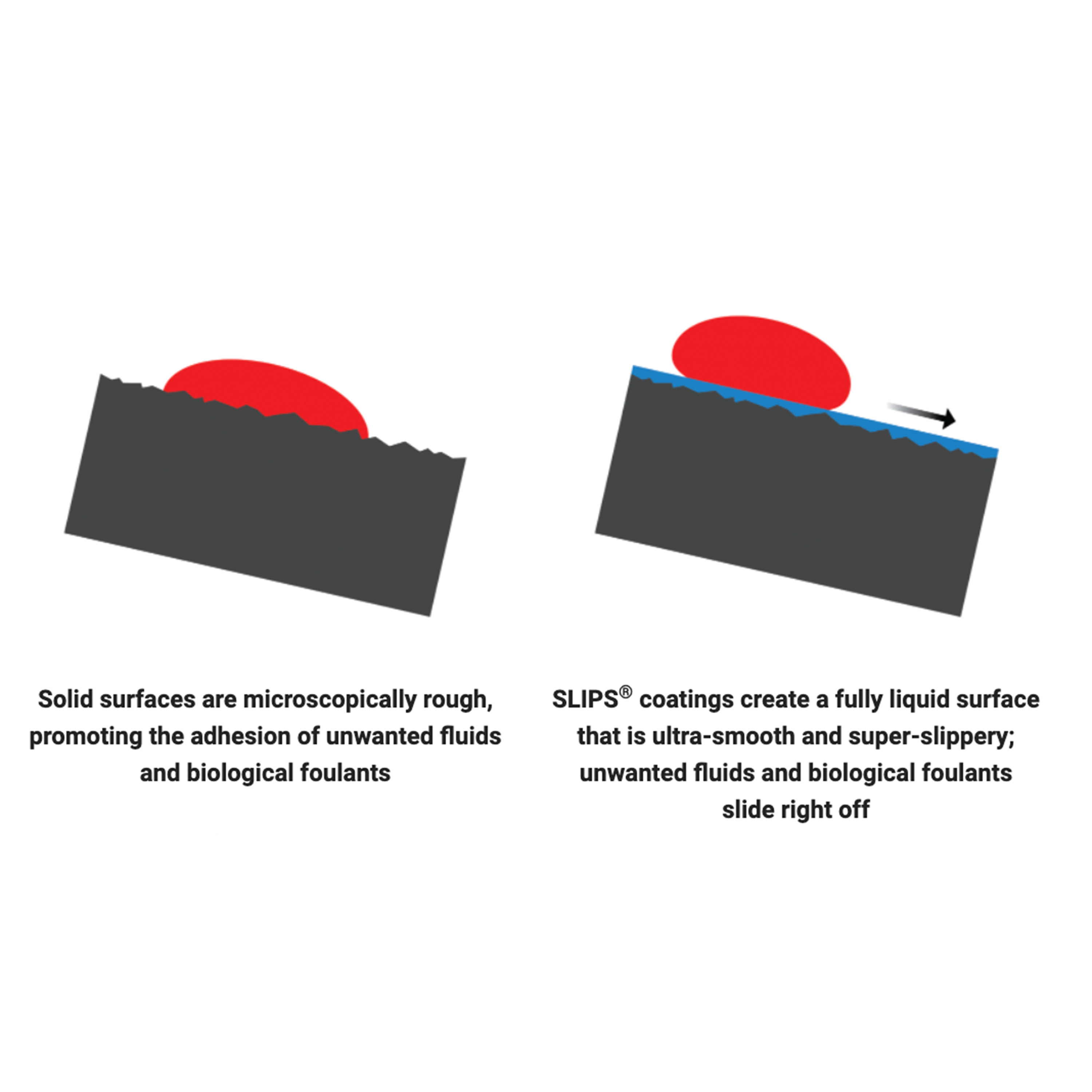
Adaptive Surface Technologies developed SLIPS (Slippery Liquid-Infused Porous Surfaces) inspired by pitcher plant slip properties. These surfaces are extremely slippery, self-healing, and prevent adhesion of virtually any material without fouling or degradation.

  • ✿Inspired by: Pitcher plant (Nepenthes sp.)
  • ⚡︎Function: Slippery surface coating that prevents adhesion
  • ▣Company: Adaptive Surface Technologies, Harvard University
  • ◉Where: Massachusetts, USA
See full biomimicry example
Biological inspiration for Spider Silk: Stronger Than Steel
Human application for Spider Silk: Stronger Than Steel
Materials

Golden silk orb-weaver spider (Nephila clavipes)

Spider Silk: Stronger Than Steel

Spider silk is five times stronger than steel by weight, more elastic than nylon, and biodegradable — yet spiders have never been farmed like silkworms. Bolt Threads and other companies have now synthesised spider silk proteins using yeast fermentation to create the world's highest-performance natural material.

  • ✿Inspired by: Golden silk orb-weaver spider (Nephila clavipes)
  • ⚡︎Function: Produce ultra-strong, elastic, tough structural fibres at ambient conditions
  • ▣Company: Bolt Threads / Spiber / Utah State University
  • ◉Where: USA
See full biomimicry example
Biological inspiration for Aquaporins: Reverse Osmosis Water Filtration
Human application for Aquaporins: Reverse Osmosis Water Filtration
Engineering

Aquaporin water channel proteins (found in all organisms)

Aquaporins: Reverse Osmosis Water Filtration

Reverse osmosis water filtration systems inspired by aquaporin water channel proteins that enable selective, efficient water transport across membranes.

  • ✿Inspired by: Aquaporin water channel proteins (found in all organisms)
  • ⚡︎Function: Mimics aquaporin protein function for efficient water filtration.
  • ▣Company: Aquaporin A/S
  • ◉Where: Denmark
See full biomimicry example
Biological inspiration for Nanomik Biotechnology: Microencapsulated Plant Defense
Human application for Nanomik Biotechnology: Microencapsulated Plant Defense
Food and Agriculture

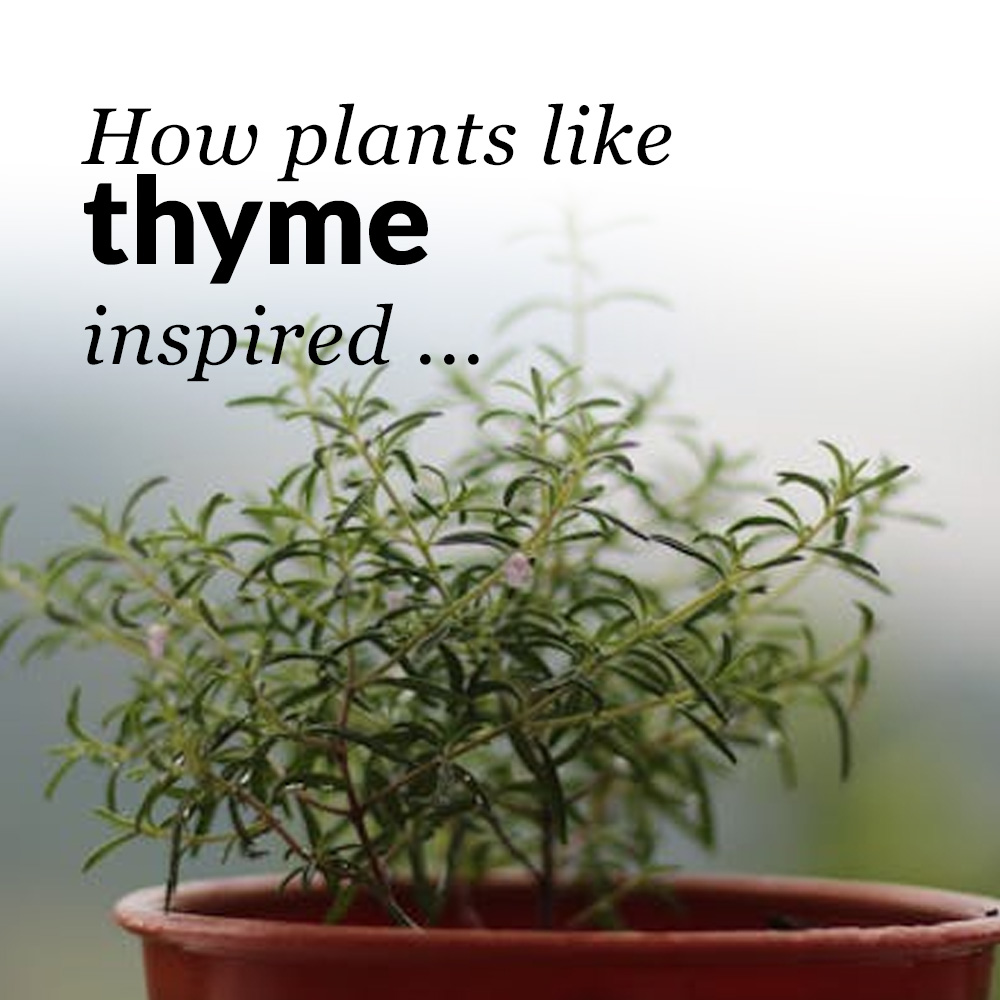
Thyme (Thymus vulgaris) and aromatic plants

Nanomik Biotechnology: Microencapsulated Plant Defense

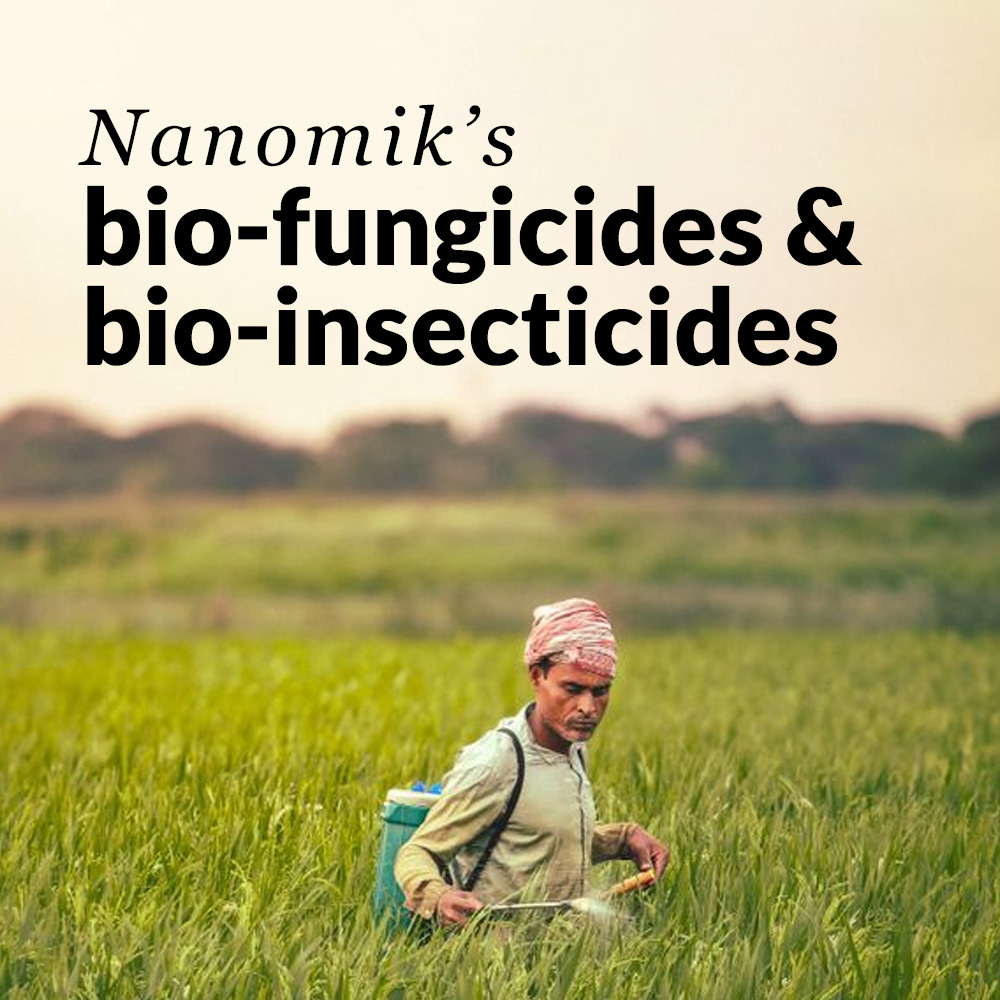
Nanomik Biotechnology harnesses the volatile chemical defenses that plants use to fight fungal disease — encapsulating them in edible bio-polymer microcapsules that adhere to crops and release protection on demand — replacing toxic synthetic fungicides with nature's own chemistry.

  • ✿Inspired by: Thyme (Thymus vulgaris) and aromatic plants
  • ▣Company: Nanomik Biotechnology
See full biomimicry example
Biological inspiration for Gecko-Inspired Dry Adhesive: Van der Waals Forces
Human application for Gecko-Inspired Dry Adhesive: Van der Waals Forces
Materials

Tokay gecko (Gekko gecko)

Gecko-Inspired Dry Adhesive: Van der Waals Forces

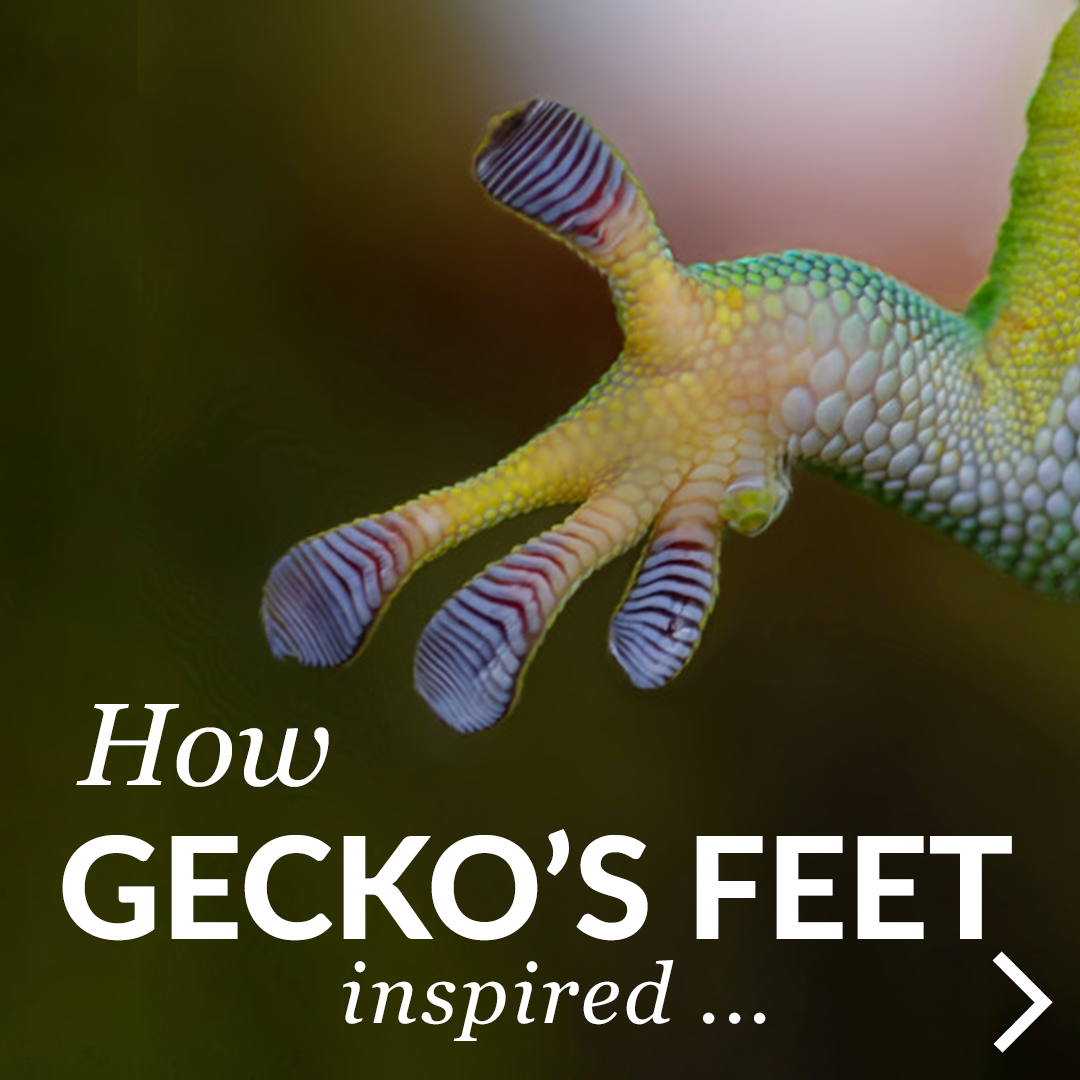
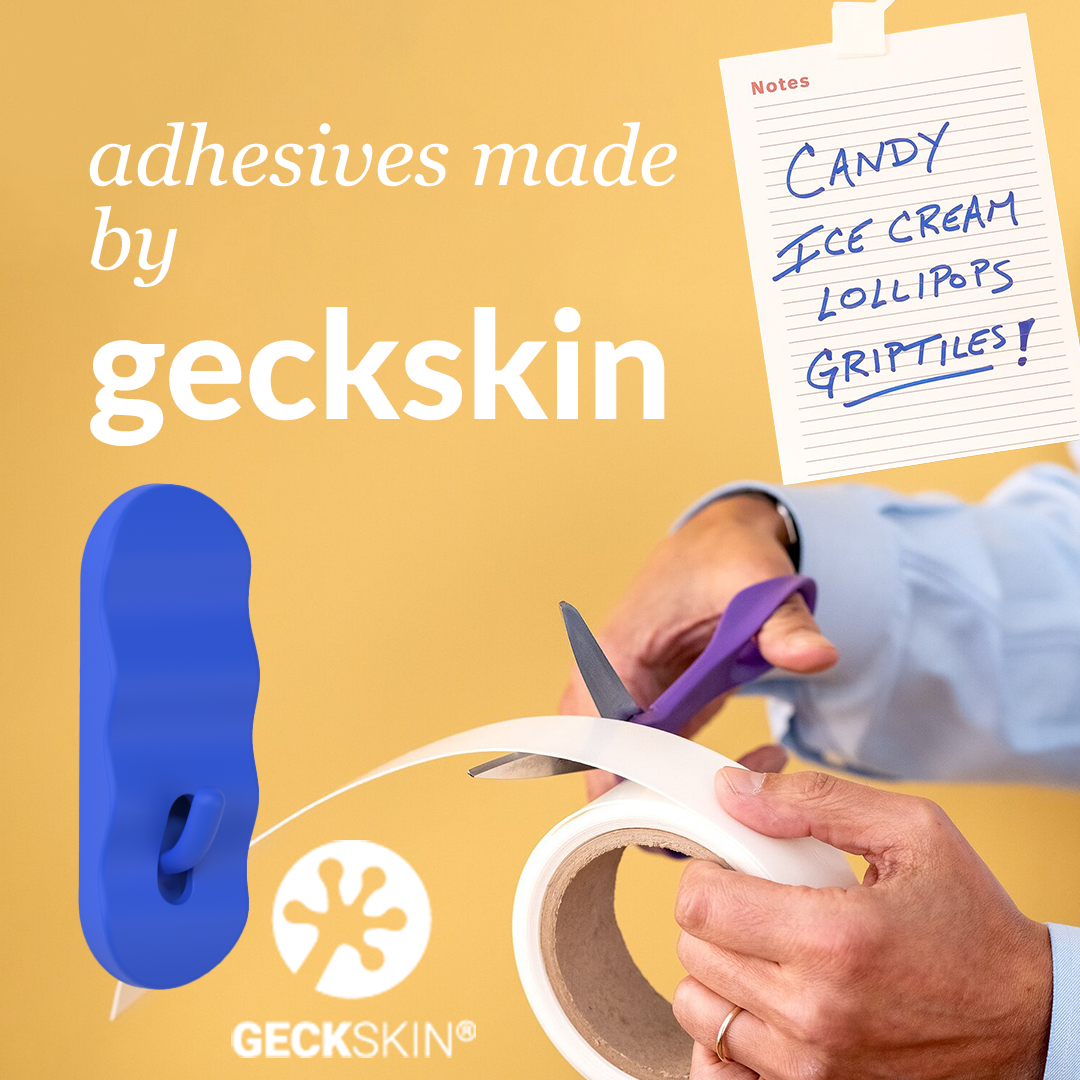
Gecko feet can attach and detach from almost any surface instantly, without glue or suction, simply using van der Waals molecular forces created by millions of tiny hair-like structures. This has inspired reusable dry adhesives now used in robotics, medical devices, and space applications.

  • ✿Inspired by: Tokay gecko (Gekko gecko)
  • ⚡︎Function: Adhesion through van der Waals intermolecular forces
  • ▣Company: Geckskin
  • ◉Where: USA
See full biomimicry example
Biological inspiration for Mussel Adhesive Proteins: Underwater Bonding
Human application for Mussel Adhesive Proteins: Underwater Bonding
Materials

Blue mussel (Mytilus edulis)

Mussel Adhesive Proteins: Underwater Bonding

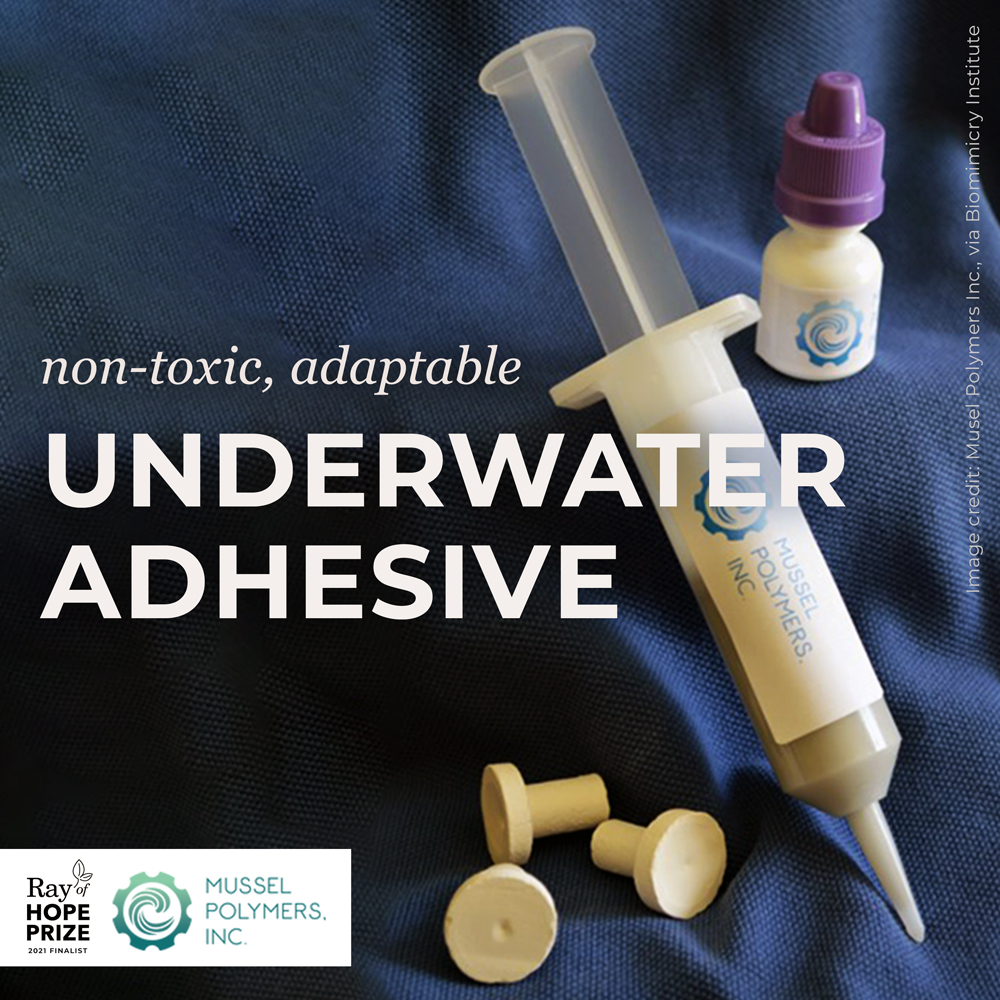
Mussels attach themselves to wet, wave-battered rocks using protein threads that bond to virtually any surface underwater — something no synthetic adhesive has ever matched. Scientists have now synthesised the key molecule (DOPA) to create biomedical glues that work inside the body.

  • ✿Inspired by: Blue mussel (Mytilus edulis)
  • ⚡︎Function: Mimics mussel protein adhesion for underwater bonding.
  • ▣Company: Mussel Polymers Inc
  • ◉Where: Netherlands
See full biomimicry example
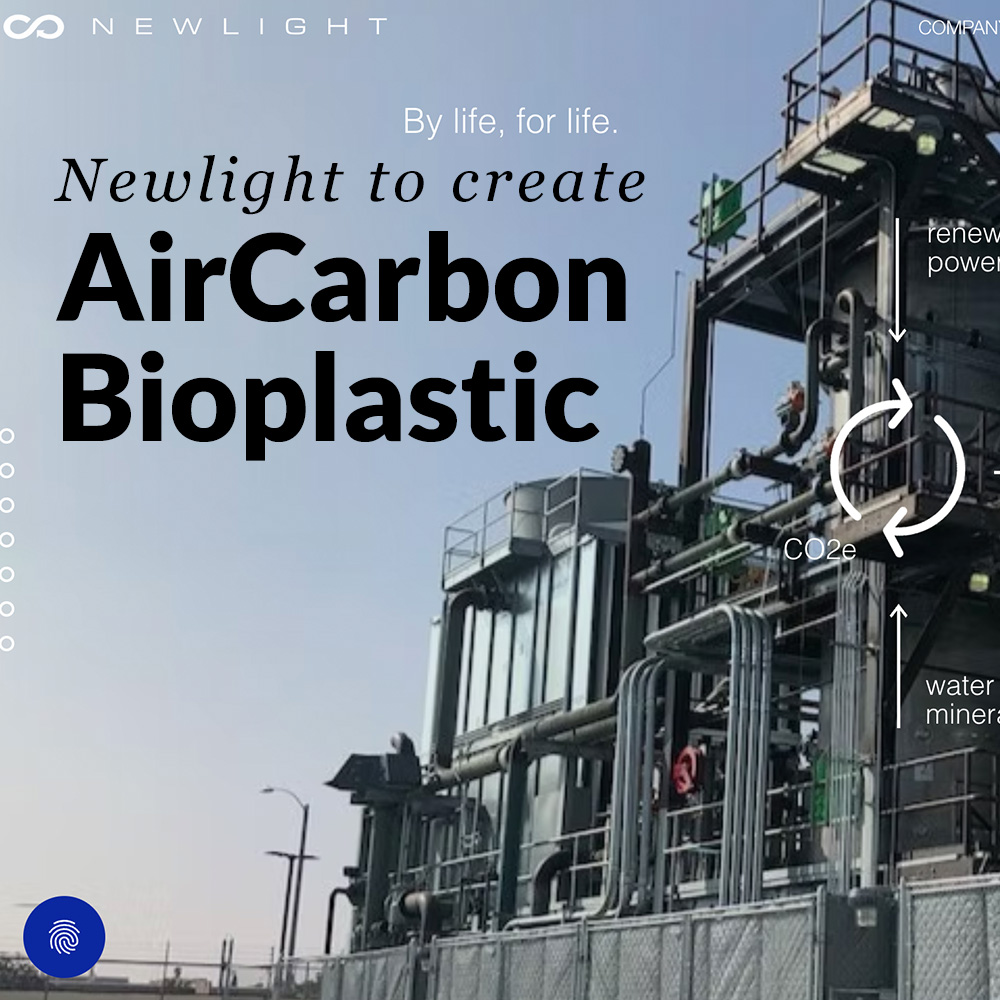
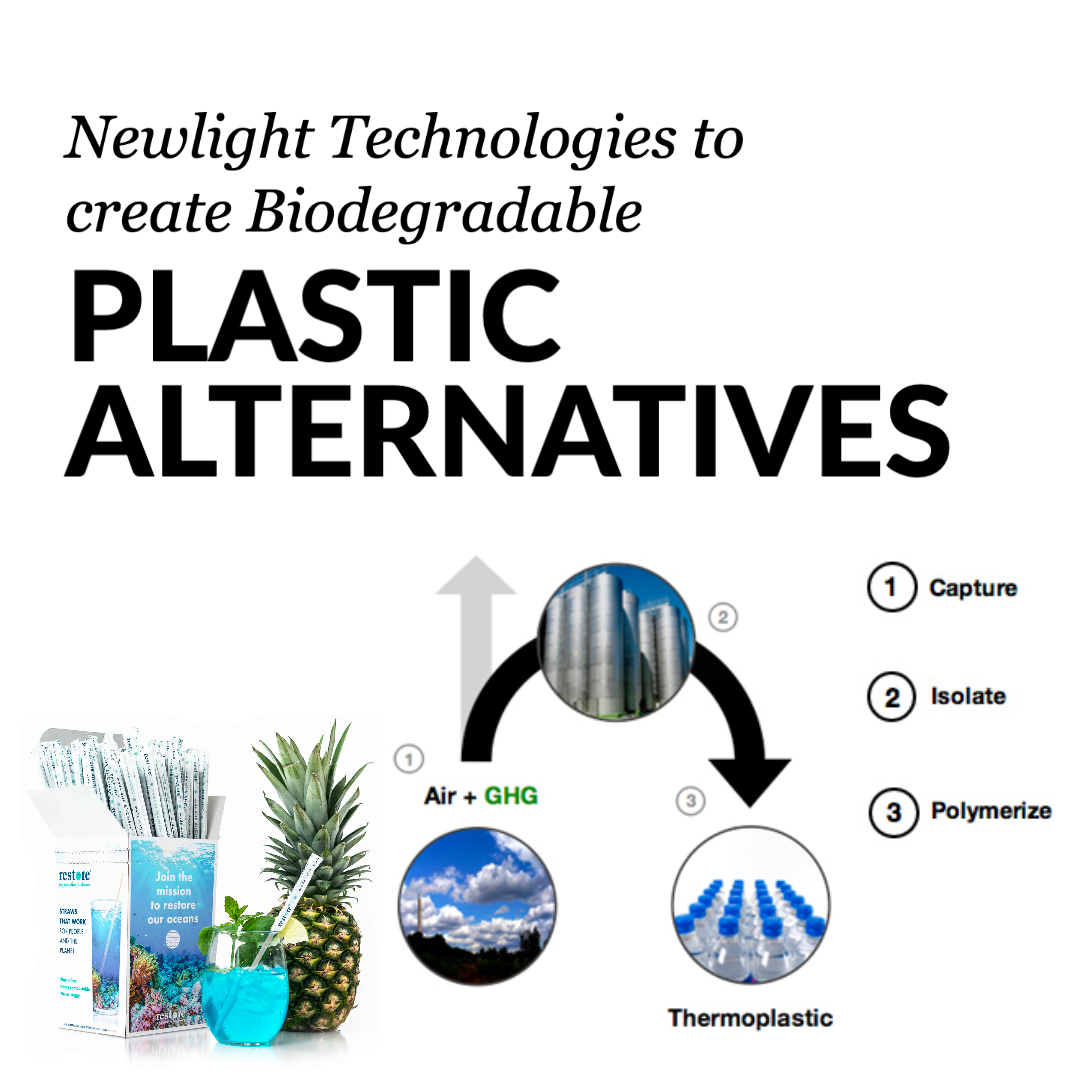
Biological inspiration for Newlight AirCarbon - Methanogen-Based Bioplastic
Human application for Newlight AirCarbon - Methanogen-Based Bioplastic
Materials

Methanotrophic bacteria (methane-oxidising microorganisms)

Newlight AirCarbon - Methanogen-Based Bioplastic

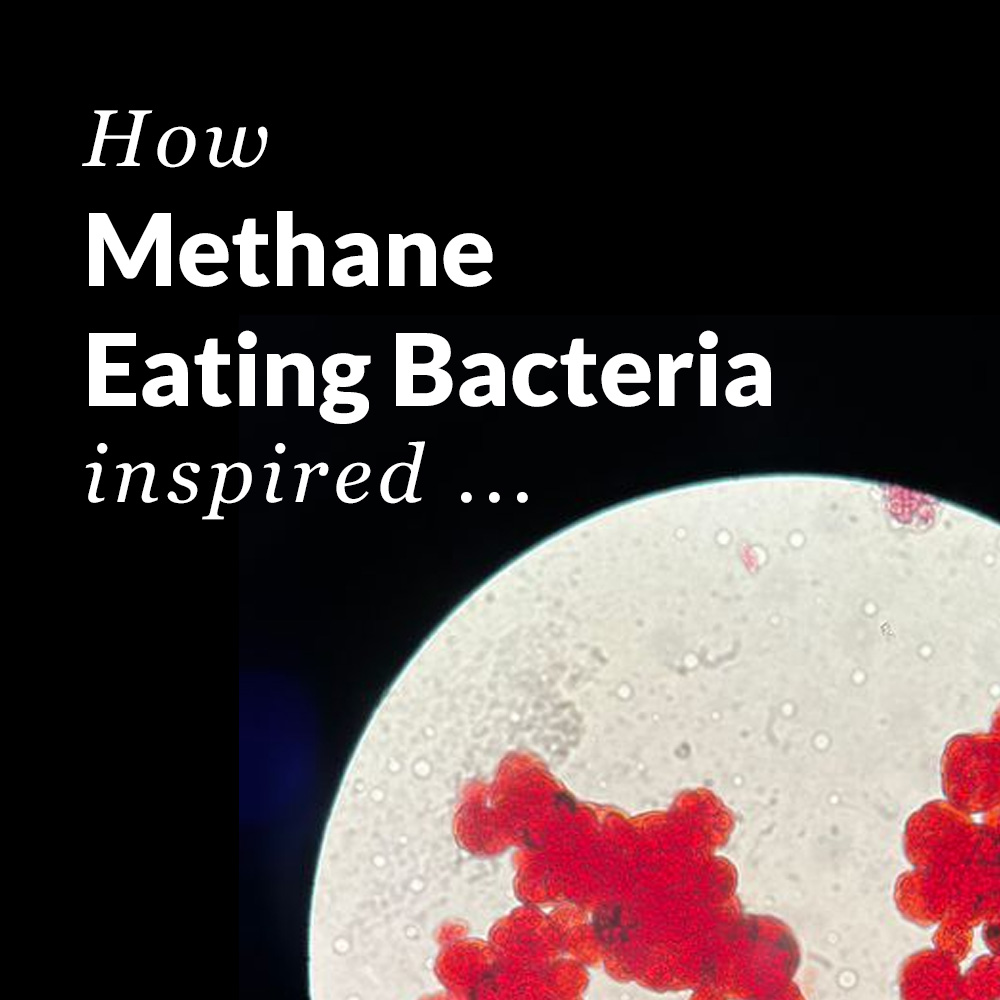
Methanotrophic bacteria inspire carbon-negative bioplastic from greenhouse gases, converting methane to polyhydroxyalkanoate polymer.

  • ✿Inspired by: Methanotrophic bacteria (methane-oxidising microorganisms)
  • ⚡︎Function: Methanotrophic bacteria must derive both energy and carbon from methane, a single-carbon molecule at high oxidation state. They overcome...
  • ▣Company: Newlight Technologies
  • ◉Where: California, USA
See full biomimicry example
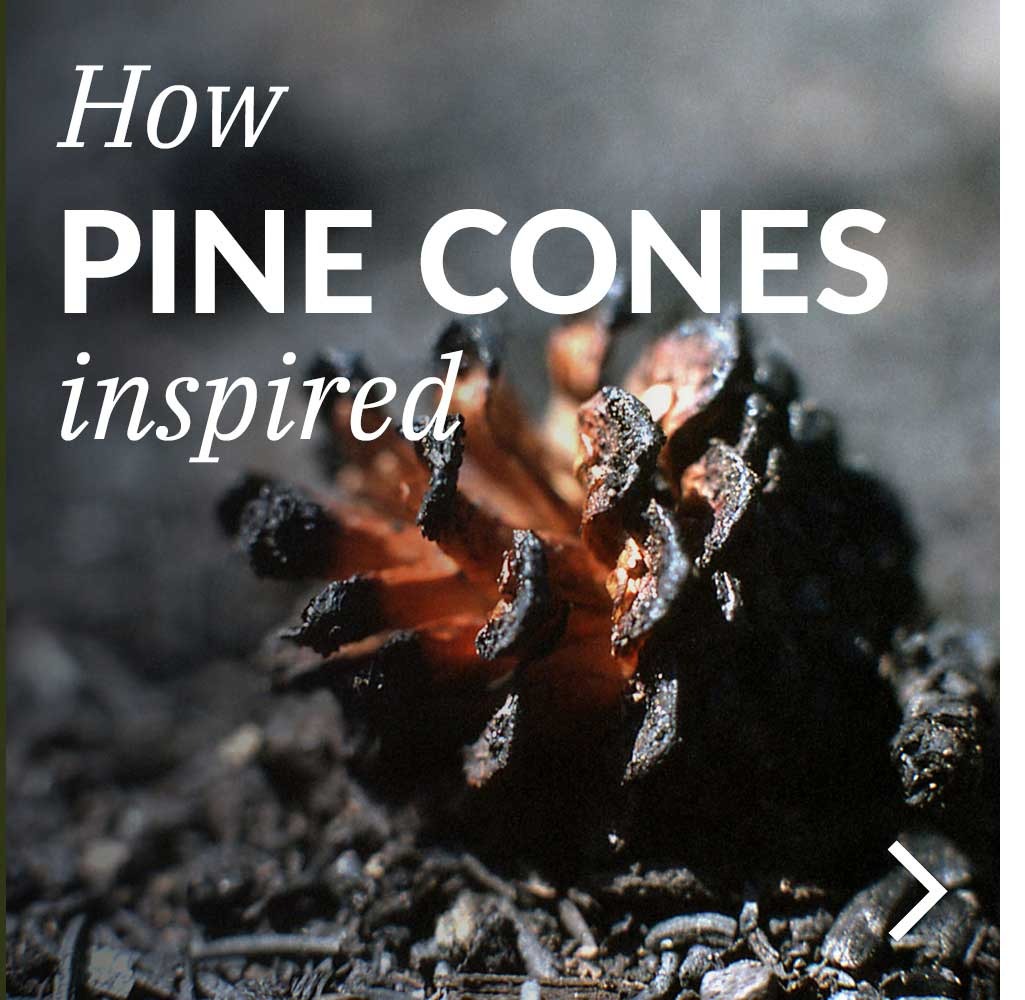
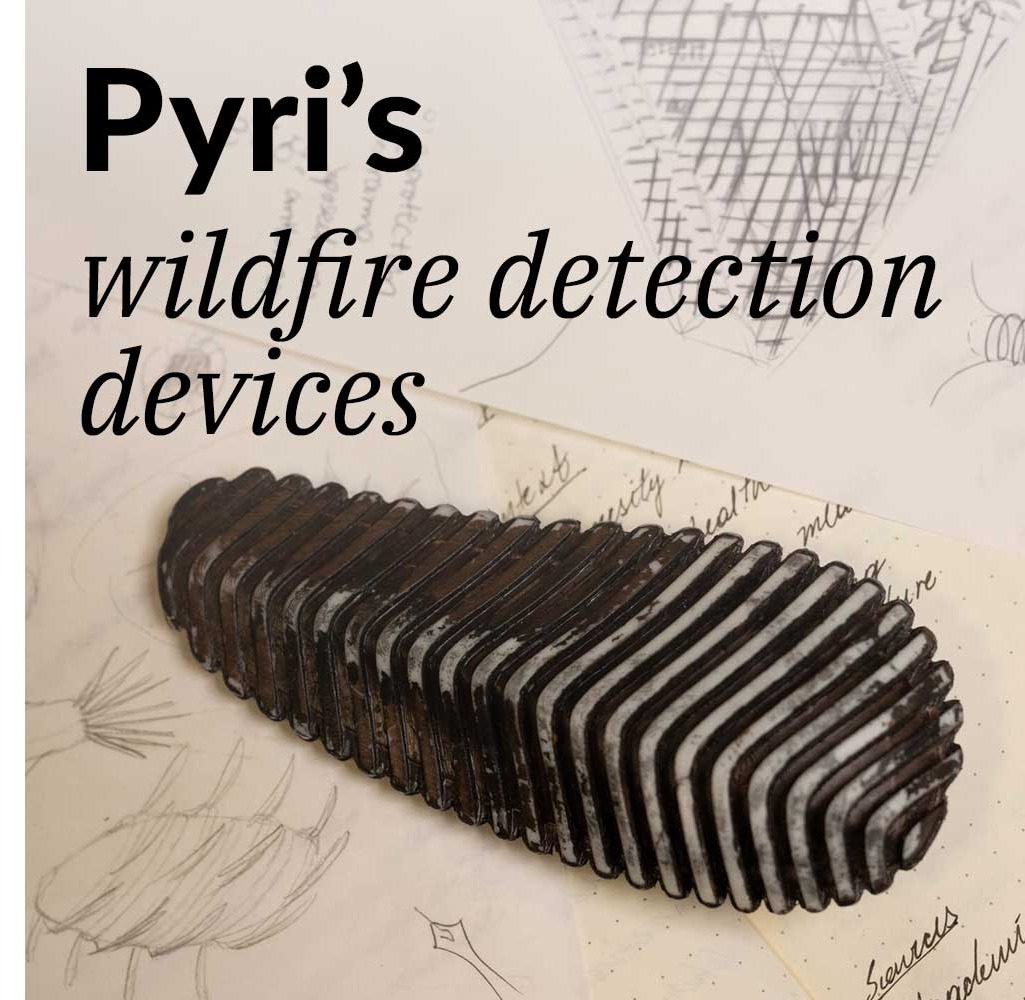
Biological inspiration for Pyri - Pine Cone Hygroscopic Wildfire Detection
Human application for Pyri - Pine Cone Hygroscopic Wildfire Detection
Technology

Pine cone (Pinus spp.) hygroscopic response

Pyri - Pine Cone Hygroscopic Wildfire Detection

Pine cone's humidity-responsive opening/closing mechanism inspires early wildfire detection devices that require no electronics.

  • ✿Inspired by: Pine cone (Pinus spp.) hygroscopic response
  • ⚡︎Function: Pine cones must disperse seeds during ideal moisture conditions whilst protecting them during drought or excess moisture. They sense and...
  • ▣Company: Pyri
  • ◉Where: USA
See full biomimicry example
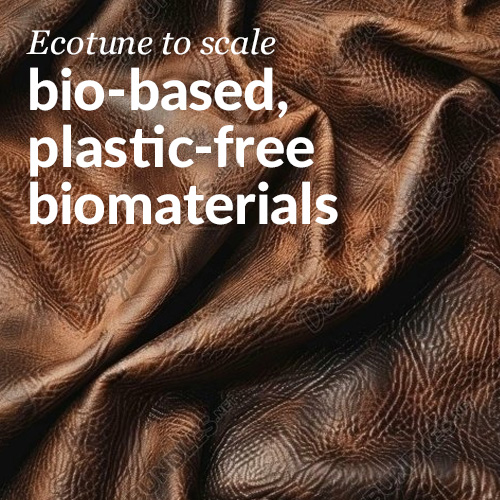
Biological inspiration for AirLoom™ Hides: Fungal Mycelium Grown into Leather
Human application for AirLoom™ Hides: Fungal Mycelium Grown into Leather
Materials

Fungal mycelium (Ganoderma species and related fungi)

AirLoom™ Hides: Fungal Mycelium Grown into Leather

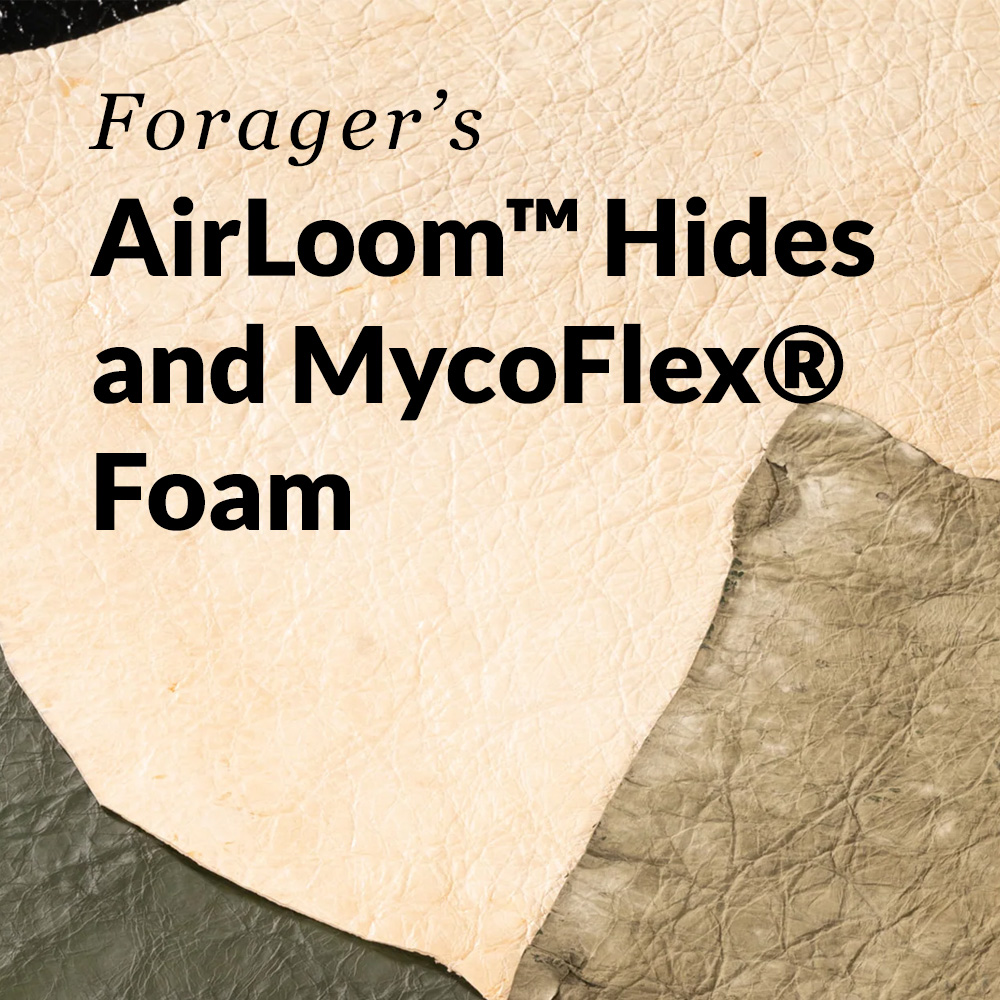
AirLoom™ Hides from Forager (by Ecovative) grow sheets of pure fungal mycelium on agricultural waste into a durable, fully compostable leather alternative. The hides preserve the natural fibrous architecture of mycelium without grinding or binding — matching animal leather in tear resistance and available in custom colours, textures, and thicknesses from 0.4 to 1.3 mm for fashion, accessories, and footwear.

  • ✿Inspired by: Fungal mycelium (Ganoderma species and related fungi)
  • ▣Company: Forager by Ecovative
See full biomimicry example
Biological inspiration for Bioplastics from Plant-Derived Sources
Human application for Bioplastics from Plant-Derived Sources
Materials

Plant leaves, citrus peel, rubisco enzyme

Bioplastics from Plant-Derived Sources

Development of biodegradable bioplastics using plant-based materials and enzymatic processes inspired by natural photosynthesis and plant metabolism.

  • ✿Inspired by: Plant leaves, citrus peel, rubisco enzyme
  • ⚡︎Function: Create durable yet biodegradable polymers using renewable plant-based sources and efficient enzymatic processes
  • ▣Company: Novomer (and related biotechnology firms)
  • ◉Where: Netherlands
See full biomimicry example
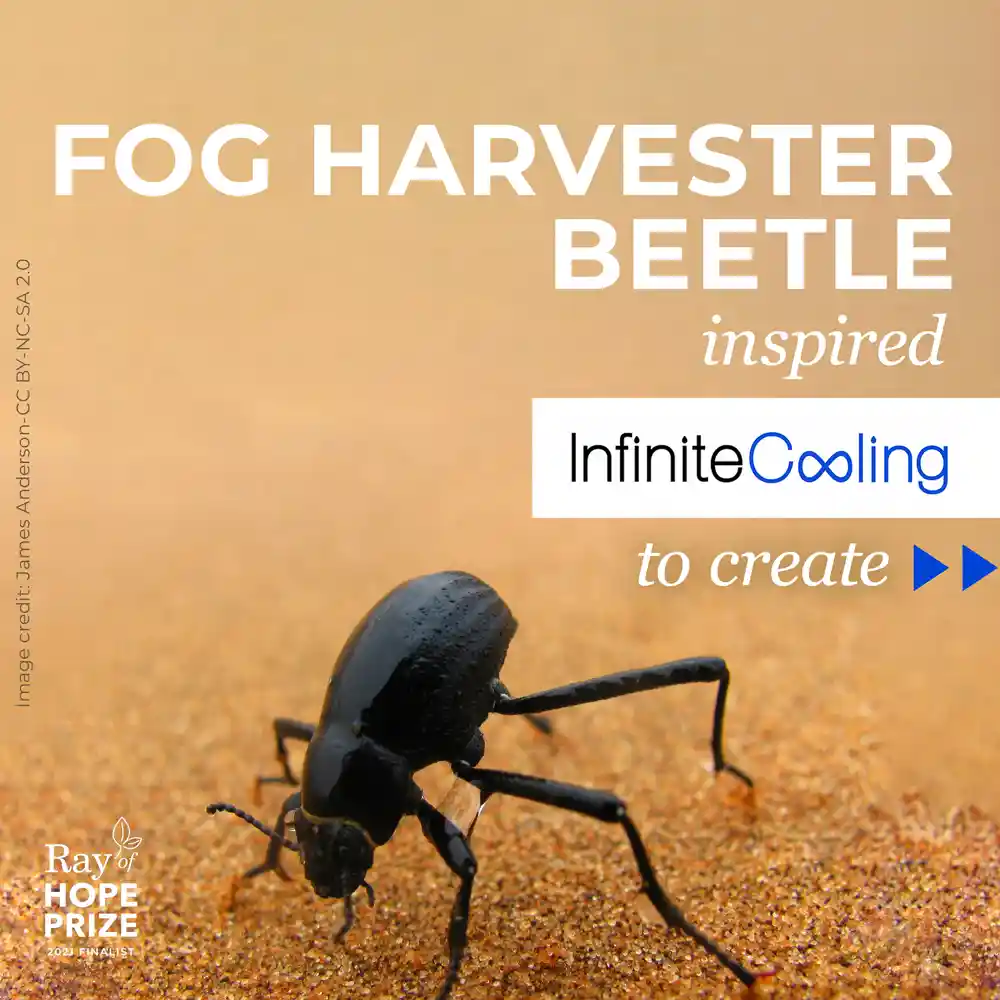
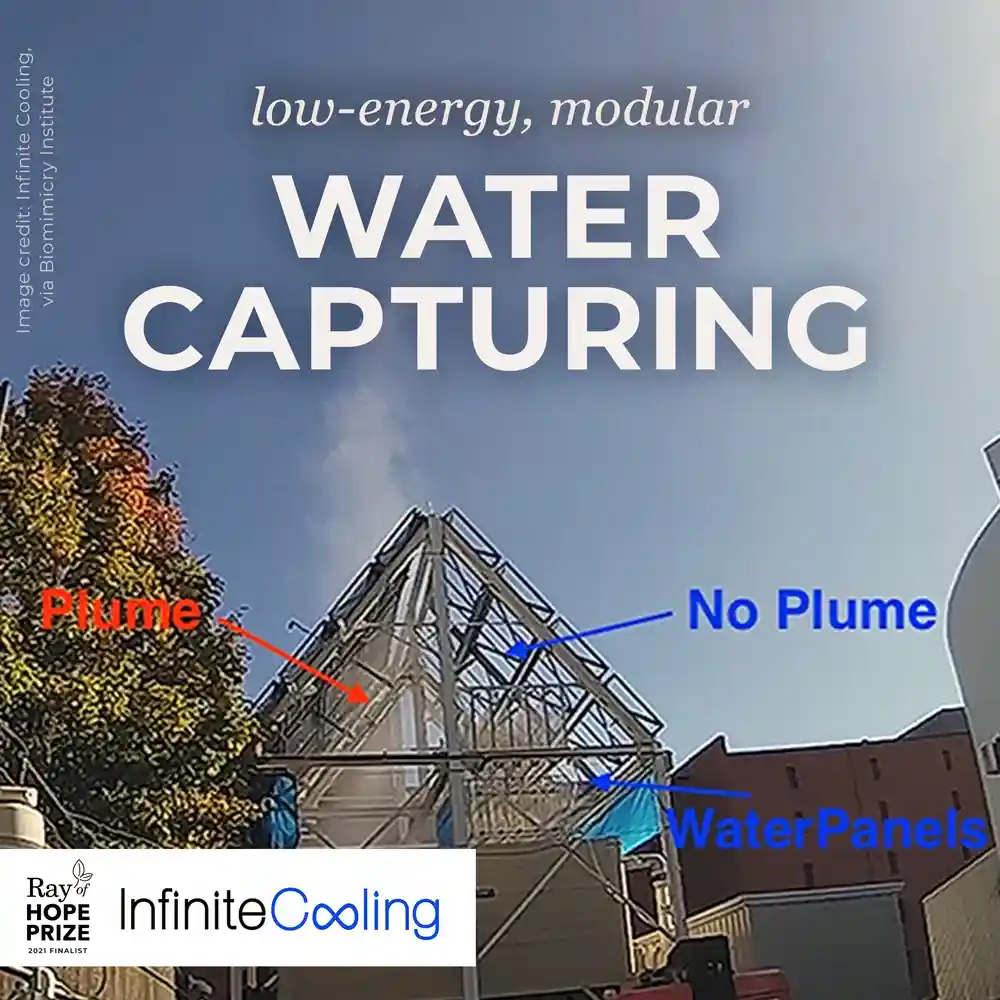
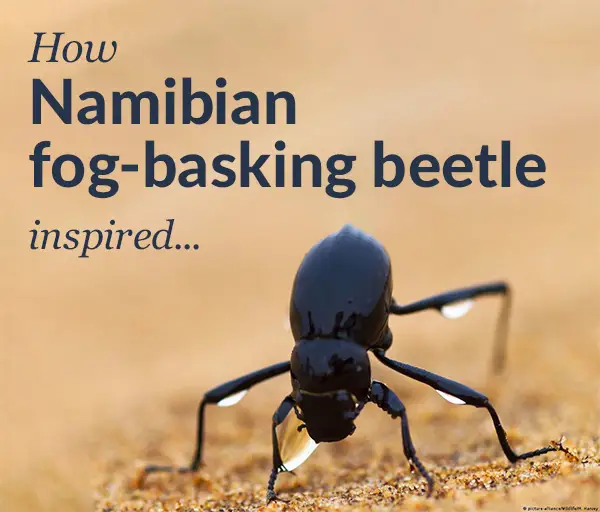
Biological inspiration for Fog Harvesting: Low-Energy Water Capturing
Human application for Fog Harvesting: Low-Energy Water Capturing
Environmental

Fog-harvesting beetle (Stenocara gracilipes)

Fog Harvesting: Low-Energy Water Capturing

Infinite Cooling developed fog harvesting technology inspired by the fog-harvesting beetle. Microscopic surface patterns collect water from fog without energy input, enabling water collection in arid regions.

  • ✿Inspired by: Fog-harvesting beetle (Stenocara gracilipes)
  • ⚡︎Function: Passive water collection from atmospheric moisture
  • ▣Company: Infinite Cooling
  • ◉Where: USA
See full biomimicry example
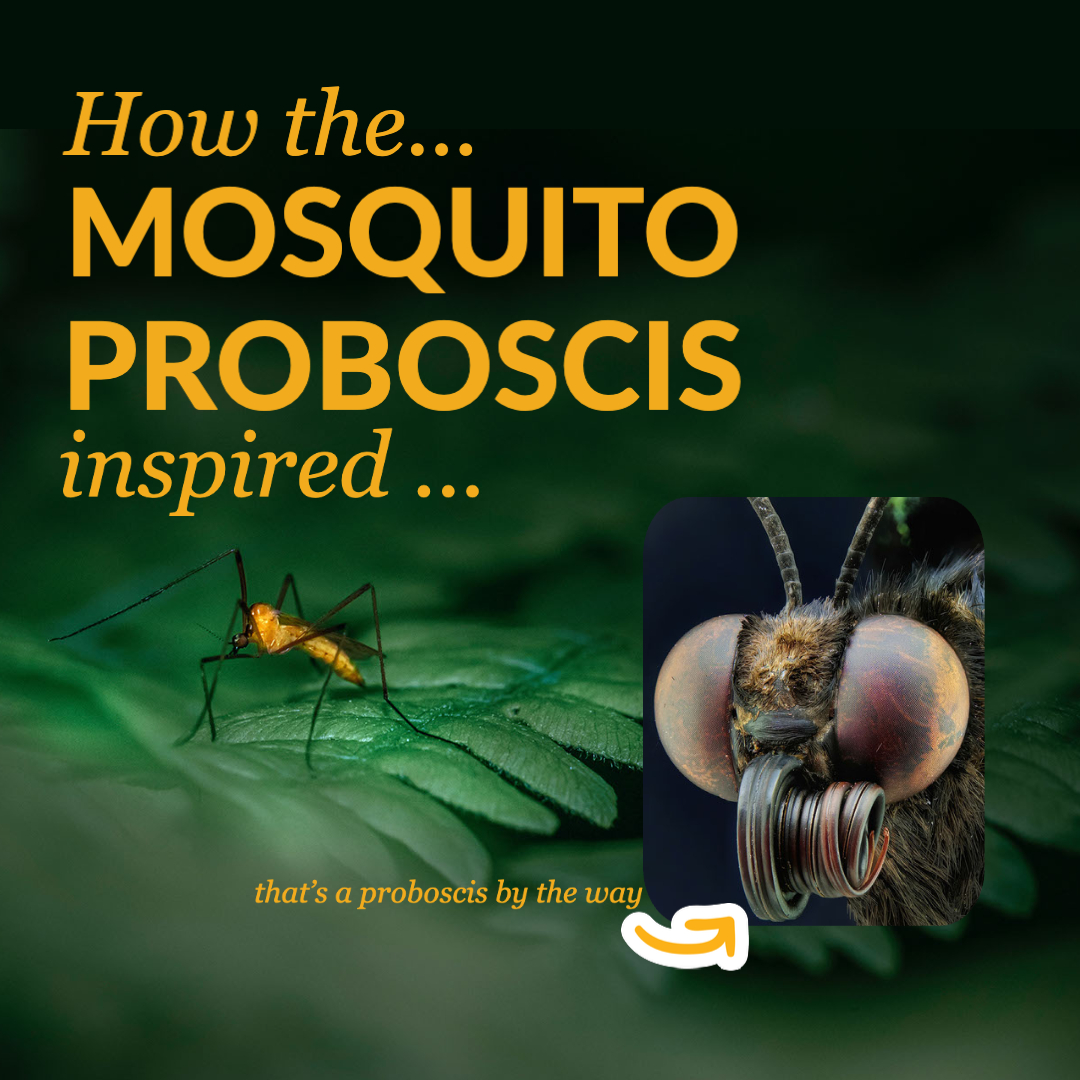
Biological inspiration for Mosquito Proboscis - Low-Pain Micro-Needles
Human application for Mosquito Proboscis - Low-Pain Micro-Needles
Medicine and Biotech

Mosquito proboscis (Aedes aegypti, Culex pipiens)

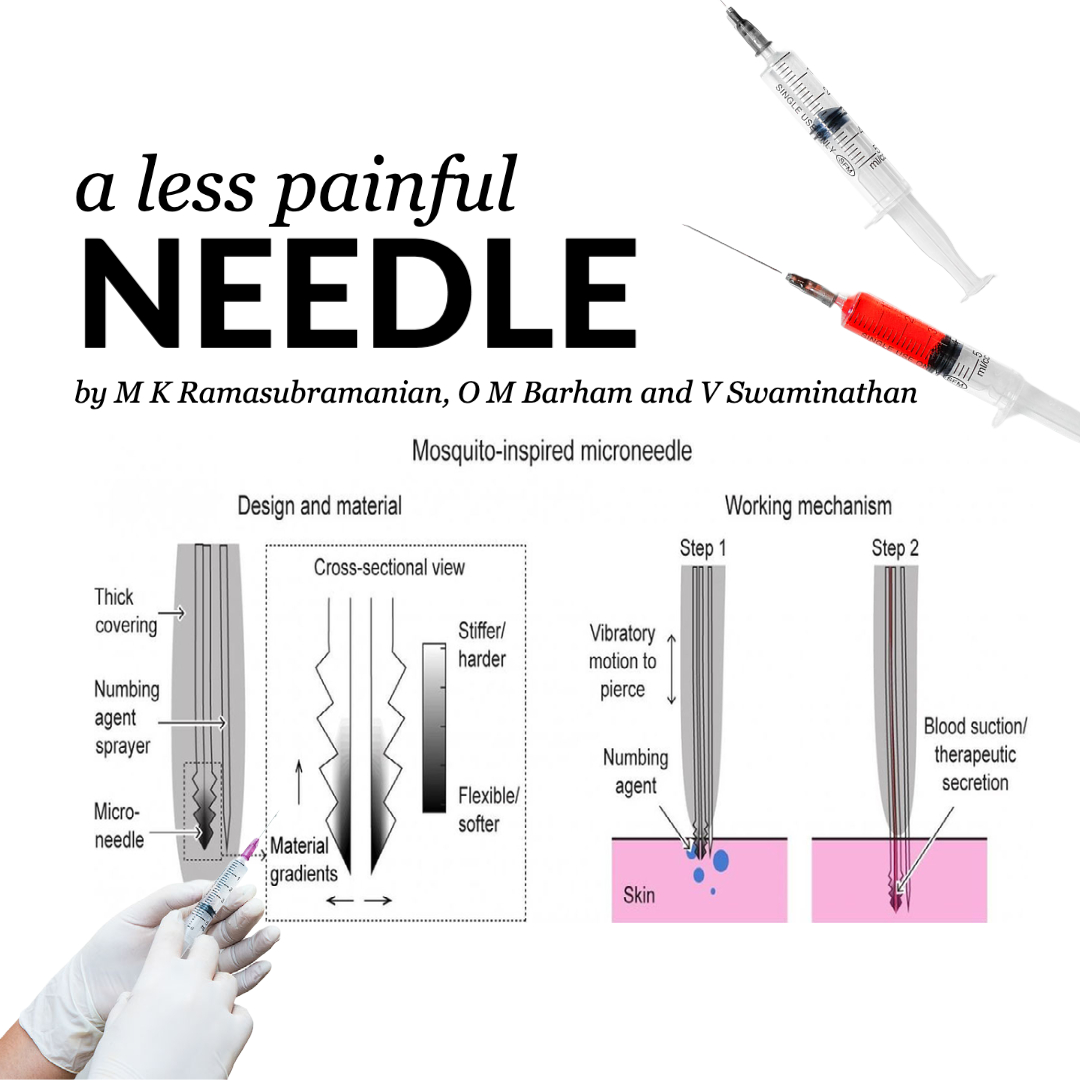
Mosquito Proboscis - Low-Pain Micro-Needles

Mosquito proboscis serrated geometry inspires less-painful micro-needles for drug delivery and blood sampling.

  • ✿Inspired by: Mosquito proboscis (Aedes aegypti, Culex pipiens)
  • ⚡︎Function: Mosquitoes must pierce tough insect or vertebrate skin using minimal muscular force, seeking blood vessels without causing pain that woul...
  • ▣Company: Terumo Corporation (Japan); Kansai University research
  • ◉Where: Japan
See full biomimicry example
Biological inspiration for MycoFlex® Foam: Mycelium-Grown Alternative to Synthetic Foam
Human application for MycoFlex® Foam: Mycelium-Grown Alternative to Synthetic Foam
Materials

Fungal mycelium (Ganoderma species and related fungi)

MycoFlex® Foam: Mycelium-Grown Alternative to Synthetic Foam

MycoFlex® Foam from Forager (by Ecovative) is a 100% biobased foam grown from pure mycelium on agricultural waste in just 7 to 9 days. The foam is antimicrobial, thermally insulating, flame resistant, and aerobically compostable — delivering a sustainable alternative to petroleum-derived foams across footwear, upholstery, and accessories.

  • ✿Inspired by: Fungal mycelium (Ganoderma species and related fungi)
  • ▣Company: Forager by Ecovative
See full biomimicry example
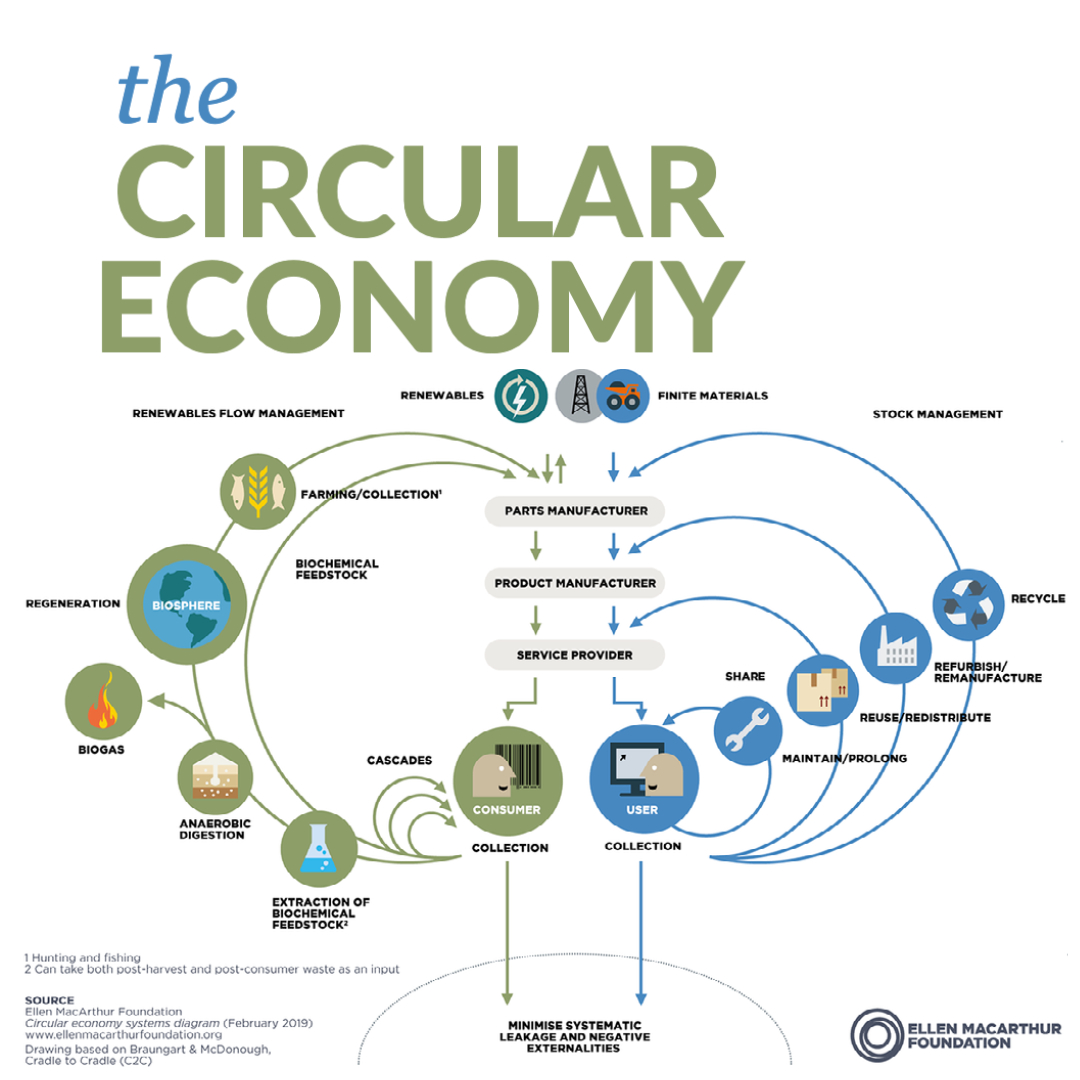
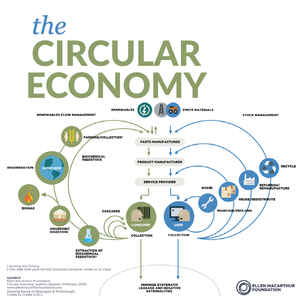
Biological inspiration for Circular Economies: Ellen MacArthur Foundation Framework
Human application for Circular Economies: Ellen MacArthur Foundation Framework
Organisational Design

Ecosystems and natural circular systems

Circular Economies: Ellen MacArthur Foundation Framework

The Ellen MacArthur Foundation develops circular economy frameworks based on ecosystem principles. Circular economies eliminate waste by designing products and systems to cycle continuously through biological or technical loops.

  • ✿Inspired by: Ecosystems and natural circular systems
  • ⚡︎Function: Systems-level resource and material management
  • ▣Company: Ellen MacArthur Foundation
  • ◉Where: Netherlands
See full biomimicry example
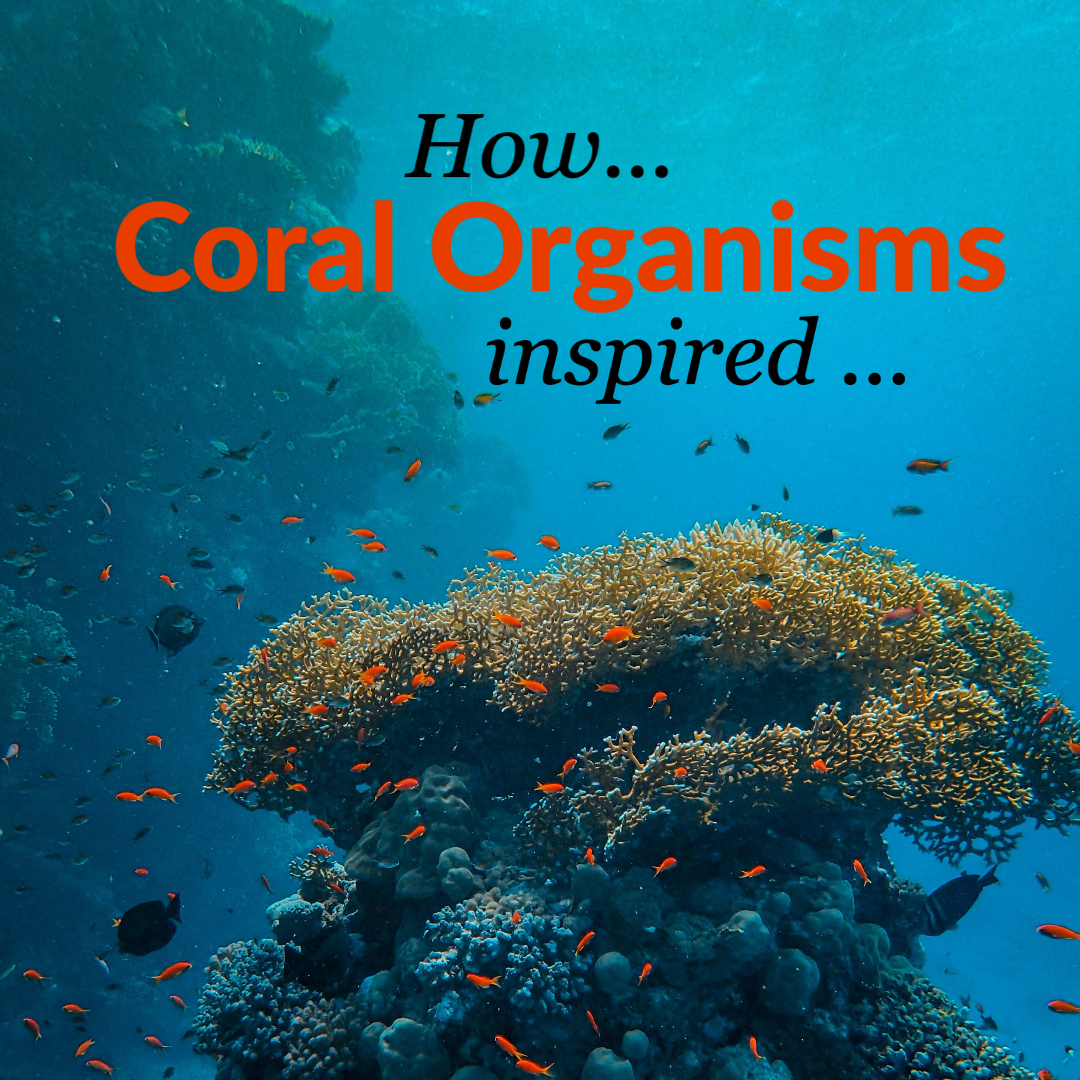
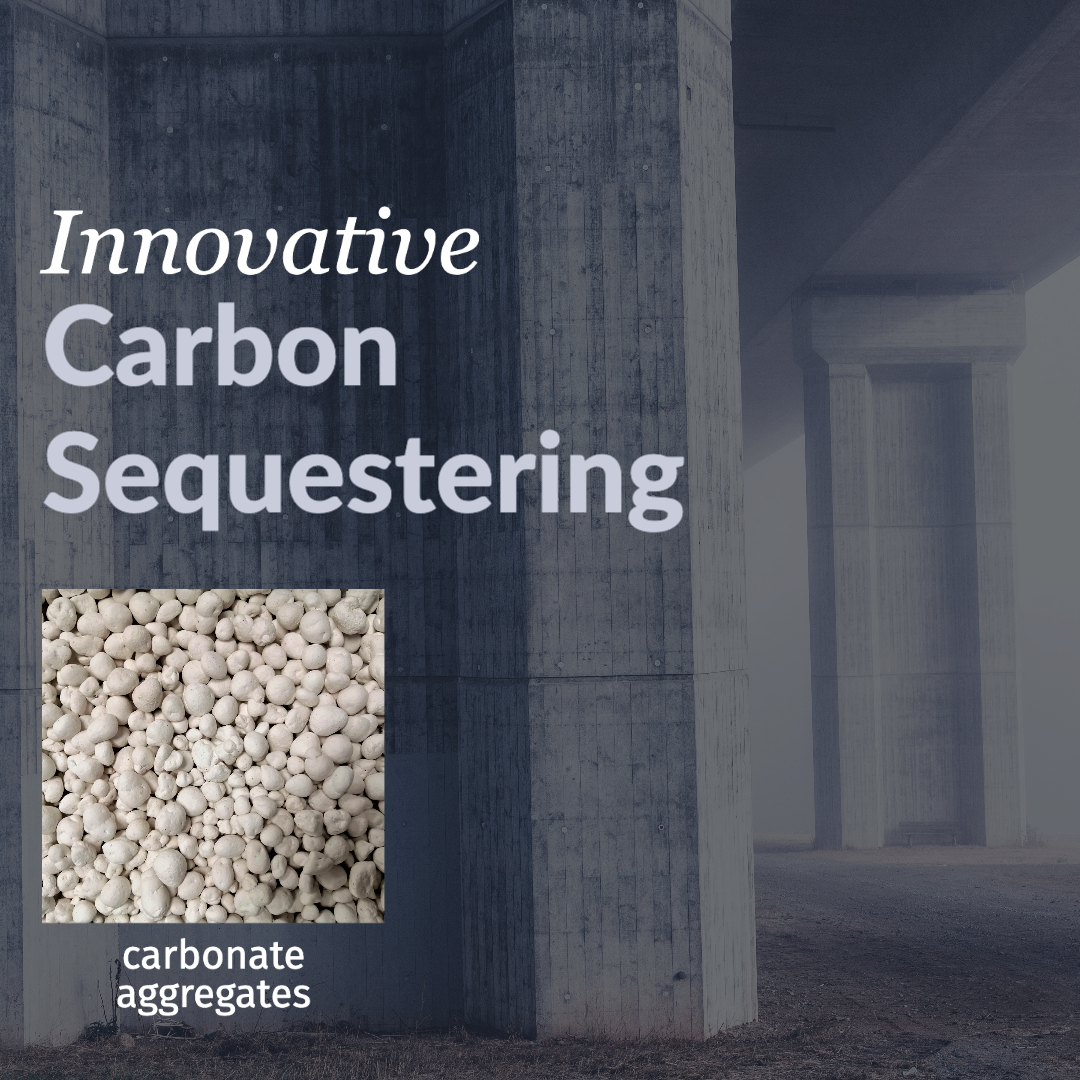
Biological inspiration for Hard Corals: CO2 Sequestering Concrete Aggregates
Human application for Hard Corals: CO2 Sequestering Concrete Aggregates
Materials

Hard corals (Scleractinia order)

Hard Corals: CO2 Sequestering Concrete Aggregates

Blue Planet developed concrete aggregates using CO2-sequestering minerals inspired by coral calcium carbonate structures. These aggregates lock CO2 into concrete, reducing emissions while improving building material sustainability.

  • ✿Inspired by: Hard corals (Scleractinia order)
  • ⚡︎Function: CO2 capture and sequestration in building materials
  • ▣Company: Blue Planet
  • ◉Where: USA
See full biomimicry example
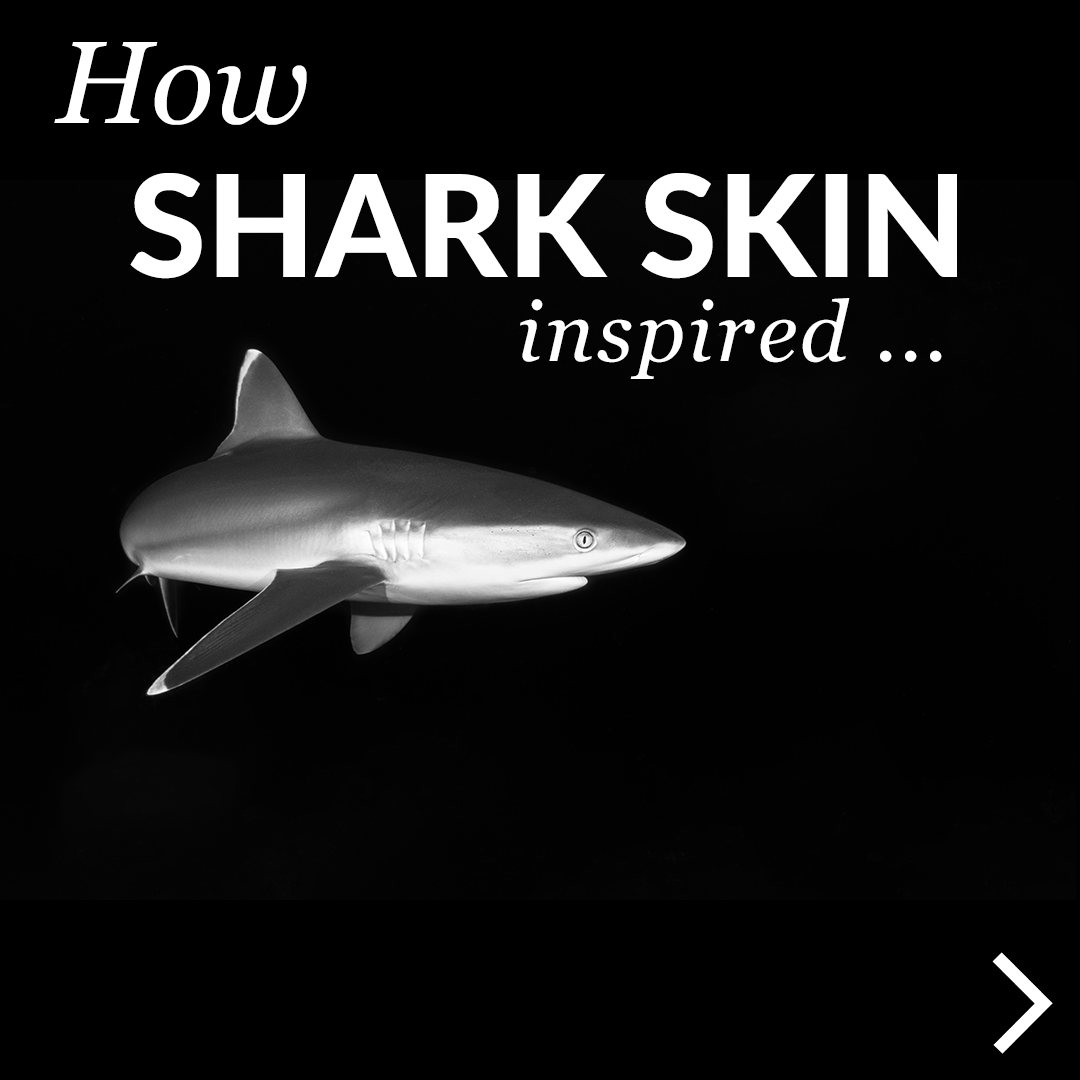
Biological inspiration for Shark Skin Anti-Fouling: Hospital Surfaces
Human application for Shark Skin Anti-Fouling: Hospital Surfaces
Materials

Shortfin mako shark (Isurus oxyrinchus)

Shark Skin Anti-Fouling: Hospital Surfaces

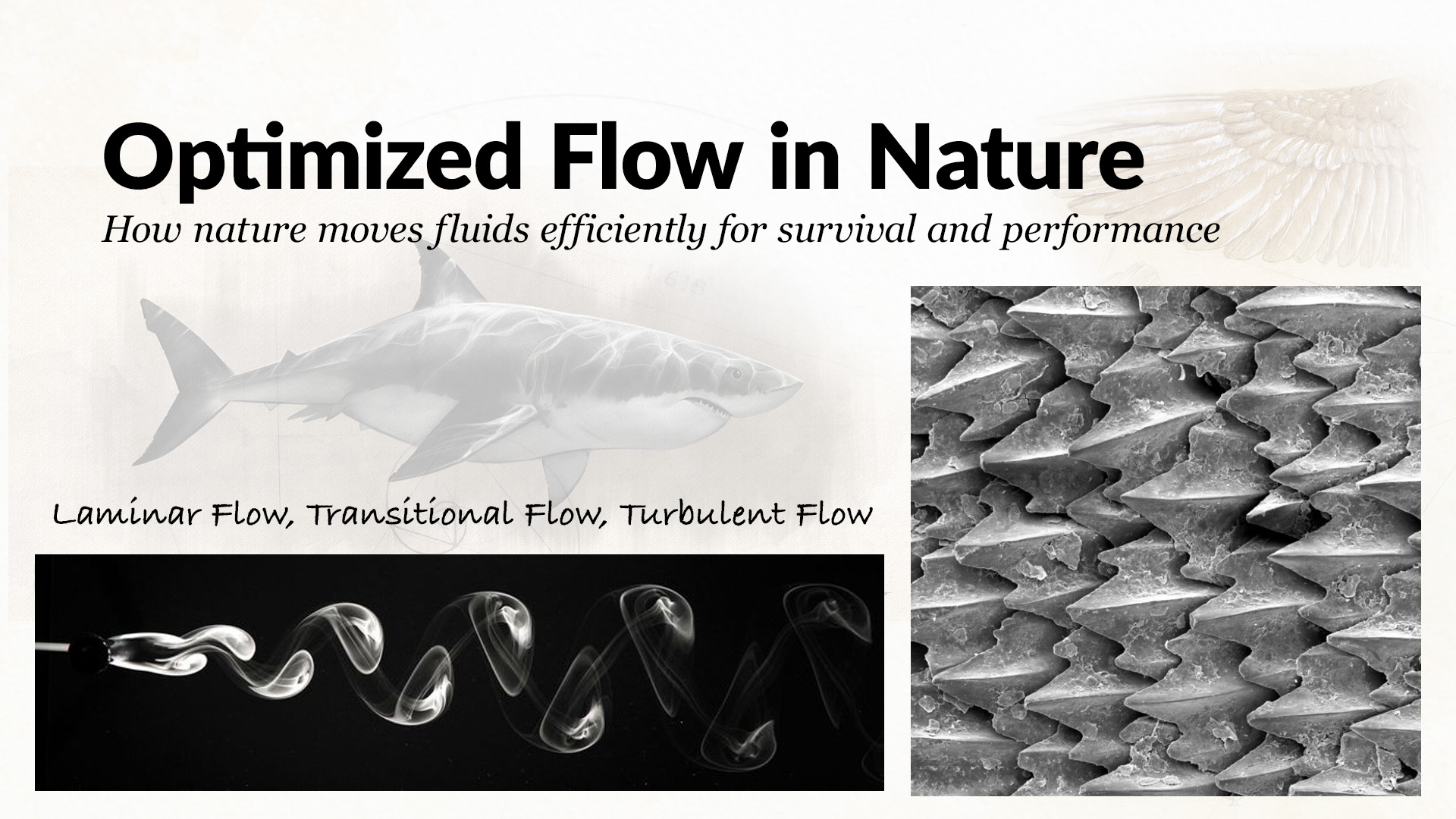
Shark skin is covered in microscopic tooth-like scales called denticles that create a riblet surface — this texture physically prevents bacteria from attaching, without any chemical biocides. Sharklet Technologies has commercialised this as the world's first physical (not chemical) anti-bacterial surface for hospital use.

  • ✿Inspired by: Shortfin mako shark (Isurus oxyrinchus)
  • ⚡︎Function: Mechanical inhibition of microbial adhesion
  • ▣Company: Sharklet Technologies Inc.
  • ◉Where: USA
See full biomimicry example
Biological inspiration for Whale Fin Wind Turbines: Humpback Tubercles
Human application for Whale Fin Wind Turbines: Humpback Tubercles
Product Design

Humpback whale (Megaptera novaeangliae)

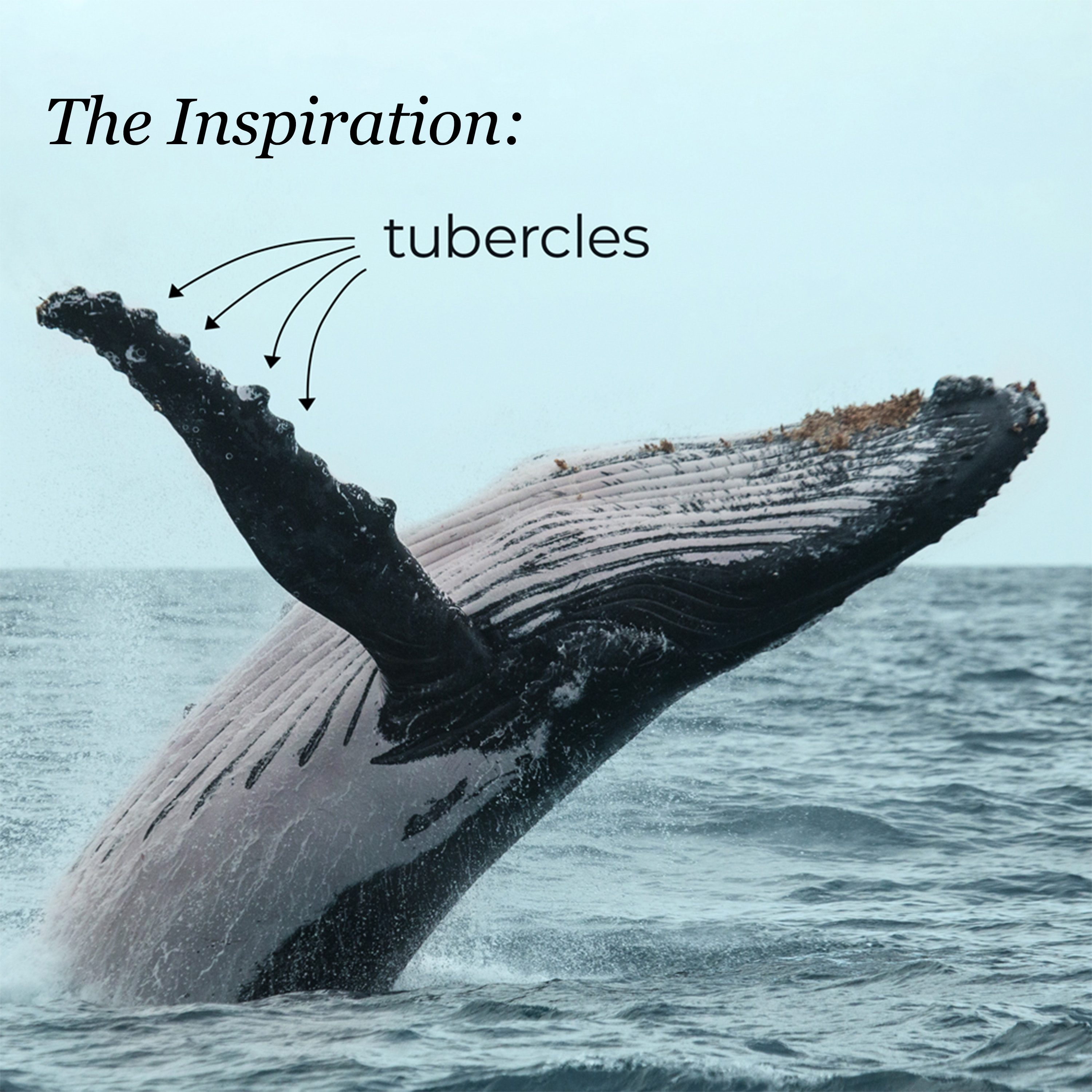
Whale Fin Wind Turbines: Humpback Tubercles

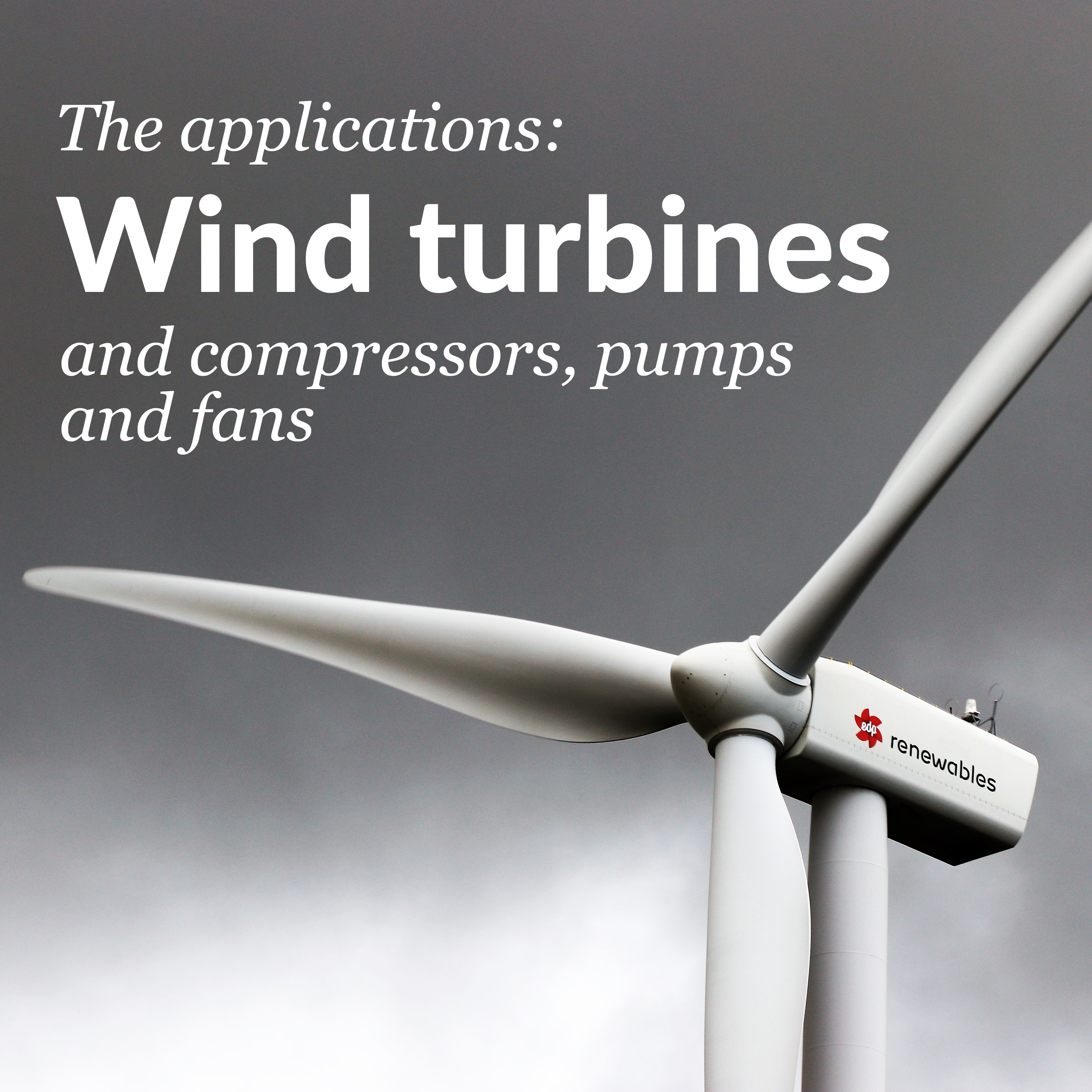
The bumps (tubercles) on humpback whale fins turn out to be a breakthrough aerodynamic innovation. WhalePower Corporation's turbine blades, modelled on these tubercles, generate 20% more power, operate in 40% lower wind speeds, and stall less — transforming wind energy economics.

  • ✿Inspired by: Humpback whale (Megaptera novaeangliae)
  • ⚡︎Function: Mimics whale fin tubercles to reduce drag and improve aerodynamic performance.
  • ▣Company: WhalePower Corporation
  • ◉Where: Canada
See full biomimicry example
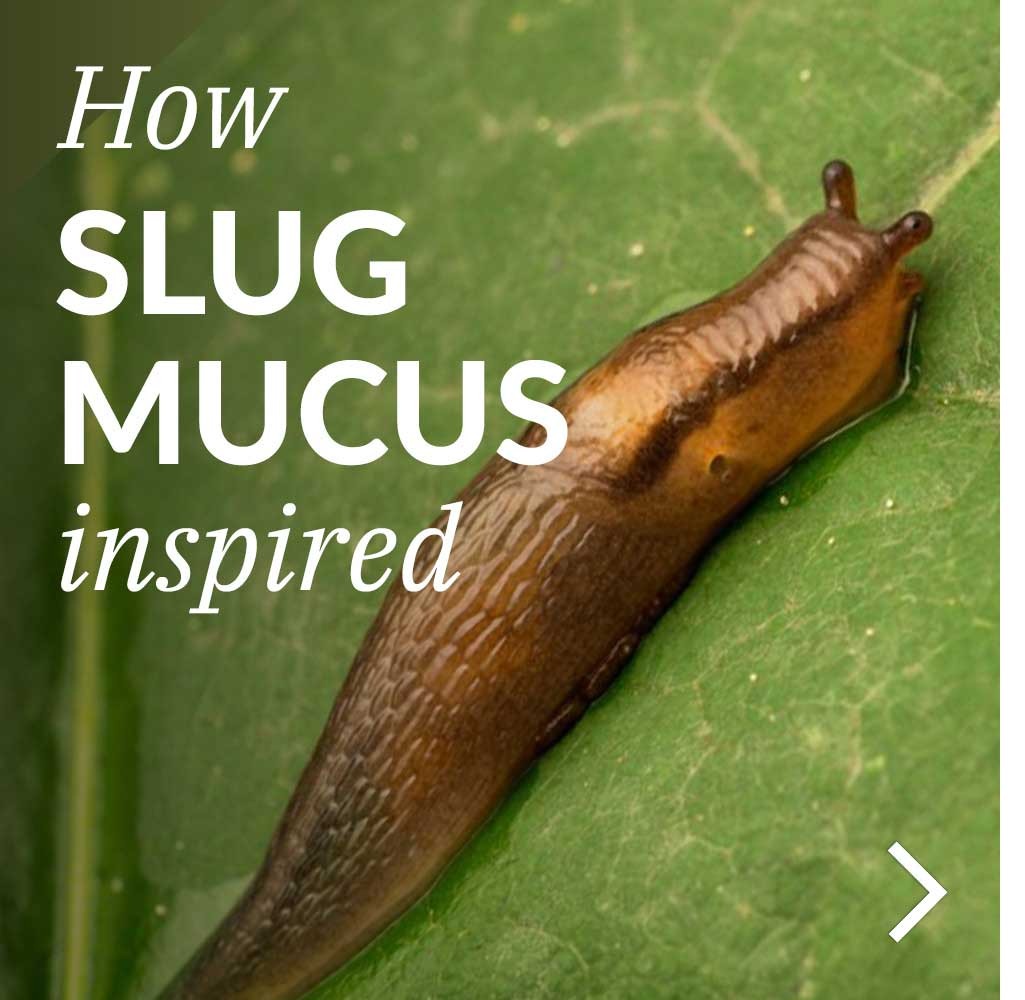
Biological inspiration for Limax Biosciences - Slug Mucus Surgical Adhesive
Human application for Limax Biosciences - Slug Mucus Surgical Adhesive
Medicine and Biotech

Arion subfuscus (Spanish slug) mucus composition

Limax Biosciences - Slug Mucus Surgical Adhesive

Arion subfuscus slug mucus inspires tough, flexible surgical glue adhering to wet tissue surfaces.

  • ✿Inspired by: Arion subfuscus (Spanish slug) mucus composition
  • ⚡︎Function: Slugs must adhere to wet environments (soil, plants soaked with rain, mucus films) whilst remaining flexible enough to move. They overcom...
  • ▣Company: Limax Biosciences / Harvard University
  • ◉Where: Harvard, USA
See full biomimicry example
Biological inspiration for Munjoi - Algae-Based Biodegradable Footwear
Human application for Munjoi - Algae-Based Biodegradable Footwear
Product Design

Algal cell walls and biopolymers

Munjoi - Algae-Based Biodegradable Footwear

Algae's structural biopolymers inspire foam materials for fully biodegradable, multifunctional footwear, replacing petroleum-based polymers.

  • ✿Inspired by: Algal cell walls and biopolymers
  • ⚡︎Function: Algae must create strong, water-resistant structures despite being composed entirely of water and soft biopolymers. They overcome this th...
  • ▣Company: Munjoi
  • ◉Where: USA
See full biomimicry example
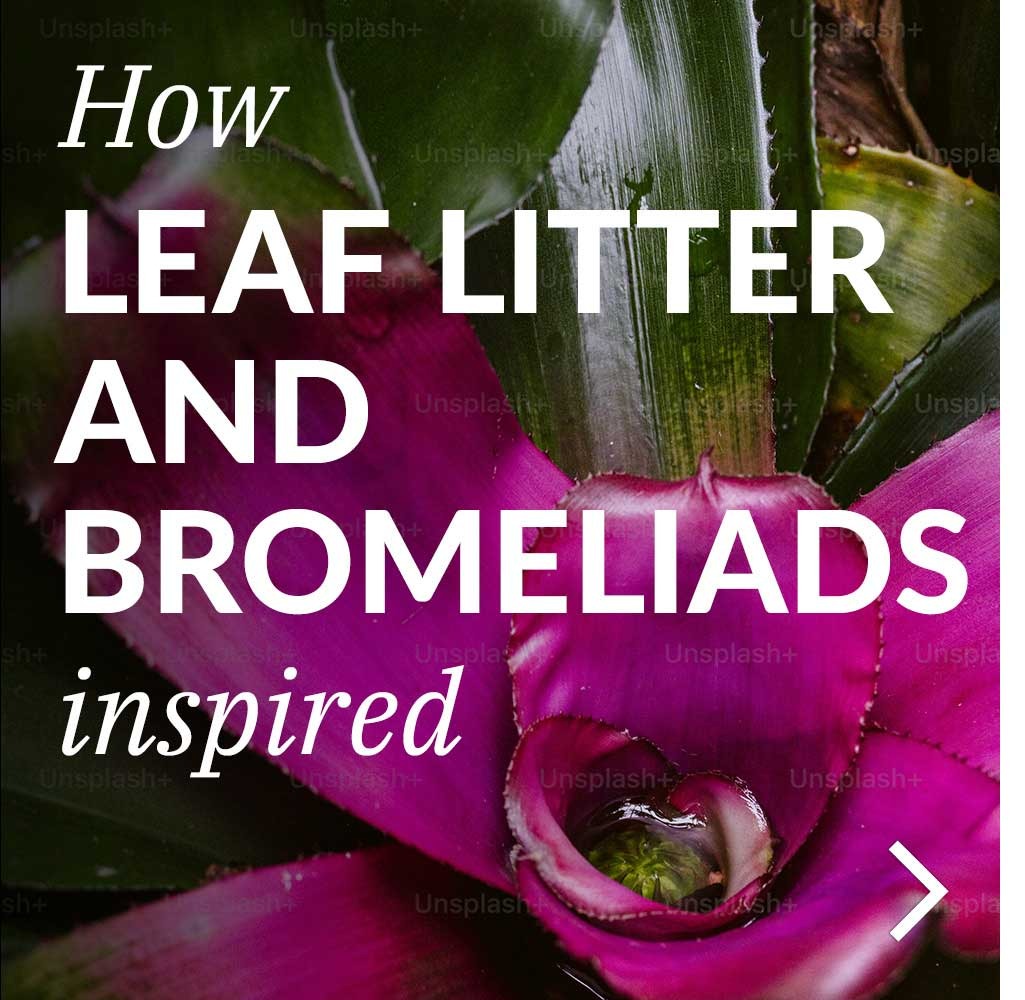
Biological inspiration for Nucleario - Bromeliad Water Capture Reforestation
Human application for Nucleario - Bromeliad Water Capture Reforestation
Environmental

Bromeliad water-capture leaf structure

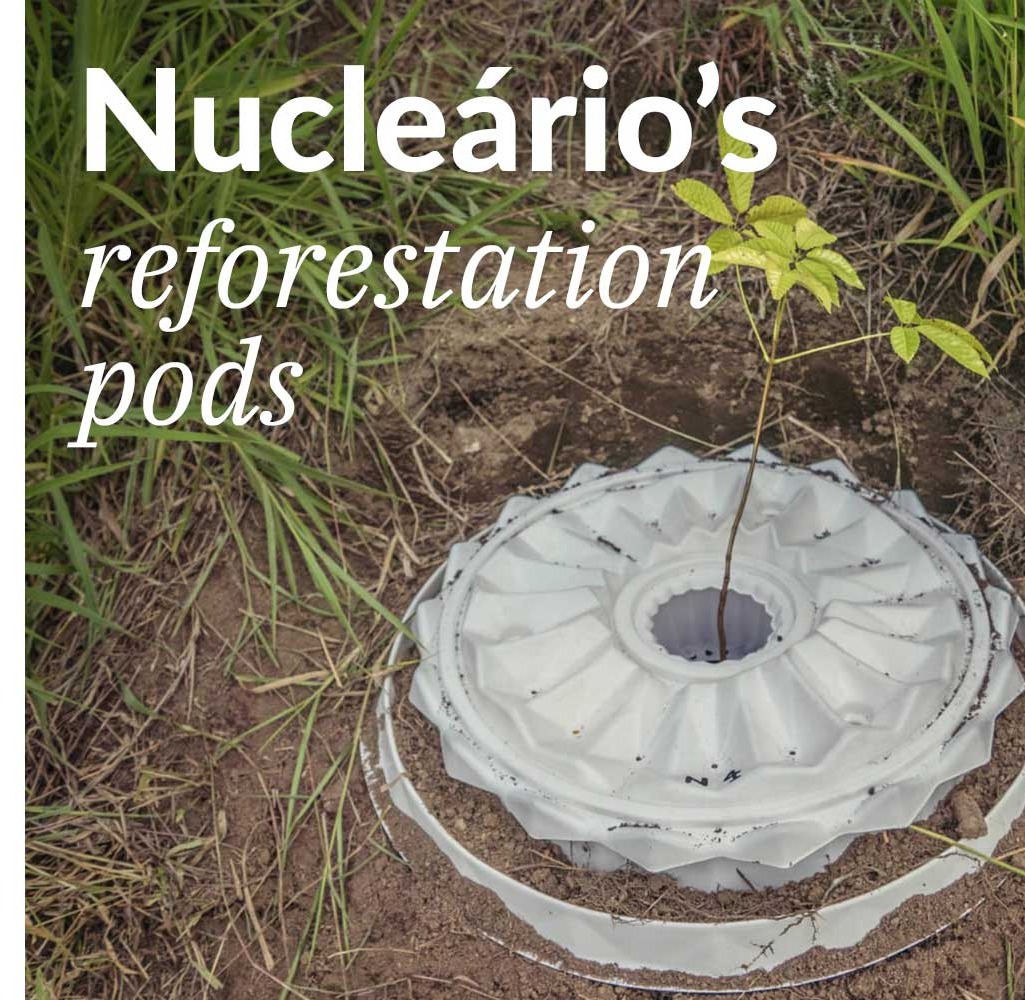
Nucleario - Bromeliad Water Capture Reforestation

Bromeliad rainwater-capture architecture inspires reforestation pods that establish seedlings in water-scarce regions without irrigation.

  • ✿Inspired by: Bromeliad water-capture leaf structure
  • ⚡︎Function: Seedlings in degraded soils must obtain water from sporadic rainfall despite low soil water-holding capacity. They must survive multi-wee...
  • ▣Company: Nucleario
  • ◉Where: Brazil
See full biomimicry example
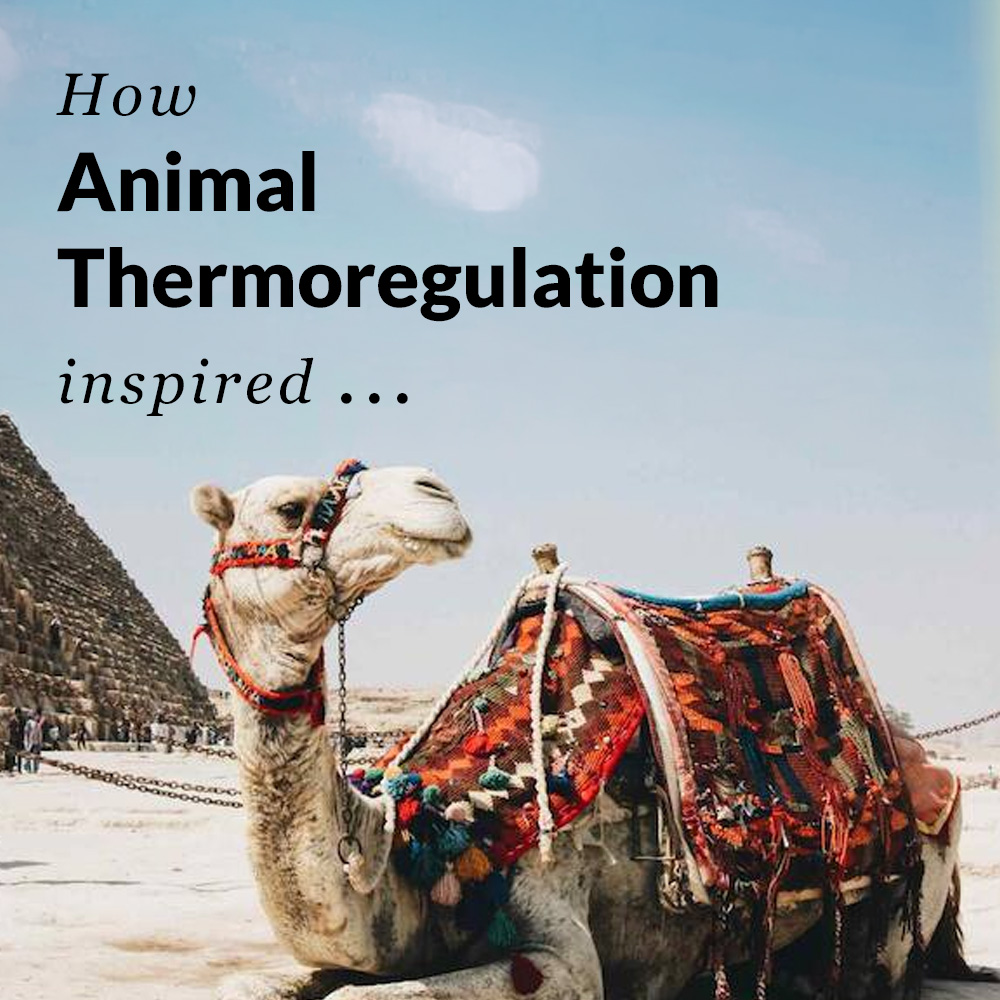
Biological inspiration for Sweating Skin: Animal Thermoregulation Inspiring Hydrogel Cooling Layers
Human application for Sweating Skin: Animal Thermoregulation Inspiring Hydrogel Cooling Layers
Engineering

Warm-blooded mammals (eccrine sweating thermoregulation)

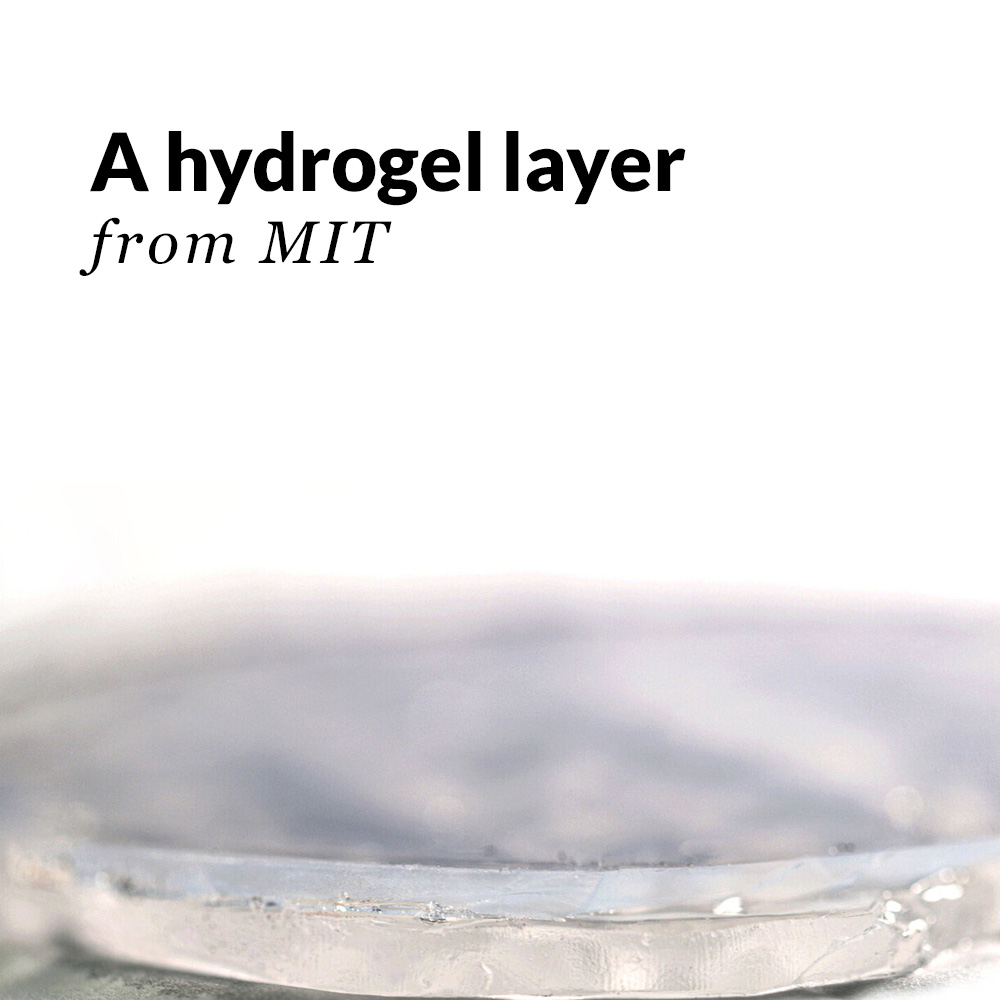
Sweating Skin: Animal Thermoregulation Inspiring Hydrogel Cooling Layers

Inspired by how warm-blooded animals cool themselves through sweat evaporation, researchers at MIT developed a temperature-sensitive hydrogel layer that passively releases water when surfaces overheat. The hydrogel acts as an artificial sweating skin — dissipating heat through evaporation with more than twice the cooling efficiency of natural convection, without any energy input or moving parts.

  • ✿Inspired by: Warm-blooded mammals (eccrine sweating thermoregulation)
  • ▣Company: MIT (Massachusetts Institute of Technology)
See full biomimicry example
Biological inspiration for Boeing 787 Winglet Design: Eagle Wing Tips
Human application for Boeing 787 Winglet Design: Eagle Wing Tips
Engineering

Soaring birds (Buteo and Aquila species)

Boeing 787 Winglet Design: Eagle Wing Tips

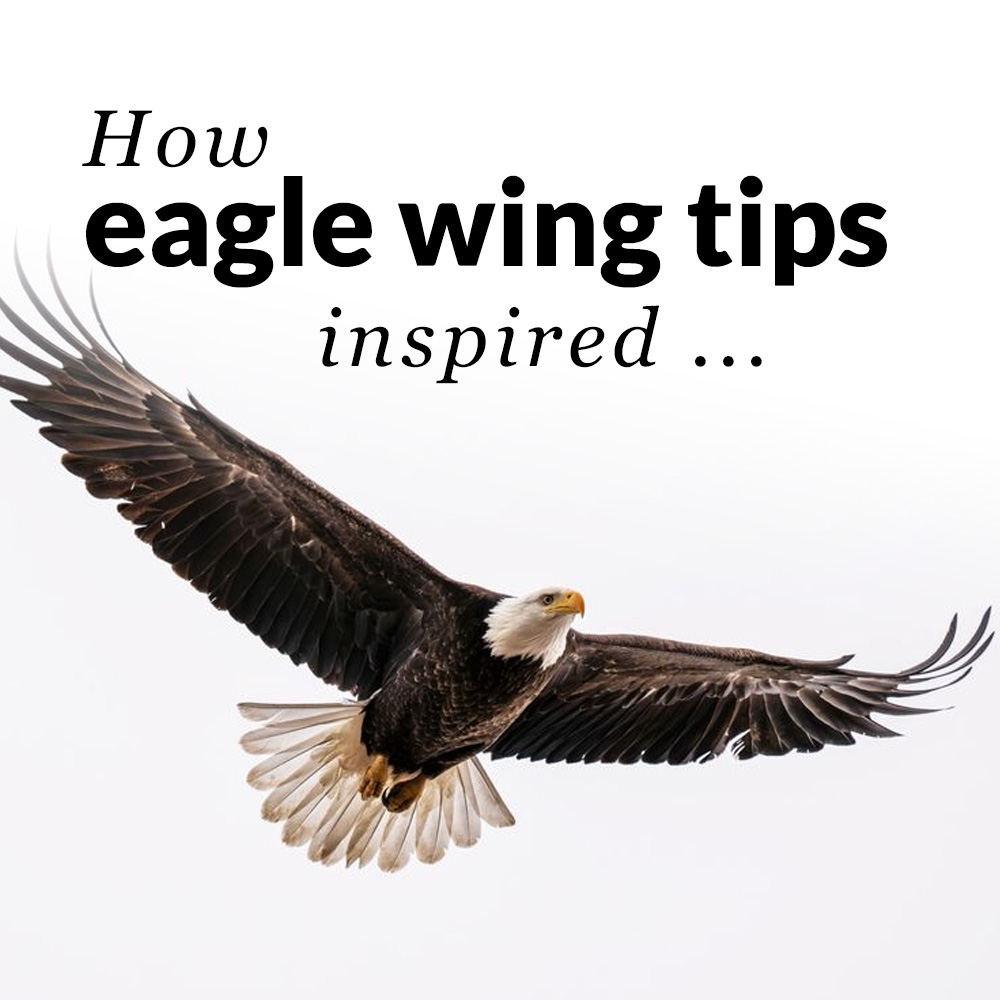
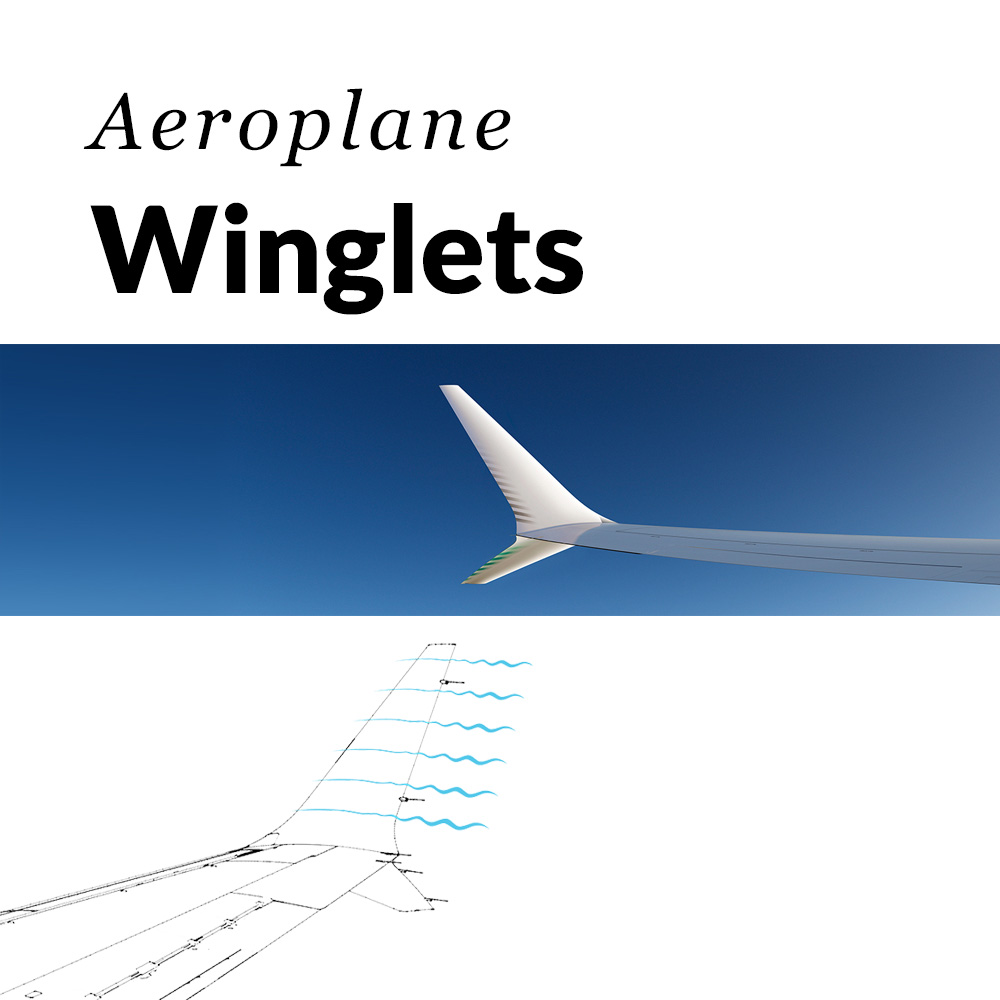
Large soaring birds like eagles and vultures spread their primary feathers into finger-like tips to reduce induced drag during soaring. Aircraft designers have mimicked this with winglets that reduce drag by 5–7%, saving airlines billions of litres of fuel per year.

  • ✿Inspired by: Soaring birds (Buteo and Aquila species)
  • ⚡︎Function: Reduce induced drag from wing tip vortices during flight
  • ▣Company: Boeing / NASA (Richard Whitcomb)
  • ◉Where: USA
See full biomimicry example
Biological inspiration for Sahara Forest Project: Namib Beetle Water Harvesting
Human application for Sahara Forest Project: Namib Beetle Water Harvesting

Namib Desert beetle (Stenocara gracilipes)

Sahara Forest Project: Namib Beetle Water Harvesting

The Namib beetle harvests water from fog in one of the world's driest deserts by using bumps on its back that attract water droplets, which then roll into its mouth. This principle is now used in fog nets, building materials, and greenhouse designs to collect drinkable water from thin air.

  • ✿Inspired by: Namib Desert beetle (Stenocara gracilipes)
  • ⚡︎Function: Collect water from atmospheric moisture in arid environments
  • ▣Company: Sahara Forest Project / MIT
  • ◉Where: Namibia
See full biomimicry example
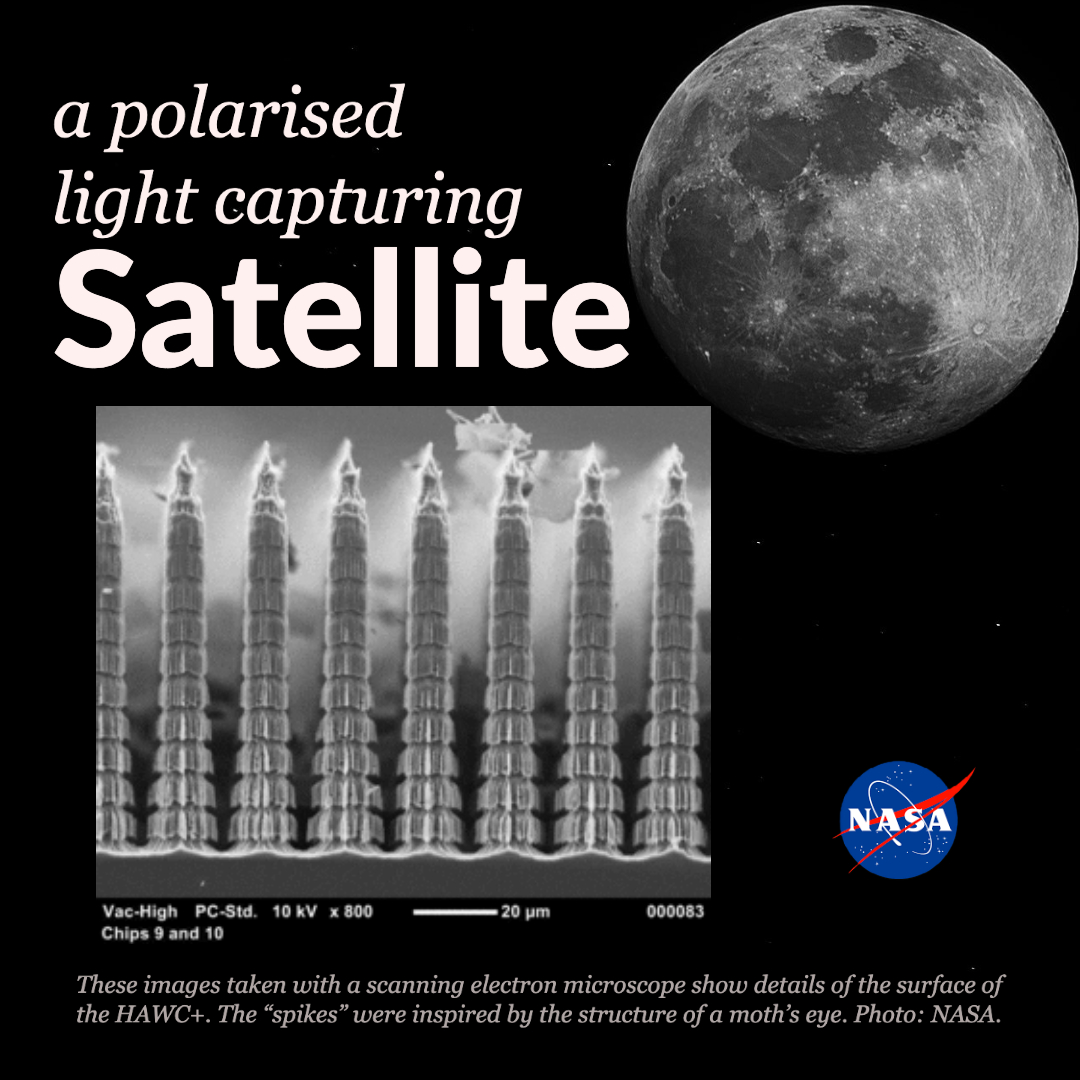
Biological inspiration for Solar Cells Inspired by Moth Eyes: Zero Reflection
Human application for Solar Cells Inspired by Moth Eyes: Zero Reflection
Technology

Night-flying moths (various nocturnal Lepidoptera)

Solar Cells Inspired by Moth Eyes: Zero Reflection

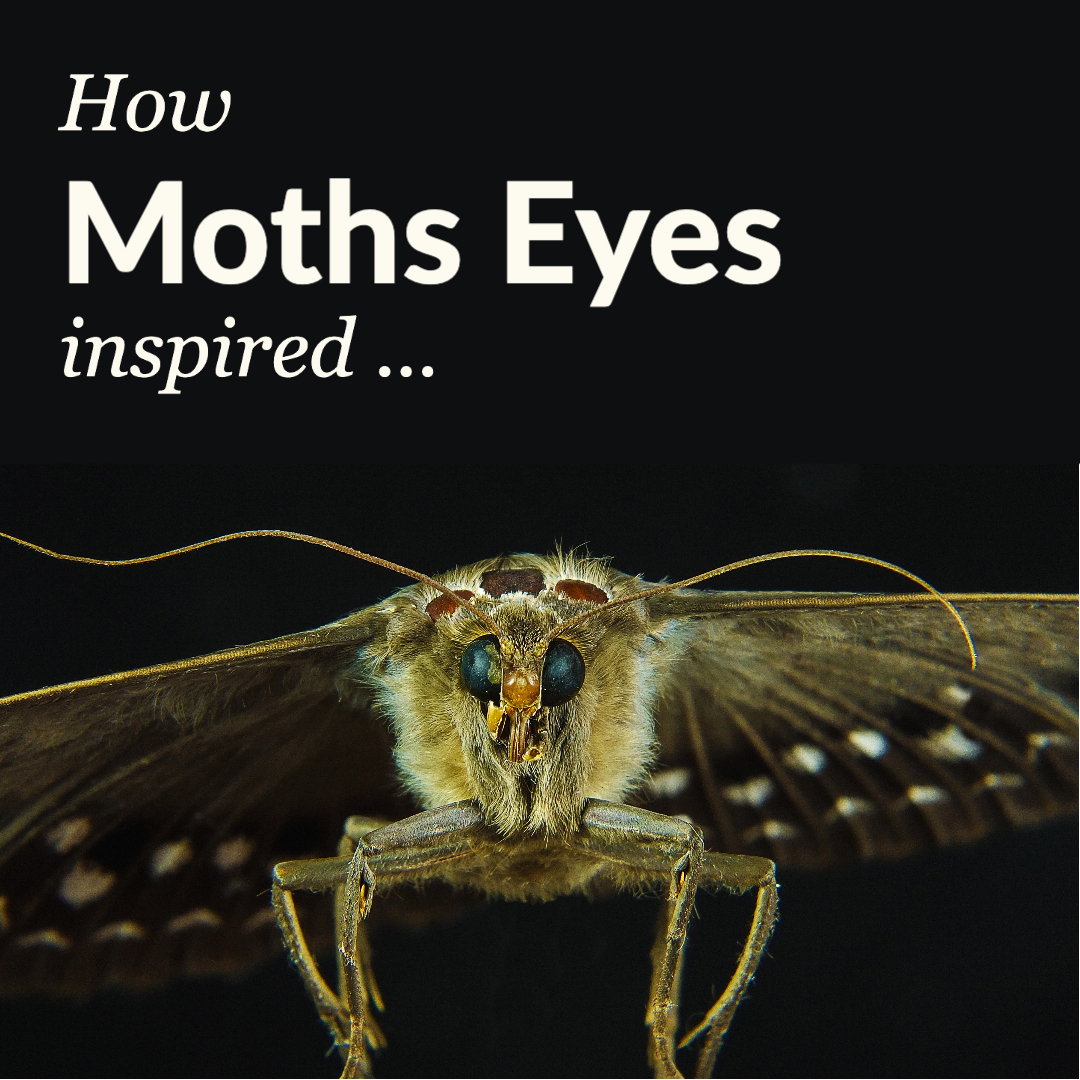
Moths' eyes are covered in an array of tiny bumps that eliminate virtually all reflection, allowing maximum light to enter in darkness. This "moth-eye" anti-reflection structure is now used in high-efficiency solar cells, increasing energy capture by up to 40%, and in anti-glare screens for every device you own.

  • ✿Inspired by: Night-flying moths (various nocturnal Lepidoptera)
  • ⚡︎Function: Maximise light capture by eliminating surface reflection
  • ▣Company: Fraunhofer Institute / various manufacturers
  • ◉Where: California, USA
See full biomimicry example
Biological inspiration for Spider Silk: High-Performance Textiles
Human application for Spider Silk: High-Performance Textiles
Materials

Spider (Araneae order), specifically orb-weaver spiders

Spider Silk: High-Performance Textiles

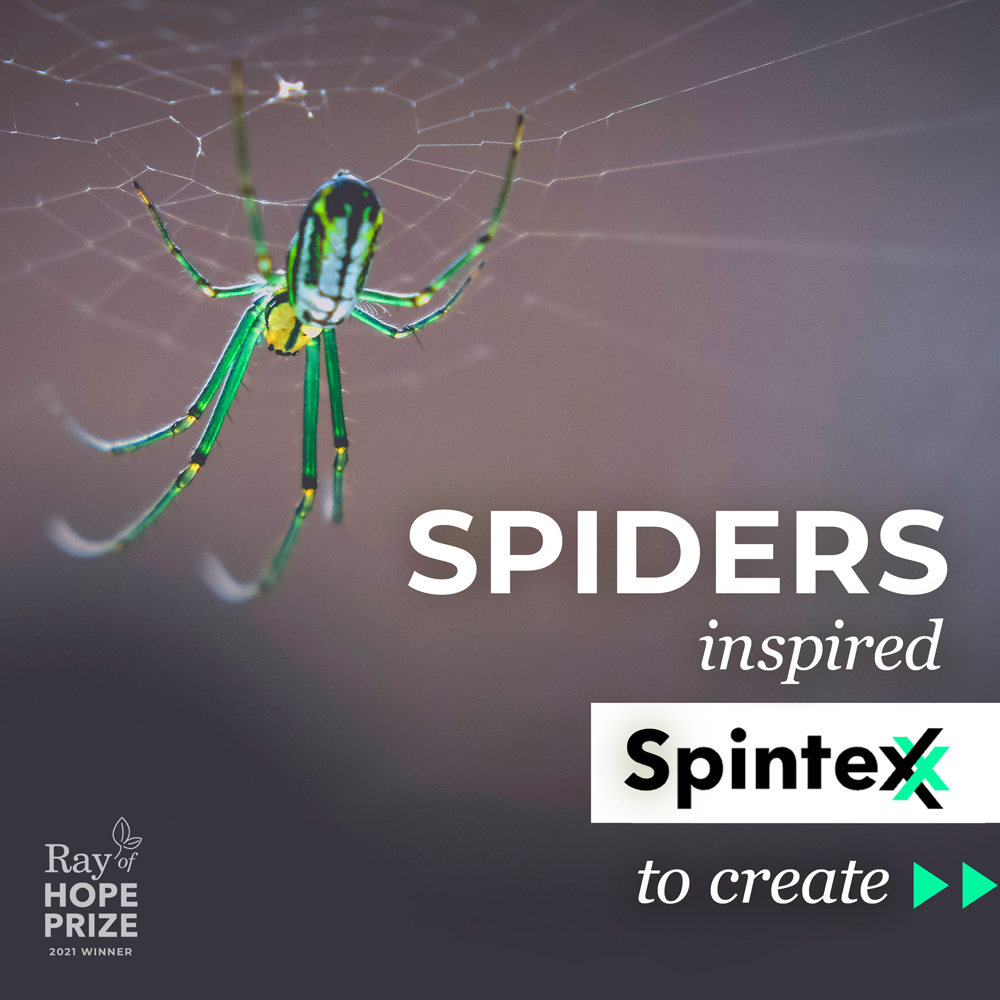
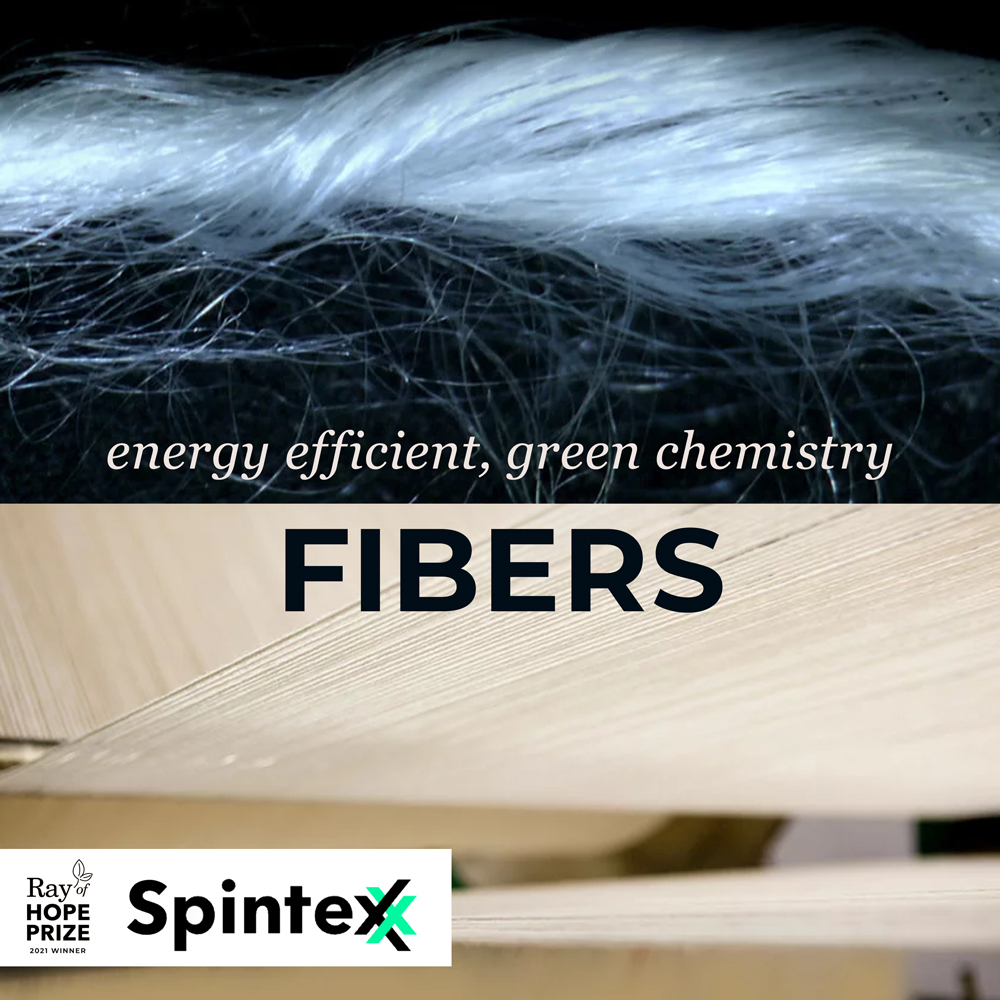
Spintex Engineering and biotech companies develop synthetic spider silk fibers for textiles. Spider silk is stronger than steel of equivalent weight and can absorb significant impact energy, making it ideal for high-performance applications.

  • ✿Inspired by: Spider (Araneae order), specifically orb-weaver spiders
  • ⚡︎Function: High-strength, high-elasticity fiber production
  • ▣Company: Spintex Engineering, Bolt Threads, AMSilk
  • ◉Where: USA
See full biomimicry example
Biological inspiration for Abalone Shell: Toughest Natural Ceramic
Human application for Abalone Shell: Toughest Natural Ceramic
Materials

Red abalone (Haliotis rufescens)

Abalone Shell: Toughest Natural Ceramic

Abalone shell (nacre) is made of 95% calcium carbonate — chalk — yet is 3,000 times tougher than chalk. The secret is a microscopic "brick-and-mortar" architecture that deflects and dissipates cracks. This has inspired bulletproof glass, ceramic armour, and self-healing materials.

  • ✿Inspired by: Red abalone (Haliotis rufescens)
  • ⚡︎Function: Create extremely tough structural material from inherently brittle components
  • ▣Company: MIT / General Electric
  • ◉Where: USA
See full biomimicry example
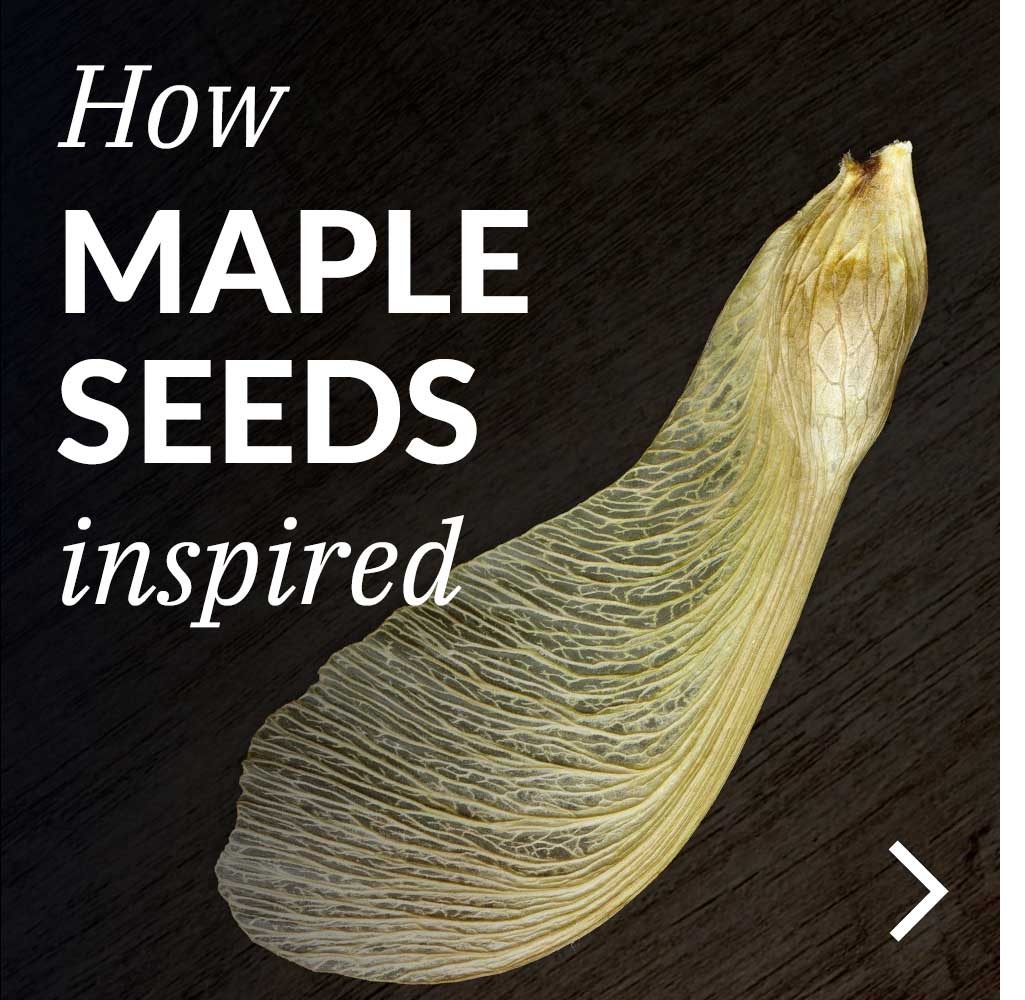
Biological inspiration for Biome Renewables - Maple Seed Wind Turbine
Human application for Biome Renewables - Maple Seed Wind Turbine
Engineering

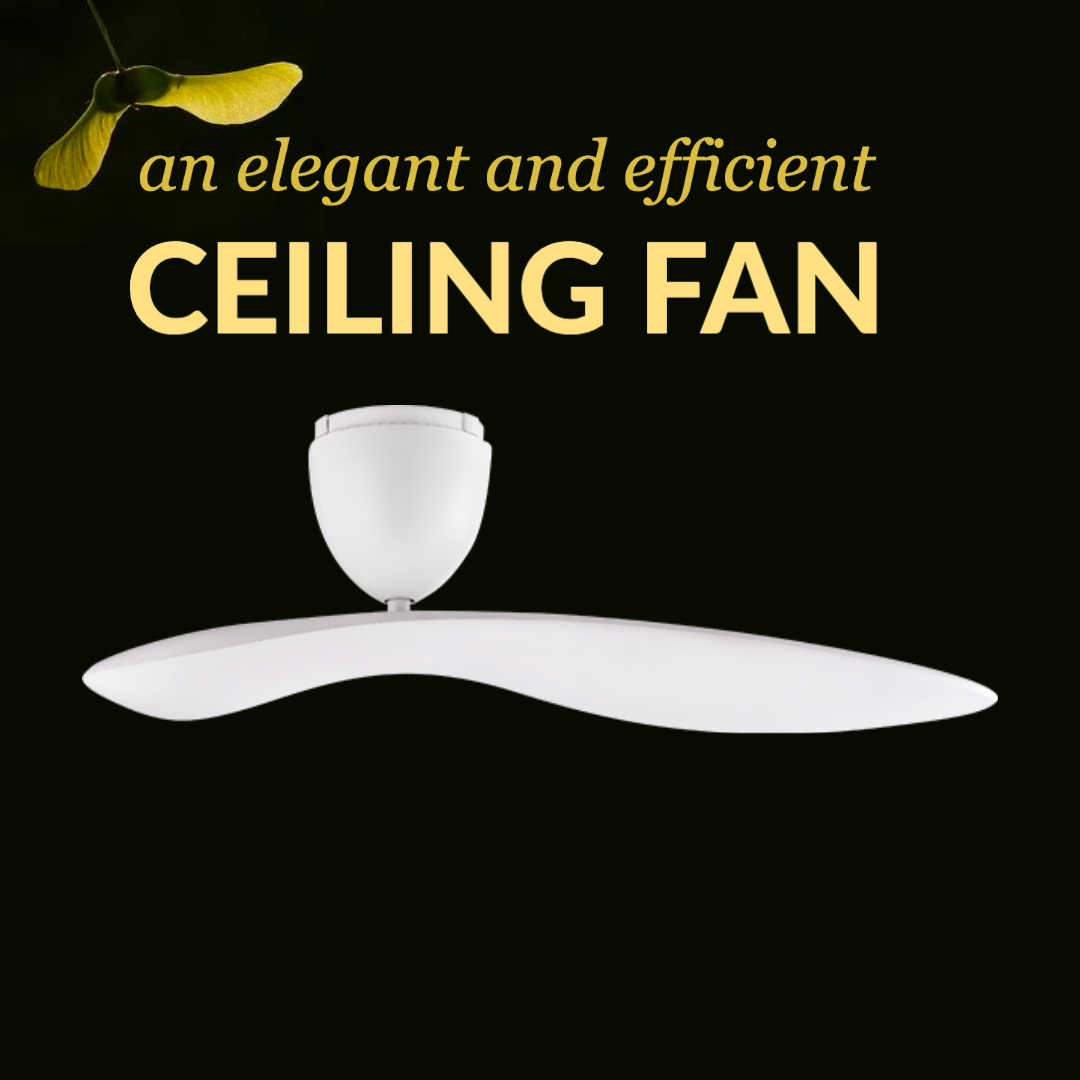
Maple seed (Acer) autorotation; Barn owl (Tyto alba) silent flight feathers

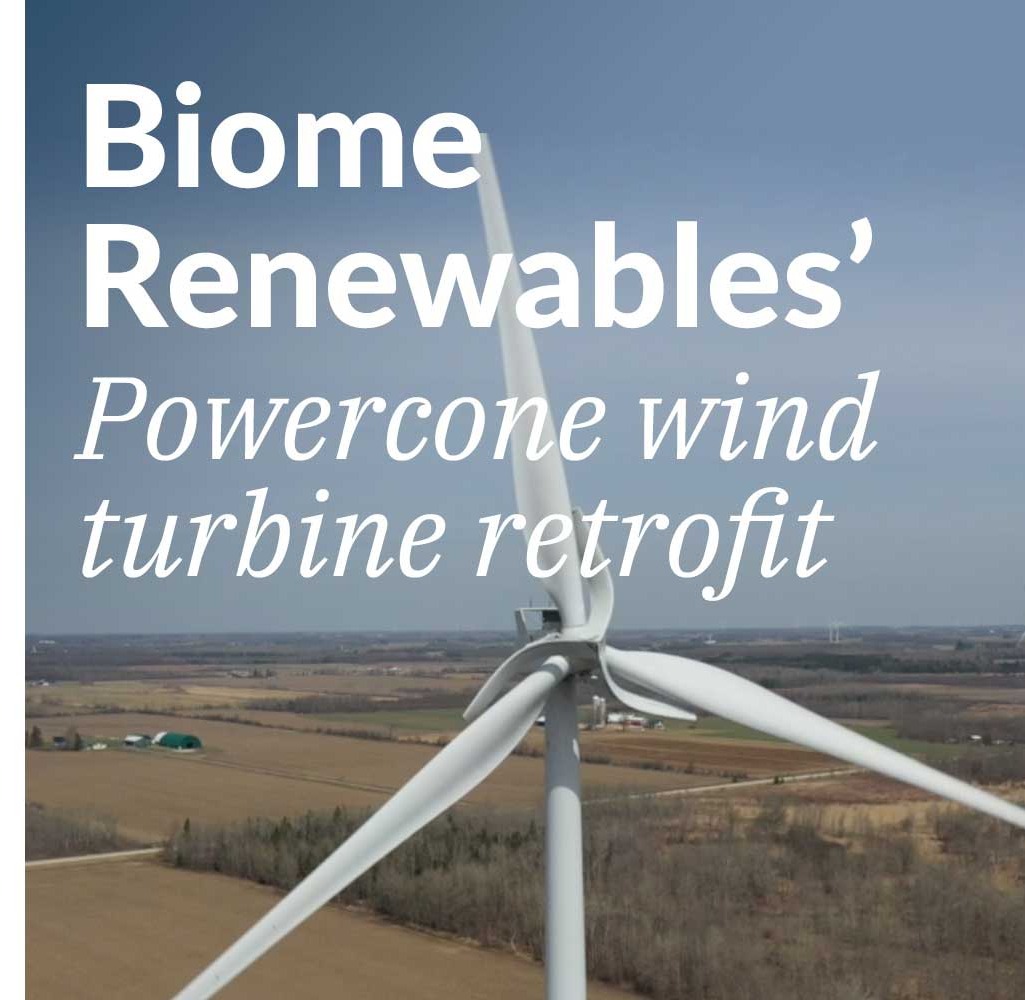
Biome Renewables - Maple Seed Wind Turbine

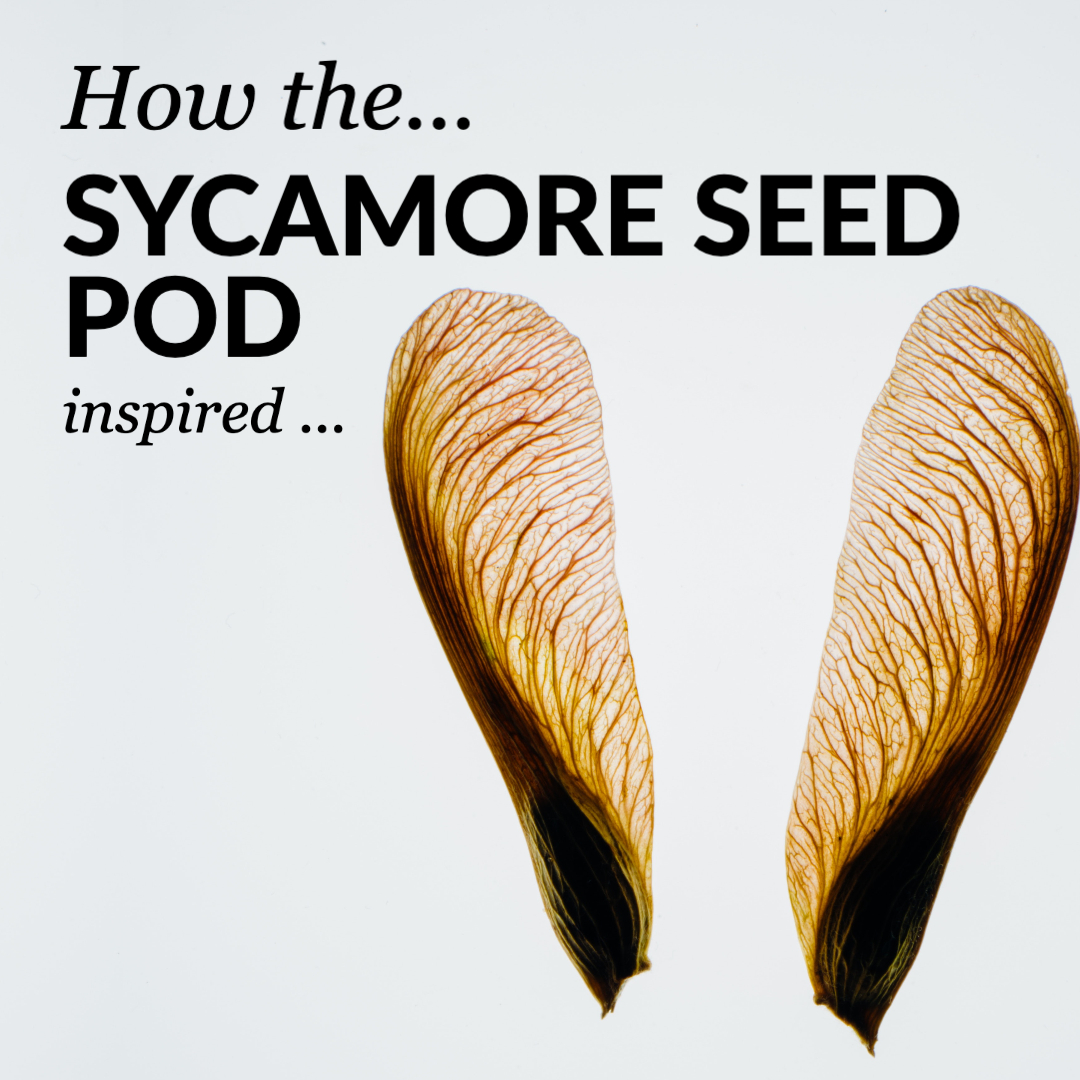
Maple seed spinning descent inspires PowerCone retrofit for wind turbine blades, increasing energy capture by 10-13%.

  • ✿Inspired by: Maple seed (Acer) autorotation; Barn owl (Tyto alba) silent flight feathers
  • ⚡︎Function: Maple seeds must descend slowly enough to disperse far, despite being dense objects. They overcome high settling velocity through rotatio...
  • ▣Company: Biome Renewables
  • ◉Where: Canada
See full biomimicry example
Biological inspiration for Ecosystems: Cardboard to Caviar Closed-Loop Model
Human application for Ecosystems: Cardboard to Caviar Closed-Loop Model
Organisational Design

Ecosystems (multiple species interdependence)

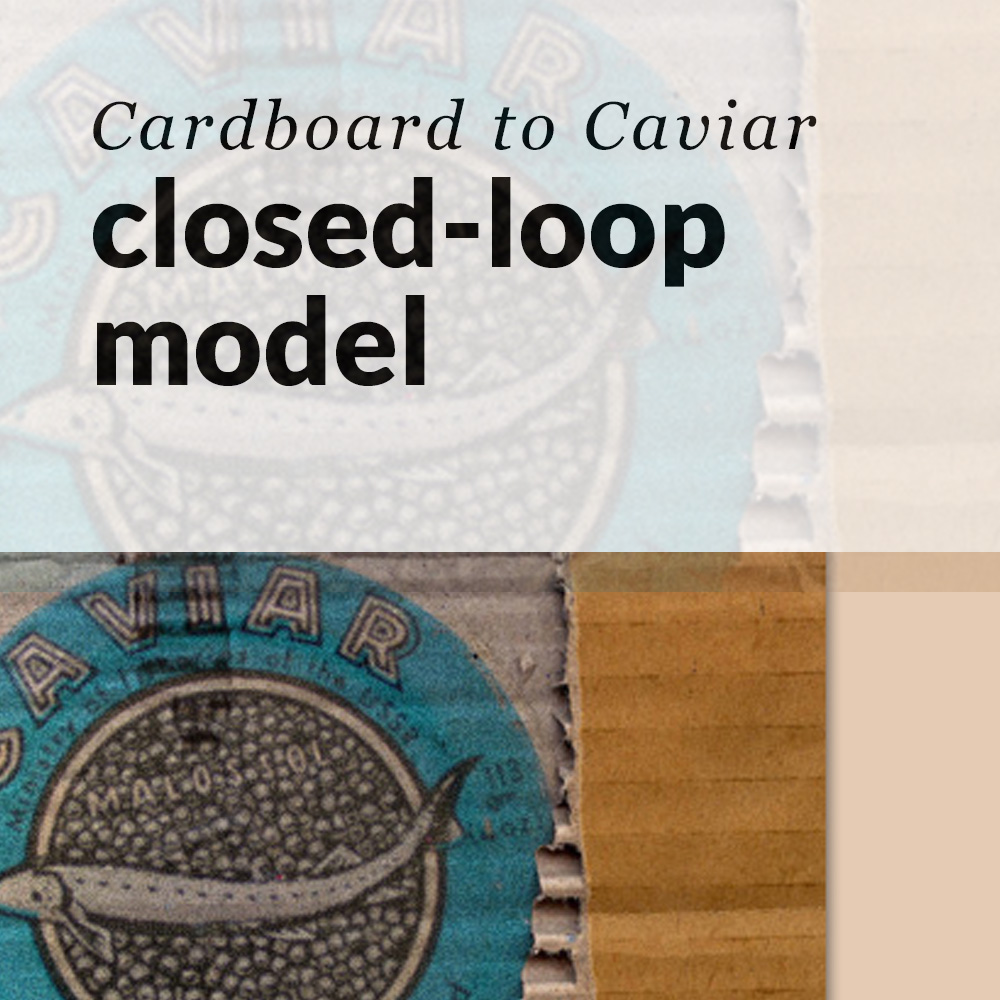
Ecosystems: Cardboard to Caviar Closed-Loop Model

Closed-loop business model developed by the Green Business Network and Graham Wiles that cascades waste from one production stage to become input for another.

  • ✿Inspired by: Ecosystems (multiple species interdependence)
  • ⚡︎Function: Mimics ecosystem material cycling to eliminate waste in industrial production.
  • ▣Company: Green Business Network, Graham Wiles
  • ◉Where: USA
See full biomimicry example
Biological inspiration for Eden Project Biomes: Soap Bubble Geometry
Human application for Eden Project Biomes: Soap Bubble Geometry
Architecture

Soap bubbles, carbon molecules, pollen grains, dragonfly wings, pressurised natural membranes

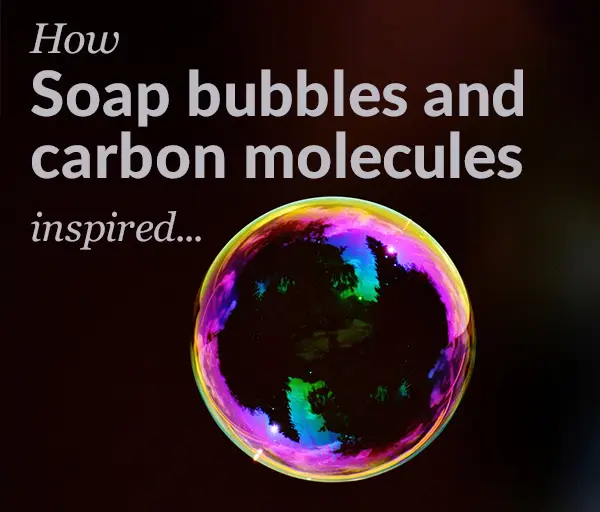
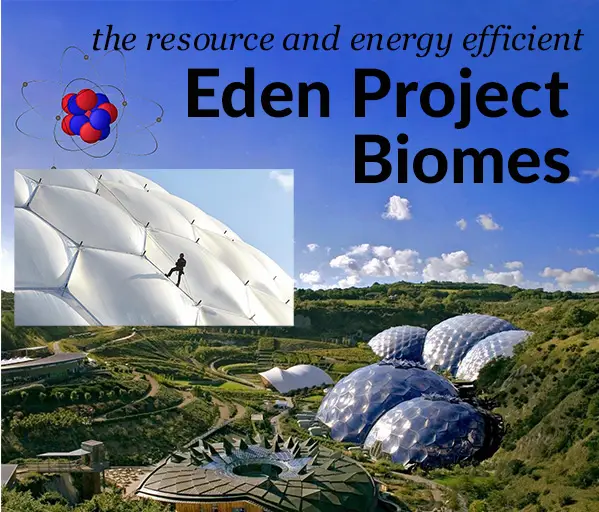
Eden Project Biomes: Soap Bubble Geometry

The Eden Project's iconic biome enclosures use soap bubble geometry reinforced with hexagons and pentagons, achieving structures lighter than the air they contain using ETFE polymer 1% the weight of glass.

  • ✿Inspired by: Soap bubbles, carbon molecules, pollen grains, dragonfly wings, pressurised natural membranes
  • ⚡︎Function: Large tropical and temperate climate zones must be enclosed, maintaining distinct environments whilst minimising construction cost and on...
  • ▣Company: Grimshaw with Arup
  • ◉Where: Cornwall, UK
See full biomimicry example
Biological inspiration for Spider Silk: Biosilk for Cosmetics
Human application for Spider Silk: Biosilk for Cosmetics
Product Design

Spider (Araneae order), specifically silk-producing spiders

Spider Silk: Biosilk for Cosmetics

AMSilk (Germany) produces bioengineered spider silk proteins for cosmetics. Synthetic spider silk creates luxurious, high-performance cosmetics with superior properties and sustainability.

  • ✿Inspired by: Spider (Araneae order), specifically silk-producing spiders
  • ⚡︎Function: Cosmetic performance and sensory properties
  • ▣Company: AMSilk (Germany)
  • ◉Where: Sweden
See full biomimicry example
Biological inspiration for The Mobius Project: Zero-Waste Nutrient Cycle Greenhouse
Human application for The Mobius Project: Zero-Waste Nutrient Cycle Greenhouse
Architecture

Natural ecosystem nutrient cycling

The Mobius Project: Zero-Waste Nutrient Cycle Greenhouse

This zero-waste urban greenhouse concept mimics natural ecosystem nutrient cycling, where waste from one process becomes input for another, generating food, energy, and water treatment simultaneously.

  • ✿Inspired by: Natural ecosystem nutrient cycling
  • ⚡︎Function: Produce food, energy, and clean water in urban environments whilst eliminating waste and creating economic value.
  • ▣Company: Exploration Architecture (now Iguana Architects)
  • ◉Where: UK
See full biomimicry example
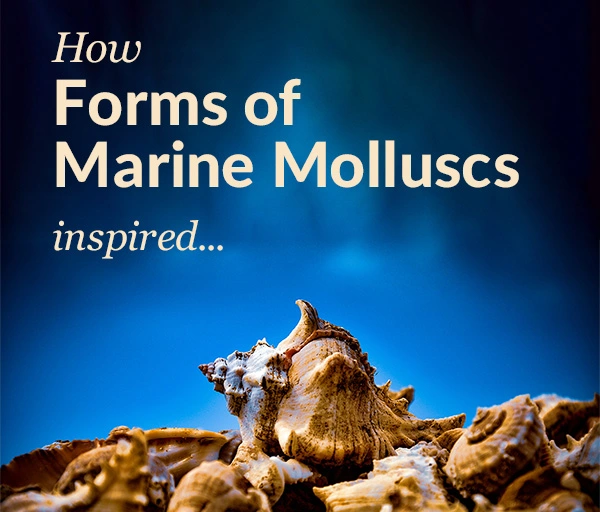
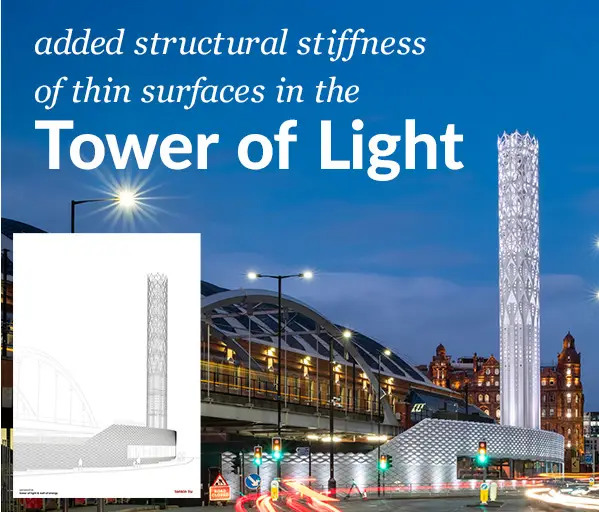
Biological inspiration for Tower of Light: Mollusc Shell-Lace Structure
Human application for Tower of Light: Mollusc Shell-Lace Structure
Architecture

Marine mollusc shells

Tower of Light: Mollusc Shell-Lace Structure

This Manchester flue tower uses mollusc shell-inspired lace structure with thin steel sheets (6-8mm) and perforations to achieve remarkable lightness without sacrificing strength.

  • ✿Inspired by: Marine mollusc shells
  • ⚡︎Function: The tower must function as a flue (exhaust structure) while being lightweight, beautiful, and achieving net-zero environmental impact.
  • ▣Company: Tonkin Liu with Arup
  • ◉Where: Manchester, UK
See full biomimicry example
Biological inspiration for Doughnut Economy: Circular Systems Thinking
Human application for Doughnut Economy: Circular Systems Thinking
Organisational Design

Whole systems, ecosystems, and natural capitalism principles

Doughnut Economy: Circular Systems Thinking

Kate Raworth's Doughnut Economy framework applies whole-systems and natural capitalism principles to redesign economic models. This systems-level biomimicry reframes economic success around ecological and social well-being rather than GDP growth.

  • ✿Inspired by: Whole systems, ecosystems, and natural capitalism principles
  • ⚡︎Function: Economic organization and resource allocation
  • ▣Company: Kate Raworth, Doughnut Economics Action Lab
  • ◉Where: UK
See full biomimicry example
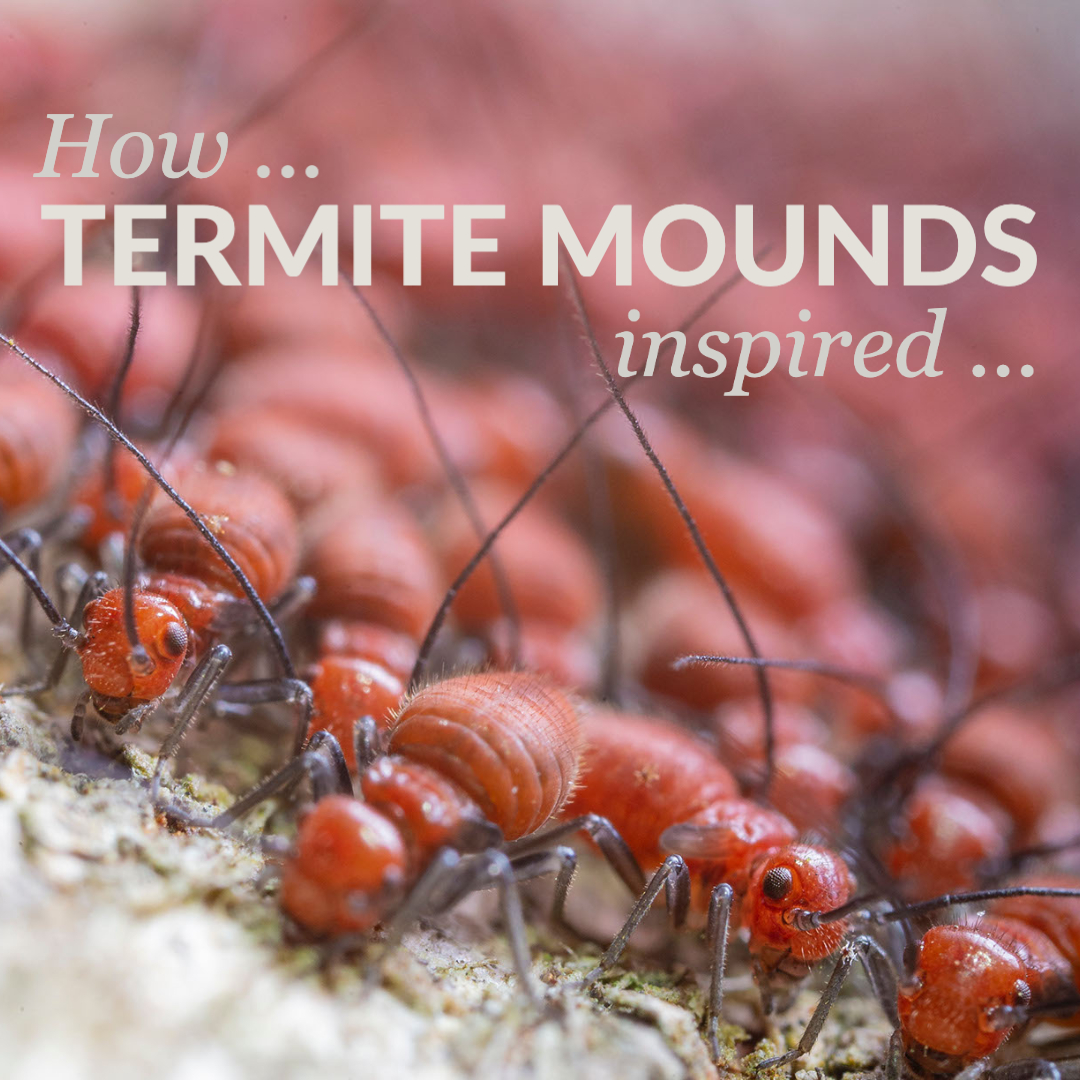
Biological inspiration for Eastgate Centre: Termite-Inspired Passive Cooling
Human application for Eastgate Centre: Termite-Inspired Passive Cooling
Architecture

African termite (Macrotermes michaelseni)

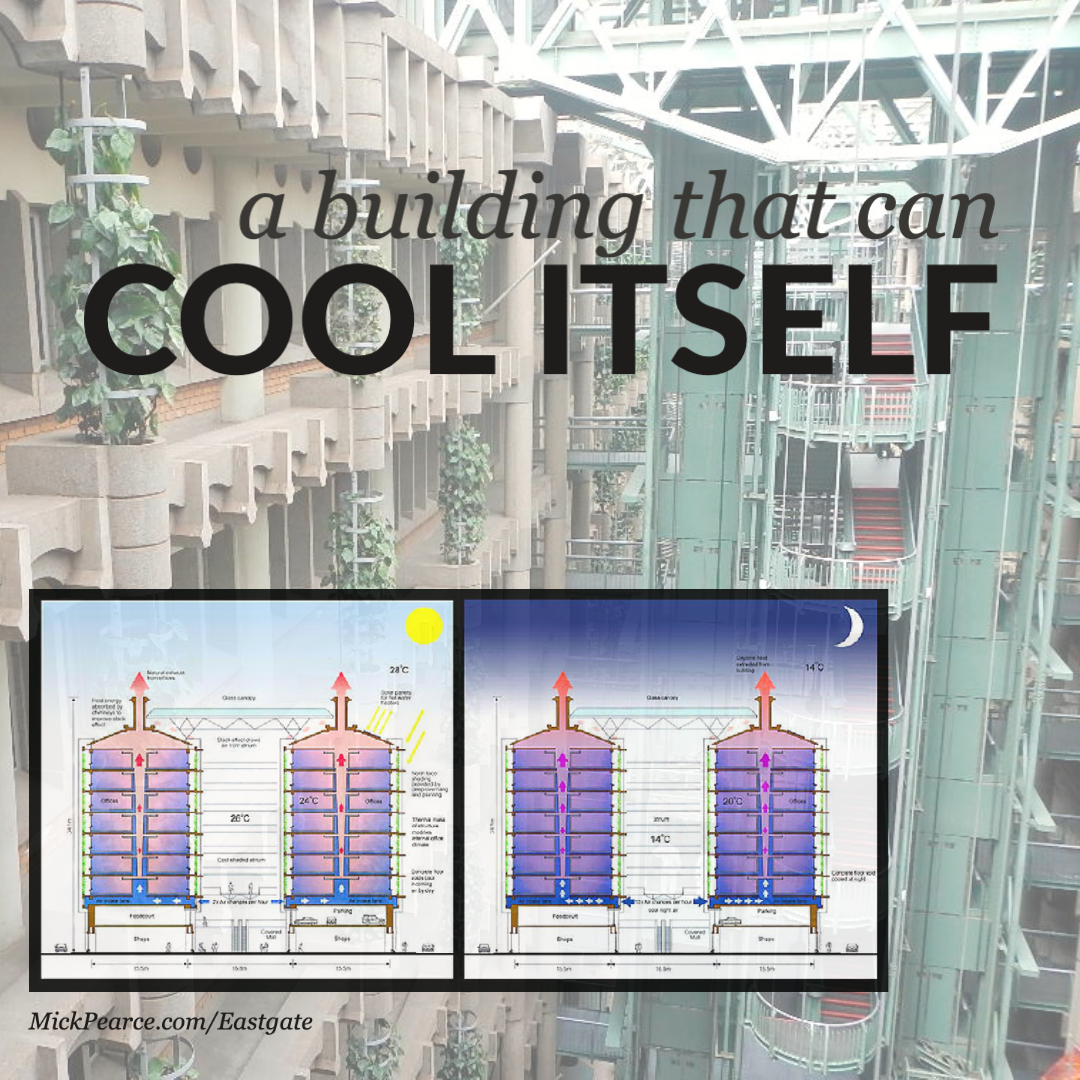
Eastgate Centre: Termite-Inspired Passive Cooling

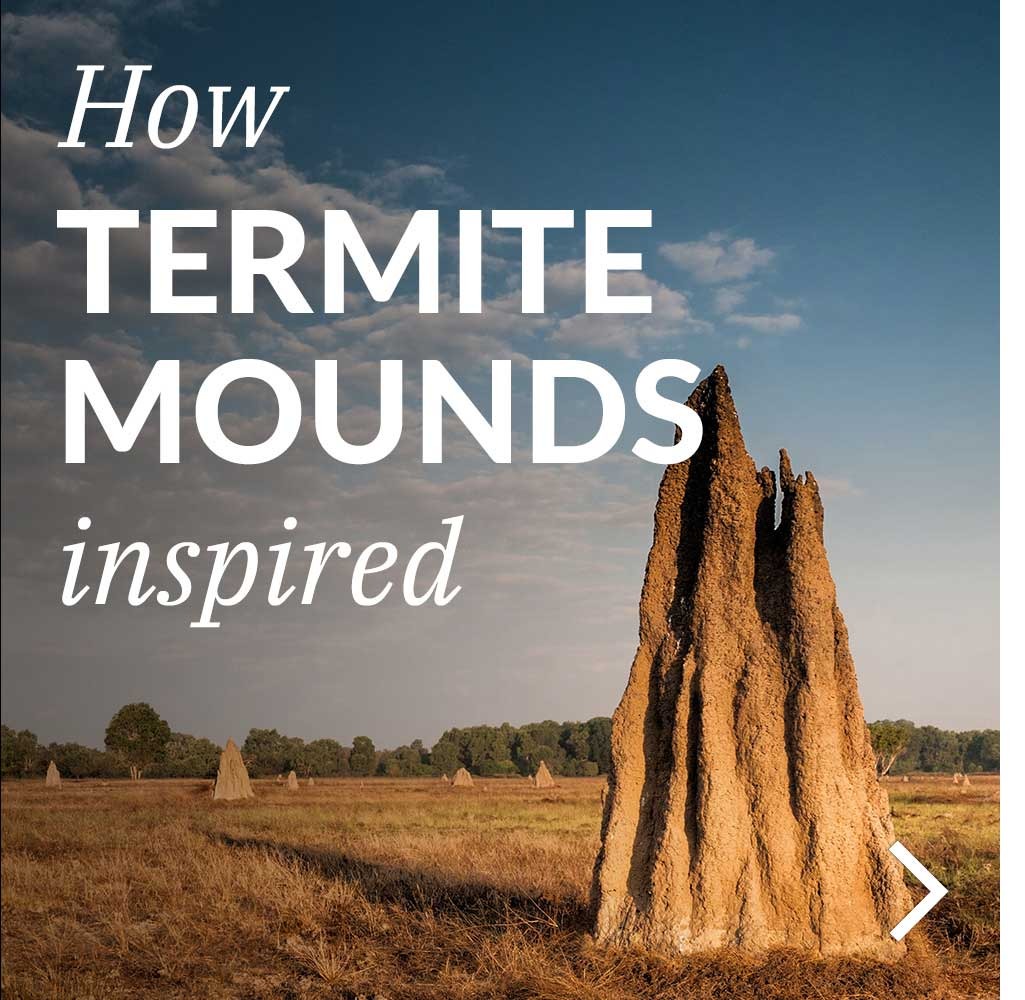
The Eastgate Centre in Harare, Zimbabwe uses no conventional air conditioning, yet maintains a constant temperature year-round — modelled entirely on how African termites regulate heat inside their 3-metre mounds.

  • ✿Inspired by: African termite (Macrotermes michaelseni)
  • ⚡︎Function: Mimics termite mound ventilation for passive building cooling.
  • ▣Company: Architect Mick Pearce, Eastgate Centre
  • ◉Where: Harare, Zimbabwe
See full biomimicry example
Biological inspiration for Photosynthesis: Light-Driven Chemical Energy
Human application for Photosynthesis: Light-Driven Chemical Energy
Technology

Plants and photosynthetic microorganisms

Photosynthesis: Light-Driven Chemical Energy

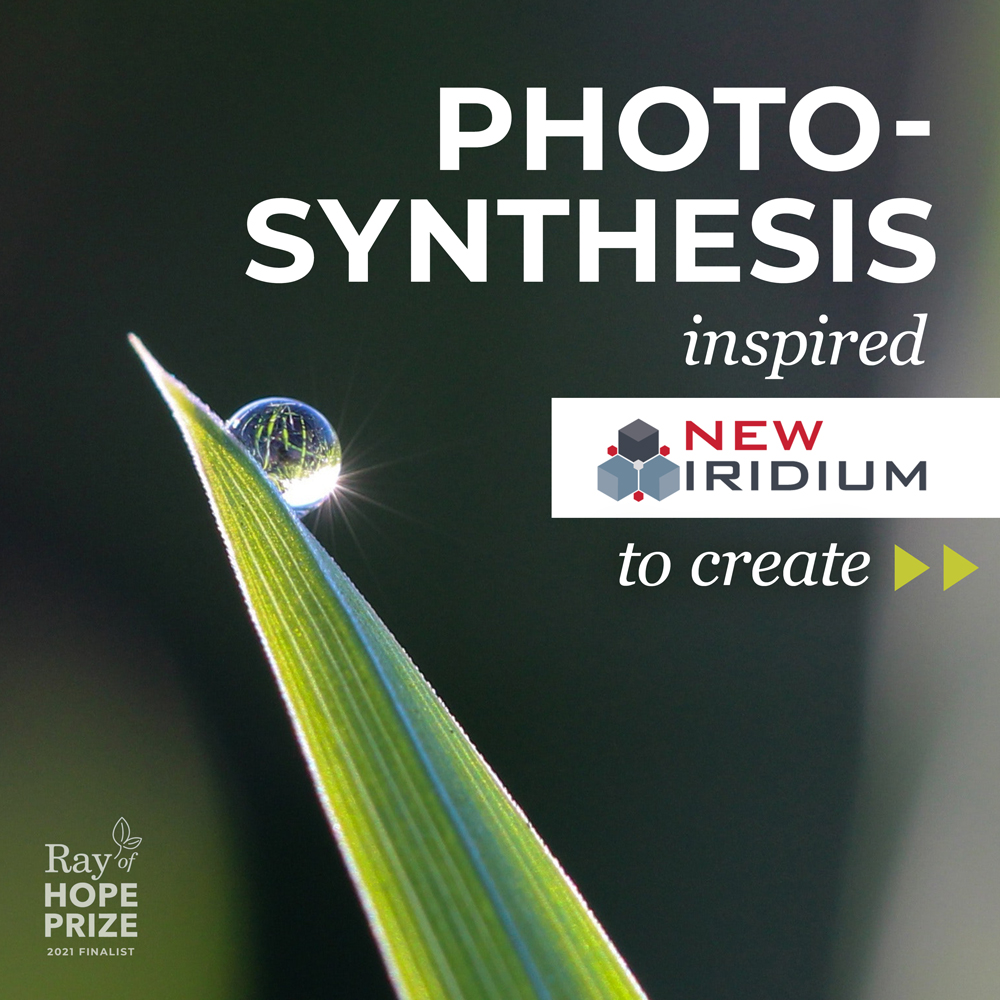
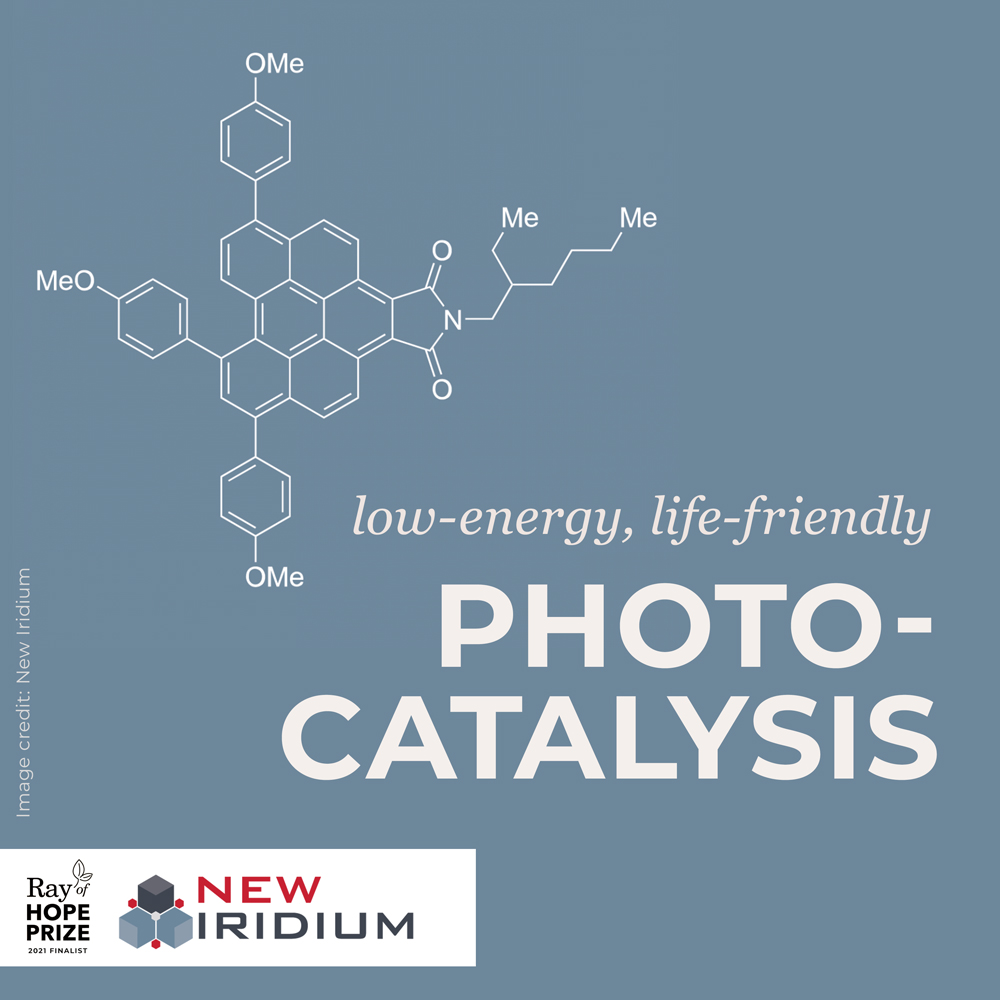
New Iridium and other companies develop light-driven chemical energy systems mimicking photosynthesis. These systems convert light directly into chemical energy (hydrogen, hydrocarbons) without biological organisms.

  • ✿Inspired by: Plants and photosynthetic microorganisms
  • ⚡︎Function: Light-driven energy conversion to chemical form
  • ▣Company: New Iridium, various research institutions and startups
  • ◉Where: USA
See full biomimicry example
Biological inspiration for Prophesee - Retinal Event-Based Neuromorphic Vision
Human application for Prophesee - Retinal Event-Based Neuromorphic Vision
Technology

Human retina photoreceptor and ganglion cell arrays

Prophesee - Retinal Event-Based Neuromorphic Vision

Human retinal architecture inspires event-based vision sensors generating 1000x less data than conventional cameras whilst capturing motion and edges.

  • ✿Inspired by: Human retina photoreceptor and ganglion cell arrays
  • ⚡︎Function: Biological vision must extract behaviorally relevant information (motion, edges, predators) from high-resolution scenes whilst constraini...
  • ▣Company: Prophesee
  • ◉Where: Paris, France
See full biomimicry example
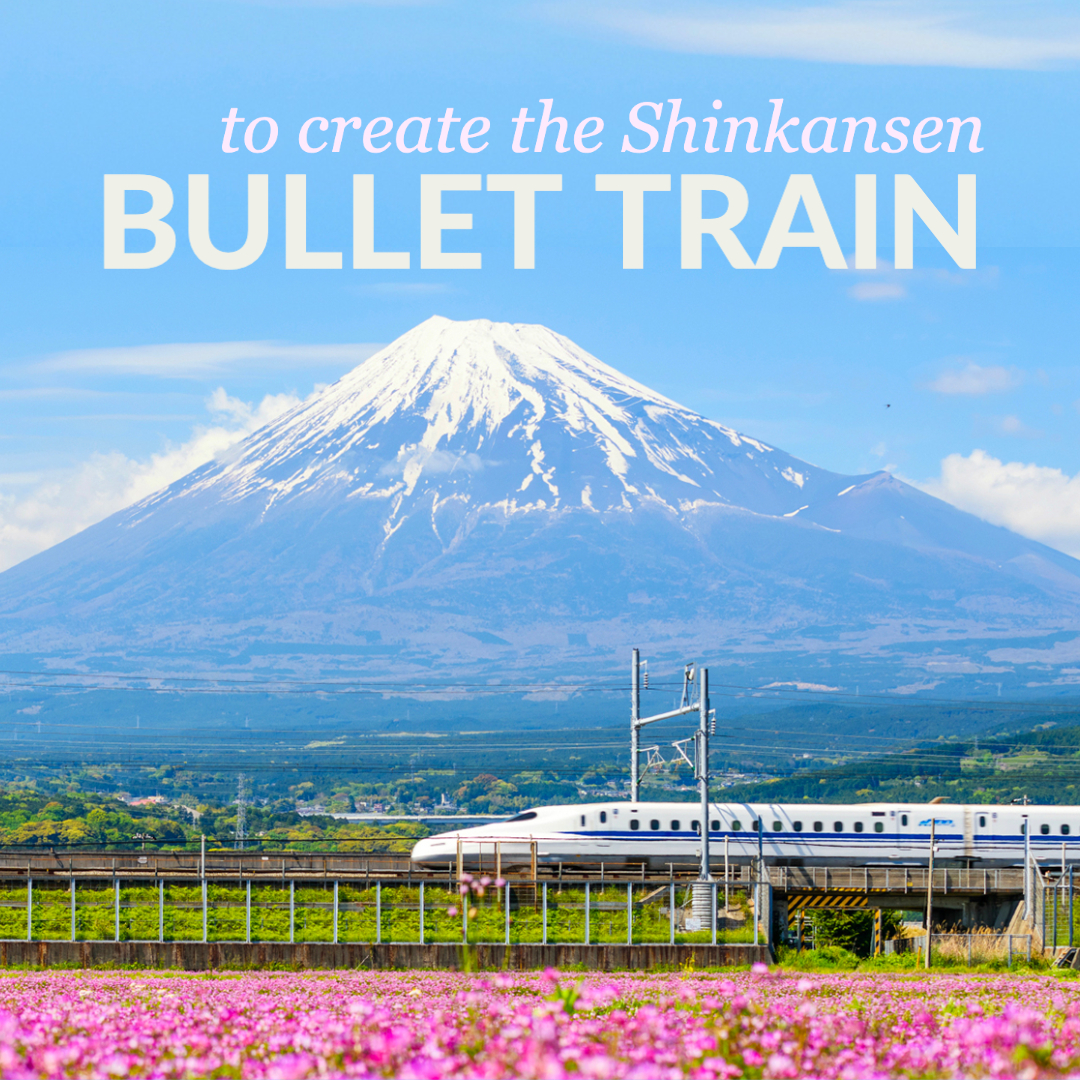
Biological inspiration for Shinkansen Bullet Train: Kingfisher Beak
Human application for Shinkansen Bullet Train: Kingfisher Beak
Engineering

Common kingfisher (Alcedo atthis)

Shinkansen Bullet Train: Kingfisher Beak

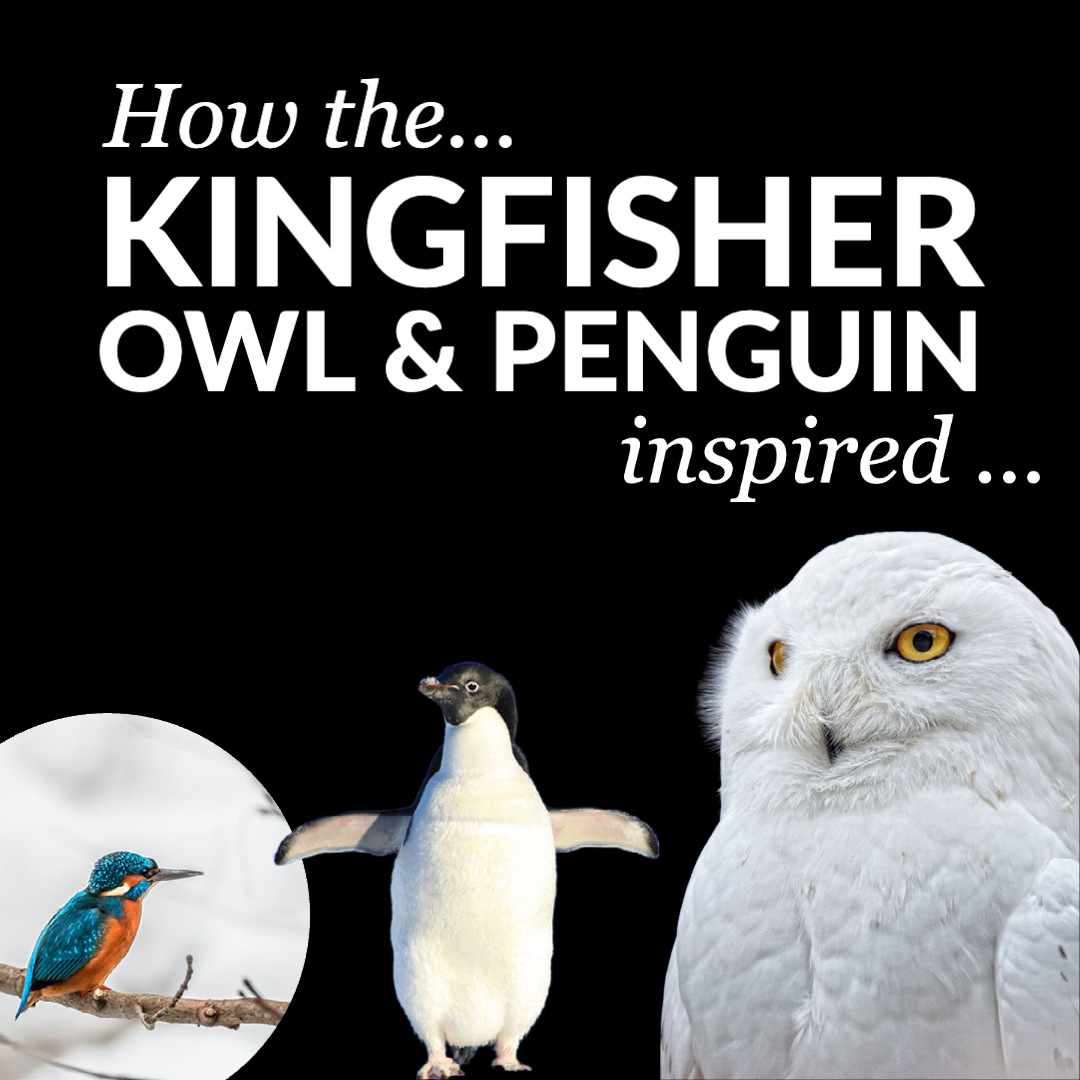
Engineer Eiji Nakatsu re-designed the nose of Japan's Shinkansen 500 series bullet train based on the kingfisher's beak — eliminating the sonic boom when exiting tunnels, reducing energy use by 15%, and increasing speed by 10%.

  • ✿Inspired by: Common kingfisher (Alcedo atthis)
  • ⚡︎Function: Mimics kingfisher beak for improved train aerodynamics.
  • ▣Company: Japan Railways, Engineer Eiji Nakatsu
  • ◉Where: Japan
See full biomimicry example
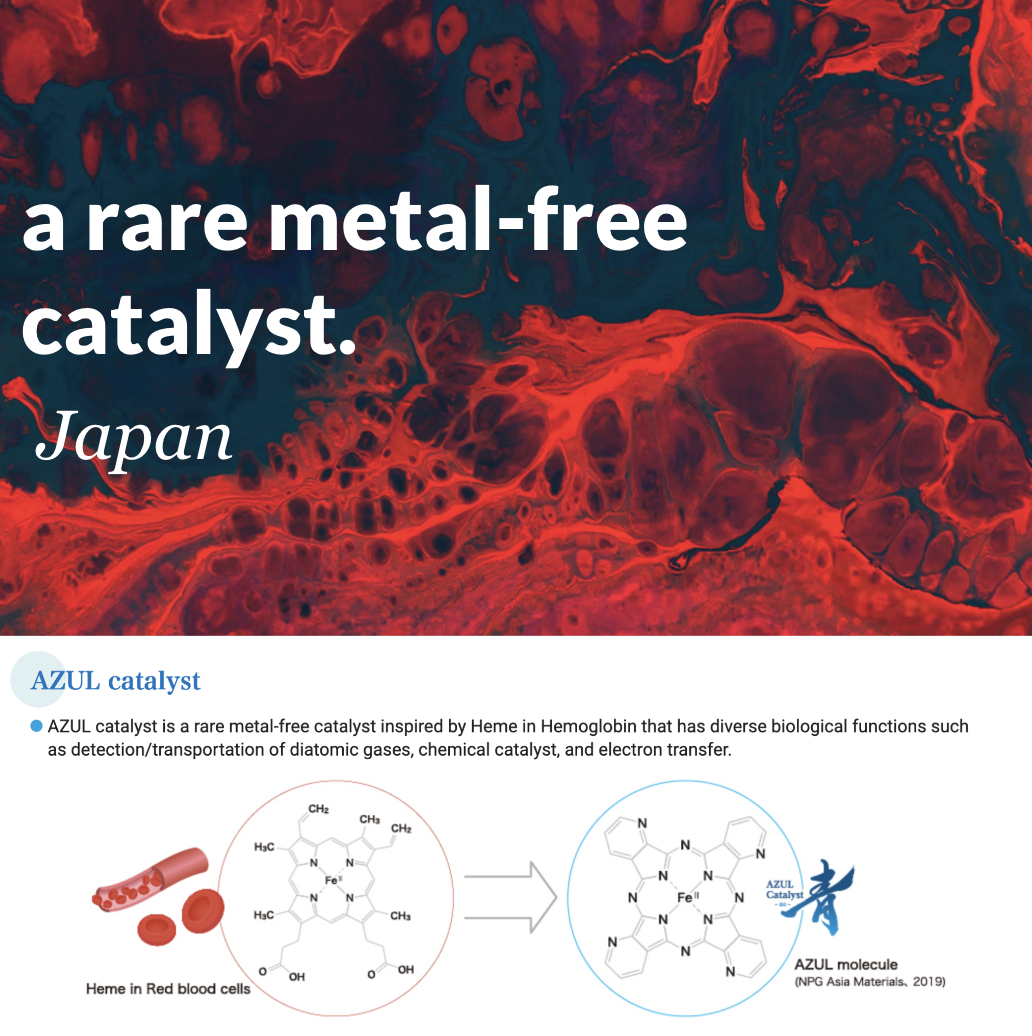
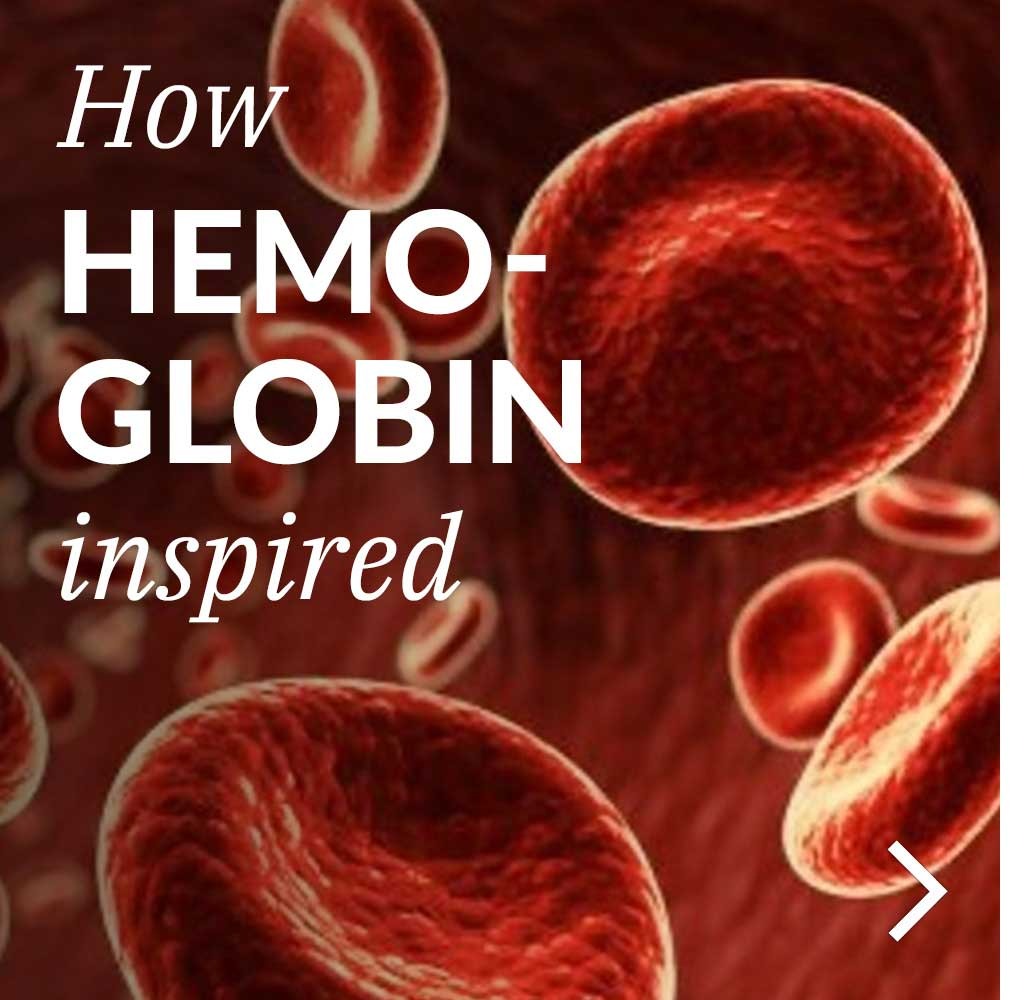
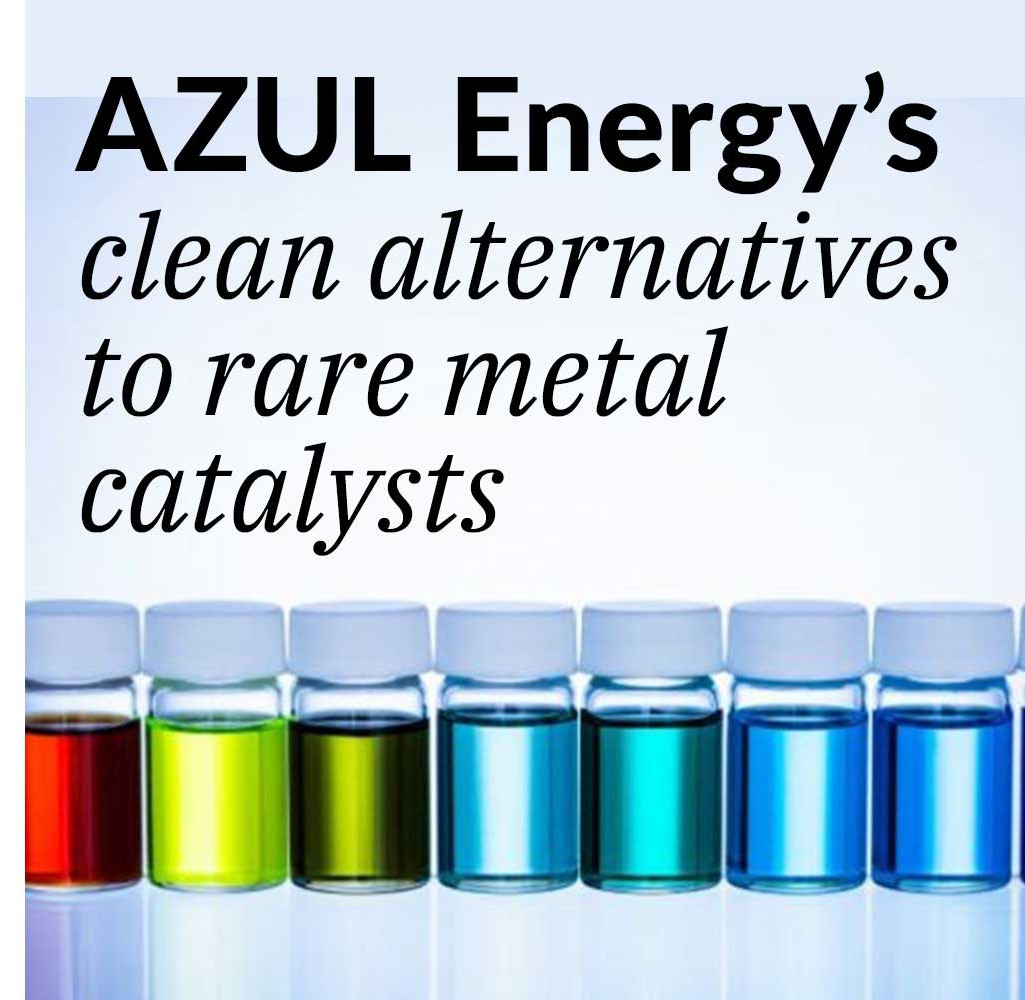
Biological inspiration for Azul Energy - Hemoglobin-Inspired Metal-Free Catalysts
Human application for Azul Energy - Hemoglobin-Inspired Metal-Free Catalysts
Materials

Hemoglobin and iron-binding proteins

Azul Energy - Hemoglobin-Inspired Metal-Free Catalysts

Hemoglobin's oxygen-binding mechanism inspires metal-free catalysts for energy storage, replacing rare-earth elements.

  • ✿Inspired by: Hemoglobin and iron-binding proteins
  • ⚡︎Function: Oxygen transport proteins must bind oxygen reversibly, many times per second, without catalyst poisoning or structural degradation. Hemog...
  • ▣Company: Azul Energy
  • ◉Where: USA
See full biomimicry example
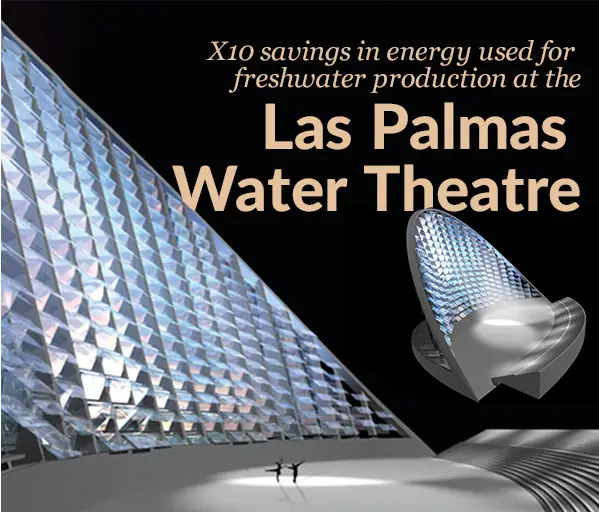
Biological inspiration for Las Palmas Water Theatre: Beetle Fog Harvesting Desalination
Human application for Las Palmas Water Theatre: Beetle Fog Harvesting Desalination
Architecture

Namibian fog-basking beetle (Stenocara gracilipes)

Las Palmas Water Theatre: Beetle Fog Harvesting Desalination

This water amphitheatre mimics the Namibian fog-basking beetle's water harvesting mechanism, using hydrophilic/hydrophobic surfaces to condense atmospheric moisture into freshwater with 10x energy savings for desalination.

  • ✿Inspired by: Namibian fog-basking beetle (Stenocara gracilipes)
  • ⚡︎Function: Provide freshwater to coastal communities whilst creating public cultural space, without energy-intensive mechanical desalination.
  • ▣Company: Grimshaw
  • ◉Where: Gran Canaria, Canary Islands
See full biomimicry example
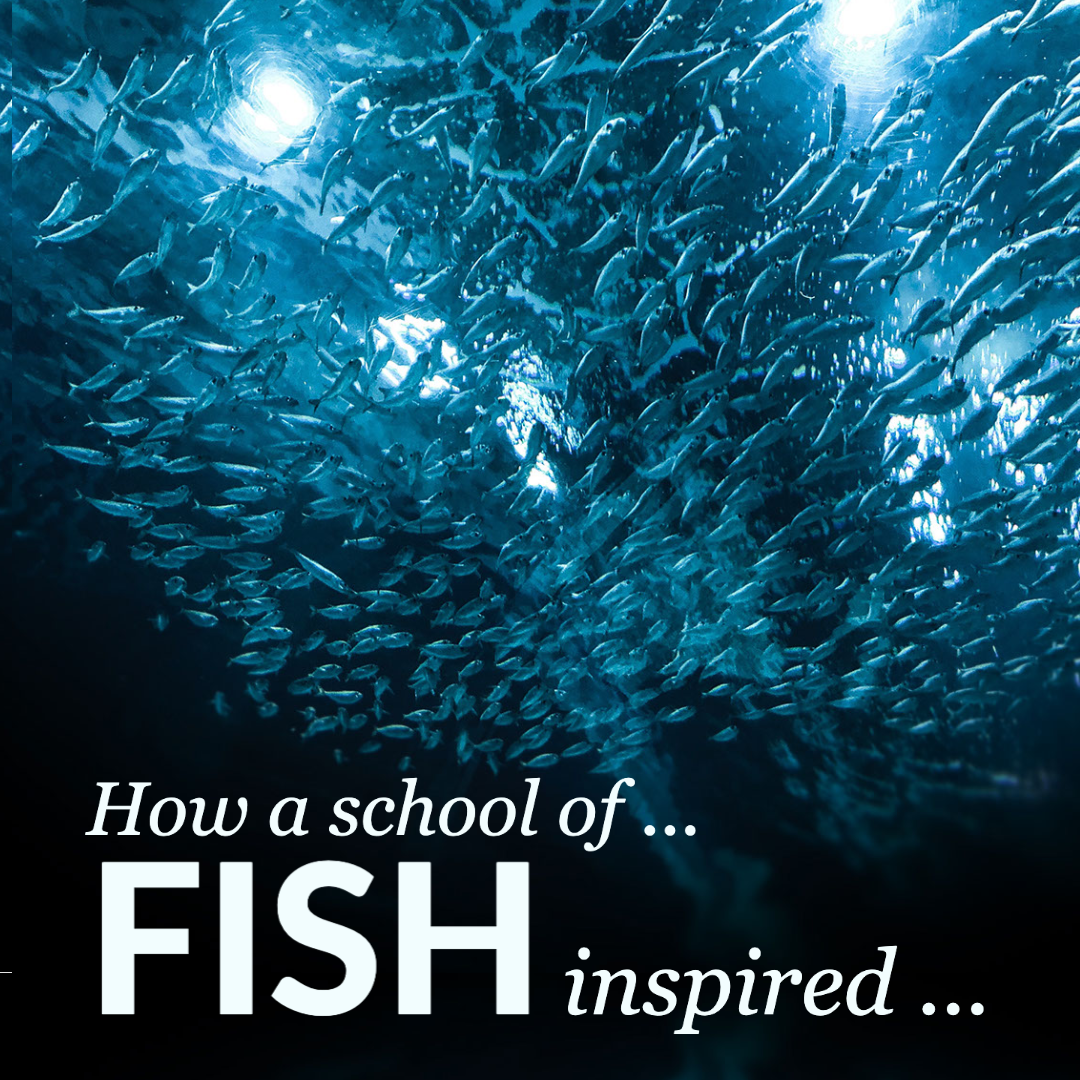
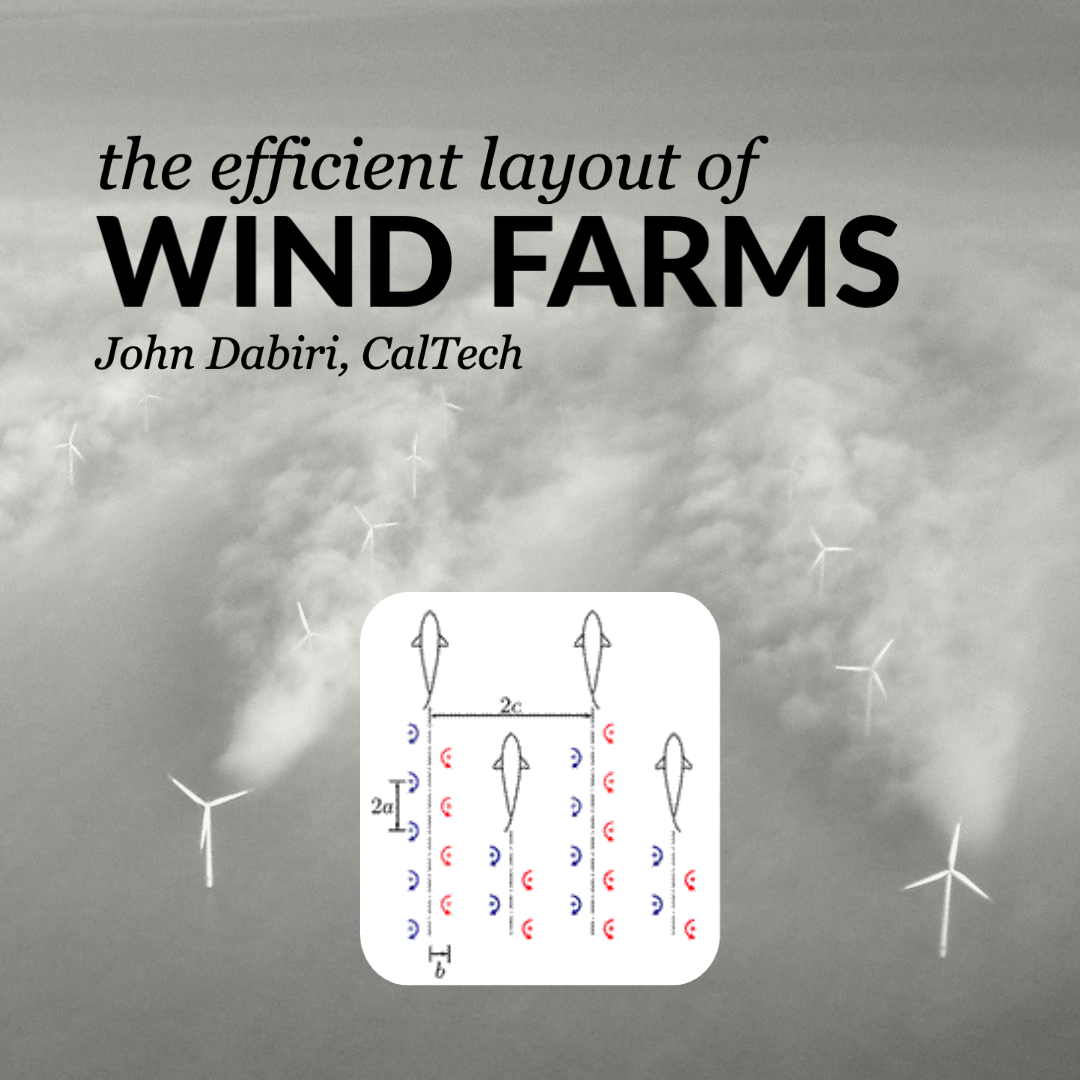
Biological inspiration for Vertical Axis Wind Turbine Placement Inspired by Schooling Fish
Human application for Vertical Axis Wind Turbine Placement Inspired by Schooling Fish
Engineering

Schooling fish (mackerel and other species)

Vertical Axis Wind Turbine Placement Inspired by Schooling Fish

Vertical axis wind turbines arranged using principles of fish schooling to improve efficiency and reduce energy costs in wind farms.

  • ✿Inspired by: Schooling fish (mackerel and other species)
  • ⚡︎Function: Improve the energy density and efficiency of wind farms through biomimetic spatial arrangement
  • ▣Company: Caltech (John Dabiri laboratory)
  • ◉Where: California, USA
See full biomimicry example
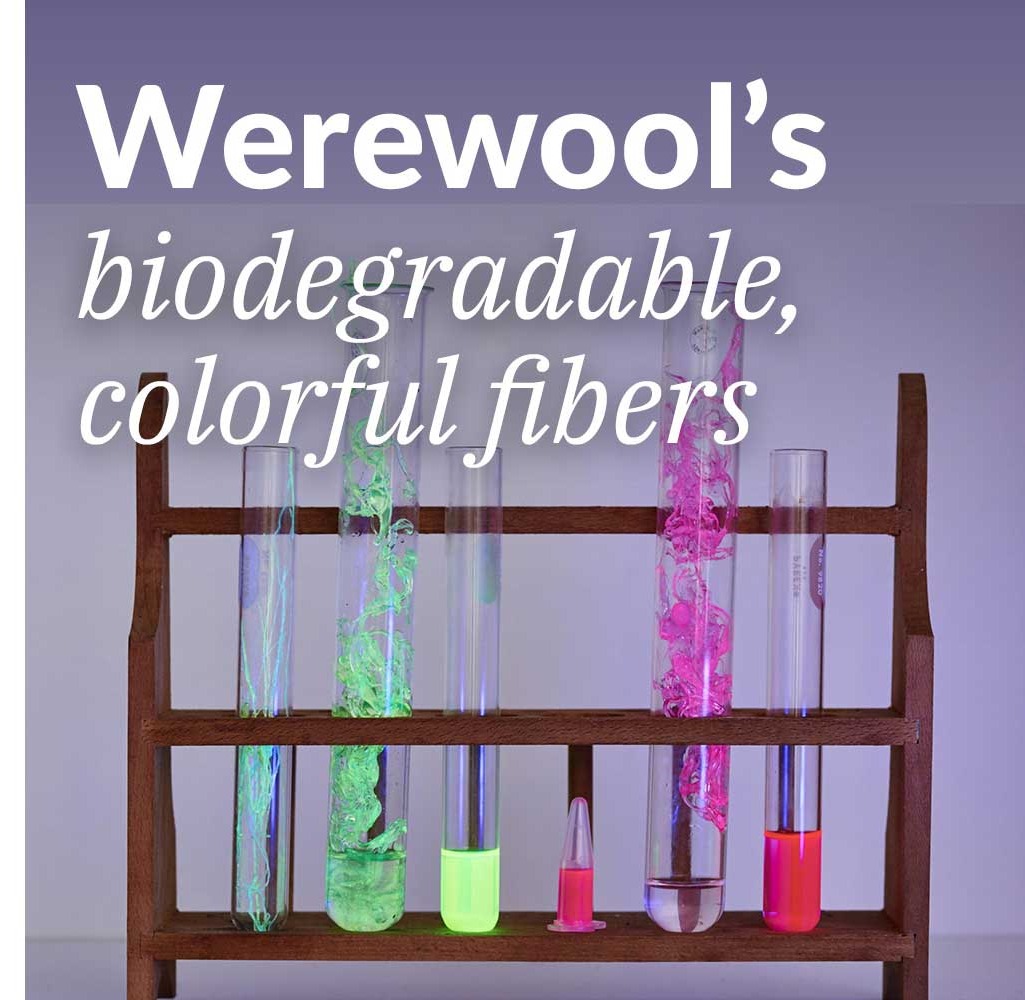
Biological inspiration for Werewool - Coral Fluorescent Proteins in Biodegradable Dyes
Human application for Werewool - Coral Fluorescent Proteins in Biodegradable Dyes
Materials

Scleractinian coral fluorescent proteins

Werewool - Coral Fluorescent Proteins in Biodegradable Dyes

Coral fluorescent proteins inspire biodegradable, vibrant coloured fibres without synthetic dyes, eliminating textile industry's water pollution.

  • ✿Inspired by: Scleractinian coral fluorescent proteins
  • ⚡︎Function: Corals must protect delicate photosynthetic partners from excess light whilst creating vibrant colours for mate attraction and species re...
  • ▣Company: Werewool
  • ◉Where: USA
See full biomimicry example
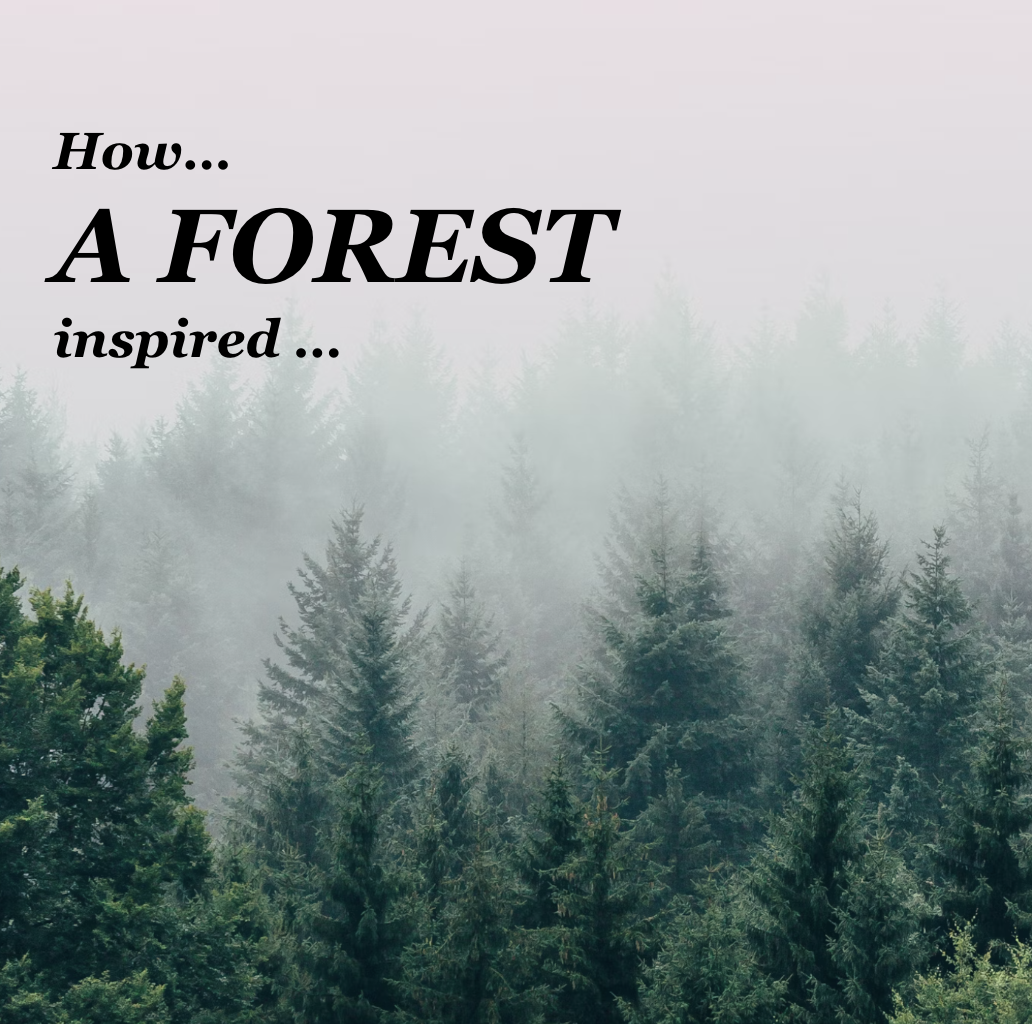
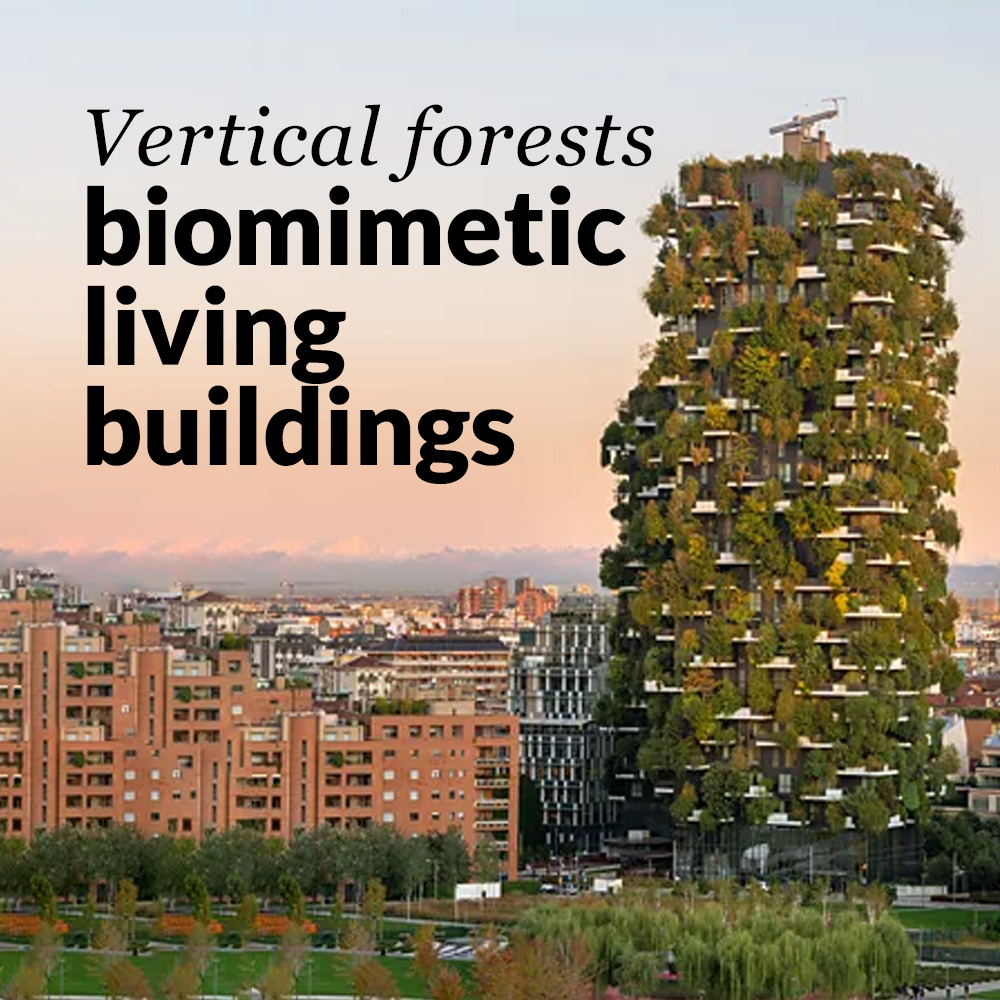
Biological inspiration for Biomimetic Buildings: Vertical Forests
Human application for Biomimetic Buildings: Vertical Forests
Architecture

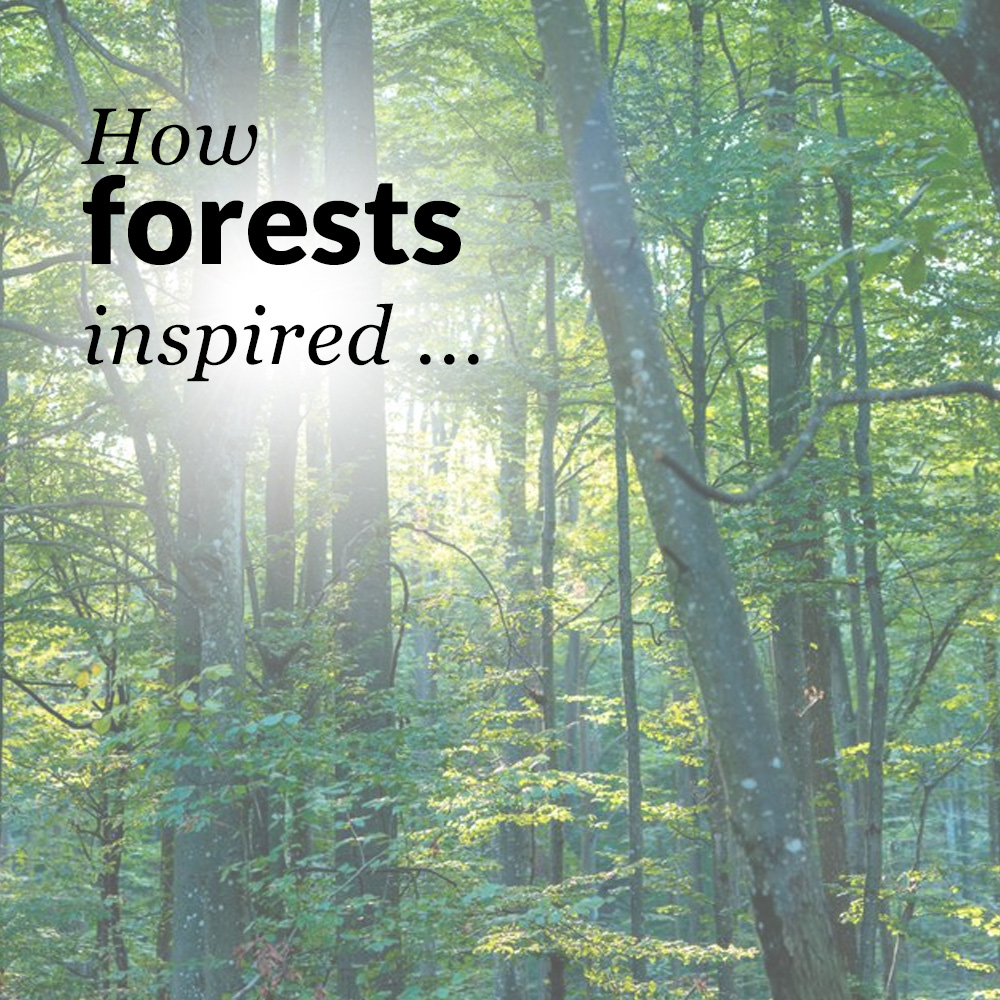
Forests and tree ecosystems

Biomimetic Buildings: Vertical Forests

Vincent Callebaut Architectures designs biomimetic buildings that function like living ecosystems. Vertical forests integrate vegetation into building structure, mimicking forest ecology while providing insulation, air purification, and aesthetic benefits.

  • ✿Inspired by: Forests and tree ecosystems
  • ⚡︎Function: Building envelope functionality and ecosystem integration
  • ▣Company: Vincent Callebaut Architectures
  • ◉Where: Milan, Italy
See full biomimicry example
Product Design

Forest floor ecosystem and animal camouflage patterns

Interface Entropy: Forest Floor Biomimetic Carpet Tiles

Interface developed TacTiles modular carpet inspired by forest floor camouflage and animal pattern disruption. The non-directional design with organic, break-up patterns creates visual continuity regardless of installation direction.

  • ✿Inspired by: Forest floor ecosystem and animal camouflage patterns
  • ⚡︎Function: Visual integration through pattern disruption
  • ▣Company: Interface, TacTiles®
  • ◉Where: Georgia, USA
See full biomimicry example
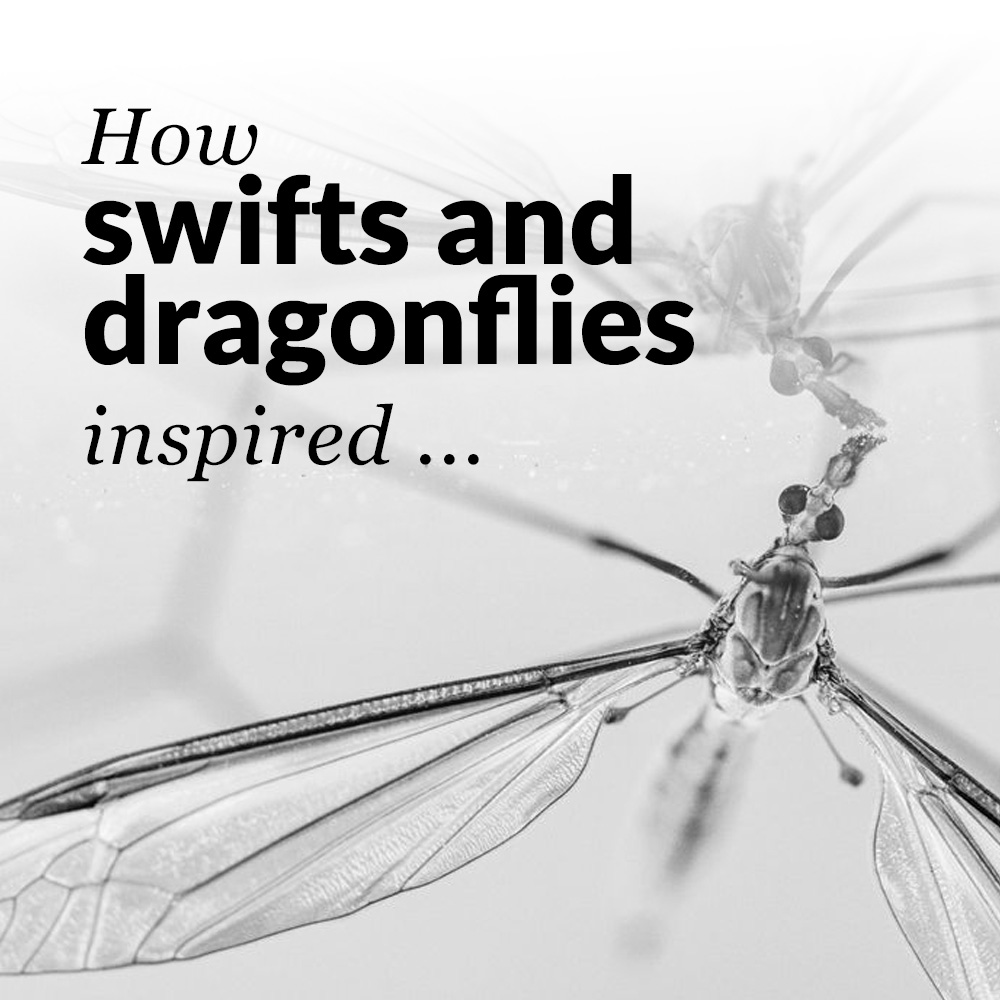
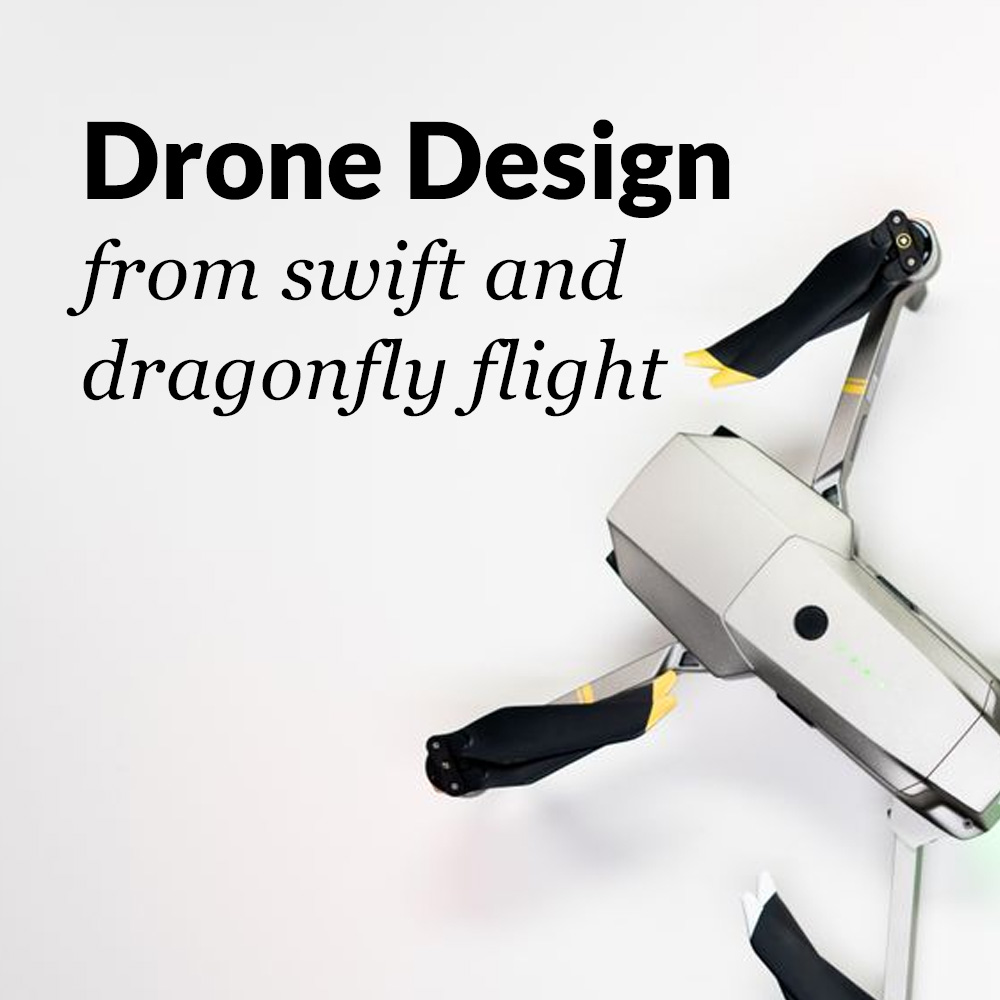
Biological inspiration for Swift and Dragonfly Flight Dynamics: Drone Design
Human application for Swift and Dragonfly Flight Dynamics: Drone Design
Robotics

Swift (Apodidae sp.) and dragonfly (Odonata order)

Swift and Dragonfly Flight Dynamics: Drone Design

University of South Australia researchers developed drone designs based on swift and dragonfly flight mechanics. These aerial vehicles achieve superior agility, efficiency, and hovering capability by mimicking natural flight patterns.

  • ✿Inspired by: Swift (Apodidae sp.) and dragonfly (Odonata order)
  • ⚡︎Function: Aerial flight and hovering
  • ▣Company: University of South Australia, drone developers
  • ◉Where: USA
See full biomimicry example
Architecture

Sensitive plants (Mimosa pudica), circulatory systems, solar-optimising leaf arrangements

Biomimetic Office Building: Self-Regulating Commercial Design

A 20,000 m² self-heated, self-cooled, and self-ventilated commercial building in Switzerland whose footprint was generated through genetic algorithm optimisation mimicking nature's solar collection strategies, with adaptive facades inspired by sensitive plants and decentralised heat distribution like a circulatory system.

  • ✿Inspired by: Sensitive plants (Mimosa pudica), circulatory systems, solar-optimising leaf arrangements
  • ⚡︎Function: Living organisms must regulate internal temperature, harvest energy, and distribute resources across their bodies without centralised mec...
  • ▣Company: Atelier 10 / Exploration Architecture (Michael Pawlyn)
  • ◉Where: Switzerland
See full biomimicry example
Biological inspiration for Cactus Spine Water Collection for Building Skins
Human application for Cactus Spine Water Collection for Building Skins
Engineering

Saguaro cactus (Carnegiea gigantea)

Cactus Spine Water Collection for Building Skins

Cactus spines collect water from morning fog by using a gradient of surface chemistry and microstructure from tip to base, directing water droplets toward the stem. Researchers are now incorporating this principle into building facade cladding panels that harvest atmospheric water in arid climates.

  • ✿Inspired by: Saguaro cactus (Carnegiea gigantea)
  • ⚡︎Function: Collect and transport atmospheric water directionally without energy input
  • ▣Company: MIT (Kyoo-Chul Park) / Xi'an Jiaotong University
  • ◉Where: USA
See full biomimicry example
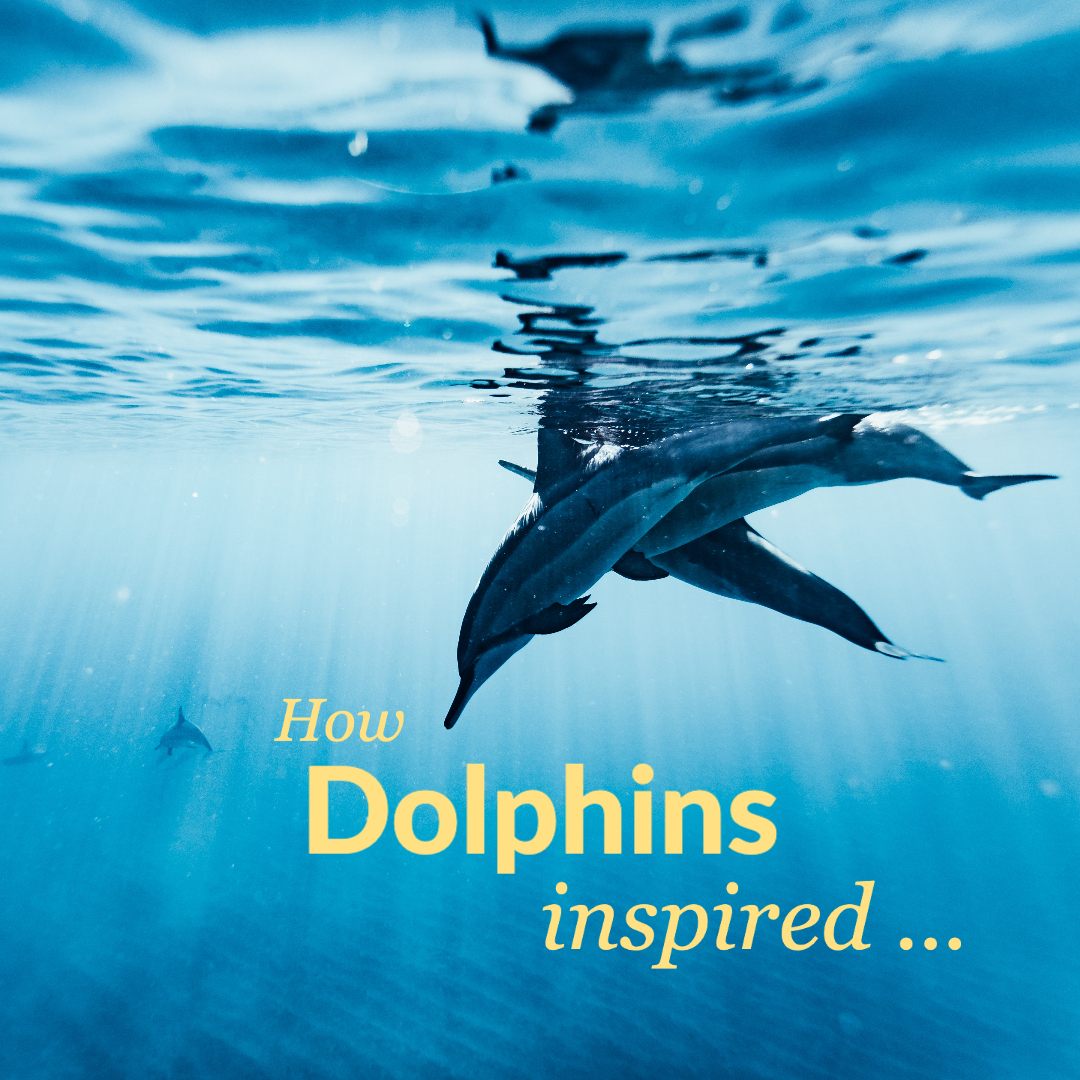
Biological inspiration for EvoLogics - Dolphin Echolocation Underwater Communication
Human application for EvoLogics - Dolphin Echolocation Underwater Communication
Technology

Dolphin echolocation system

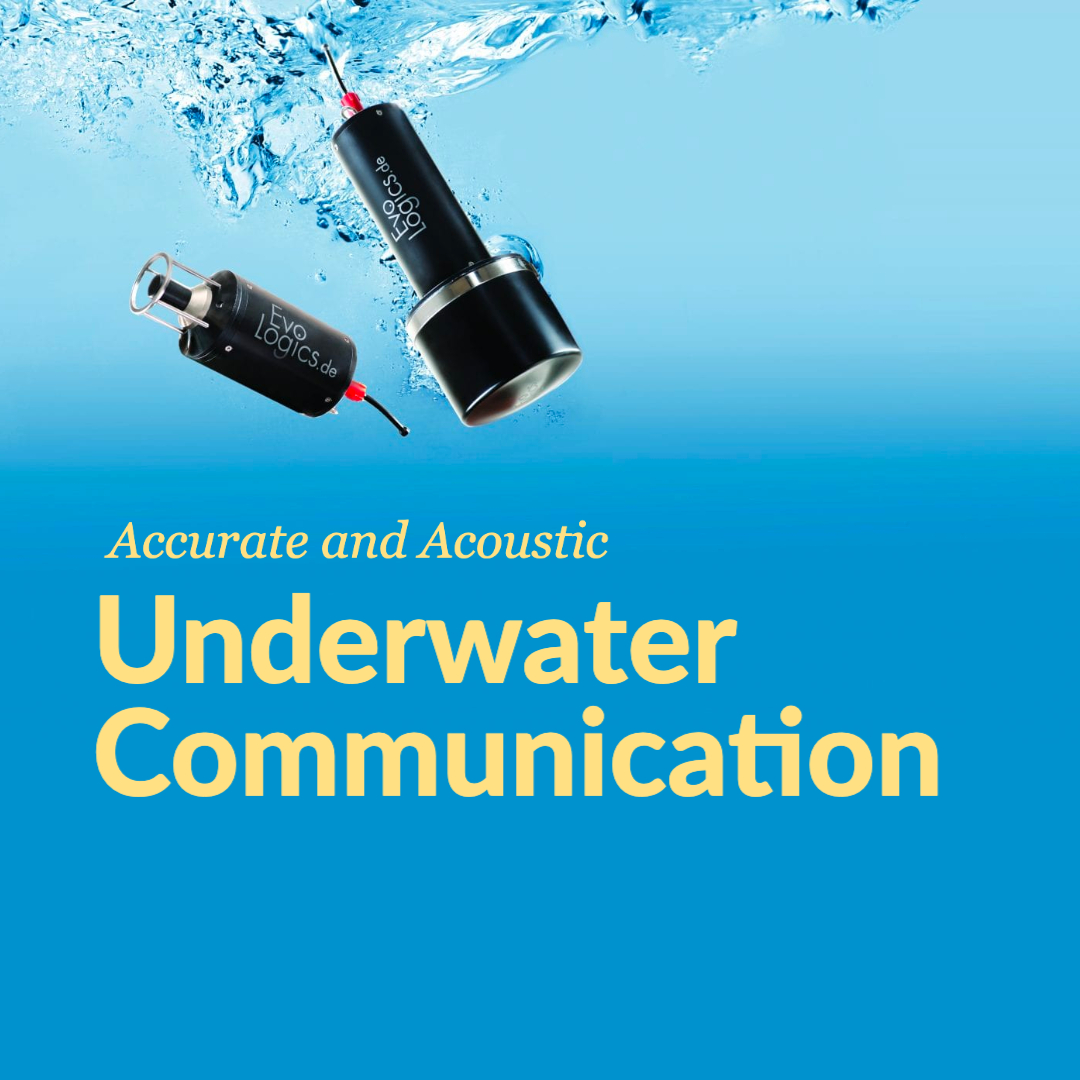
EvoLogics - Dolphin Echolocation Underwater Communication

Dolphin echolocation processing inspires S2C acoustic modems achieving accurate underwater communication where conventional sonars fail.

  • ✿Inspired by: Dolphin echolocation system
  • ⚡︎Function: Dolphins must navigate and hunt in visually opaque water, identifying prey position, size, and material properties from acoustic reflecti...
  • ▣Company: EvoLogics
  • ◉Where: Berlin, Germany
See full biomimicry example
Architecture

Termite mounds (Macrotermes)

Federation Square: Termite-Inspired Thermal Labyrinth

A 38,000 m² art and media complex in Melbourne featuring the largest thermal labyrinth installed at the time of construction, inspired by termite mound ventilation to achieve passive cooling without mechanical air conditioning.

  • ✿Inspired by: Termite mounds (Macrotermes)
  • ⚡︎Function: Termite colonies must maintain stable internal temperatures for fungus cultivation despite extreme external temperature swings, without a...
  • ▣Company: Atelier 10 / LAB Architecture Studio / Bates Smart
  • ◉Where: Melbourne, Australia
See full biomimicry example
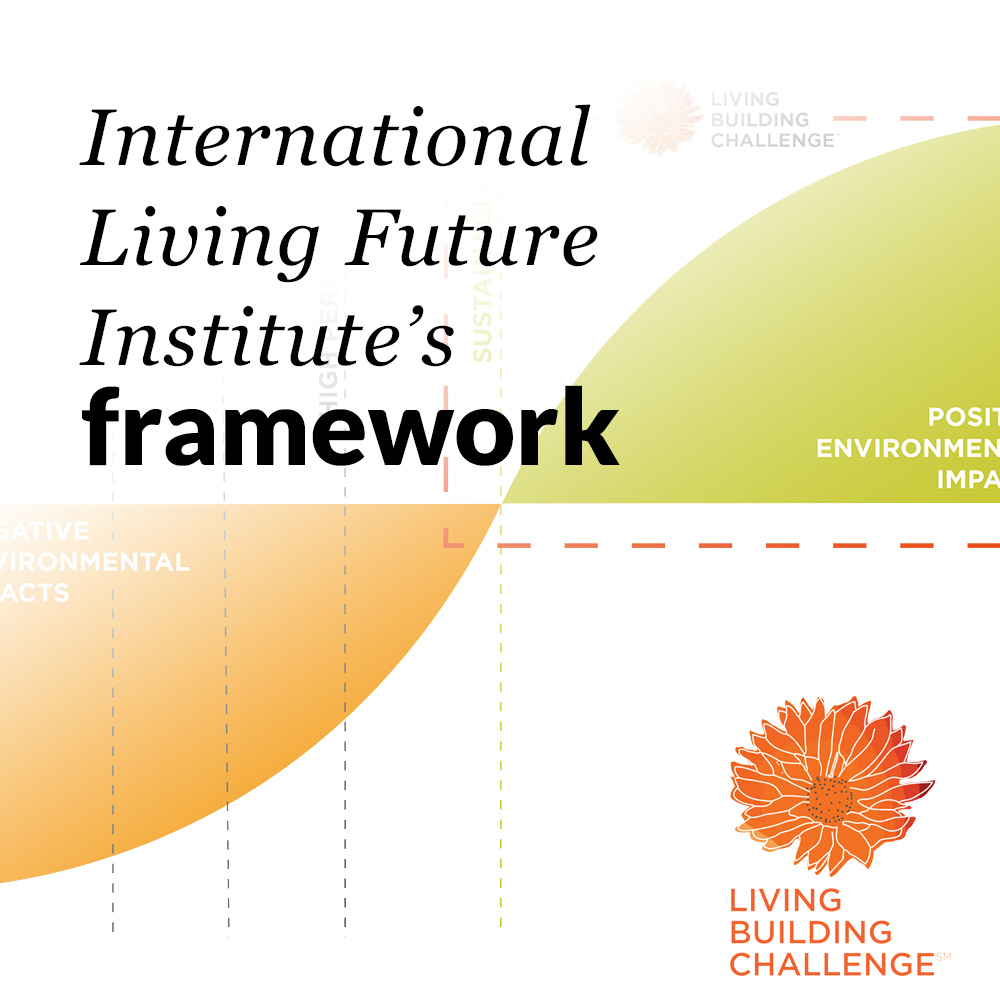
Biological inspiration for Living Building Challenge: Nature-Based Building Framework
Human application for Living Building Challenge: Nature-Based Building Framework
Architecture

Various organisms and natural systems (framework)

Living Building Challenge: Nature-Based Building Framework

Comprehensive building certification framework requiring buildings to function like living systems with positive environmental impact.

  • ✿Inspired by: Various organisms and natural systems (framework)
  • ⚡︎Function: Applies life's principles to building design and operation.
  • ▣Company: International Living Future Institute (ILFI)
  • ◉Where: Seattle, USA
See full biomimicry example
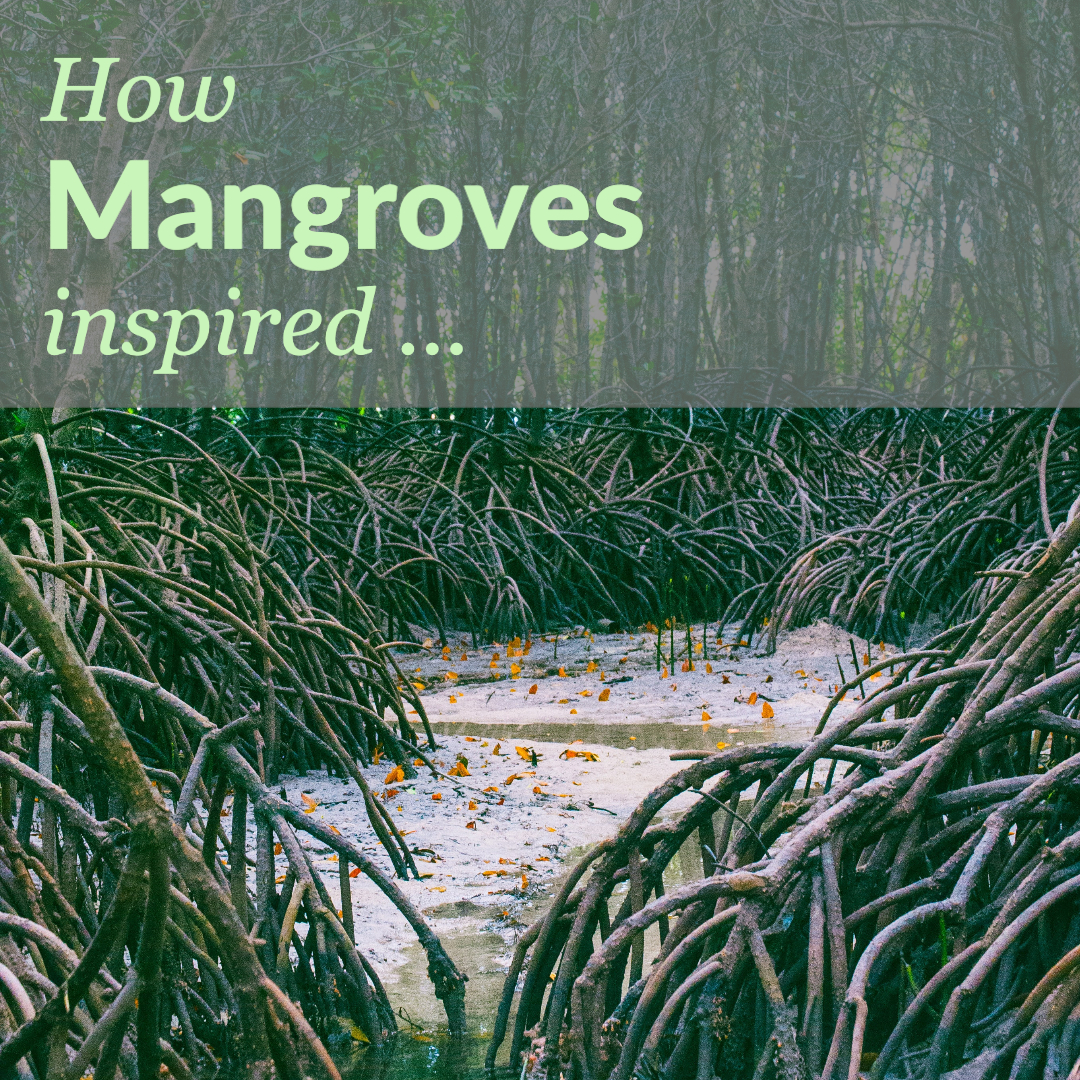
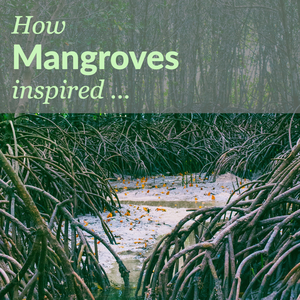
Biological inspiration for Mangrove Roots: Offshore Wind Foundation Design
Human application for Mangrove Roots: Offshore Wind Foundation Design
Engineering

Red mangrove (Rhizophora mangle)

Mangrove Roots: Offshore Wind Foundation Design

Mangrove root systems stabilise trees in shifting tidal sediments by spreading loads across dozens of branching roots rather than concentrating force in a single trunk. Engineers are applying this branching foundation principle to offshore wind turbines to dramatically reduce steel use and installation cost.

  • ✿Inspired by: Red mangrove (Rhizophora mangle)
  • ⚡︎Function: Stabilise large structures in soft, shifting substrates while resisting lateral forces
  • ▣Company: Arup / MIT
  • ◉Where: Denmark
See full biomimicry example
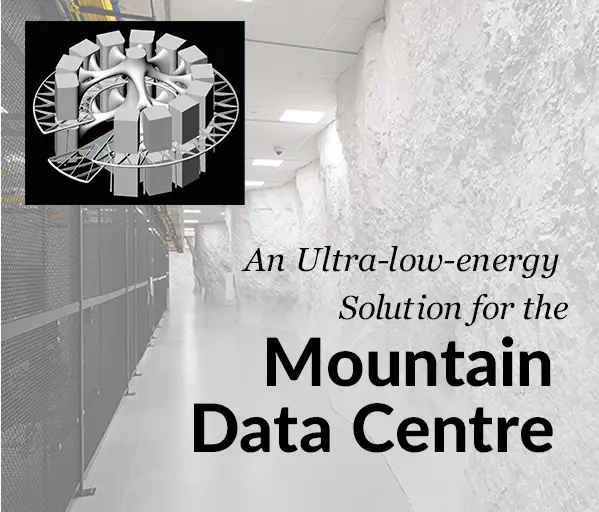
Biological inspiration for Mountain Data Centre: Biological Branching Cooling
Human application for Mountain Data Centre: Biological Branching Cooling
Architecture

Branching biological systems (Murray's Law)

Mountain Data Centre: Biological Branching Cooling

This data centre eliminates energy-intensive cooling by locating in a mountain tunnel and using Murray's Law of biological branching to optimise duct networks for thermal distribution.

  • ✿Inspired by: Branching biological systems (Murray's Law)
  • ⚡︎Function: House energy-intensive data servers while minimising operational energy consumption through cooling systems.
  • ▣Company: Exploration Architecture
  • ◉Where: Norway
See full biomimicry example
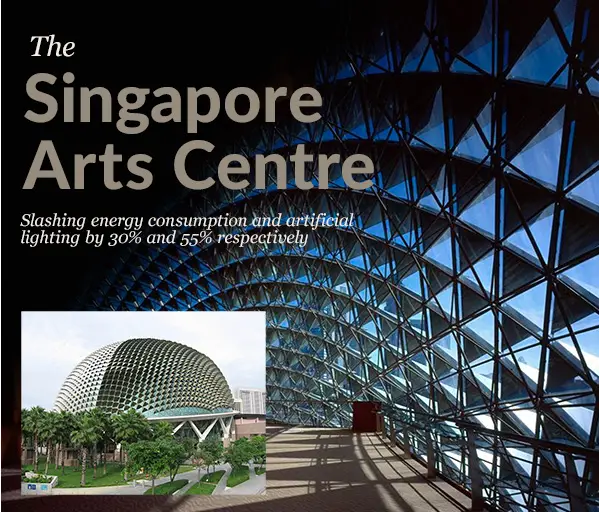
Biological inspiration for Singapore Arts Centre: Durian Fruit Kinetic Facade
Human application for Singapore Arts Centre: Durian Fruit Kinetic Facade
Architecture

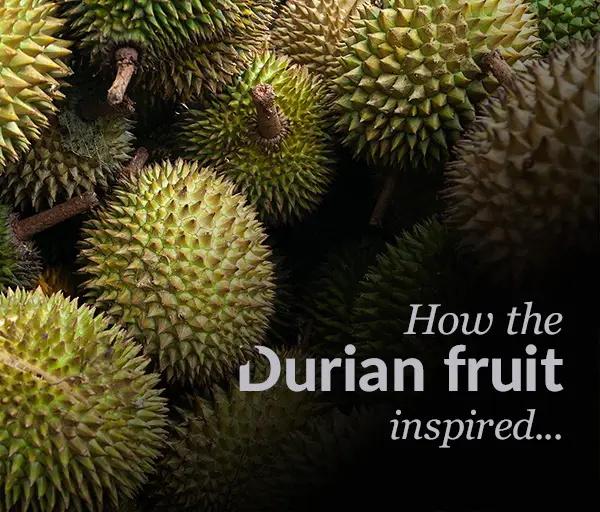
Durian fruit (Durio zibethinus) thorny casing

Singapore Arts Centre: Durian Fruit Kinetic Facade

Singapore Arts Centre's kinetic facade mimics durian fruit's spiky protective envelope, synchronising with sun movement to control tropical heat while maintaining natural lighting and reducing energy use by 30%.

  • ✿Inspired by: Durian fruit (Durio zibethinus) thorny casing
  • ⚡︎Function: The building must manage intense tropical sun and heat, maintain comfortable interior conditions, provide generous daylighting for arts a...
  • ▣Company: Michael Wilford & Partners with Atelier One and Atelier Ten
  • ◉Where: Singapore
See full biomimicry example
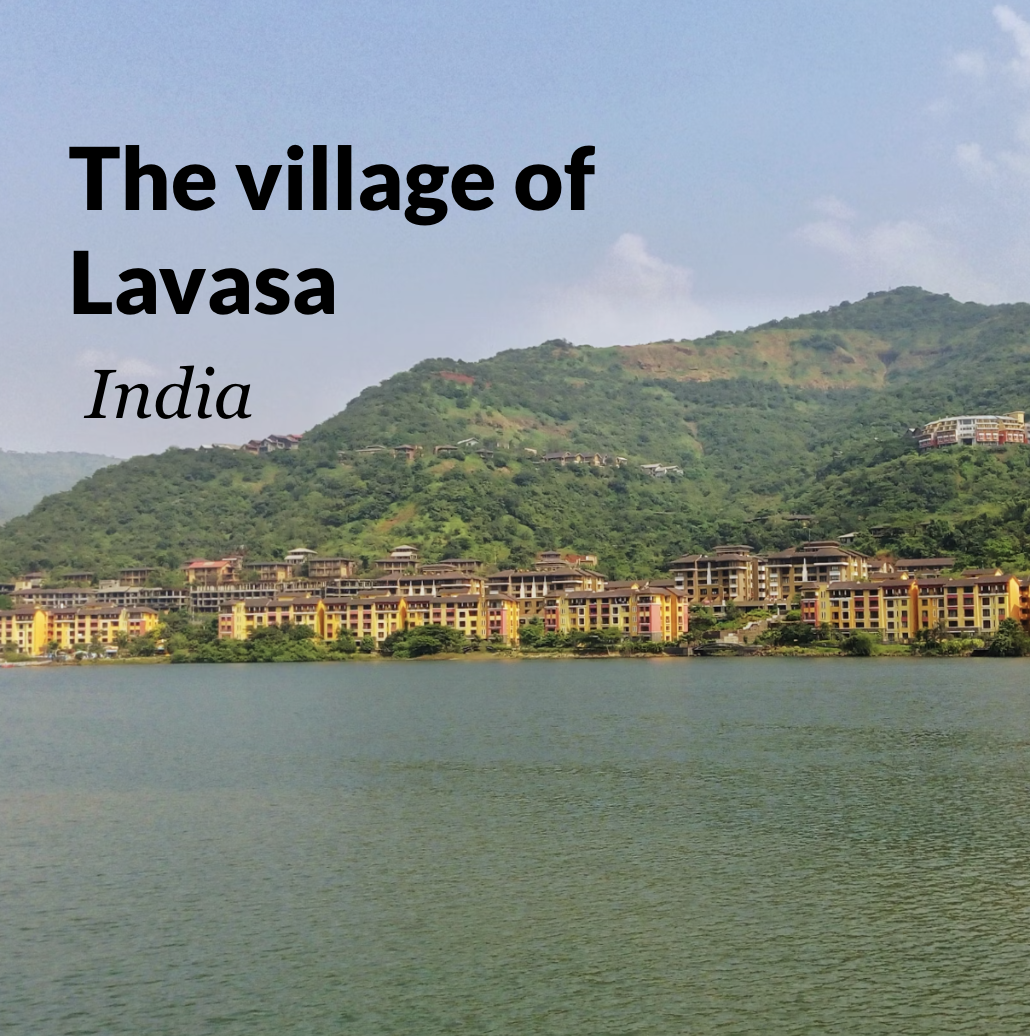
Biological inspiration for Village of Lavasa: Forest Ecosystem Urban Design
Human application for Village of Lavasa: Forest Ecosystem Urban Design
Architecture

Deciduous forest ecosystem

Village of Lavasa: Forest Ecosystem Urban Design

This Indian village replicates six ecosystem services from local deciduous forest, with roofs that release monsoonal water as vapour, permeable pavements, tree-root-inspired foundations, and anthills-modelled rainfall management.

  • ✿Inspired by: Deciduous forest ecosystem
  • ⚡︎Function: Develop a village that provides human housing whilst maintaining or restoring the ecological function of the landscape it occupies.
  • ▣Company: HOK with Biomimicry 3.8
  • ◉Where: India
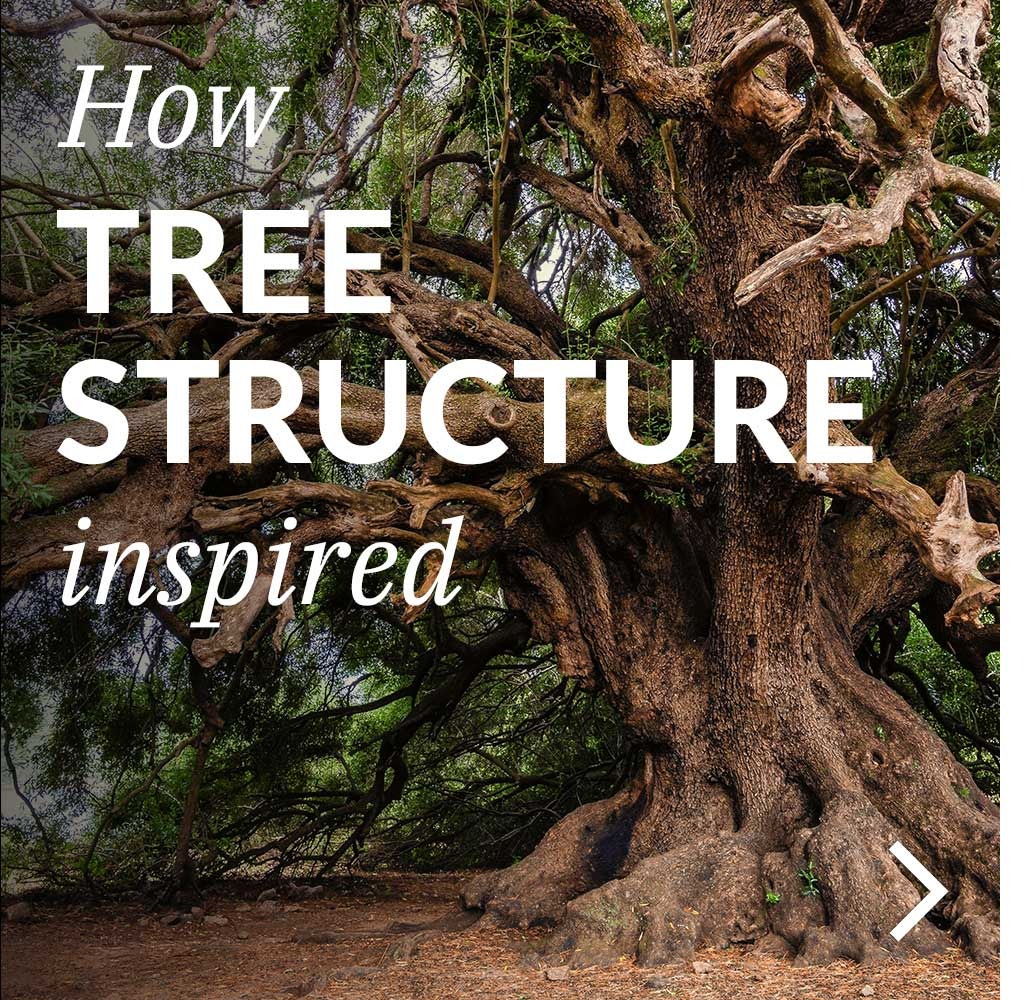
See full biomimicry example

Bird eggs (various species)

Eggshell Thin-Shell Concrete Structures

A hen's egg can withstand 50 kg of compressive force despite its shell being less than 0.4mm thick — because the double-curved form distributes stress evenly across the entire surface. This principle, understood and applied by engineers like Félix Candela and Pier Luigi Nervi, produced the most material-efficient large-span structures ever built.
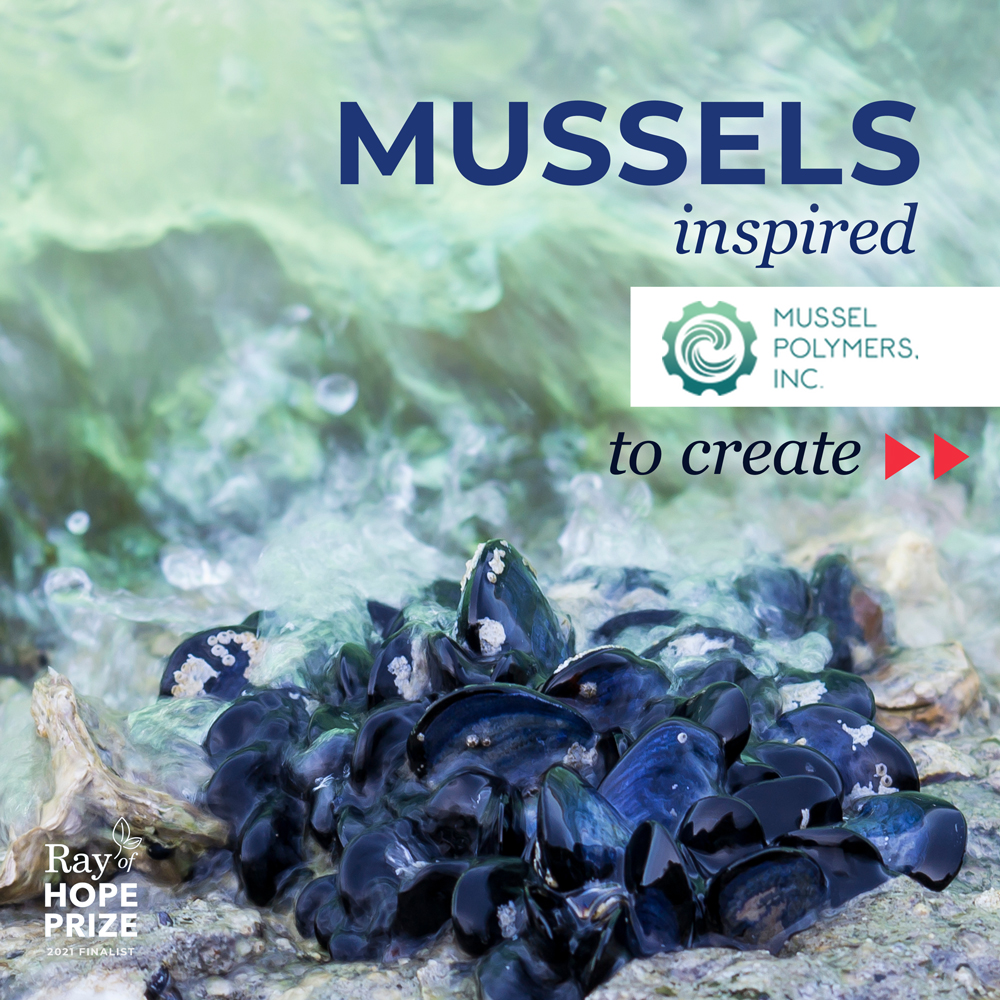
  • ✿Inspired by: Bird eggs (various species)
  • ⚡︎Function: Support loads over large spans with minimal structural material
  • ▣Company: Félix Candela / Pier Luigi Nervi / Zaha Hadid
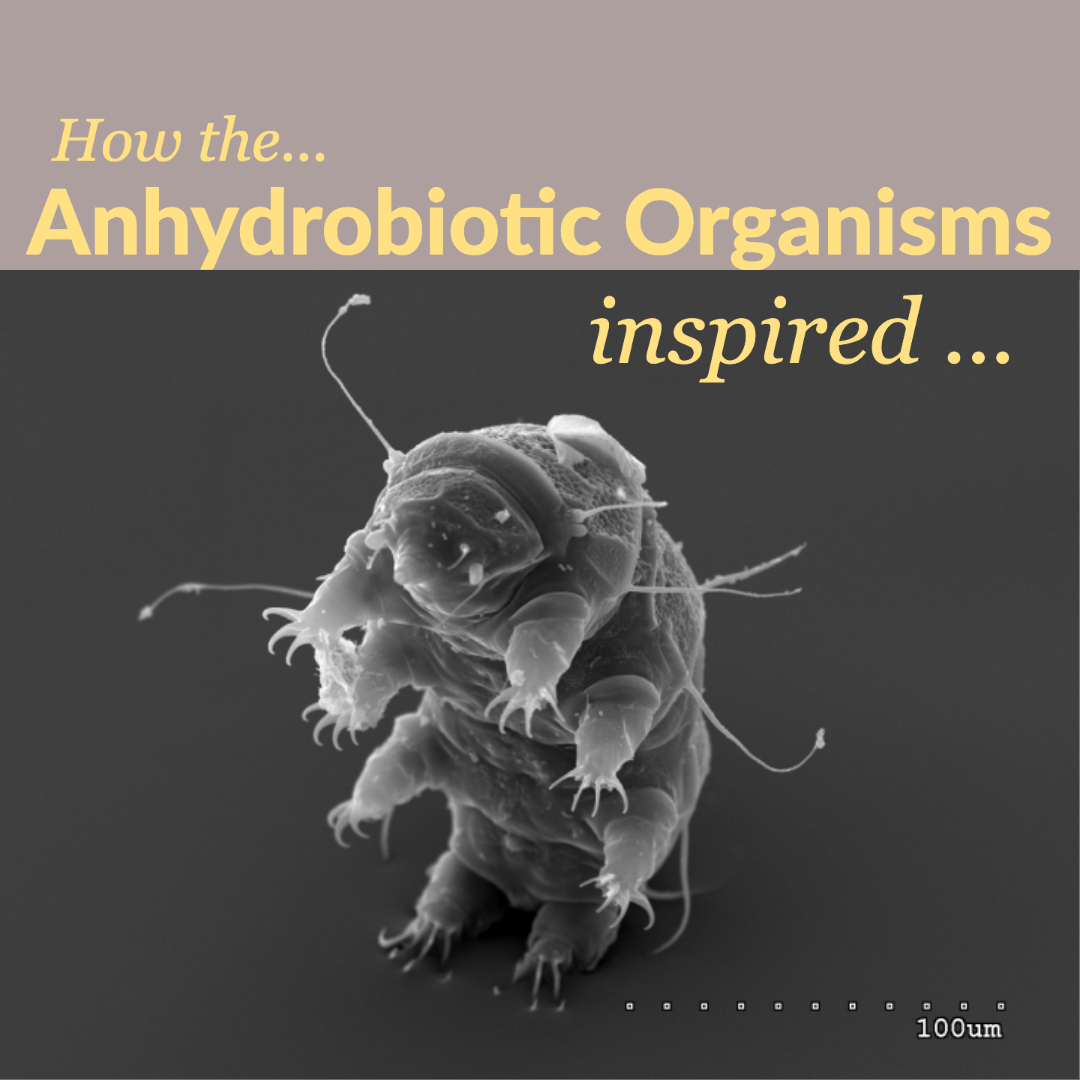
  • ◉Where: USA
See full biomimicry example
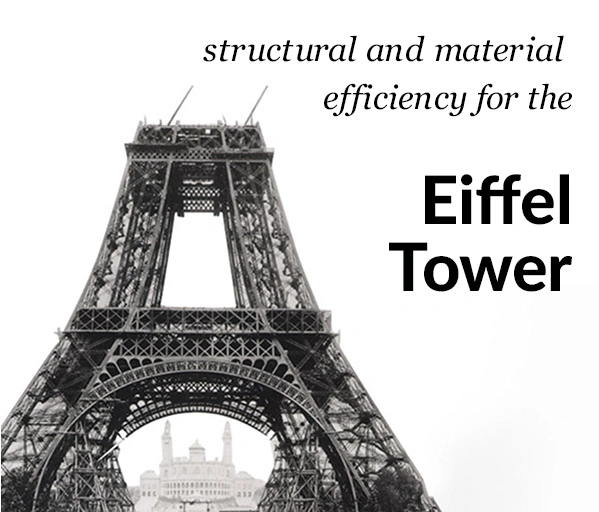
Biological inspiration for Eiffel Tower: Femur-Inspired Hierarchical Structure
Human application for Eiffel Tower: Femur-Inspired Hierarchical Structure
Architecture

Human femur bone trabeculae

Eiffel Tower: Femur-Inspired Hierarchical Structure

The Eiffel Tower's curved structure and hierarchical truss system mimic the efficient load-bearing design of human femur bone, with supporting elements aligned along lines of force like trabeculae.

  • ✿Inspired by: Human femur bone trabeculae
  • ⚡︎Function: The tower must support its own massive weight and resist wind-induced bending stresses while minimizing material and cost.
  • ▣Company: Gustave Eiffel
  • ◉Where: Paris, France
See full biomimicry example
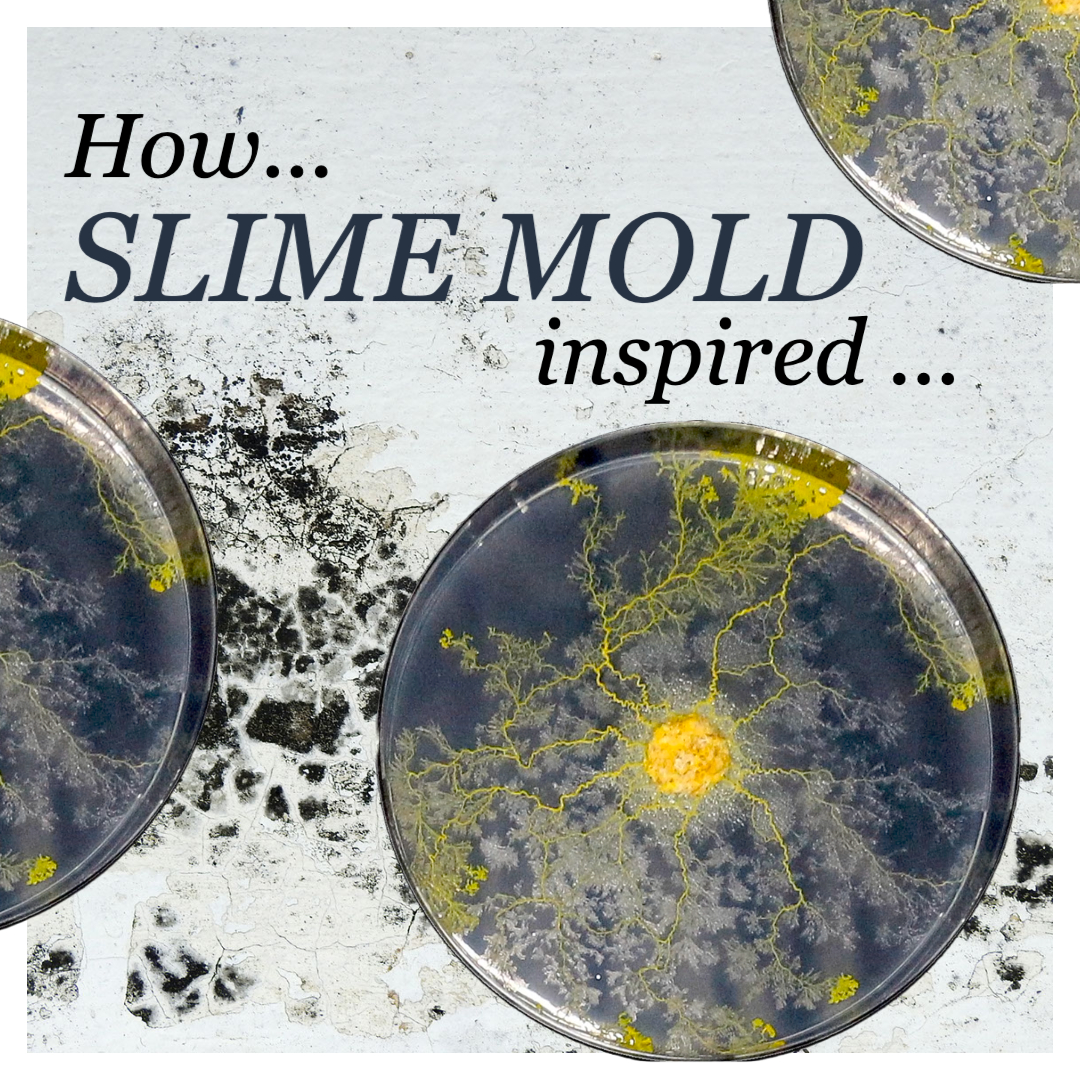
Architecture

Physarum polycephalum (slime mould)

George Brown College: Slime Mould Campus Circulation

A campus master plan for George Brown College in Toronto that uses slime mould algorithms to optimise transportation routes between multiple urban campus patches, revealing resilient redundancies in the network.

  • ✿Inspired by: Physarum polycephalum (slime mould)
  • ⚡︎Function: Slime moulds must efficiently transport nutrients between distributed food sources while maintaining network integrity if any pathway is...
  • ▣Company: B+H Architects / Raphael Kay (Harvard)
  • ◉Where: Toronto, Canada
See full biomimicry example
Architecture

Nature-inspired design combined with dragon dancing tradition

Jinhua Yanweizhou Park

A landscape and park design by Turenscape that integrates natural ecological principles with cultural traditions like dragon dancing for environmental restoration.

  • ✿Inspired by: Nature-inspired design combined with dragon dancing tradition
  • ⚡︎Function: Restore degraded wetlands while creating culturally meaningful community space
  • ▣Company: Turenscape
  • ◉Where: Jinhua, China
See full biomimicry example
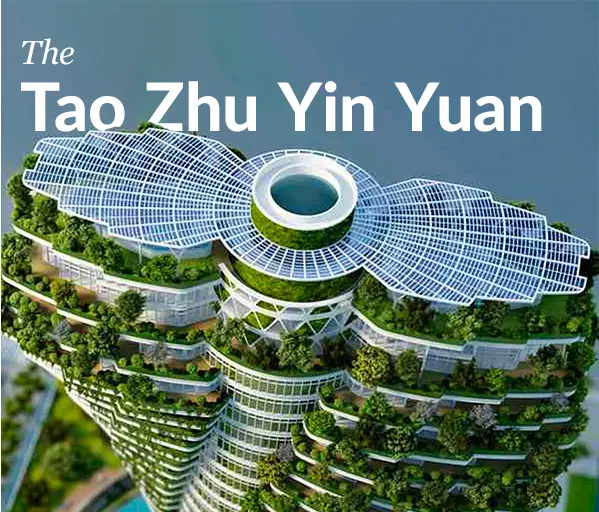
Biological inspiration for Tao Zhu Yin Yuan: DNA Double-Helix Carbon-Absorbing Tower
Human application for Tao Zhu Yin Yuan: DNA Double-Helix Carbon-Absorbing Tower
Architecture

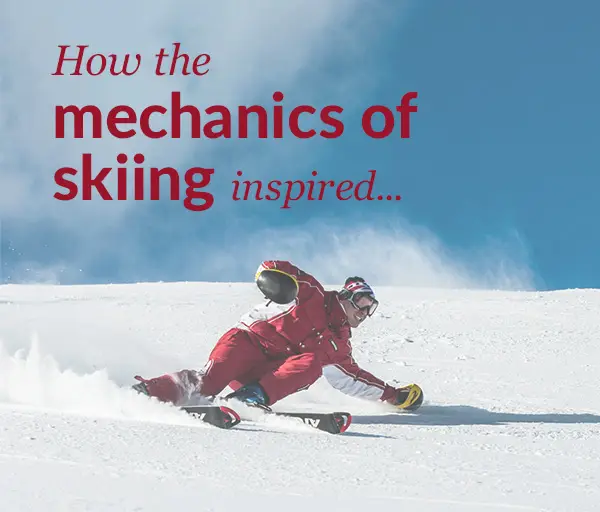
Human DNA structure and skiing mechanics

Tao Zhu Yin Yuan: DNA Double-Helix Carbon-Absorbing Tower

This Taipei tower's DNA double-helix form provides panoramic views, privacy, and structural resilience while absorbing 130 tons of CO2 annually through integrated green systems.

  • ✿Inspired by: Human DNA structure and skiing mechanics
  • ⚡︎Function: The tower must house residents comfortably while sequestering carbon, providing both privacy and panoramic views, and surviving seismic e...
  • ▣Company: Vincent Callebaut Architectures
  • ◉Where: Taipei, Taiwan
See full biomimicry example
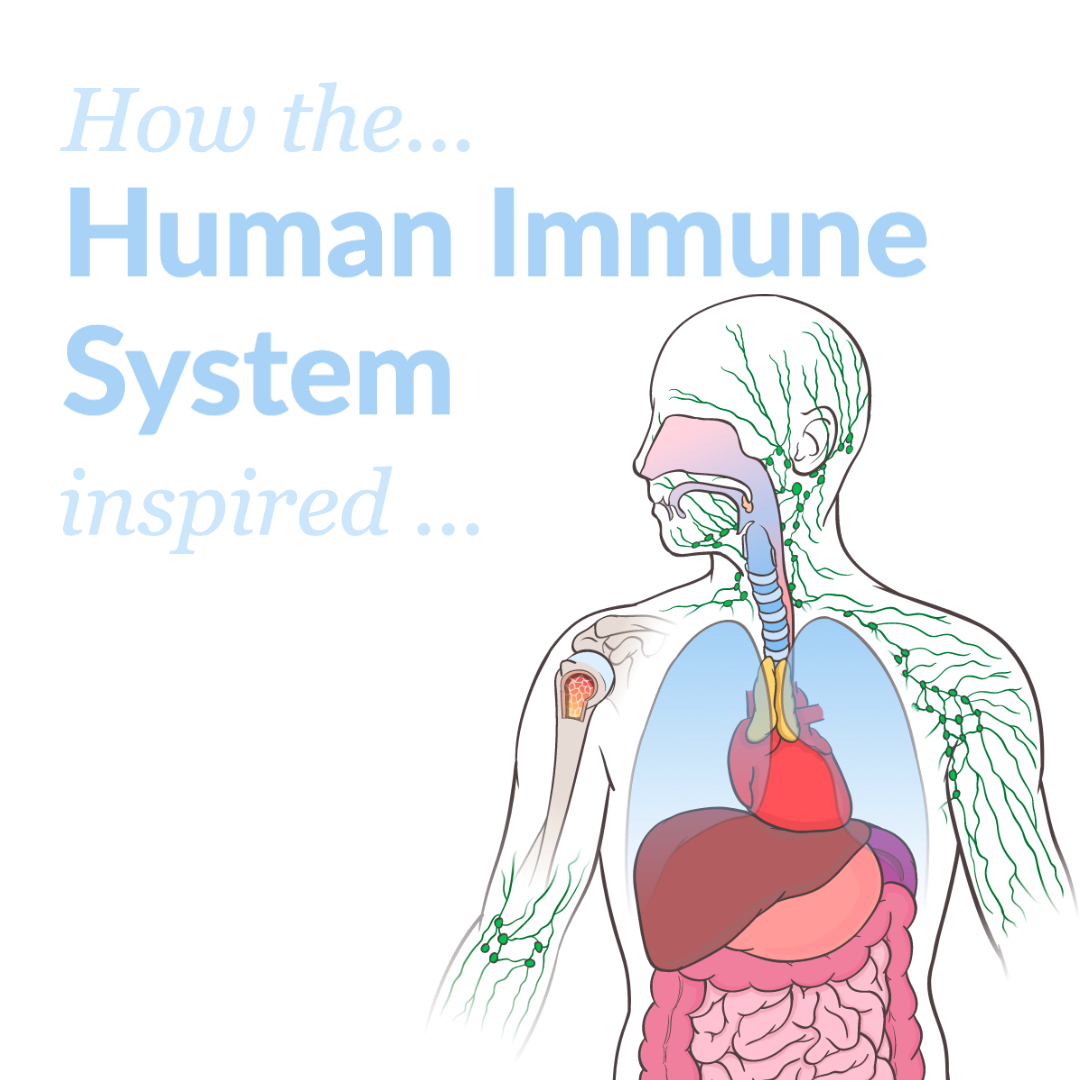
Organisational Design

Nature's distributed systems and ecosystem organization

Bioteams Distributed Business Framework

Ken Thompson developed Bioteams framework applying natural distributed organization principles to business. The framework redesigns teams and organizations to operate like decentralized biological systems.

  • ✿Inspired by: Nature's distributed systems and ecosystem organization
  • ⚡︎Function: Organizational coordination and decision-making
  • ▣Company: Ken Thompson, Bioteams Design
  • ◉Where: UK
See full biomimicry example
Organisational Design

Nature's feedback systems and ecosystem regulation

Enterprise Team Organisation: Feedback Loops

Bioteams Design develops organizational structures using natural feedback loop principles. Teams self-regulate through information feedback, enabling adaptive response without micromanagement.

  • ✿Inspired by: Nature's feedback systems and ecosystem regulation
  • ⚡︎Function: Information flow and organizational self-regulation
  • ▣Company: Bioteams Design
  • ◉Where: UK
See full biomimicry example
Product Design

East African climate and environment adaptation

Motorcycle Helmets for East African Climate

The bePRO helmet designed by Design Without Borders using biomimetic principles adapted to East African climate conditions for improved safety and comfort.

  • ✿Inspired by: East African climate and environment adaptation
  • ⚡︎Function: Create a comfortable, protective, locally manufacturable motorcycle helmet adapted to East African conditions
  • ▣Company: Design Without Borders
  • ◉Where: Kenya
See full biomimicry example
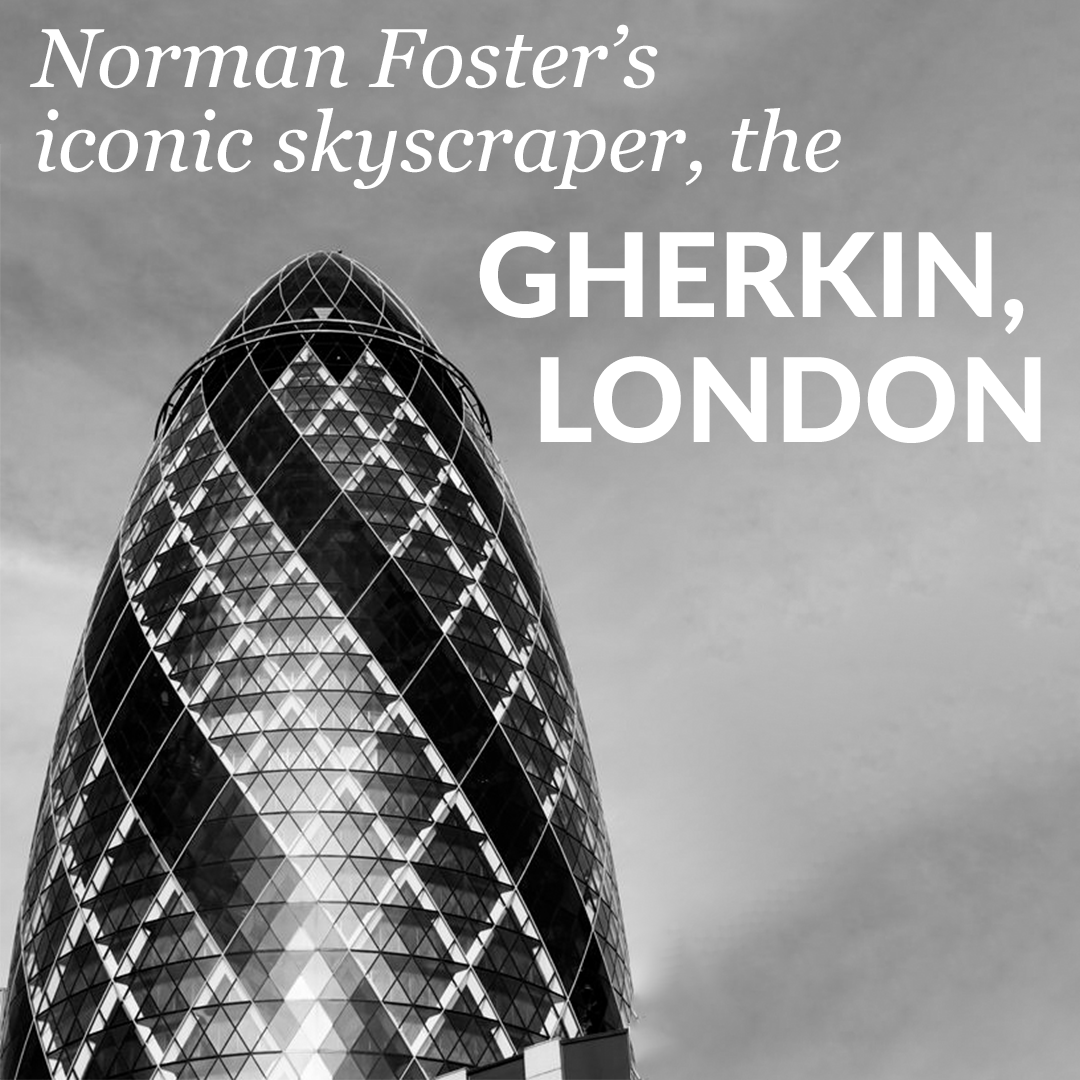
Biological inspiration for The Gherkin: Sponge-Inspired Ventilation
Human application for The Gherkin: Sponge-Inspired Ventilation

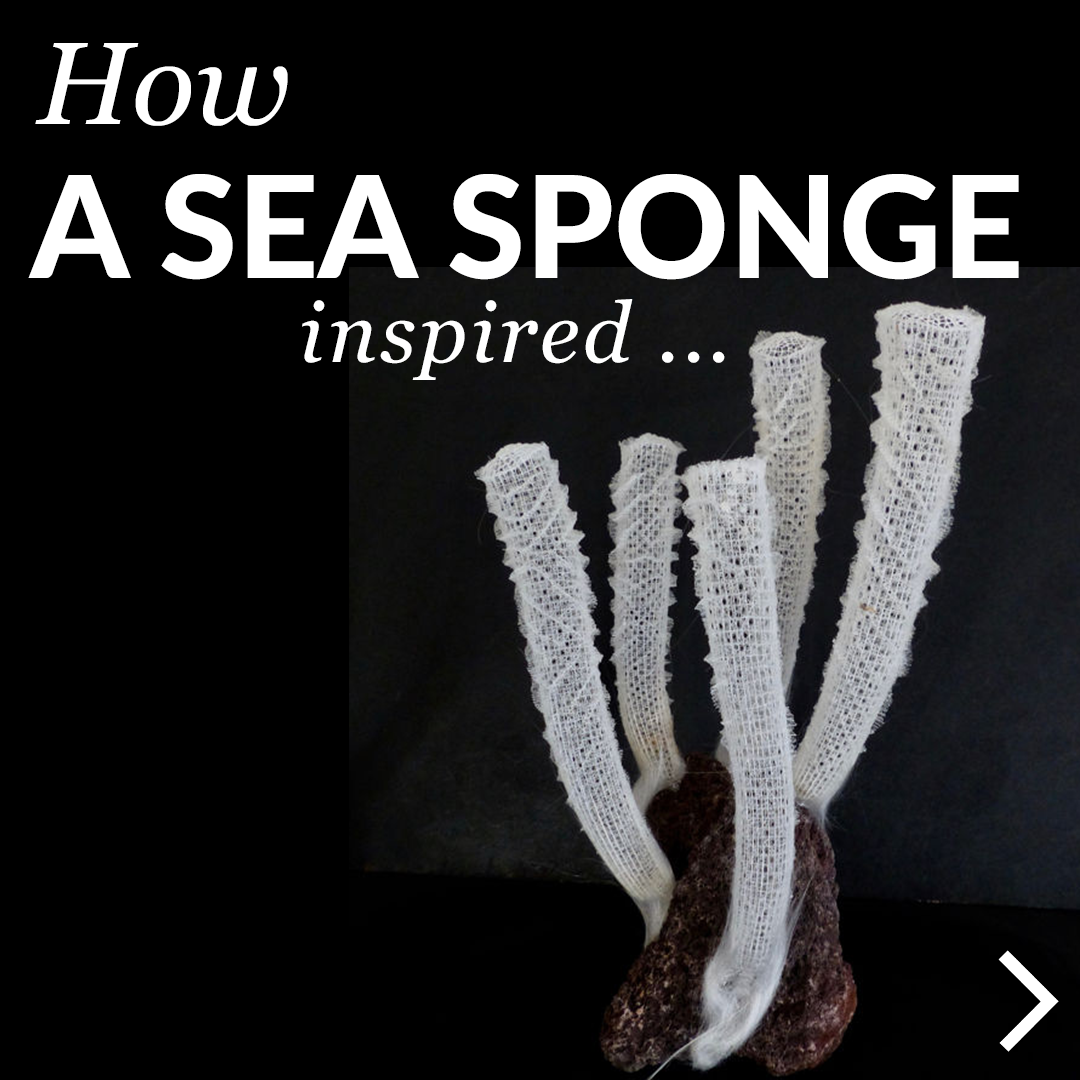
Venus flower basket sponge (Euplectella aspergillum)

The Gherkin: Sponge-Inspired Ventilation

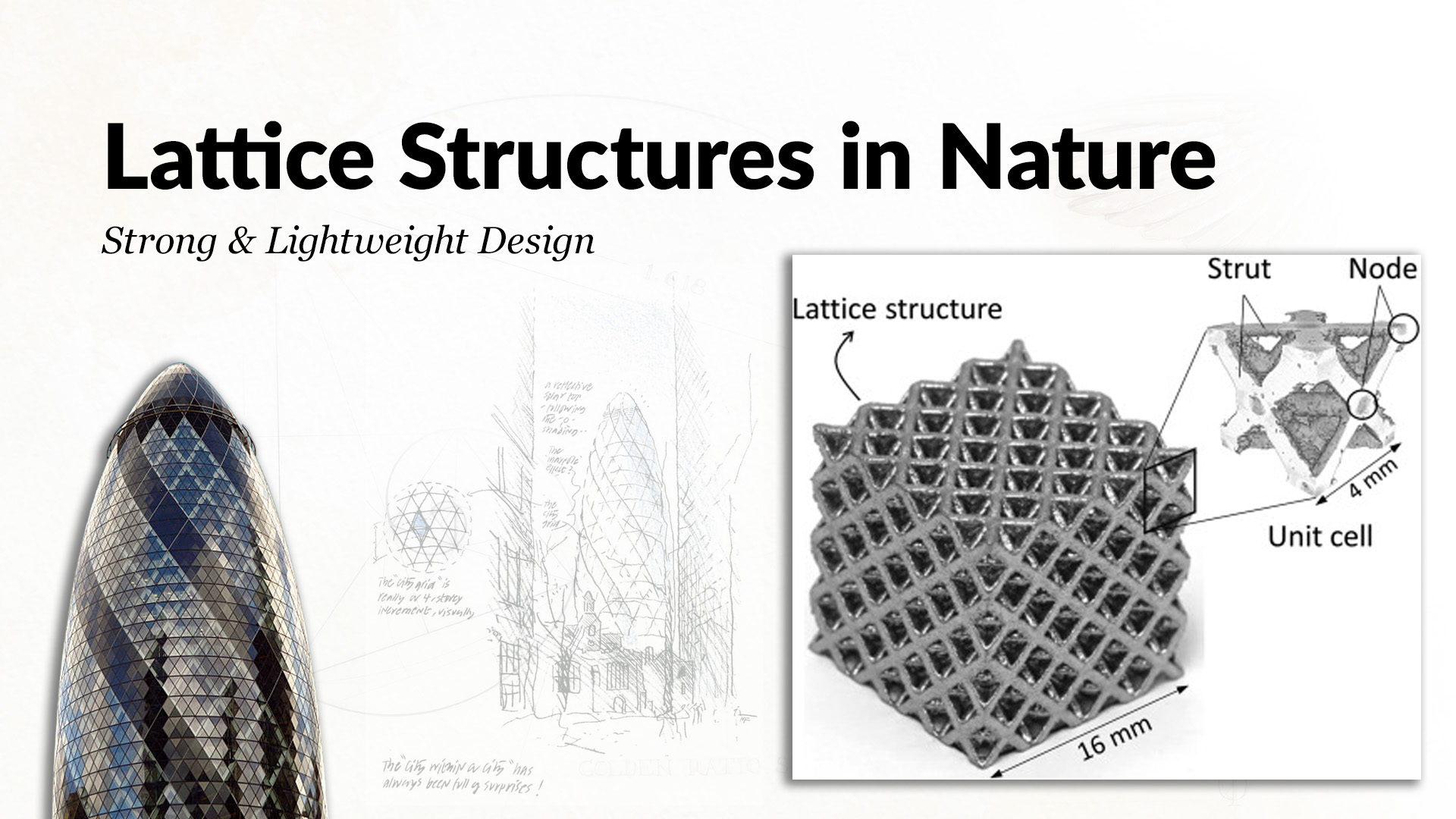
30 St Mary Axe (the Gherkin) in London uses a ventilation strategy directly inspired by the Venus flower basket sponge, creating natural air spirals that reduce energy consumption by 50% compared to buildings of equivalent size.

  • ✿Inspired by: Venus flower basket sponge (Euplectella aspergillum)
  • ⚡︎Function: Create a building envelope that enables natural ventilation while maintaining structural integrity
  • ▣Company: Norman Foster / Arup
  • ◉Where: London, UK
See full biomimicry example
Architecture

Forest patch dynamics and ant communication networks

CABN Vision Plan: Forest Patch Dynamics Community Design

A 64-hectare carbon-positive community in rural Ontario designed by emulating forest patch dynamics and ant communication strategies to create resilient, pedestrian-focused clusters of prefabricated net-positive homes.

  • ✿Inspired by: Forest patch dynamics and ant communication networks
  • ⚡︎Function: Forest ecosystems must maintain productivity and resilience across large areas despite variable conditions, disturbances, and resource av...
  • ▣Company: B+H Architects / CABN
  • ◉Where: Ontario, Canada
See full biomimicry example
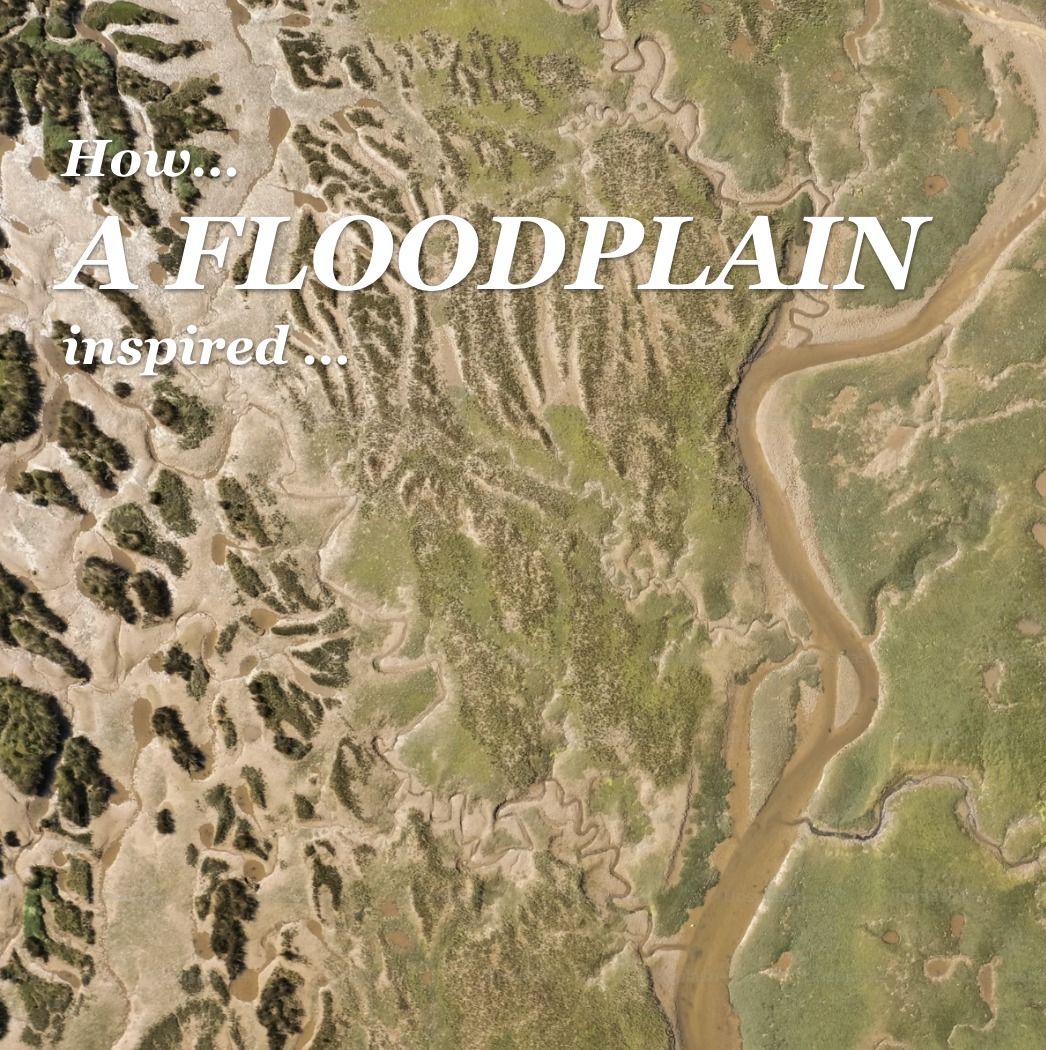
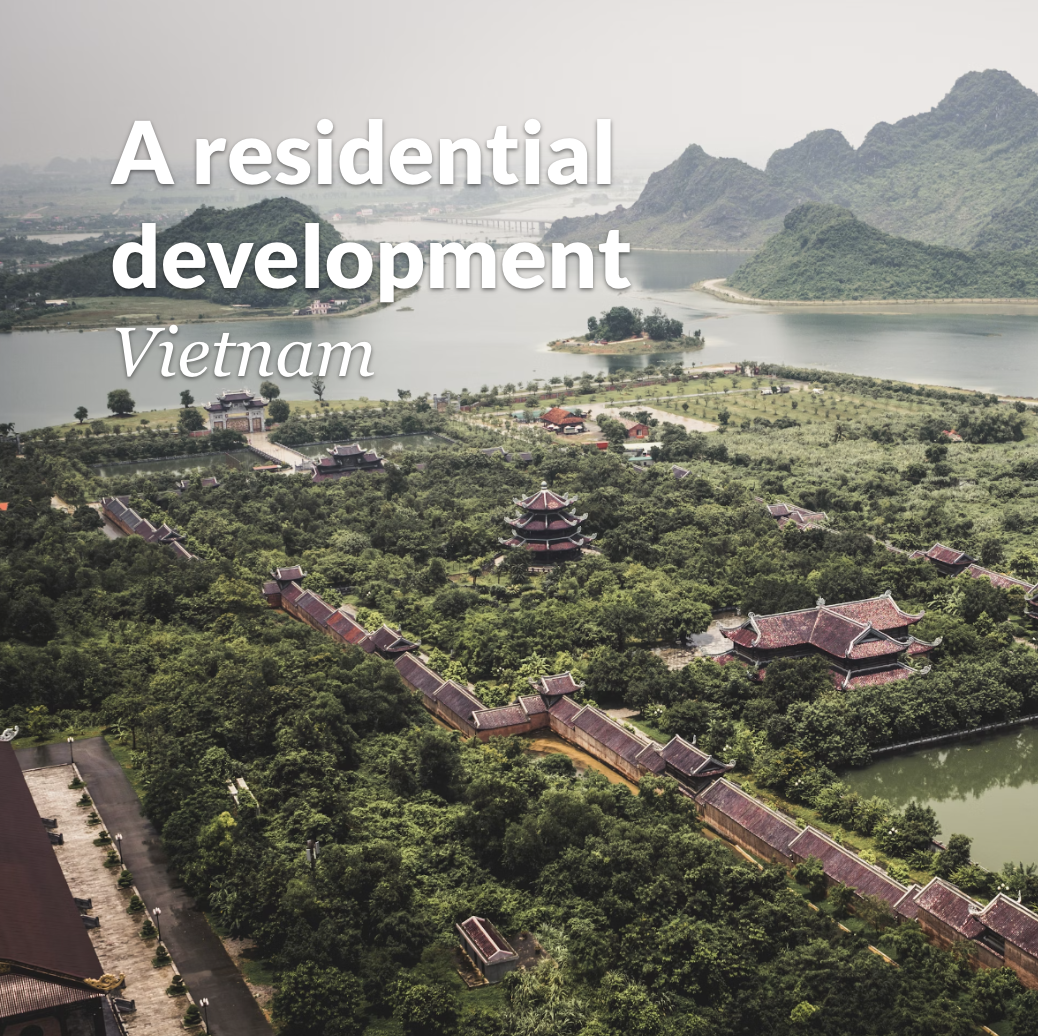
Biological inspiration for Hamlet Waterfront: Floodplain-Integrated Residential Design
Human application for Hamlet Waterfront: Floodplain-Integrated Residential Design
Architecture

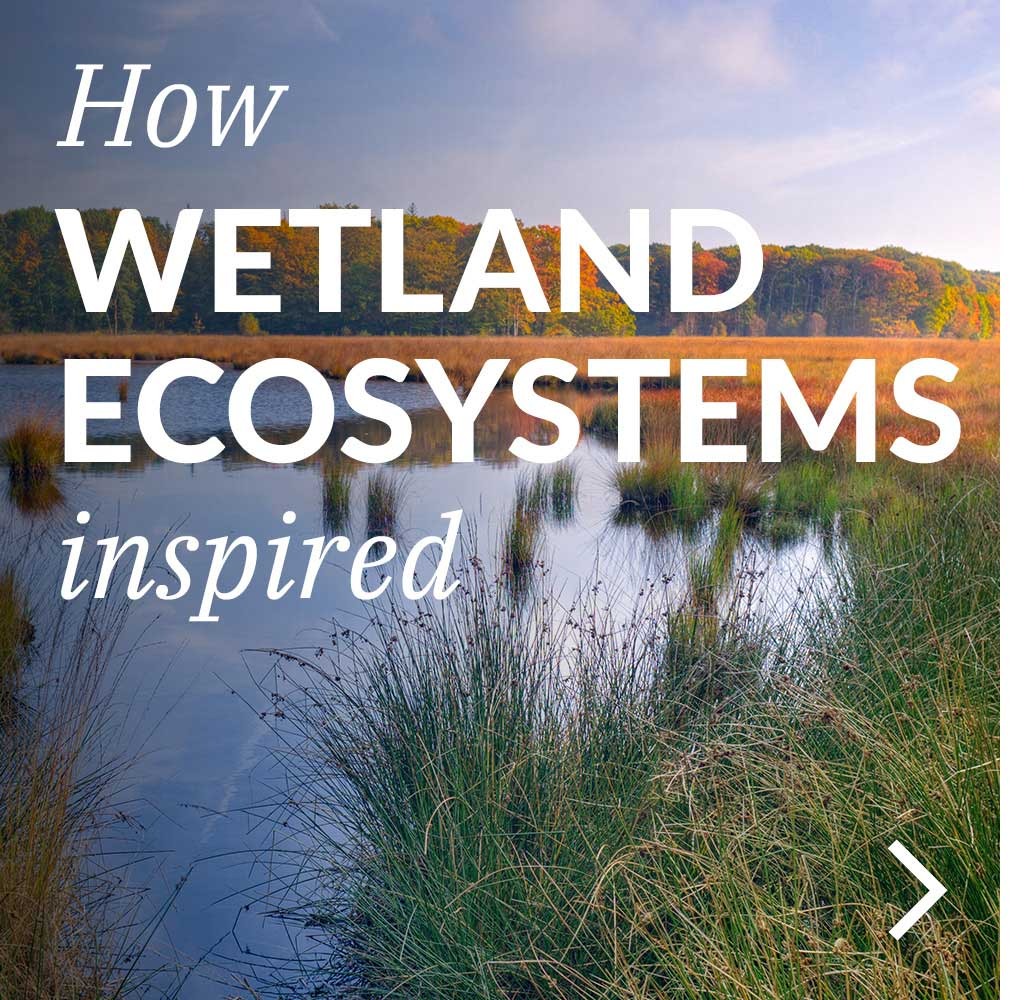
River delta and wetland ecosystems

Hamlet Waterfront: Floodplain-Integrated Residential Design

This Vietnamese waterfront development integrates rather than eradicates natural wetlands and river delta systems, allowing development and ecosystem services to coexist through locally-attuned system design.

  • ✿Inspired by: River delta and wetland ecosystems
  • ⚡︎Function: Provide residential development on floodplain while maintaining or restoring ecological function and achieving flood resilience.
  • ▣Company: B+H Architecture & Biomimicry Frontiers
  • ◉Where: Vietnam
See full biomimicry example
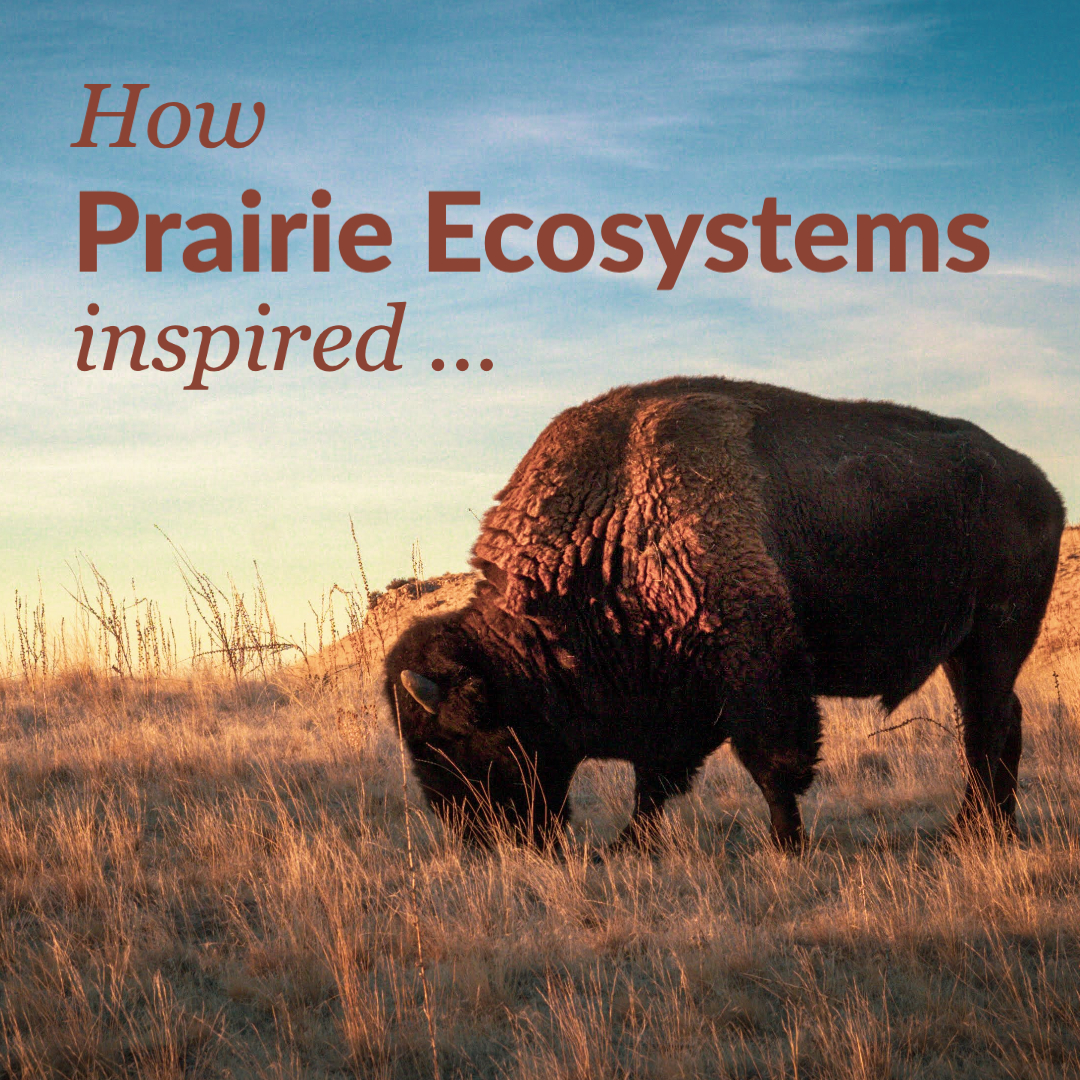
Architecture

Bison grazing patterns and prairie wetland hydrology

Metis Crossing: Biomimetic Infrastructure Master Plan

A 600-hectare infrastructure master plan for an Indigenous Metis cultural centre in Alberta, Canada, using biomimetic strategies including bison-based regeneration and wetland restoration.

  • ✿Inspired by: Bison grazing patterns and prairie wetland hydrology
  • ⚡︎Function: Prairie ecosystems maintain productivity and resilience through the interaction of large grazing animals, fire, and hydrology, cycling nu...
  • ▣Company: B+H Architects
  • ◉Where: Alberta, Canada
See full biomimicry example
Architecture

Ephemeral stream systems and forest finger ecology

New Lowell Living Village: Letting the Land Dictate Design

A 200-hectare mixed-use master plan in Ontario that restores dried ephemeral streams and integrates forest fingers into the urban fabric, achieving measurably higher ecological performance than both pre-design conditions and traditional development.

  • ✿Inspired by: Ephemeral stream systems and forest finger ecology
  • ⚡︎Function: Watershed ecosystems distribute water from ridgeline to wetland through branching networks of ephemeral and perennial streams, filtering...
  • ▣Company: B+H Architects
  • ◉Where: Ontario, Canada
See full biomimicry example
Architecture

Heterogeneous biological membranes and circulatory systems

Project Jewel: Biomimetic Airport Climate Design

A 121,000 m² airport and commercial complex in Singapore that uses heterogeneous glazing patterns and embedded chilled water pipe systems inspired by biological membranes and circulatory systems to strategically condition a vast indoor garden without massive energy consumption.

  • ✿Inspired by: Heterogeneous biological membranes and circulatory systems
  • ⚡︎Function: Living organisms must regulate internal conditions across large bodies with different zones requiring different conditions—tropical canop...
  • ▣Company: Atelier 10 / Safdie Architects
  • ◉Where: Singapore
See full biomimicry example
Architecture

Prairie grassland ecosystems and earth-sheltered geology

Roosevelt Presidential Library: Regenerative Living Building

A 109,000 ft² presidential library achieving Living Building Standard certification through earth-sheltered design, local grazing agriculture for carbon sinking, and energy generation exceeding 105% of building needs.

  • ✿Inspired by: Prairie grassland ecosystems and earth-sheltered geology
  • ⚡︎Function: Prairie ecosystems sustain themselves through the interaction of deep-rooted grasses, soil microbiomes, and large grazers, cycling carbon...
  • ▣Company: Atelier 10
  • ◉Where: North Dakota, USA
See full biomimicry example
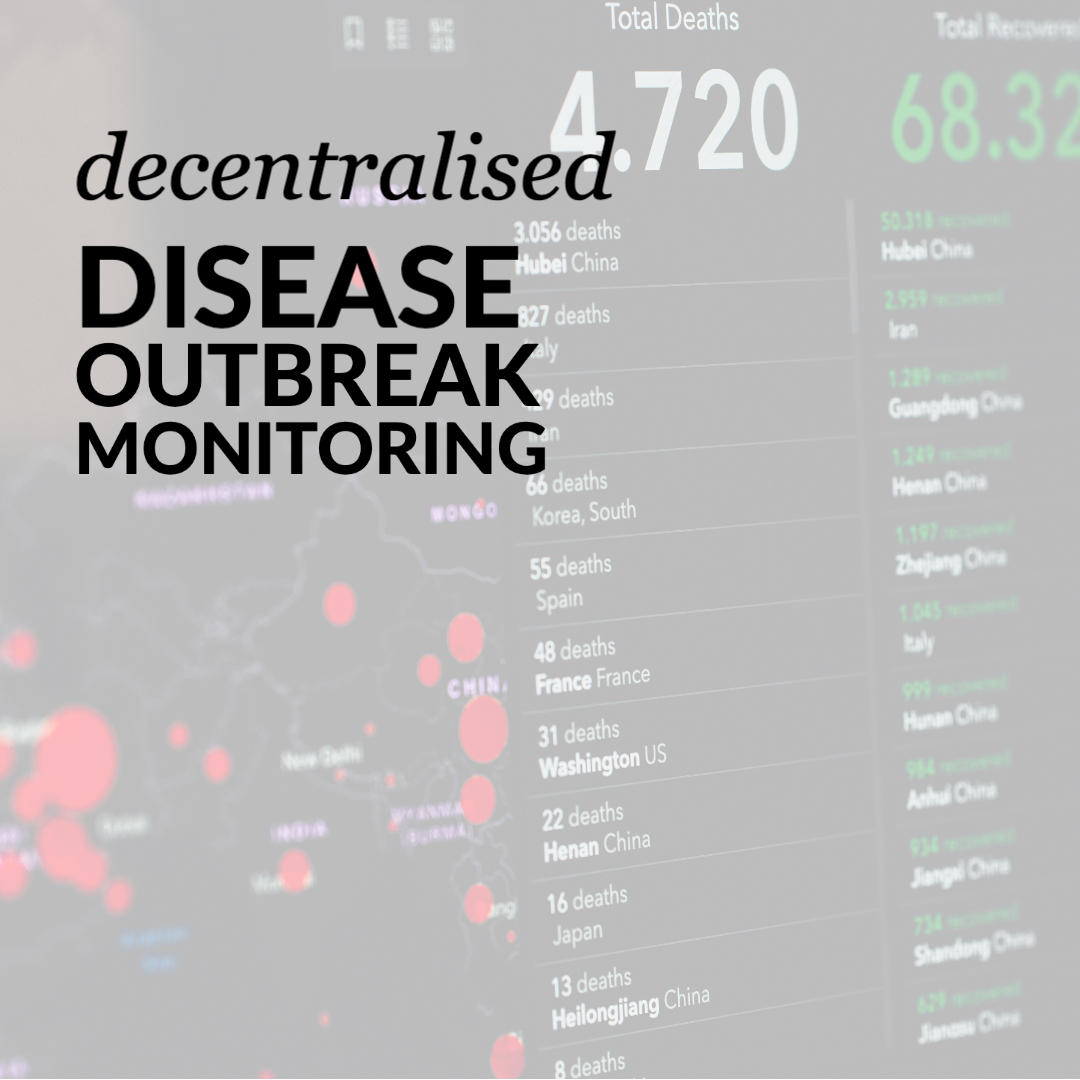
Technology

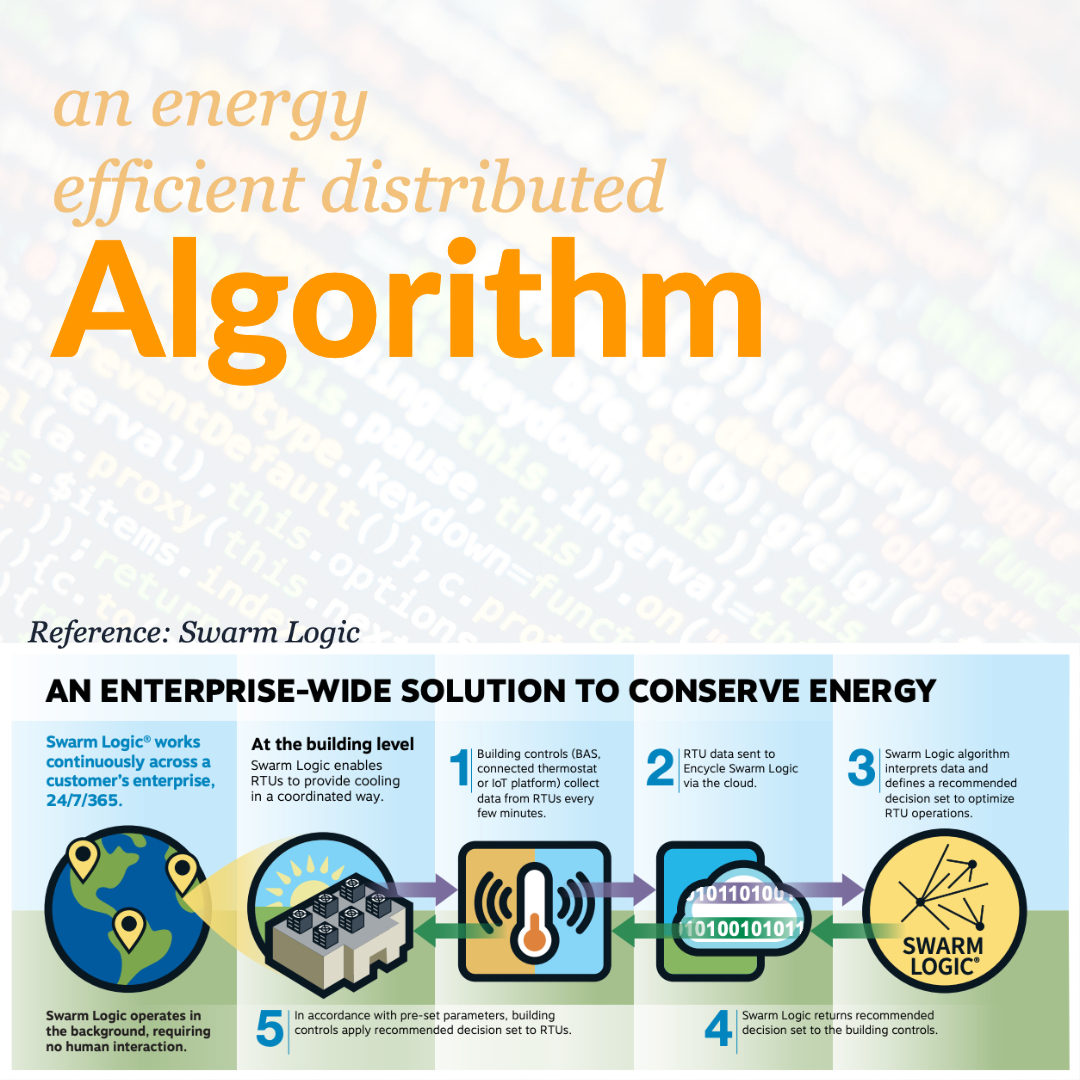
Swarm intelligence systems (ant colonies, bird flocks, fish schools)

Swarm Intelligence: Blockchain Systems

Blockchain technology incorporates swarm intelligence principles enabling decentralized consensus and coordination. Distributed networks achieve agreement without central authority, mimicking how social insects organize.

  • ✿Inspired by: Swarm intelligence systems (ant colonies, bird flocks, fish schools)
  • ⚡︎Function: Distributed consensus and coordination
  • ▣Company: Various (Bitcoin, Ethereum, blockchain platforms)
  • ◉Where: USA
See full biomimicry example
Biological inspiration for Box Fish Car: Mercedes-Benz Bionic Concept
Human application for Box Fish Car: Mercedes-Benz Bionic Concept
Engineering

Yellow boxfish (Ostracion cubicus)

Box Fish Car: Mercedes-Benz Bionic Concept

Despite its square shape, the boxfish is one of the most hydrodynamically efficient swimmers in the ocean. Mercedes-Benz engineers discovered it has a drag coefficient of just 0.06 — and designed a concept car based entirely on its body plan that achieves unprecedented aerodynamic efficiency.

  • ✿Inspired by: Yellow boxfish (Ostracion cubicus)
  • ⚡︎Function: Move efficiently through fluid while maintaining structural rigidity with minimal material
  • ▣Company: Mercedes-Benz / Daimler
  • ◉Where: Stuttgart, Germany
See full biomimicry example
Architecture

Island ecosystems and Ahupua'a land management

Kaua'i Economic Resilience Centre

A biomimetic commercial building on Kaua'i that uses the Living Story methodology and indigenous Hawaiian knowledge to address socio-ecological and economic challenges on the island.

  • ✿Inspired by: Island ecosystems and Ahupua'a land management
  • ⚡︎Function: Island ecosystems must sustain all life functions within strict resource boundaries, cycling nutrients, water, and energy without externa...
  • ▣Company: B+H Architects
  • ◉Where: Kaua'i, Hawai'i, USA
See full biomimicry example
Materials

Earth and clay composition used by humans historically

Adobe Materials: Building Techniques and Sustainability

Traditional adobe building materials and techniques providing thermal mass, breathability, and sustainability for climate-responsive architecture.

  • ✿Inspired by: Earth and clay composition used by humans historically
  • ⚡︎Function: Uses earth materials and thermal principles for sustainable building.
  • ▣Company: Mapungubwe Interpretive Centre
  • ◉Where: USA
See full biomimicry example

Biomimicry Levels

Form, Process and Systems Examples

Explore biomimicry at three levels of depth, from physical forms to underlying systems.

Biological inspiration for Amphico - Lotus Leaf PFAS-Free Water Repellency
Human application for Amphico - Lotus Leaf PFAS-Free Water Repellency
Materials

Lotus leaf (Nelumbo nucifera) surface structure

Amphico - Lotus Leaf PFAS-Free Water Repellency

Lotus leaf surface microstructure inspires PFAS-free, durable water-repellent textiles (Amphitex), eliminating persistent environmental pollutants.

  • ✿Inspired by: Lotus leaf (Nelumbo nucifera) surface structure
  • ⚡︎Function: Lotus leaves must shed water and debris to prevent fungal colonisation and maintain gas exchange. They overcome wettability through multi...
  • ▣Company: Amphico
  • ◉Where: UK
See full biomimicry example
Biological inspiration for Morpho Butterfly Structural Colour: No-Dye Fabrics
Human application for Morpho Butterfly Structural Colour: No-Dye Fabrics
Product Design

Morpho butterfly (Morpho rhetenor)

Morpho Butterfly Structural Colour: No-Dye Fabrics

The Morpho butterfly's iridescent blue wings contain no blue pigment — the colour is created entirely by microscopic structures that interfere with light. This inspired a range of structural colour technologies that could eliminate toxic textile dyes entirely.

  • ✿Inspired by: Morpho butterfly (Morpho rhetenor)
  • ⚡︎Function: Color production through light interference
  • ▣Company: Qualcomm (Mirasol display); Lexus; structural colour researchers
  • ◉Where: USA
See full biomimicry example
Biological inspiration for Velcro: Burdock Plant Hook Attachment
Human application for Velcro: Burdock Plant Hook Attachment
Product Design

Burdock plant (Arctium sp.)

Velcro: Burdock Plant Hook Attachment

The invention of Velcro — one of the most commercially successful products in history — came directly from Swiss engineer George de Mestral observing how burdock burrs clung to his dog's fur through thousands of tiny hooks that caught on microscopic loops in the fur.

  • ✿Inspired by: Burdock plant (Arctium sp.)
  • ⚡︎Function: Mechanical attachment and adhesion
  • ▣Company: George de Mestral / Velcro Industries
  • ◉Where: Switzerland
See full biomimicry example
Biological inspiration for Lotus Leaf Self-Cleaning Surfaces: Superhydrophobicity
Human application for Lotus Leaf Self-Cleaning Surfaces: Superhydrophobicity
Product Design

Sacred lotus (Nelumbo nucifera)

Lotus Leaf Self-Cleaning Surfaces: Superhydrophobicity

The lotus leaf is covered in microscopic waxy bumps that make water form perfect spheres and roll off instantly, carrying dirt with them. This "lotus effect" has been commercialised in self-cleaning building materials, textiles, medical devices, and solar panels worldwide.

  • ✿Inspired by: Sacred lotus (Nelumbo nucifera)
  • ⚡︎Function: Water and dirt repulsion
  • ▣Company: Sto-Lotusan, Schoeller
  • ◉Where: Germany
See full biomimicry example

For R&D and product teams

Find the problems worth solving in your own products

The Biomimicry Opportunity Map scans your company website and suggests nature-inspired challenges for each product line.