Environmental
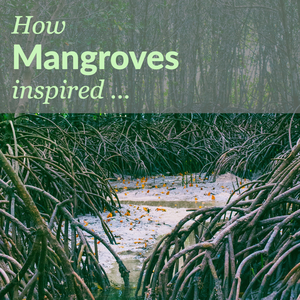
Mangrove trees (Rhizophora species), the natural model for Mangrove Root Structure: Living Sea Wall
Mangrove Root Structure: Living Sea Wall: the human application

Inspired by: Mangrove trees (Rhizophora species)

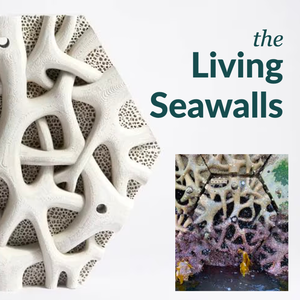
Mangrove Root Structure: Living Sea Wall

Sydney Institute of Marine Science, Reef Design Lab

The Problem

Coastal erosion threatens urban areas; traditional sea walls are concrete structures that destroy habitat and increase erosion in other areas.

Using mangrove root architecture to design living sea walls that provide coastal protection and habitat restoration.

The Sydney Institute of Marine Science and Reef Design Lab developed a living sea wall at Sydney Harbour based on mangrove root structures. Mangrove prop roots create complex three-dimensional networks that dissipate wave energy, trap sediment, and provide habitat. This design offers coastal protection while supporting biodiversity.

Biomimicry Breakdown

The Biomimicry Analysis

How Mangrove trees (Rhizophora species) translates into Mangrove Root Structure: Living Sea Wall

Term
Applied to Mangrove Root Structure: Living Sea Wall
Function
Mimics mangrove roots to provide coastal protection while creating habitat.
Mechanism
Complex three-dimensional structure dissipates wave energy and traps sediment naturally.
Design Principle
Build systems that make their habitat; protection and restoration as integrated function.
Resulting Design
Multi-functional coastal infrastructure that protects and restores ecosystems.

Find your own nature-inspired opportunities

Inspired by Mangrove Root Structure: Living Sea Wall? The Biomimicry Opportunity Map scans your company website and suggests challenges worth solving the way nature would.

Get started →

Apply This

Design Application Prompts

There's a natural world to explore

Learn to find strategies like this yourself