Materials
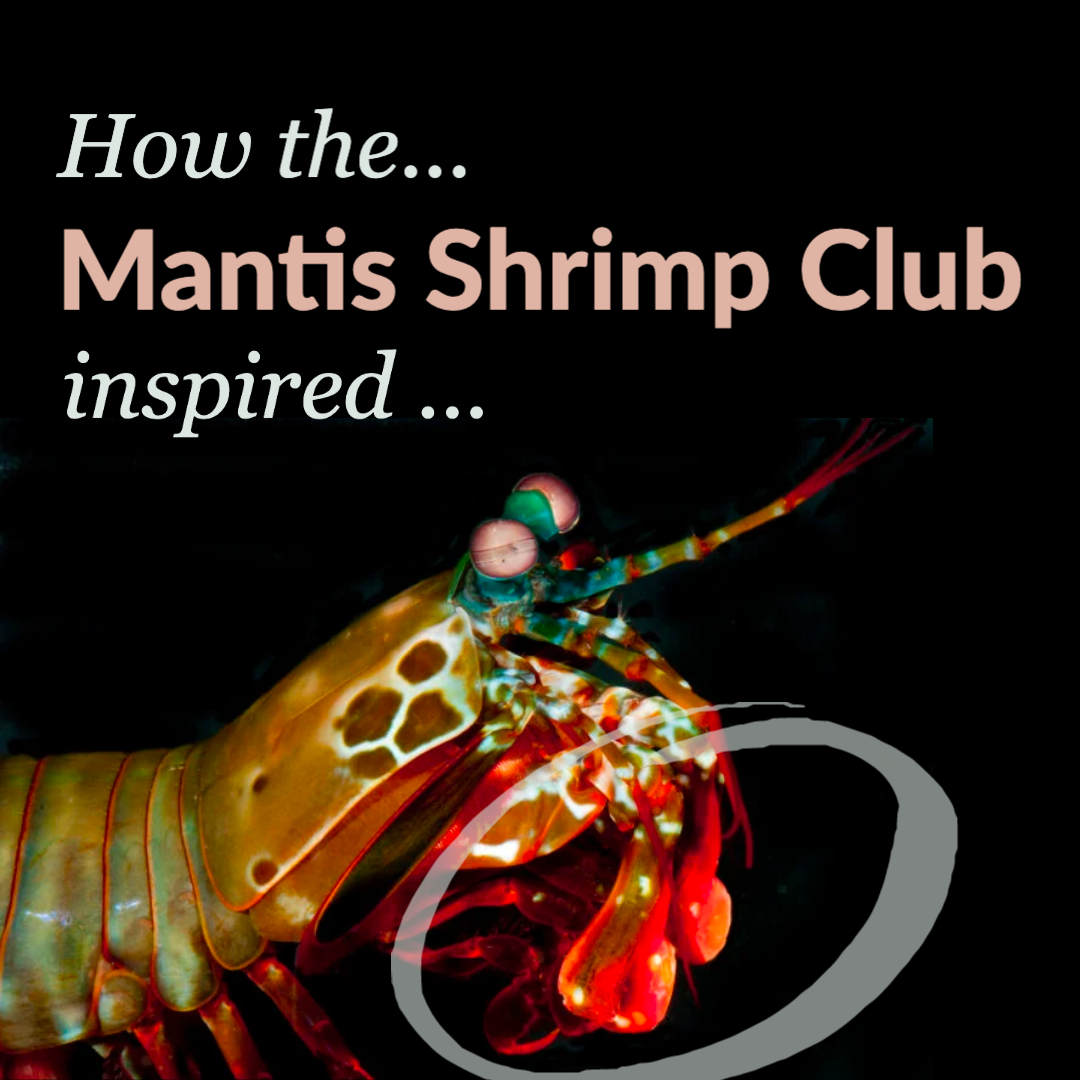
Mantis Shrimp (Stomatopoda, Dactyl Club), the natural model for Mantis Shrimp Composites
Mantis Shrimp Composites: the human application

Inspired by: Mantis Shrimp (Stomatopoda, Dactyl Club)

Mantis Shrimp Composites

Purdue University, UC Riverside

30

impact strength advantage

percentage superior to conventional carbon composites

45

crack deflection angle

degrees maximum propagation rotation per layer

15

cost reduction

percentage lower material cost vs. equivalent carbon fibre performance

The Problem

Conventional impact-resistant composites require expensive carbon fibres and remain vulnerable to delamination and catastrophic failure under extreme impacts. Damage tolerance is limited.

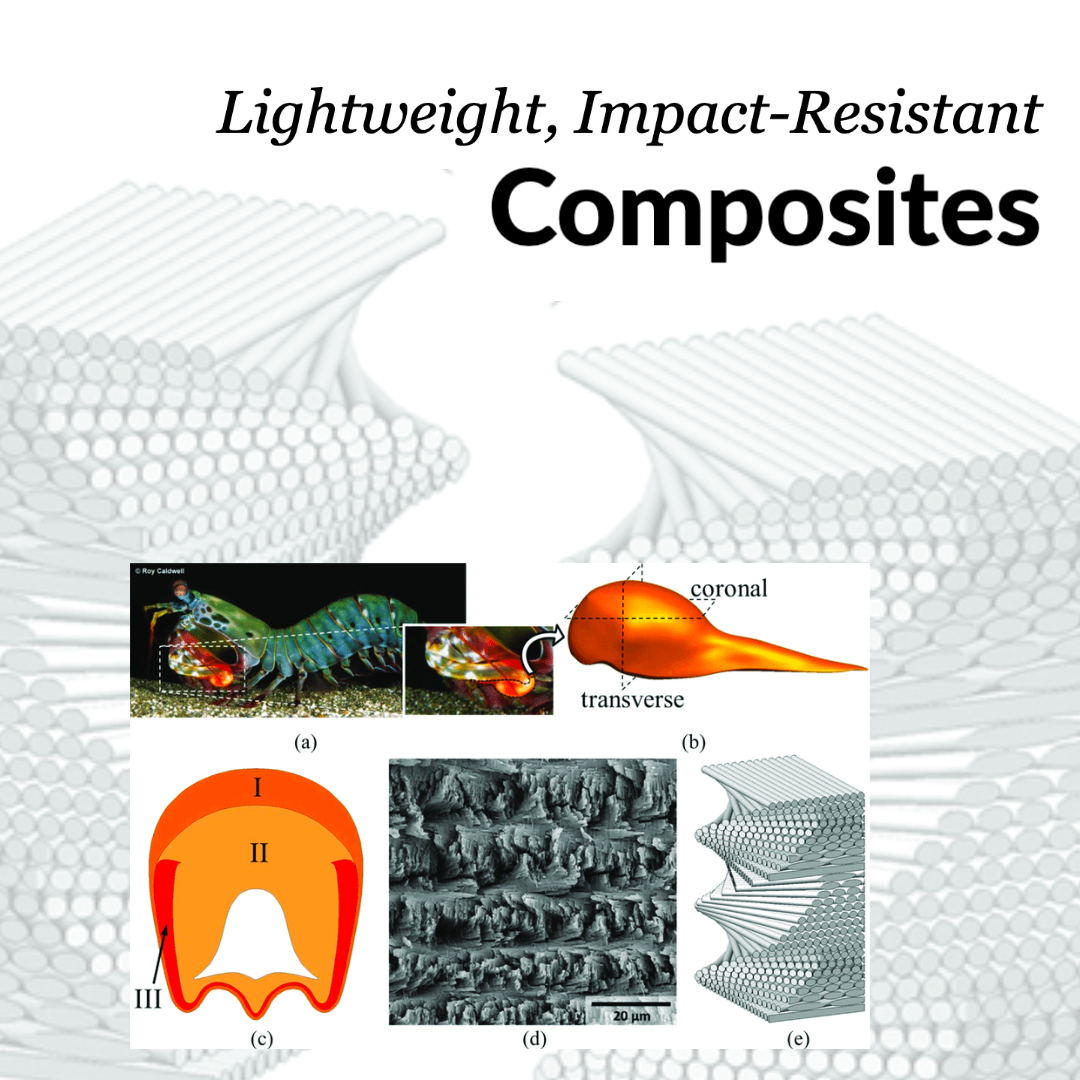
Herringbone structure rotates crack propagation. Purdue/UCR research.

Mantis shrimp possess the most powerful punch in the animal kingdom, striking prey at speeds exceeding 15 metres per second with forces equivalent to a bullet. Their dactyl club—a sophisticated bludgeoning structure—achieves this performance through layered hierarchical architecture where keratinous fibres are arranged in progressively rotated herringbone patterns. This spiral arrangement redirects crack propagation paths, prevents catastrophic failure, and distributes impact energy across multiple material interfaces. The dactyl club suffers damage from repeated impacts yet maintains structural integrity for thousands of strikes—a self-healing resilience unmatched in conventional materials. Materials scientists at Purdue and UC Riverside studied mantis shrimp club architecture and recognised that herringbone fibre arrangements could create impact-resistant composites superior to existing aerospace and military materials. By arranging reinforcement fibres in spiral-rotated layers, researchers engineered composites that progressively rotate crack propagation paths, dissipating impact energy through multiple failure modes rather than catastrophic fracture. These mantis-shrimp-inspired composites achieve impact strength 30% superior to carbon fibre whilst using lower-cost base materials, revolutionising how engineers approach damage tolerance in high-impact applications.
Biomimicry Breakdown

The Biomimicry Analysis

How Mantis Shrimp (Stomatopoda, Dactyl Club) translates into Mantis Shrimp Composites

Term
Applied to Mantis Shrimp Composites
Function
Composite layers contain reinforcement fibres arranged at progressively increasing angles (0°, 30°, 60°, 90° relative to impact axis). When a crack initiates, it encounters a fibre layer at an oblique angle and redirects rather than propagating straight through.
Mechanism
Cracks approaching a rotated fibre layer experience resistance and deflect along the fibre orientation rather than continuing their original path. Each successive layer rotates the crack direction further, creating a spiral crack path that dissipates energy through multiple fibre-matrix interfaces rather than propagating directly to catastrophic failure.
Design Principle
Distributed crack deflection through hierarchical geometry is superior to direct impact resistance because it converts catastrophic failure into progressive, energy-absorbing damage modes.
Resulting Design
Mantis-shrimp-inspired composites achieve impact strengths equivalent to high-end carbon composites at 15-20% lower material cost and with superior damage tolerance allowing repair rather than replacement.

Find your own nature-inspired opportunities

Inspired by Mantis Shrimp Composites? The Biomimicry Opportunity Map scans your company website and suggests challenges worth solving the way nature would.

Get started →

Apply This

Design Application Prompts

There's a natural world to explore

Learn to find strategies like this yourself