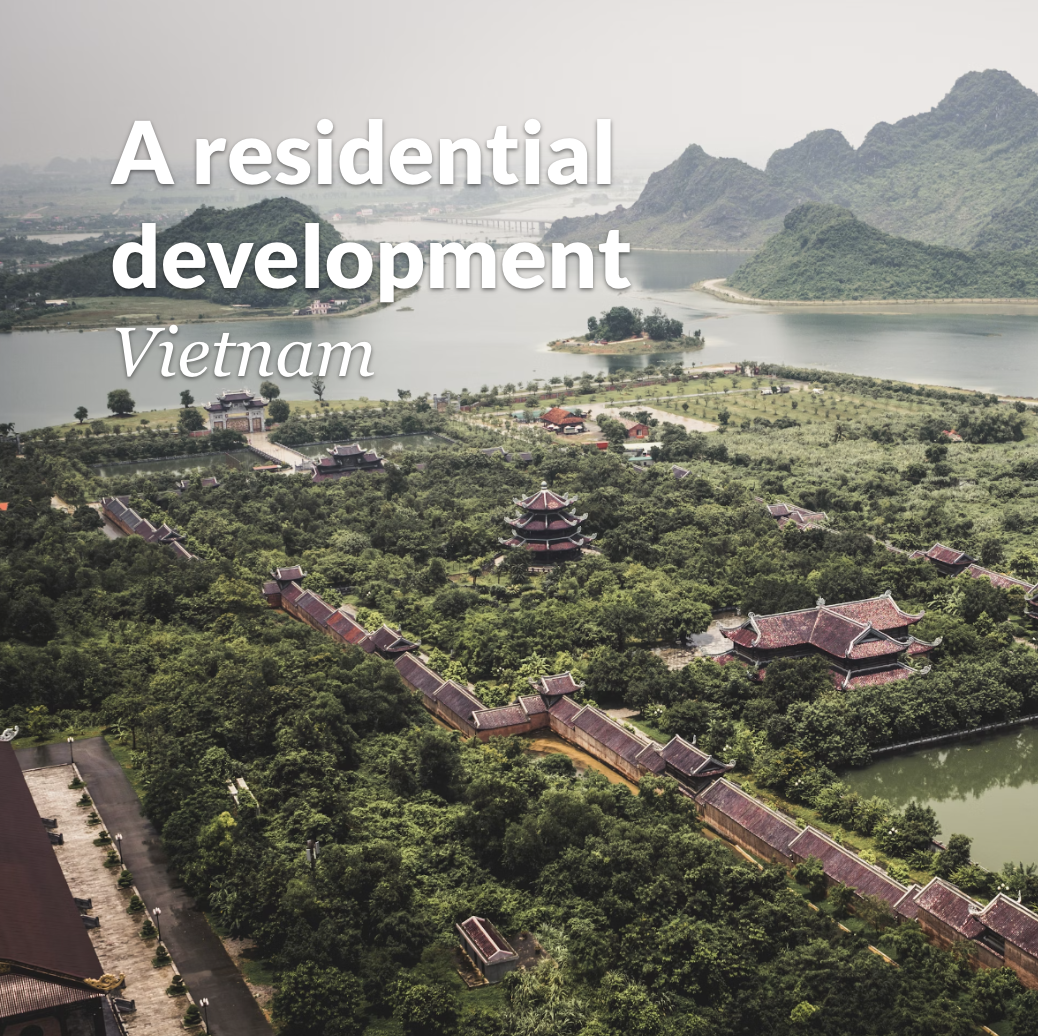
This Vietnamese waterfront development integrates rather than eradicates natural wetlands and river delta systems, allowing development and ecosystem services to coexist through locally-attuned system design.
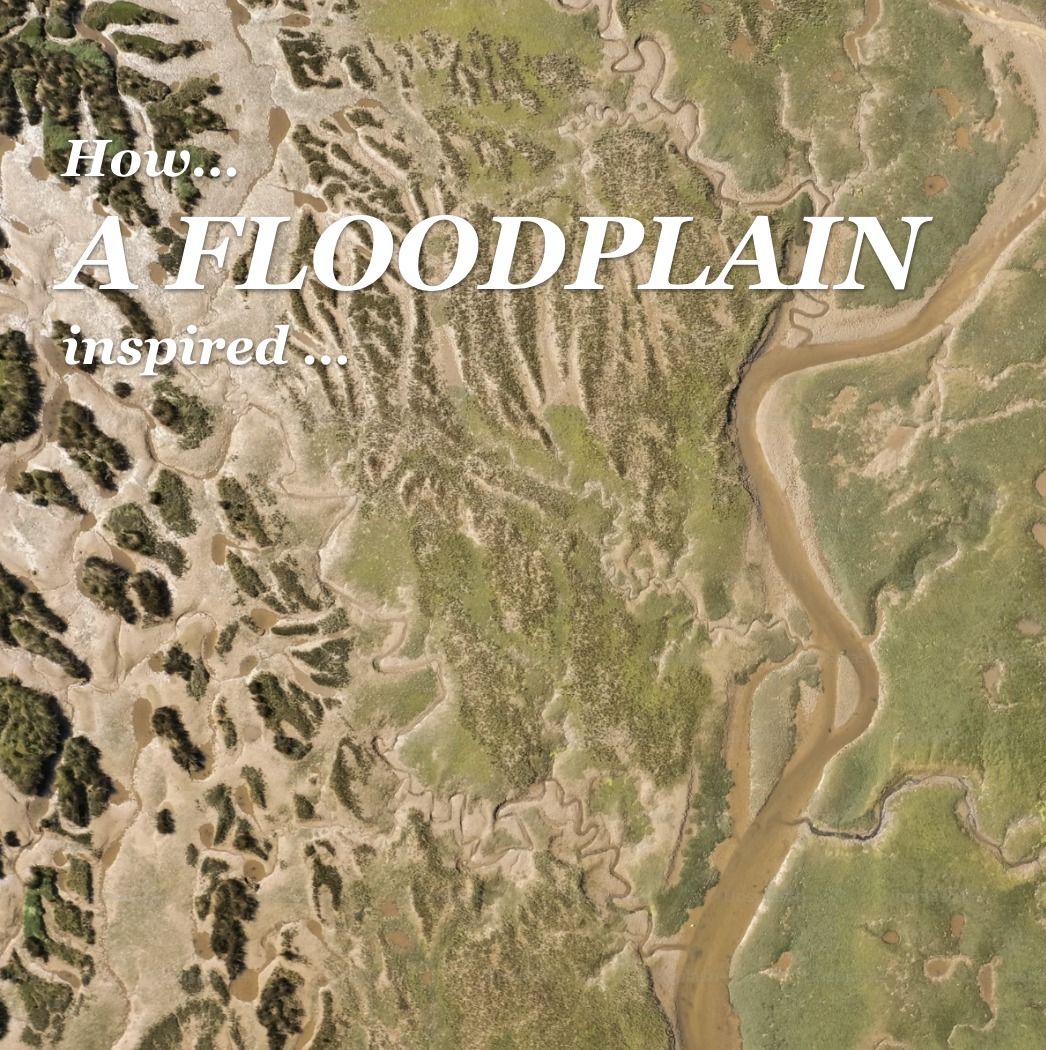
Hamlet Waterfront in Vietnam represents a courageous commitment to biomimetic development planning at the scale of entire landscapes. Developed by B+H Architecture in collaboration with Biomimicry Frontiers, the project confronted a typical development challenge: how to create residential real estate on the Saigon River floodplain, a landscape continuously shaped by flooding, seasonal inundation, and ecological dynamism. Rather than the conventional response—drain the floodplain, suppress floods through dikes, eliminate wetlands, and impose static urban geometry—the project asked a fundamentally different question: what if we designed development to work with, rather than against, floodplain ecology?
The site includes extensive wetlands and delta ecosystems that have evolved sophisticated strategies for thriving amid periodic inundation. Rather than eradicating these systems as obstacles to development, Hamlet Waterfront incorporated them as essential infrastructure. Buildings are positioned on elevated foundations that allow floodwaters to flow beneath them. Native vegetation is preserved and restored, providing habitat whilst naturally slowing floodwaters and filtering sediment. Permeable surfaces allow water infiltration. Wetland areas are expanded rather than diminished, creating natural water retention and purification.
The result is a development where no existing ecosystem is destroyed and all structures respond to local hydrological and ecological systems rather than imposing external demands. During monsoons and flood events, the wetlands function as natural flood buffers, protecting developed areas whilst creating habitat for birds, fish, and plants. The system demonstrates locally-attuned development—a principle that recognises that every landscape has distinct ecological characteristics and that good design works in concert with these characteristics rather than against them.
Hamlet Waterfront stands as proof that development and ecological restoration are not contradictory goals. By studying how river deltas and wetland systems naturally manage water, support biodiversity, and maintain stability, architects and engineers can create human settlements that enhance rather than degrade the landscapes they occupy. The project demonstrates that profitable development and ecological integrity can not only coexist but actively reinforce each other.