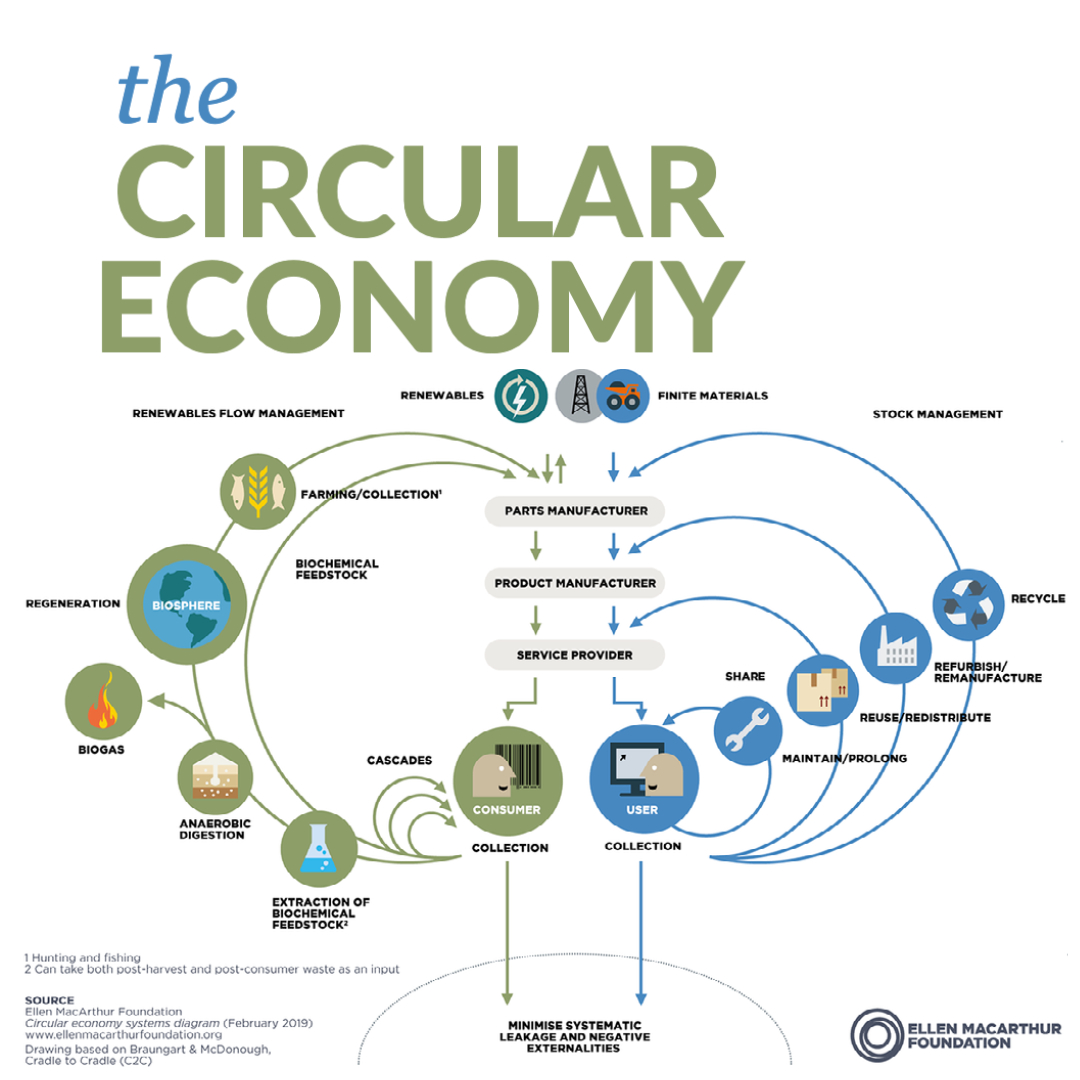
Kate Raworth's Doughnut Economy framework applies whole-systems and natural capitalism principles to redesign economic models. This systems-level biomimicry reframes economic success around ecological and social well-being rather than GDP growth.
Kate Raworth's Doughnut Economy is a systems-level framework that mimics how natural ecosystems operate: circular, regenerative, and balanced. Traditional economic models pursue endless GDP growth on a finite planet—biophysically impossible and ecologically destructive. Natural systems, conversely, operate within planetary boundaries while regenerating resources through circular processes. The Doughnut framework visualizes a 'safe and just space' with two boundaries: the social foundation (meeting human needs for food, water, health, education, income, networks, etc.) and the ecological ceiling (planetary boundaries for climate, biodiversity, land use, fresh water, nitrogen/phosphorus cycles, etc.). The goal is not to maximize one variable but to operate within this balanced space where human needs are met without exceeding planetary limits. This represents a profound application of biomimetic systems thinking: rather than copying specific organisms or mechanisms, Raworth applies principles of ecosystem function—regeneration, circularity, balance, and interconnection—to the entire economic system. The framework has been adopted by cities, nations, and organizations to guide policy and business strategy. It fundamentally challenges growth-at-all-costs capitalism and proposes an economy that thrives within ecological limits while ensuring human flourishing. This is systems-level biomimicry: using nature's organizational principles to redesign human economic institutions.