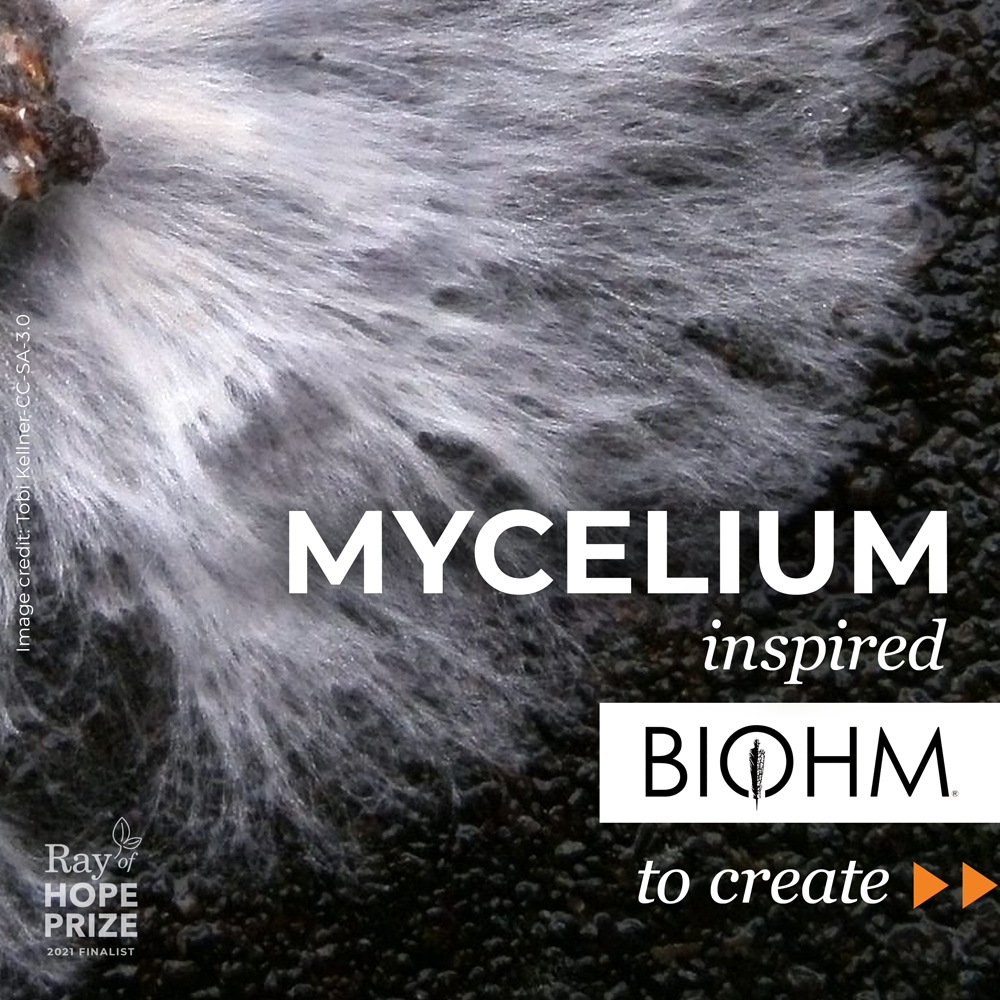
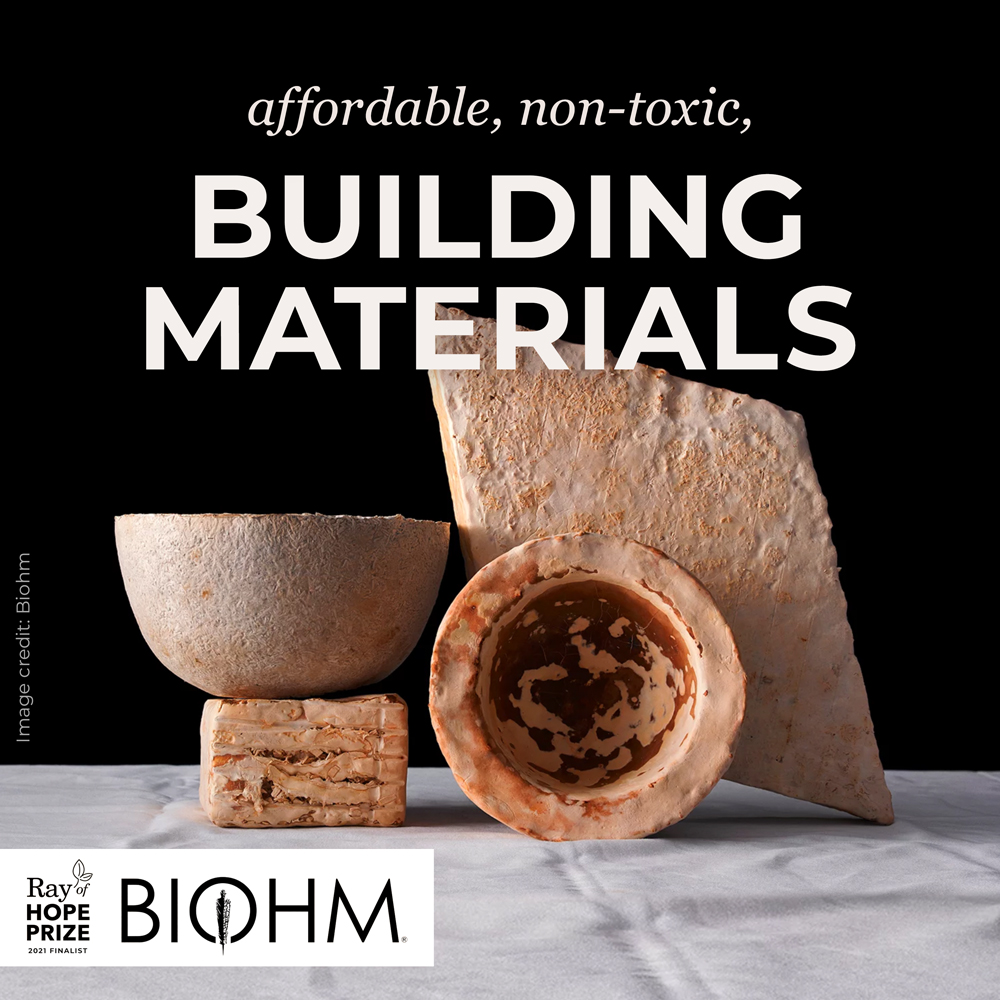
Biohm developed mycelium-based building materials that are affordable, non-toxic, fire-resistant, and fully biodegradable. These materials function as insulation, structural panels, and acoustic treatments in sustainable building design.
Biohm applies mycelium cultivation principles to create building materials that are simultaneously strong, insulating, fire-resistant, and biodegradable. Unlike Ecovative's focus on packaging, Biohm engineers mycelium composites for structural and semi-structural applications in buildings. The materials are created by growing mycelium networks through agricultural waste and mineral aggregates, creating composites with tunable properties. By adjusting substrate composition, growth time, and curing methods, Biohm produces materials with densities and strengths suitable for insulation, acoustic panels, interior walls, and even load-bearing applications. Key advantages: materials are manufactured without kilns or high-energy processes (unlike cement or fired clay), require no chemical binders, sequester carbon throughout their lifecycle, and can be returned to soil at end of life. Biohm materials have been tested for fire resistance (achieving non-combustible ratings in some formulations), thermal insulation (R-values comparable to conventional insulation), and acoustic absorption (superior to many synthetic alternatives). Production is scalable with distributed manufacturing possible (grow materials locally from local waste). Cost is competitive with conventional materials while offering superior environmental performance. Applications include interior walls, insulation, acoustic treatments, and architectural features. The technology represents true circular building: materials grow from waste, perform durably in buildings, then biodegrade back into soil.