Tessellations: Efficient Tiling Without Wasting Space
Natural system
Nature Model
biological inspiration
Various
Application
primary function
Global
Location
origin
The Problem
This innovation addresses a key sustainability or performance challenge.
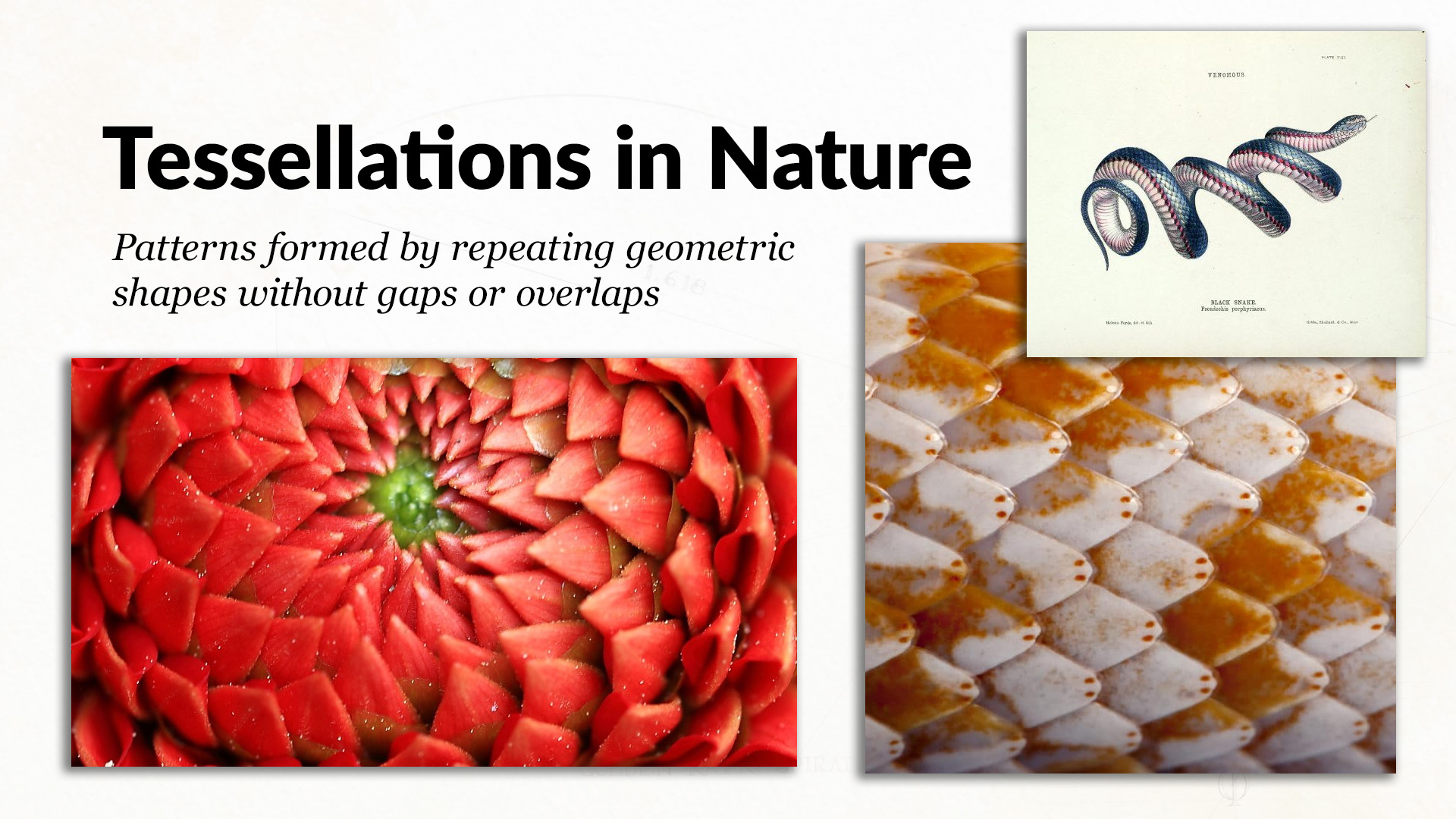
Tessellations: Efficient Tiling Without Wasting Space Tessellation in nature involves repeating geometric patterns that fit together without gaps, optimizing strength, efficiency, and space usage. Honeycomb structures in beehives use hexagonal tessellation to store honey with minimal wax.
Tessellations: Efficient Tiling Without Wasting Space Tessellation in nature involves repeating geometric patterns that fit together without gaps, optimizing strength, efficiency, and space usage. Honeycomb structures in beehives use hexagonal tessellation to store honey with minimal wax. Snake scales and fish skin tessellate for flexibility and protection. Turtle shells and insect exoskeletons form interlocking plates for durability.
Biomimicry Breakdown
The Biomimicry Analysis
Term
Applied to Tessellations: Efficient Tiling Without Wasting Space
Resulting Design
A nature-inspired solution: Tessellations: Efficient Tiling Without Wasting Space