The Problem
Traditional shoe treads sacrifice efficiency for safety, creating high friction in all directions that increases energy expenditure during movement. Wet and slippery surfaces remain hazardous despite tread design.
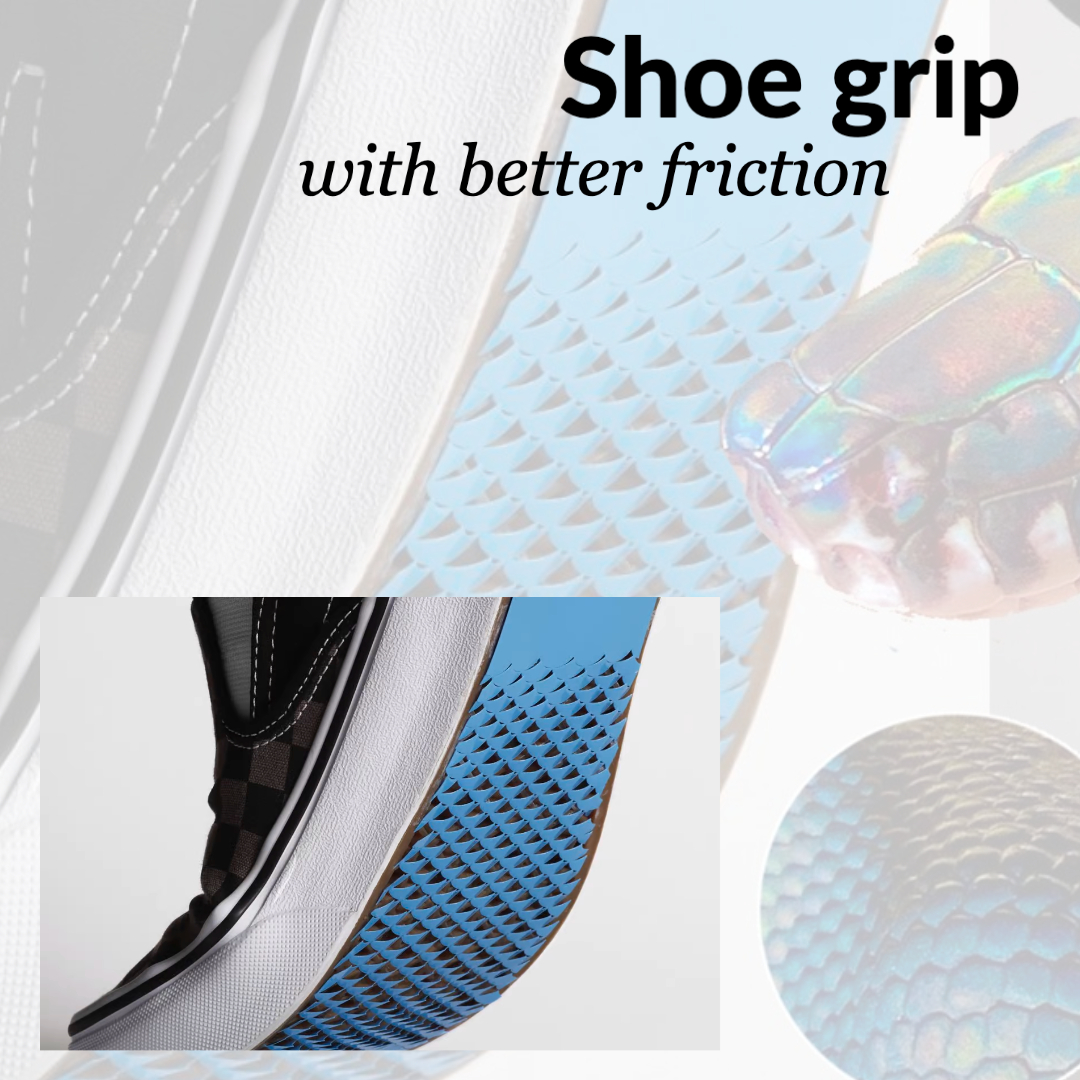
Snake scales create directional friction. Applied to footwear.
Snakes move across diverse surfaces—smooth rock, loose sand, vertical bark—yet maintain consistent traction through scale microstructures that create directional friction. Each scale has distinct friction properties along different axes: high friction opposing motion in the direction of travel (preventing slipping) but lower friction along the direction of travel (enabling efficient movement). This directional friction system allows snakes to climb, excavate, and move across treacherous terrain without separate specialised appendages. Shoe designers studying snake locomotion recognised that this directional friction principle could revolutionise footwear grip in both athletic and industrial applications. Modern shoe soles now incorporate microstructured patterns mimicking snake scale geometry, creating high traction perpendicular to the direction of motion whilst maintaining efficiency along the direction of travel. The result is footwear that provides superior grip on wet, slippery, and unstable surfaces—transforming athletic performance, workplace safety, and movement efficiency across hazardous environments.