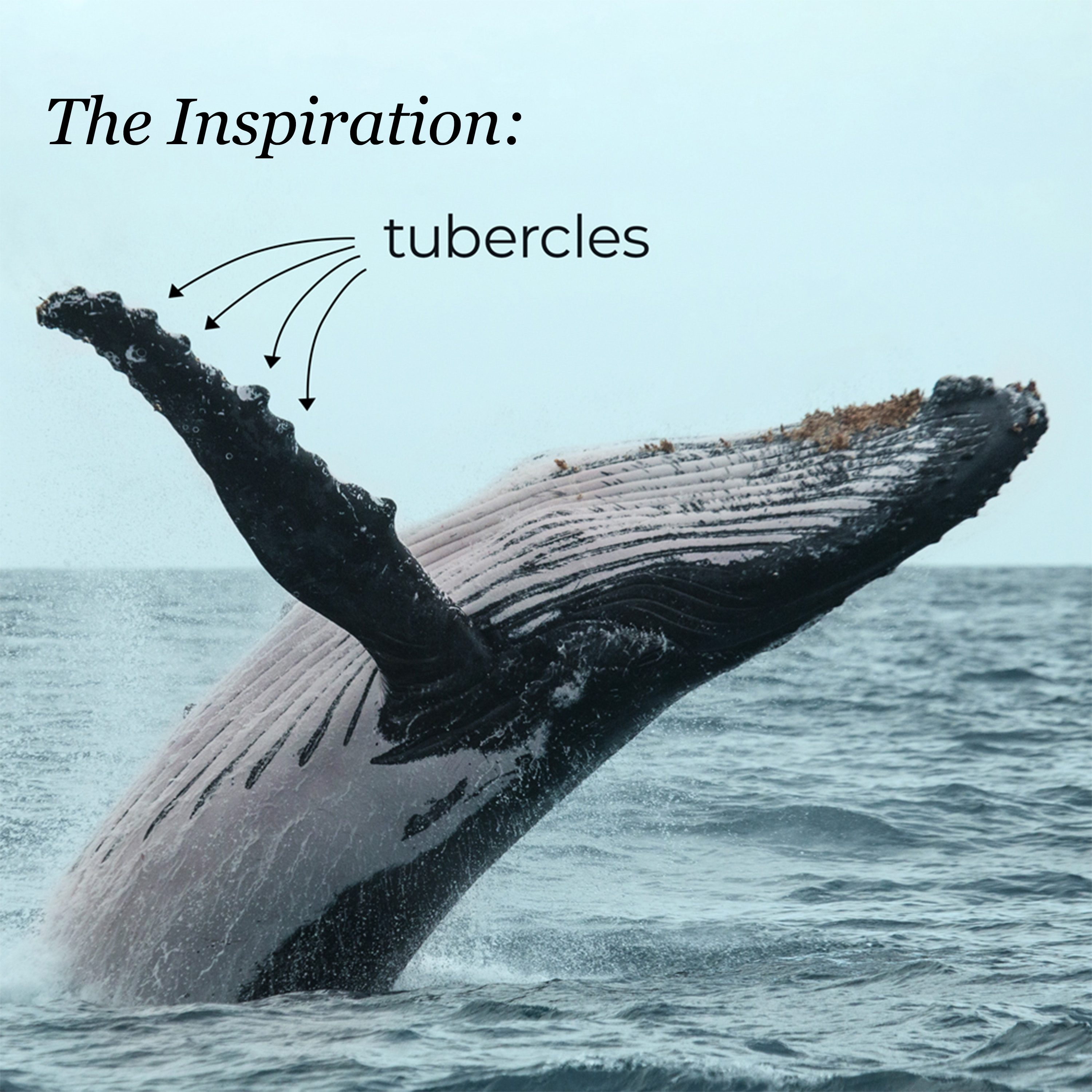
The bumps (tubercles) on humpback whale fins turn out to be a breakthrough aerodynamic innovation. WhalePower Corporation's turbine blades, modelled on these tubercles, generate 20% more power, operate in 40% lower wind speeds, and stall less — transforming wind energy economics.
Conventional aerodynamic theory predicted that smooth leading edges on wings and blades are optimal for lift generation. Humpback whale fins, however, have large bumps called tubercles along their leading edges — a structure that should, by conventional wisdom, reduce performance.
Biologist Frank Fish noticed this paradox when examining a bronze humpback whale sculpture and assumed it was a casting error. After measuring the actual anatomy, he confirmed the bumps were real — and then discovered why: the tubercles create micro-vortices that keep airflow attached to the blade surface at higher angles of attack, preventing stall.
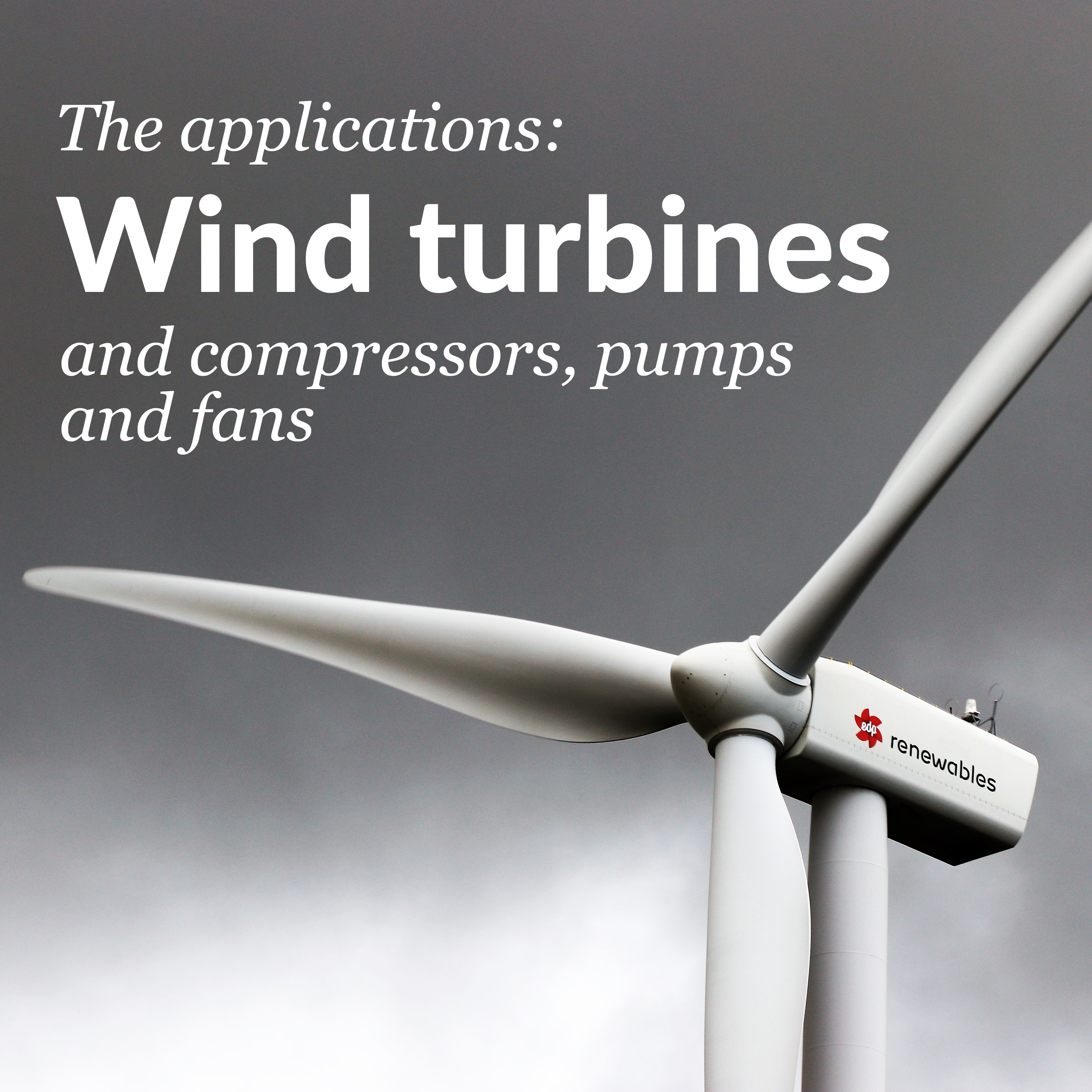
WhalePower Corporation applied this to wind turbine blades and fan blades. The tuberculated blades reach full power in 40% lower wind speeds, generate 20% more electricity in optimal conditions, produce less noise, and virtually eliminate the stall behaviour that makes conventional turbines inefficient in gusty or variable-speed winds.
The technology is now also applied to HVAC fans (reducing energy use by up to 20%), ship propellers, and aircraft wing designs. It represents one of the most commercially successful biomimicry innovations in the energy sector.