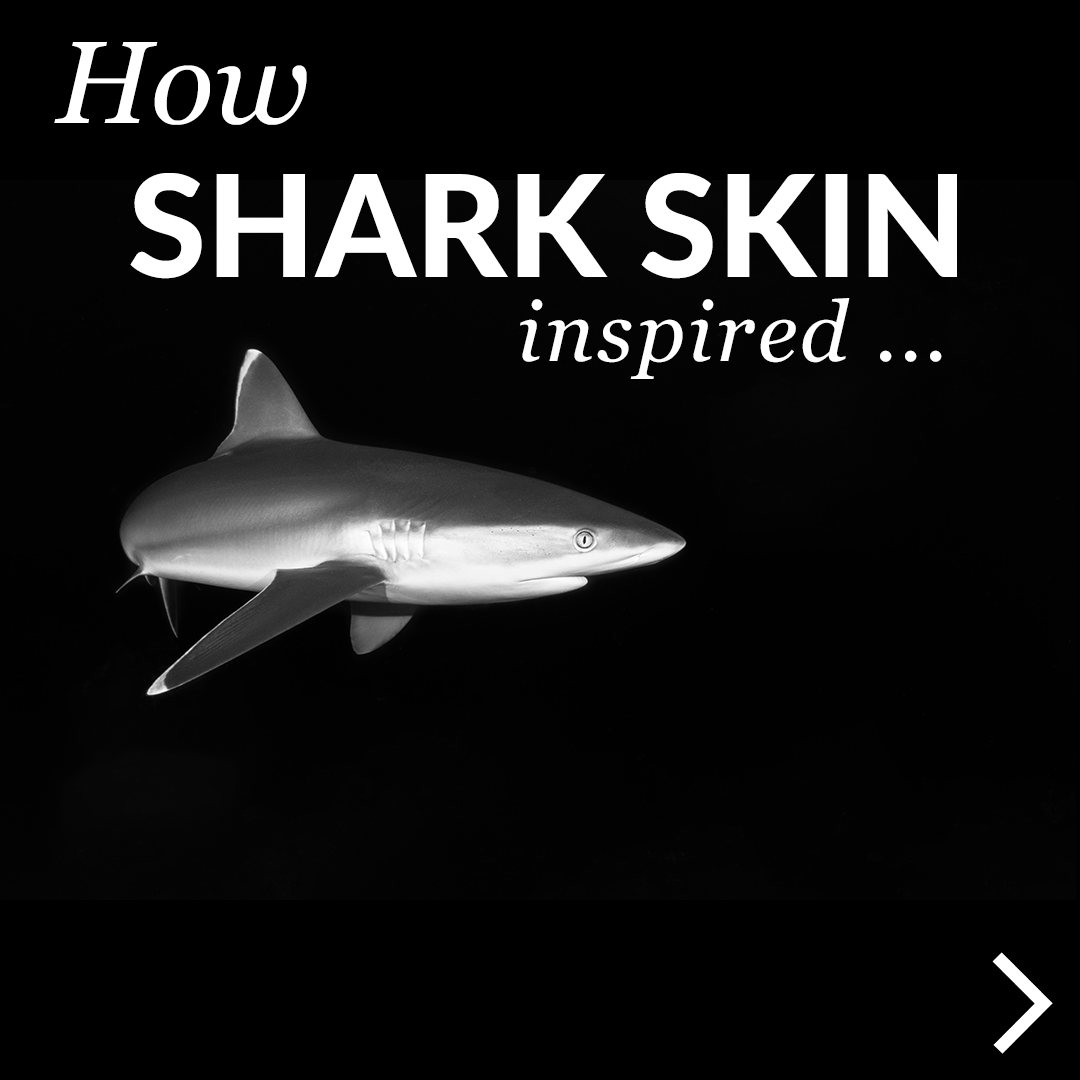
Shark skin is covered in microscopic tooth-like scales called denticles that create a riblet surface — this texture physically prevents bacteria from attaching, without any chemical biocides. Sharklet Technologies has commercialised this as the world's first physical (not chemical) anti-bacterial surface for hospital use.
Hospital-acquired infections kill approximately 99,000 people in the US alone each year, and bacterial resistance to antibiotics is growing. Most conventional anti-bacterial surfaces rely on biocidal chemicals (silver ions, triclosan, quaternary ammonium compounds) that kill bacteria on contact — but also select for resistant strains over time.
Dermal denticles (the tiny scales that give shark skin its rough texture) are arranged in a diamond pattern with riblet-like microchannels approximately 2 micrometres wide. Bacteria trying to colonise a surface need to find a surface patch large enough to accommodate their attachment apparatus. On the shark skin surface, no such patch exists: the geometry is specifically sized to deny bacteria the flat area they need to adhere and form biofilm.
Dr Anthony Brennan at the University of Florida studied this while working on a Navy contract to reduce biofouling on ships. He created Sharklet — a pattern of diamond-shaped microstructures just 2 micrometres wide — and licensed it through Sharklet Technologies.
Sharklet film on hospital surfaces reduces MRSA transfer by 80% with no chemicals. Applications include hospital bed rails, catheter surfaces, food preparation surfaces, touch screens, and medical implants. Unlike biocidal surfaces, Sharklet does not select for resistant bacteria because it works through physical, not chemical, means.