Materials
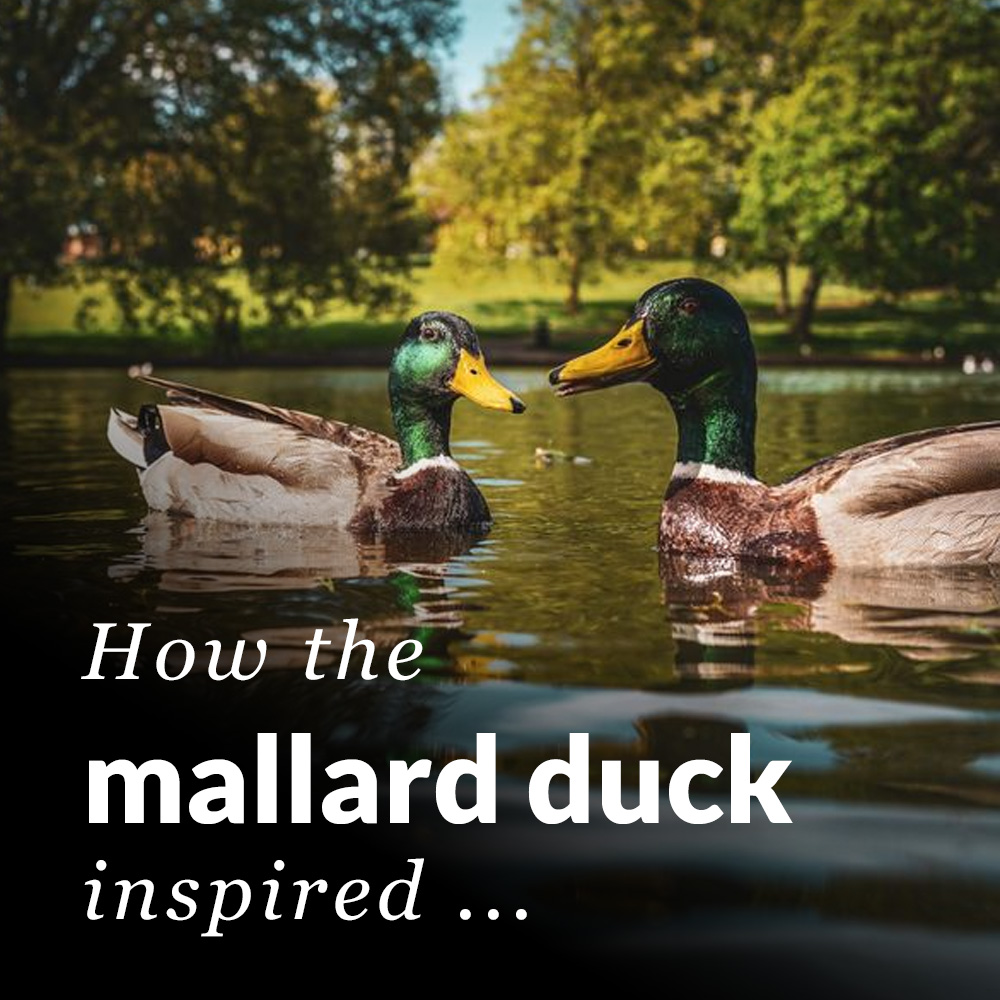
Mallard Duck, the natural model for Waterbird-Inspired Waterproofing
Waterbird-Inspired Waterproofing: the human application

Inspired by: Mallard Duck

Waterbird-Inspired Waterproofing

Cellulotech

0

Fluorine atoms in the coating chemistry

Covalent cellulose-based grafting replaces all PFAS components

50+

Wash cycles the coating survives

Covalent anchoring to fibre surfaces resists delamination through repeated laundering

~1nm

Coating thickness on fibre surface

Monolayer molecular grafting preserves breathability and hand-feel

The Problem

PFAS-based durable water repellency coatings for textiles are being banned globally due to environmental persistence and bioaccumulation, yet fluorine-free alternatives typically sacrifice wash durability or breathability.

Molecular grafting replicates duck preen-oil nanocoating

Durable water repellency (DWR) coatings keep outdoor garments dry, but the dominant chemistry — per- and polyfluoroalkyl substances (PFAS) — is now recognised as a persistent environmental contaminant that bioaccumulates in wildlife and human tissue. Regulatory bans are tightening worldwide, yet alternative coatings typically sacrifice either durability, breathability, or wash resistance. The textile industry is under pressure to find a fluorine-free solution that actually works.

Montreal-based Cellulotech drew inspiration from how aquatic birds maintain feather waterproofing. Ducks do not apply a thick wax layer; instead, their preen oil fills nanoscale capillary gaps between feather barbules through molecular self-assembly, creating a continuous hydrophobic network at minimal material cost. The functional waterproofing is molecular and structural, not bulk — which is why duck feathers remain breathable even while repelling liquid water entirely.

Cellulotech developed a cellulose-based chemistry that grafts hydrophobic molecular chains directly onto textile fibre surfaces, replicating the nanoscale gap-filling mechanism of preen oil without fluorine. The molecules anchor covalently to natural and synthetic fibres, surviving repeated washing cycles without delaminating. Because the coating is applied at the molecular monolayer scale, fabric hand-feel and breathability are preserved — properties that bulk silicone or wax coatings compromise.

The elimination of fluorine is the immediate commercial driver, but the molecular grafting approach has deeper implications: the same platform chemistry can be tuned to repel oils, biofouling, or specific chemicals, potentially replacing a broad family of functional coatings across medical textiles, filtration membranes, and marine applications — all without the persistent environmental legacy of fluorinated compounds.
Biomimicry Breakdown

The Biomimicry Analysis

How Mallard Duck translates into Waterbird-Inspired Waterproofing

Term
Applied to Waterbird-Inspired Waterproofing
Function
Ducks maintain waterproofing by distributing preen oil through nanoscale capillary gaps between feather barbules via molecular self-assembly, creating a continuous hydrophobic network at molecular scale without bulk coating or structural modification.
Mechanism
Cellulose-derived hydrophobic molecular chains are covalently grafted onto textile fibre surfaces, replicating preen-oil gap-filling at the monolayer scale — anchoring durably to both natural and synthetic fibres through the wash cycle.
Design Principle
Molecular-scale surface modification replaces bulk coating: by filling surface interstices with covalently bonded hydrophobic chains rather than depositing a thick fluoropolymer film, the treatment achieves durable water repellency without sacrificing breathability or introducing persistent contaminants.
Resulting Design
A fluorine-free DWR coating that survives repeated washing, preserves fabric breathability and hand-feel, and repels water as effectively as conventional PFAS coatings — meeting incoming regulatory requirements without performance compromise.

Find your own nature-inspired opportunities

Inspired by Waterbird-Inspired Waterproofing? The Biomimicry Opportunity Map scans your company website and suggests challenges worth solving the way nature would.

Get started →

Apply This

Design Application Prompts

There's a natural world to explore

Learn to find strategies like this yourself