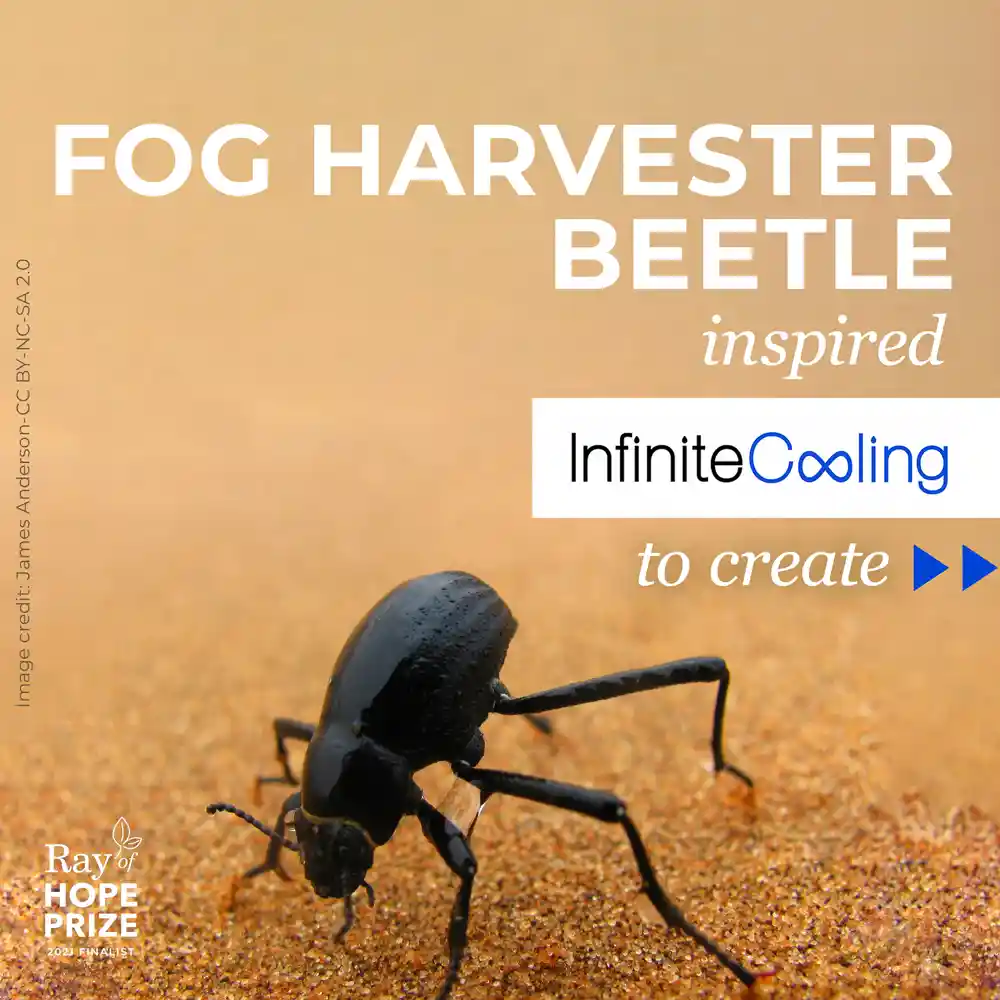
The Namib beetle harvests water from fog in one of the world's driest deserts by using bumps on its back that attract water droplets, which then roll into its mouth. This principle is now used in fog nets, building materials, and greenhouse designs to collect drinkable water from thin air.
The Namib Desert beetle survives in an environment that receives less than 1.5cm of rain per year by collecting water from coastal fog. Its back is covered in alternating hydrophilic (water-attracting) bumps and hydrophobic (water-repelling) troughs. Fog droplets accumulate on the bumps, grow heavy, then roll down into the beetle's mouth.
MIT researchers replicated this surface texture using hydrophilic glass beads embedded in a hydrophobic polymer film. The resulting surface can collect water from fog even in very low-humidity conditions, at rates far exceeding any previous synthetic fog collector.
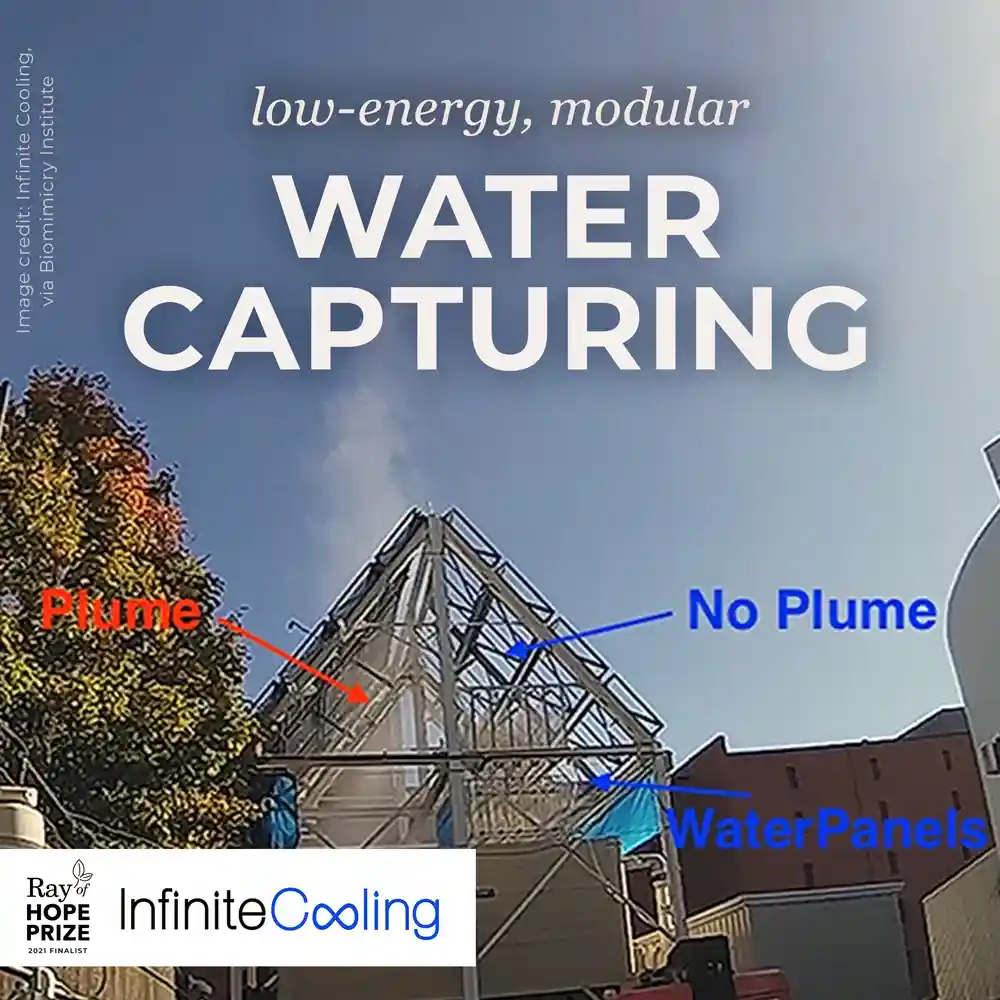
The Sahara Forest Project in Qatar uses this principle at scale, growing crops in arid land using seawater greenhouses. Fog is produced inside, collected on beetle-inspired surfaces, and channelled to irrigate plants — demonstrating food production in the desert using only sunlight and seawater.
Building applications include fog-collecting mesh facades, roofing panels that harvest atmospheric moisture, and window coatings that collect dew for greywater systems.