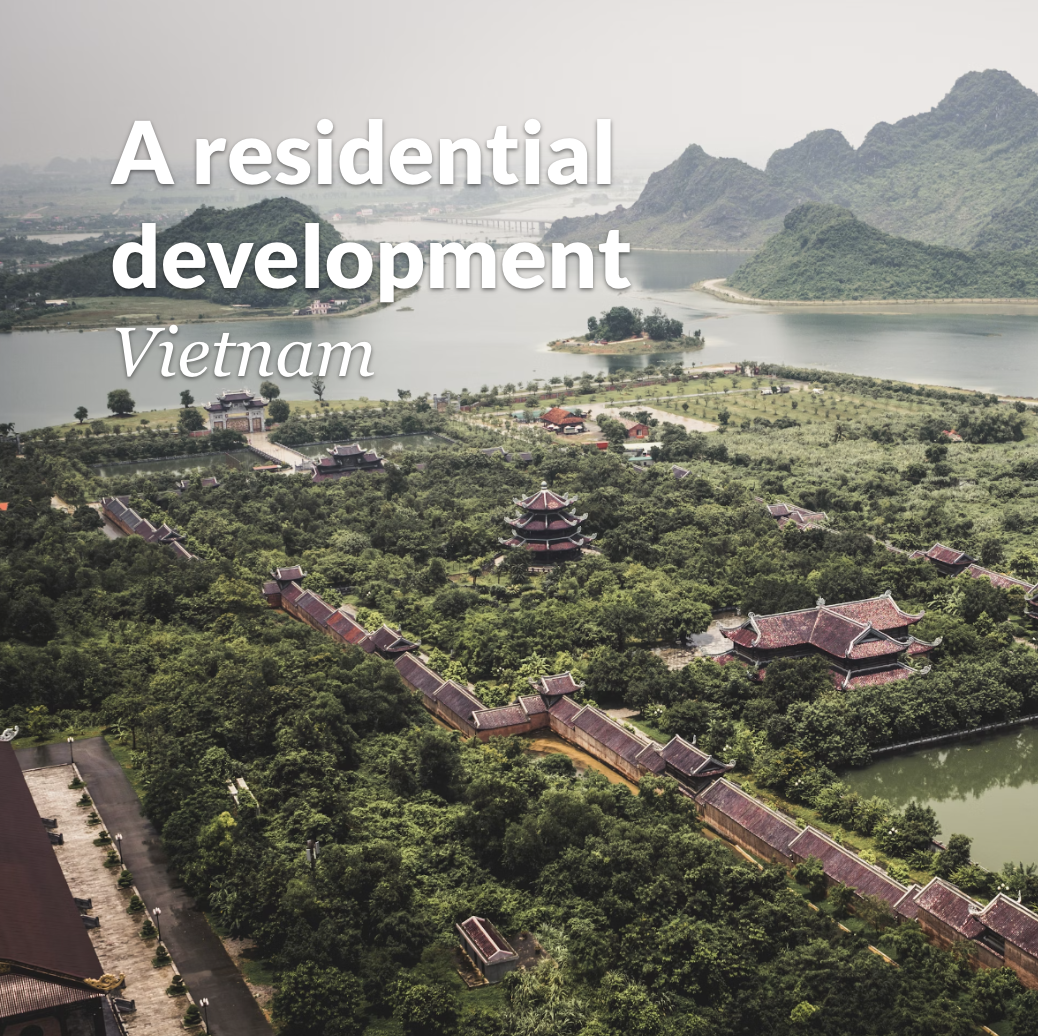
This Indian village replicates six ecosystem services from local deciduous forest, with roofs that release monsoonal water as vapour, permeable pavements, tree-root-inspired foundations, and anthills-modelled rainfall management.
Village of Lavasa represents a comprehensive application of biomimicry principles to entire settlement design, a collaboration between architectural firm HOK and biomimicry strategic consultancy Biomimicry 3.8, working under the guidance of Janine Benyus, pioneering voice in biomimetic design. Rather than viewing urban development as something imposed upon natural systems, the project asks: what if we designed a village to replicate the ecosystem services that the original deciduous forest provided?
The village replicates six key ecosystem services from the forest it replaced. First, roof design mimics leaf structures, releasing monsoonal rainfall as vapour through enhanced evaporative cooling rather than creating runoff. This reduces surface water volume whilst maintaining hydrological balance. Second, permeable pavements throughout the village allow rainwater to percolate into groundwater aquifers rather than running off into streams, replicating forest floor's water infiltration capacity. These two hydrological strategies alone transform the village from a water-shedding surface into a water-absorbing landscape.
Third, building foundations employ tree-root-inspired anchor designs that stabilise structures whilst maintaining soil health and permeability, preventing the compaction and erosion typical of conventional construction. Fourth, the village's stormwater management system models itself on termite mounds and anthills, using branching channels and settling basins that slow water flow, prevent erosion, and naturally filter runoff—solving stormwater management through passive ecological design rather than engineered detention ponds. Additionally, the village's vegetation strategy, building placement, and microclimatic design preserve and extend habitat corridors that the original forest supported.
Village of Lavasa demonstrates that entire human settlements can be designed to enhance rather than degrade ecological function. By studying what a healthy deciduous forest does—cycling water, building soil, managing rainfall, providing habitat, generating oxygen, moderating temperature—and then systematically replicating these functions through architectural and planning choices, the village achieves economic development that restores rather than diminishes the natural systems that make human life possible.