The Problem
Petroleum-derived foams are energy-intensive to manufacture, non-biodegradable, and accumulate as microplastics in the environment. The footwear, upholstery, and accessories industries need a high-performance foam with equivalent cushioning, insulation, and durability — one that closes the loop at end of life.
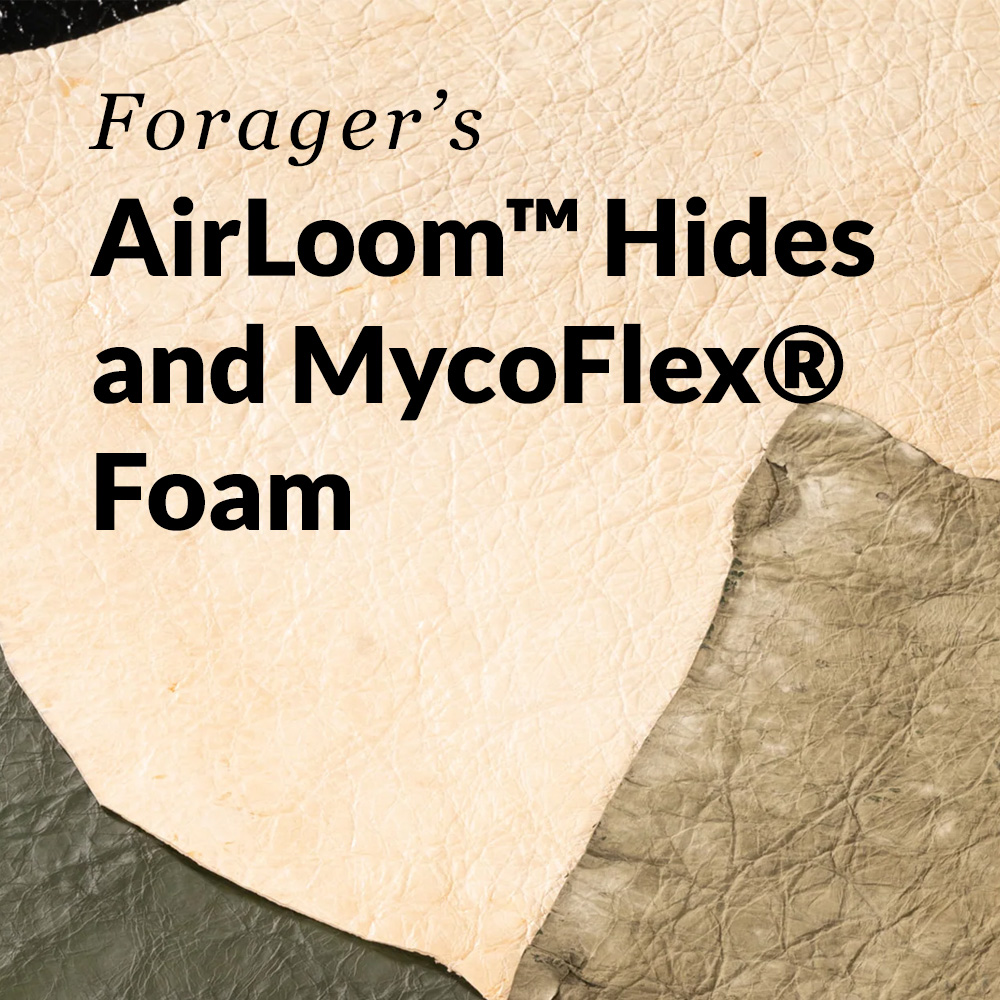
MycoFlex® Foam from Forager (by Ecovative) is a 100% biobased foam grown from pure mycelium on agricultural waste in just 7 to 9 days. The foam is antimicrobial, thermally insulating, flame resistant, and aerobically compostable — delivering a sustainable alternative to petroleum-derived foams across footwear, upholstery, and accessories.
Synthetic foams — polyurethane, expanded polystyrene — underpin everything from shoe midsoles to furniture cushioning. Derived from petrochemicals, they are energy-intensive to produce, take hundreds of years to decompose, and accumulate as microplastics in soil and waterways. As footwear brands, furniture makers, and electronics manufacturers face mounting pressure to decarbonise their supply chains, they need a foam that matches synthetic performance across cushioning, insulation, and durability — while closing the loop at end of life.
Forager's MycoFlex® Foam meets this challenge by growing foam directly from pure mycelium. Using the same AirMycelium® vertical farming process that produces AirLoom™ Hides, Forager cultivates mycelium on plant-based agricultural by-products inside precisely controlled chambers. The mycelium's natural three-dimensional mesh structure — the same network fungi use to decompose organic matter and distribute nutrients through soil — inherently forms a porous, resilient foam without any synthetic additives. Growth conditions are tuned to dial in specific pore size, density, and mechanical properties for each application.
MycoFlex® Foam is 100% biobased, antimicrobial, thermally insulating, flame resistant, and aerobically compostable. It grows in just 7 to 9 days — enabling fast production cycles — and can be shaped and guided during growth rather than stamped or cut after manufacture. The foam's first commercial application is the world's first mycelium-based earplugs, developed in partnership with audio brand GOB: a fully compostable alternative to the billions of single-use petroleum-based earplugs discarded every year.