The Problem
The global leather industry relies on livestock farming — a major source of greenhouse gas emissions, land use, and water consumption — and on petroleum-based synthetic alternatives that are non-biodegradable and shed microplastics. Fashion brands need a material with leather's performance, aesthetics, and workability, without either environmental footprint.
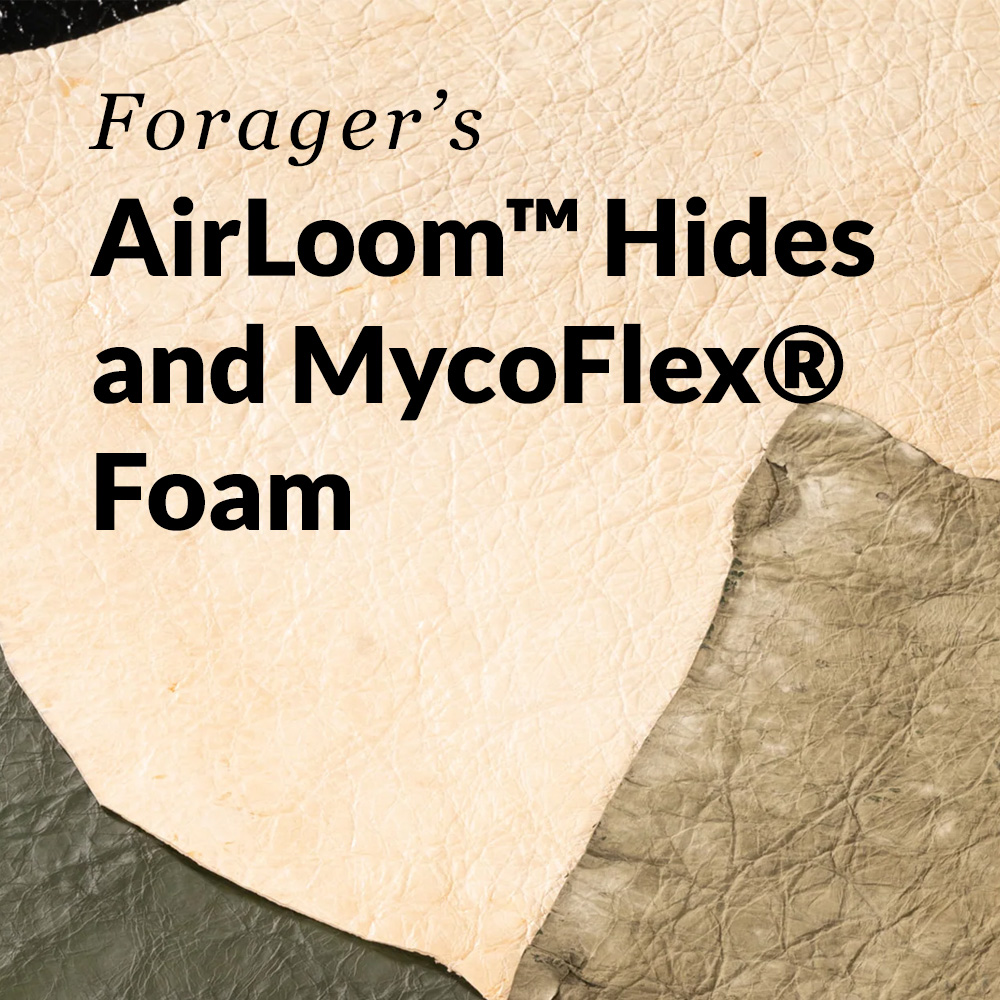
AirLoom™ Hides from Forager (by Ecovative) grow sheets of pure fungal mycelium on agricultural waste into a durable, fully compostable leather alternative. The hides preserve the natural fibrous architecture of mycelium without grinding or binding — matching animal leather in tear resistance and available in custom colours, textures, and thicknesses from 0.4 to 1.3 mm for fashion, accessories, and footwear.
The global leather industry depends on livestock farming — one of the largest contributors to greenhouse gas emissions, land degradation, and freshwater consumption. Petroleum-based synthetic alternatives like PU leather solve one problem while creating another: they are non-biodegradable and shed microplastics throughout their lifetime. Fashion, footwear, and accessories brands urgently need a material with leather's performance, workability, and aesthetic richness, without either footprint.
Forager — a brand of Ecovative Design — answers this challenge by growing its AirLoom™ Hides from pure fungal mycelium. Using its proprietary AirMycelium® vertical farming process, Forager cultivates mycelium on plant-based agricultural by-products (corn husks and similar waste) inside precisely controlled chambers. The mycelium grows into continuous sheets — up to 1.6 metres wide and 30 metres long — in a matter of days. The sheets are then harvested and sent to finishing partners for tanning, dyeing, embossing, and texturing, giving designers access to matte, glossy, iridescent, and embossed finishes in virtually any colour.
Unlike competing mycelium leather products that grind mycelium and rebind it with synthetic fibres, AirLoom™ Hides preserve the natural interlocking structure of the mycelium threads. This structural integrity gives the material its mechanical strength — tear resistance equal to raw animal hide — without any plastic or fibre additives. At end of life, AirLoom™ Hides are home-compostable, returning nutrients to soil rather than persisting in landfill. Forager's farm currently produces 1.5 million square feet of hide per year, with major fashion groups including PVH and Bestseller among its priority-access partners.