Technology
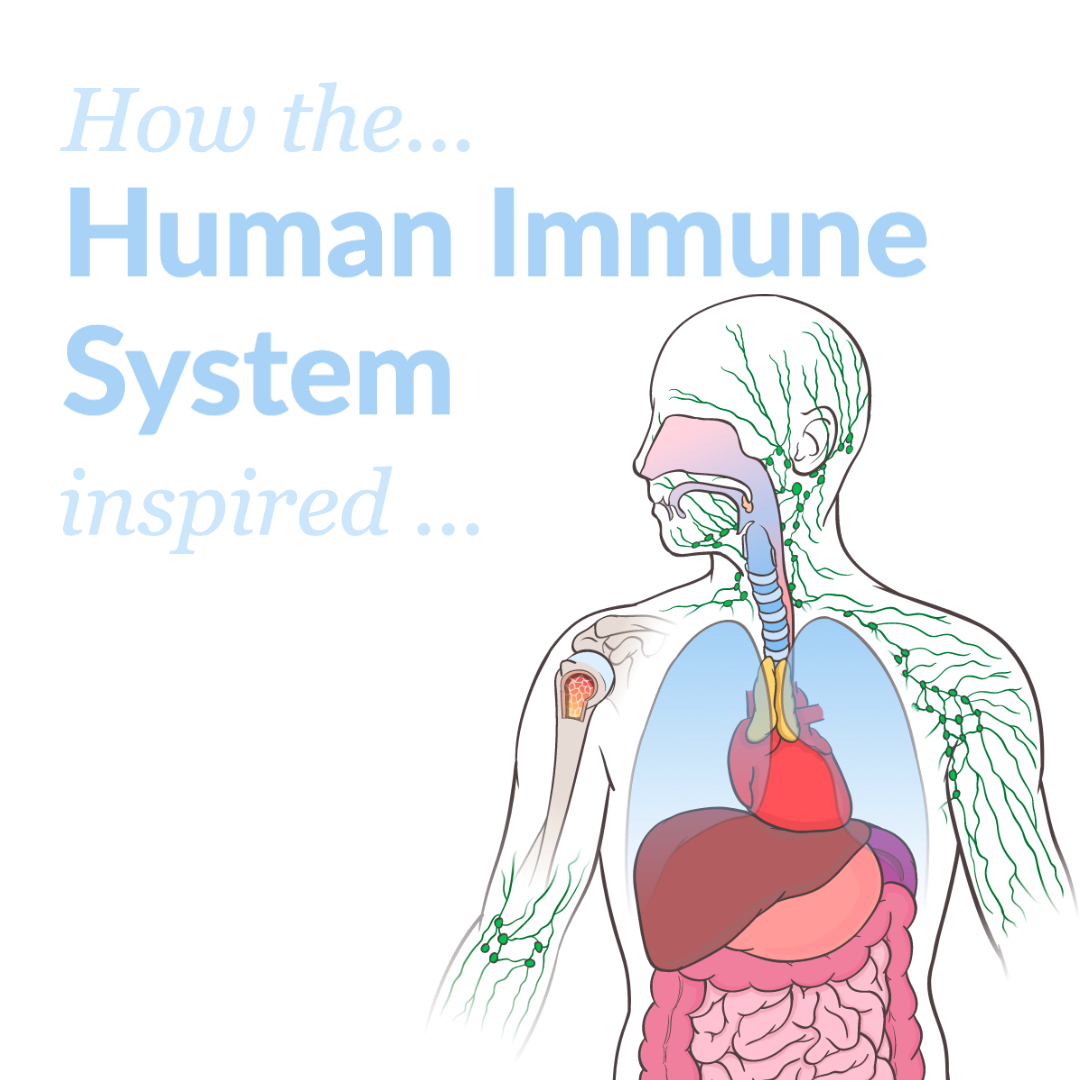
Human Immune System (T-cells, Sentinel Pattern), the natural model for Immune System Disease Monitoring
Immune System Disease Monitoring: the human application

Inspired by: Human Immune System (T-cells, Sentinel Pattern)

Immune System Disease Monitoring

14

detection time reduction

days earlier than conventional surveillance

76

sentinel site coverage

percentage of population within detection network

89

false alarm reduction

percentage improved specificity vs. centralised thresholds

The Problem

Centralised disease reporting creates 2-4 week delays in outbreak detection. Information flows slowly through hierarchies. By the time outbreaks are detected, thousands are infected.

Distributed sentinel nodes like immune T-cells.

The human immune system lacks a central command centre yet detects pathogenic outbreaks across the entire body through distributed sentinel cells—T-lymphocytes that patrol tissues, sample antigens, and communicate threat information back to lymph nodes and immune hubs. This decentralised surveillance system can detect and respond to threats within hours despite processing information across a distance-separated network. Public health systems, by contrast, rely on centralised reporting where information flows upward through hierarchies to national epidemiological agencies—a process that delays outbreak detection by weeks or months. Epidemiologists recognised that immune system architecture could revolutionise disease surveillance. Decentralised disease monitoring networks deploy sentinel nodes (typically hospitals, clinics, pharmacies) that detect unusual patterns locally and transmit information to regional hubs without requiring central clearance. Machine learning systems analyse patterns across distributed nodes, identifying disease clusters before symptoms become widespread. This biomimetic approach detected COVID-19 patterns 2-3 weeks before conventional surveillance, reducing outbreak response time from months to days and demonstrating that immune-system-inspired decentralised networks fundamentally outperform hierarchical reporting for early threat detection.
Biomimicry Breakdown

The Biomimicry Analysis

How Human Immune System (T-cells, Sentinel Pattern) translates into Immune System Disease Monitoring

Term
Applied to Immune System Disease Monitoring
Function
Distributed sentinel nodes continuously monitor local health data—pharmacy dispensing patterns, hospital admissions, emergency department chief complaints. Machine learning detects anomalies from baseline patterns, automatically flagging unusual clusters without centralised approval.
Mechanism
Each sentinel node processes local data through statistical models trained on historical patterns. When anomalies exceed local thresholds, alerts transmit to regional hubs. Regional systems aggregate information from multiple sentinel nodes, identifying geographic clusters and disease signatures using machine learning pattern recognition.
Design Principle
Decentralised detection systems respond faster than hierarchical systems because local nodes respond to actual emerging patterns rather than waiting for centralised analysis and official pronouncements.
Resulting Design
Decentralised networks detect emerging outbreaks 14-21 days earlier than conventional systems, enabling intervention before exponential spread. COVID-19 variants detected 2-3 weeks before official emergence.

Find your own nature-inspired opportunities

Inspired by Immune System Disease Monitoring? The Biomimicry Opportunity Map scans your company website and suggests challenges worth solving the way nature would.

Get started →

Apply This

Design Application Prompts

There's a natural world to explore

Learn to find strategies like this yourself