The Problem
Buildings consume massive energy, eliminate habitats, and create dead concrete environments; conventional construction is disconnected from nature
Vincent Callebaut Architectures designs biomimetic buildings that function like living ecosystems. Vertical forests integrate vegetation into building structure, mimicking forest ecology while providing insulation, air purification, and aesthetic benefits.
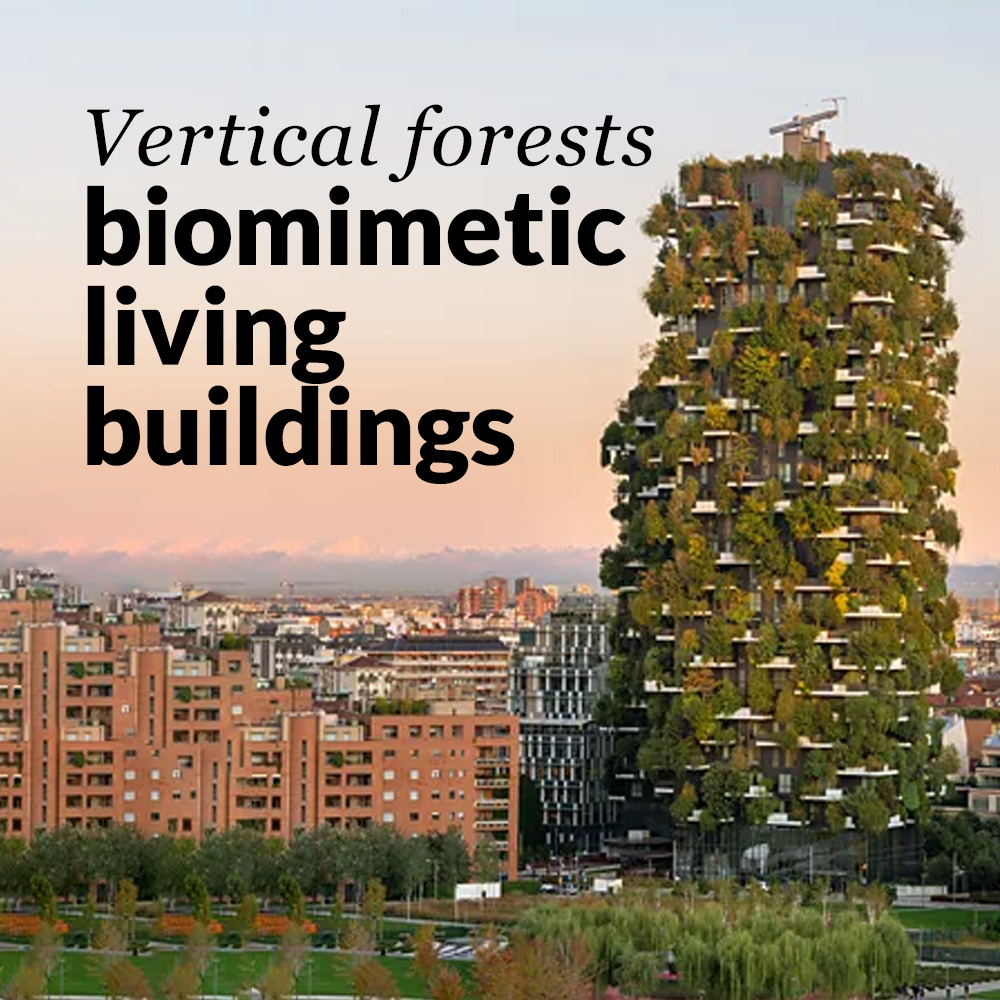
Vincent Callebaut is an architect who specializes in biomimetic buildings that integrate natural systems into built environments. His vertical forest concept is perhaps the most visible example: buildings that are as much ecosystem as building, with vegetation integrated throughout their structure. The Bosco Verticale in Milan (designed by Boeri Studio) is perhaps the most famous example, but Callebaut has designed numerous buildings using similar principles. The concept is biomimicry at the architectural scale: instead of mimicking a specific organism, the building itself becomes an organism. Vertical forests serve multiple functions: they provide thermal insulation (plants and soil buffer temperature extremes), air purification (plants absorb CO2 and produce oxygen), habitat creation (birds, insects, and other creatures colonize the vegetation), stormwater management (vegetation and soil absorb rainfall), and psychological benefits (people respond positively to visible nature). The buildings are designed to mimic forest ecology: vertical stratification (different vegetation types at different heights), interconnected canopy (allowing movement for animals and air), and integrated water systems (capturing, filtering, and recycling water). Production costs are higher than conventional buildings, but operational costs are lower due to reduced heating/cooling, improved air quality, and longevity of structure. Buildings become more beautiful, productive ecosystems over time as vegetation matures and ecological relationships develop. This approach addresses fundamental design question: what if buildings functioned like living systems rather than dead structures?