


Technology
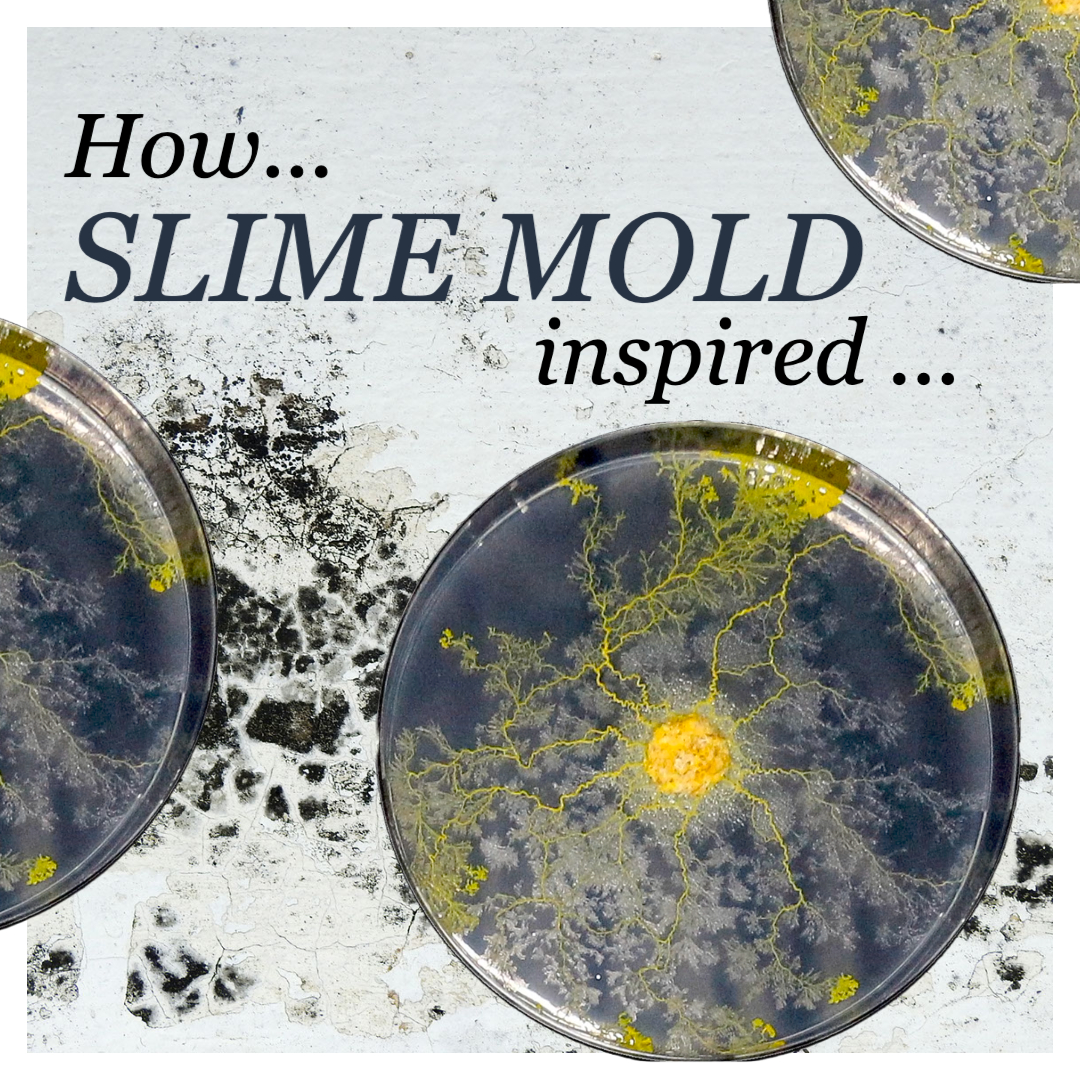
Slime mold (Physarum polycephalum), the natural model for Slime Mold: Self-Organized Adaptive Network Design
Slime Mold: Self-Organized Adaptive Network Design: the human application

Inspired by: Slime mold (Physarum polycephalum)

Slime Mold: Self-Organized Adaptive Network Design

Tokyo Railway System, Atsushi Tero research

The Problem

Network design is computationally complex; transportation networks often inefficient; need for biologically-inspired optimization.

Railway system and network design inspired by slime mold's ability to create optimal resource distribution networks without central planning.

Slime molds solve path-finding and network optimization problems through distributed chemical signaling. Tokyo's railway system was redesigned using slime mold principles - the organism naturally creates networks that approximate optimal routing when faced with finding paths between resources. Researchers applied this to railway layout optimization.

Biomimicry Breakdown

The Biomimicry Analysis

How Slime mold (Physarum polycephalum) translates into Slime Mold: Self-Organized Adaptive Network Design

Term
Applied to Slime Mold: Self-Organized Adaptive Network Design
Function
Mimics slime mold optimization for network design.
Mechanism
Distributed chemical processes create increasingly optimized networks.
Design Principle
Use self-organization for complex system optimization.
Resulting Design
Optimized transportation and infrastructure networks.

Find your own nature-inspired opportunities

Inspired by Slime Mold: Self-Organized Adaptive Network Design? The Biomimicry Opportunity Map scans your company website and suggests challenges worth solving the way nature would.

Get started →

Apply This

Design Application Prompts

There's a natural world to explore

Learn to find strategies like this yourself