Engineering
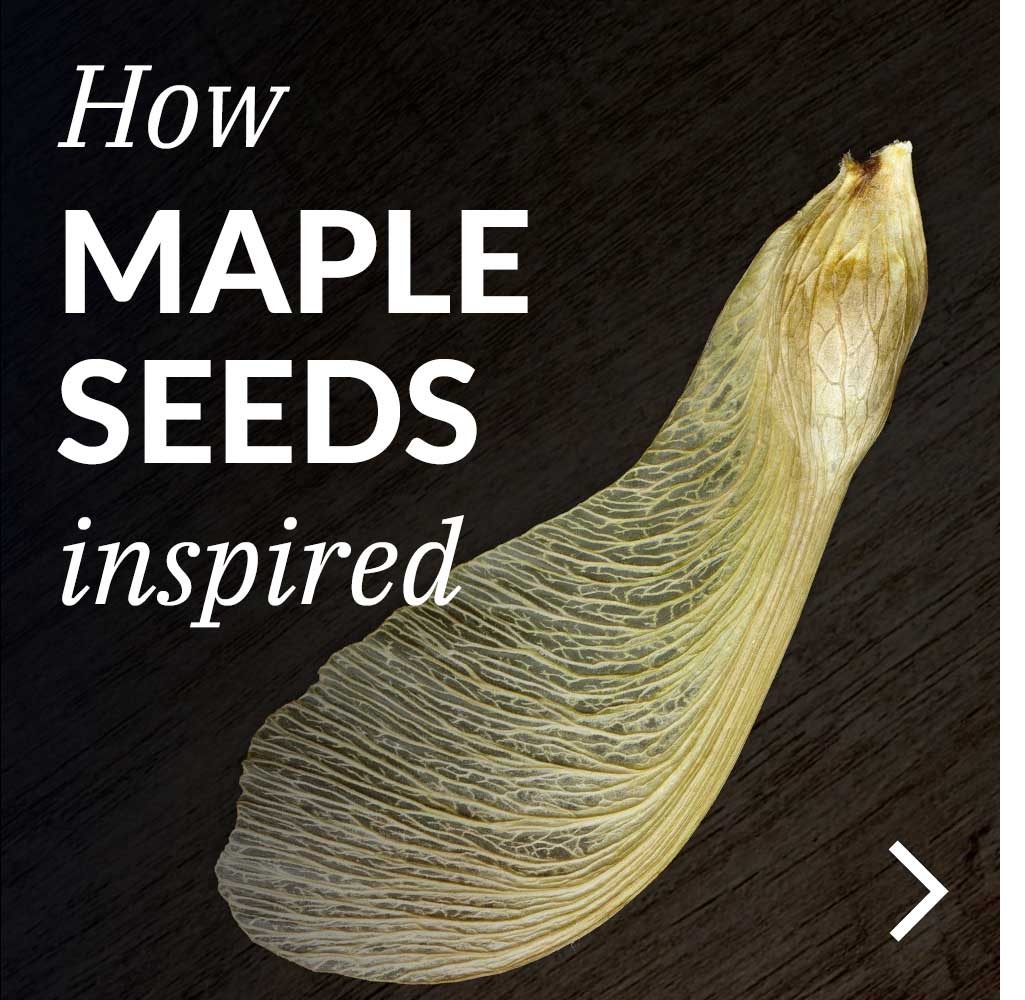
Maple seed (Acer) autorotation; Barn owl (Tyto alba) silent flight feathers, the natural model for Biome Renewables - Maple Seed Wind Turbine
Biome Renewables - Maple Seed Wind Turbine: the human application

Inspired by: Maple seed (Acer) autorotation; Barn owl (Tyto alba) silent flight feathers

Biome Renewables - Maple Seed Wind Turbine

Biome Renewables

10-13

percent energy capture increase

field-tested improvement on existing turbines

>1000

turbine retrofits deployed

commercial scale-up

<2

year payback period

on retrofit investment

The Problem

Wind turbine efficiency plateaus as blade designs approach conventional aerodynamic limits. Retrofitting existing turbines with minor improvements is economically attractive but challenging. Aerodynamic enhancements requiring no blade replacement are needed.

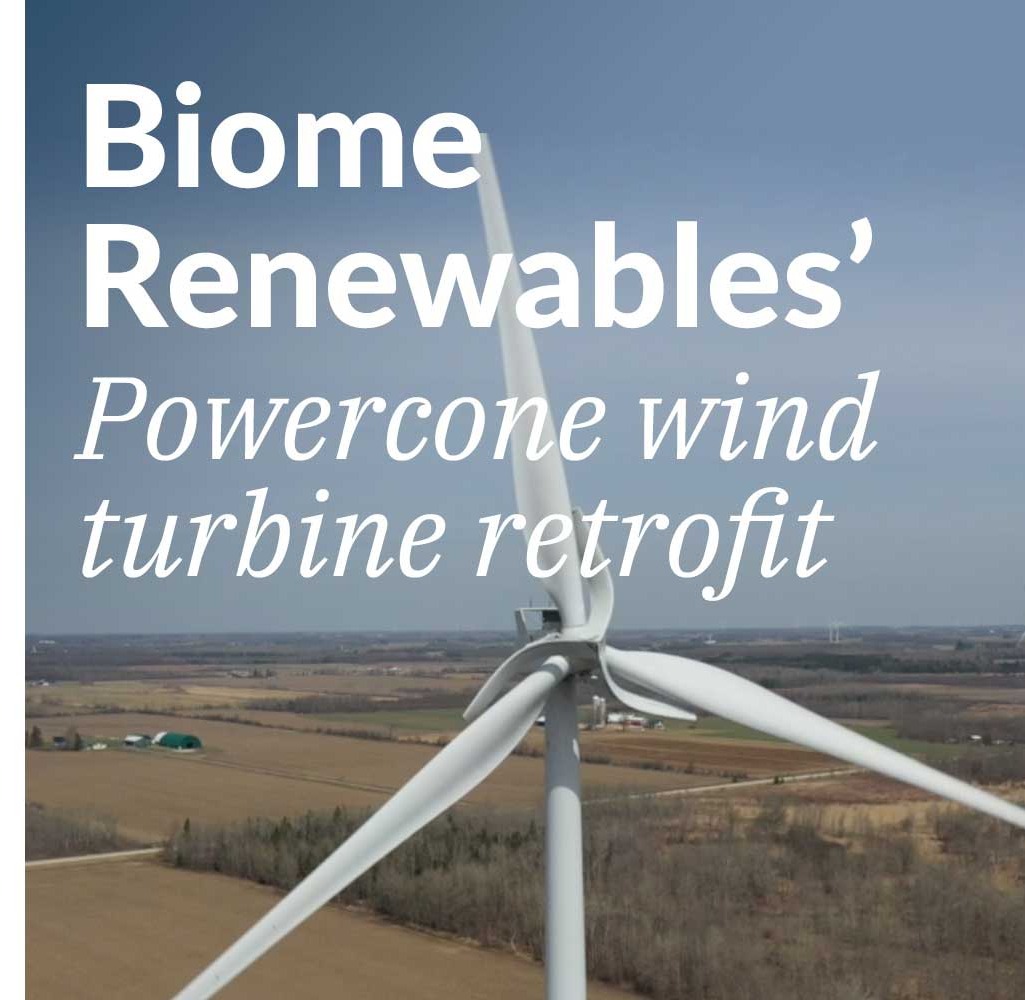
Maple seed spinning descent inspires PowerCone retrofit for wind turbine blades, increasing energy capture by 10-13%.

Maple seeds possess an elegant aerodynamic design: flattened, winged samaras that spin as they descend, creating controlled rotation that slows their fall and disperses them far from the parent tree. This spinning motion minimises terminal velocity, allowing even winds to carry seeds kilometres away. Engineers at Biome Renewables recognised that maple seed aerodynamics—specifically the controlled vortex dynamics created by the spinning wing—could enhance wind turbine blade efficiency. Conventional turbine blades stall at high wind speeds when boundary-layer separation creates dead zones near blade tips. Biome developed the PowerCone: a retrofit featuring maple-seed-inspired geometries that redirect blade-tip airflow and induce counter-rotating vortices similar to a spinning samara's wake. Field installations show PowerCone retrofits increasing energy capture 10-13% across wind speeds, with particular gains during high-wind stall conditions where conventional blades lose efficiency. The retrofit mounts on existing turbines without replacing blades or major modifications, making it economically viable for vast installed-base improvements. By studying how nature optimises rotation and descent through seed design, Biome unlocked efficiency gains previously requiring complete turbine redesign.
Biomimicry Breakdown

The Biomimicry Analysis

How Maple seed (Acer) autorotation; Barn owl (Tyto alba) silent flight feathers translates into Biome Renewables - Maple Seed Wind Turbine

Term
Applied to Biome Renewables - Maple Seed Wind Turbine
Function
Maple seeds must descend slowly enough to disperse far, despite being dense objects. They overcome high settling velocity through rotation-induced lift that creates controlled descent—a balancing act between descent rate and dispersal distance.
Mechanism
Samara wings generate lift as the seed rotates. This lift partially counteracts gravity, reducing terminal velocity from ~15 m/s (if dropped passively) to ~1 m/s (spinning descent). The spinning motion creates a stable vortex below the wing, enabling long-distance wind dispersal.
Design Principle
Design rotating systems where secondary flows (vortices) generated by rotation improve overall efficiency. Create asymmetries or winglets that induce counter-rotating vortices in the wake. Optimise systems for performance across variable regimes, not just peak conditions.
Resulting Design
PowerCone induces vortex dynamics similar to spinning maple seeds, redirecting flow around blade tips and recovering energy lost to separation. Retrofits increase turbine energy capture 10-13%, delivering measurable efficiency gains without blade replacement or major modification.

Find your own nature-inspired opportunities

Inspired by Biome Renewables - Maple Seed Wind Turbine? The Biomimicry Opportunity Map scans your company website and suggests challenges worth solving the way nature would.

Get started →

Apply This

Design Application Prompts

There's a natural world to explore

Learn to find strategies like this yourself