The Problem
Needle insertion pain is a significant barrier to patient compliance in insulin therapy, vaccine uptake, and blood sampling. Conventional micro-needles, whilst smaller than traditional needles, still cause pain and patient anxiety. Painless, effective needle designs are needed.
Mosquito proboscis serrated geometry inspires less-painful micro-needles for drug delivery and blood sampling.
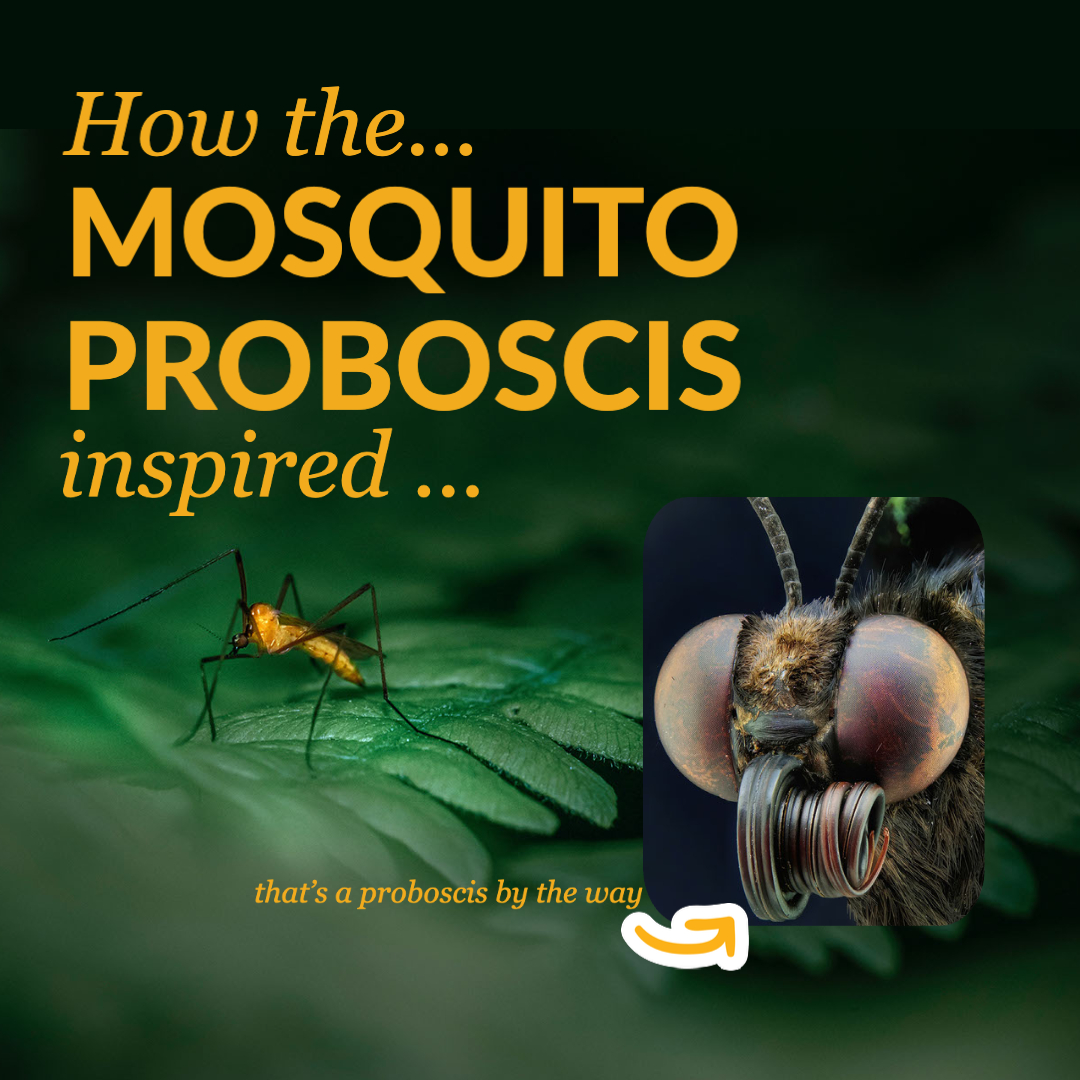
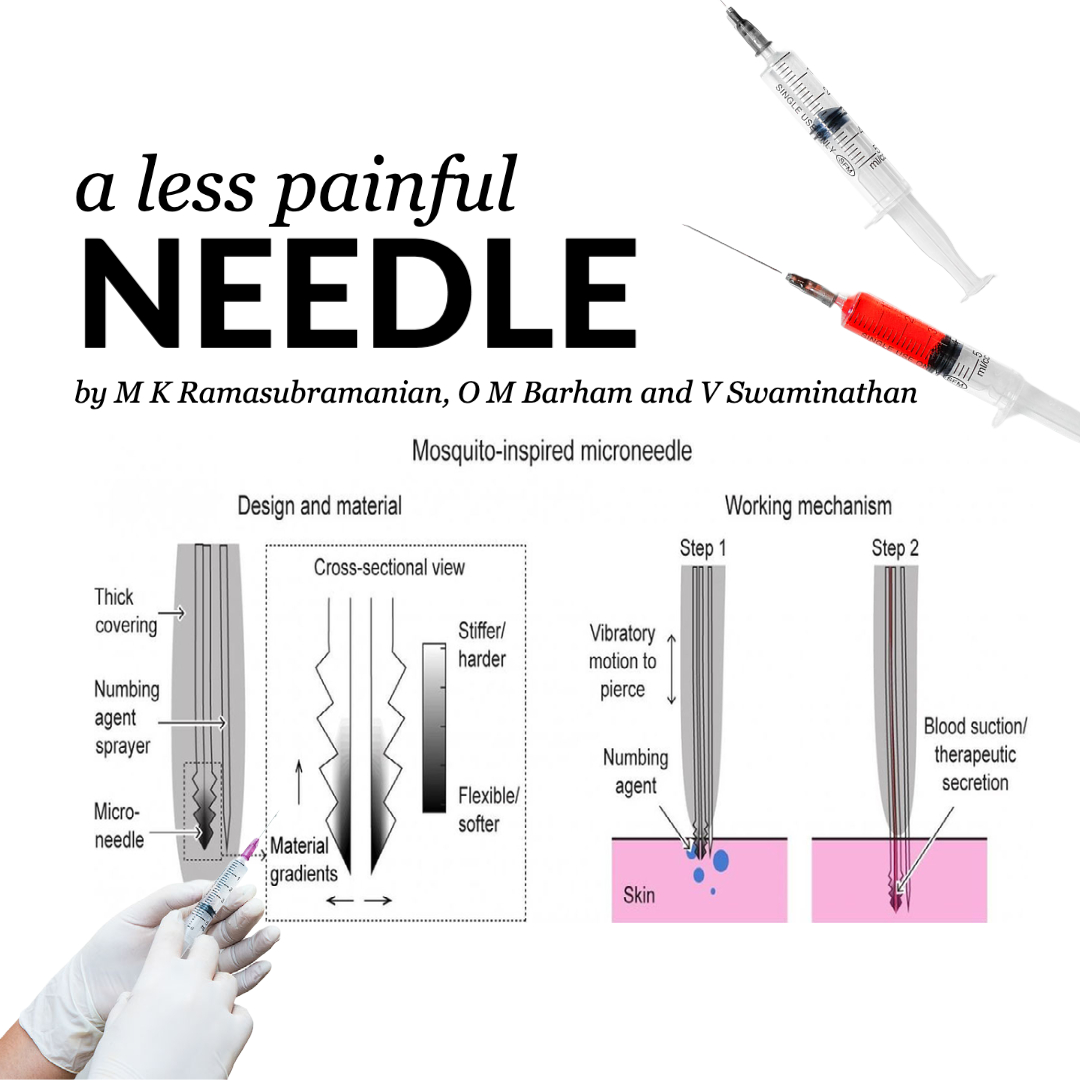
Mosquito proboscises—the needle-like feeding apparatus—pierce human skin with extraordinary ease, despite exerting minimal force. The secret lies in their geometry: rather than a smooth, pointed needle, mosquito proboscises feature microscopic serrations running along the edges, similar to a bread knife at nanometre scale. These serrations reduce the force required for penetration by distributing stress concentration and enabling gradual fibre separation rather than abrupt tearing. Additionally, the proboscis vibrates at ultrasonic frequencies (100-200 Hz) as it penetrates, further reducing insertion force and pain perception. Researchers at Kansai University and collaborating institutions reverse-engineered this geometry into clinical micro-needles for insulin delivery, vaccination, and blood sampling. Serrated, vibrating micro-needles reduce insertion force by 50-70% versus conventional smooth needles and significantly decrease pain perception—critical for paediatric and elderly patients with needle phobia. The resulting devices provide equivalent drug delivery efficacy using smaller needles with reduced vascular injury risk. Clinical trials demonstrate patient acceptance rates >90%, compared with <50% for conventional micro-needle arrays, transforming previously challenging treatments into nearly painless procedures.