
All Examples

Interest · 30 examples

Biomimicry examples:
Engineering

30 examples where people turned a strategy from nature into engineering solutions.

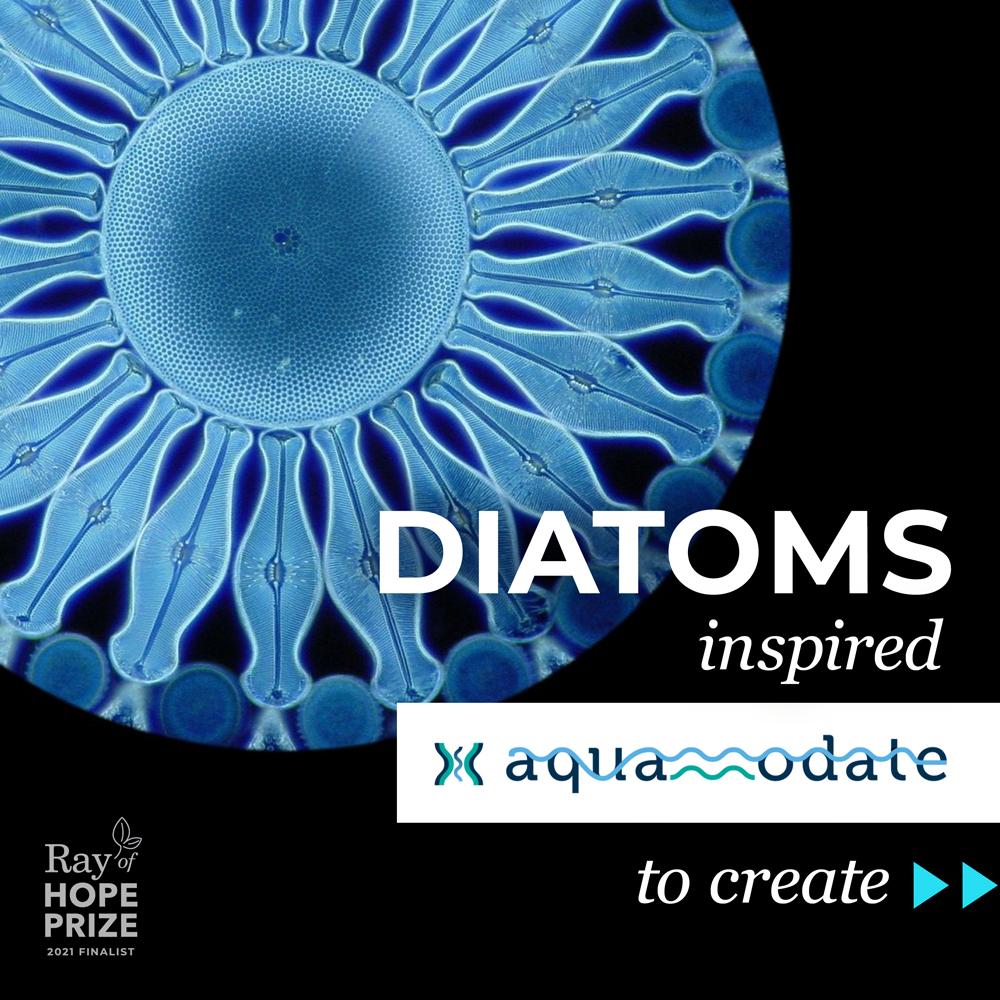
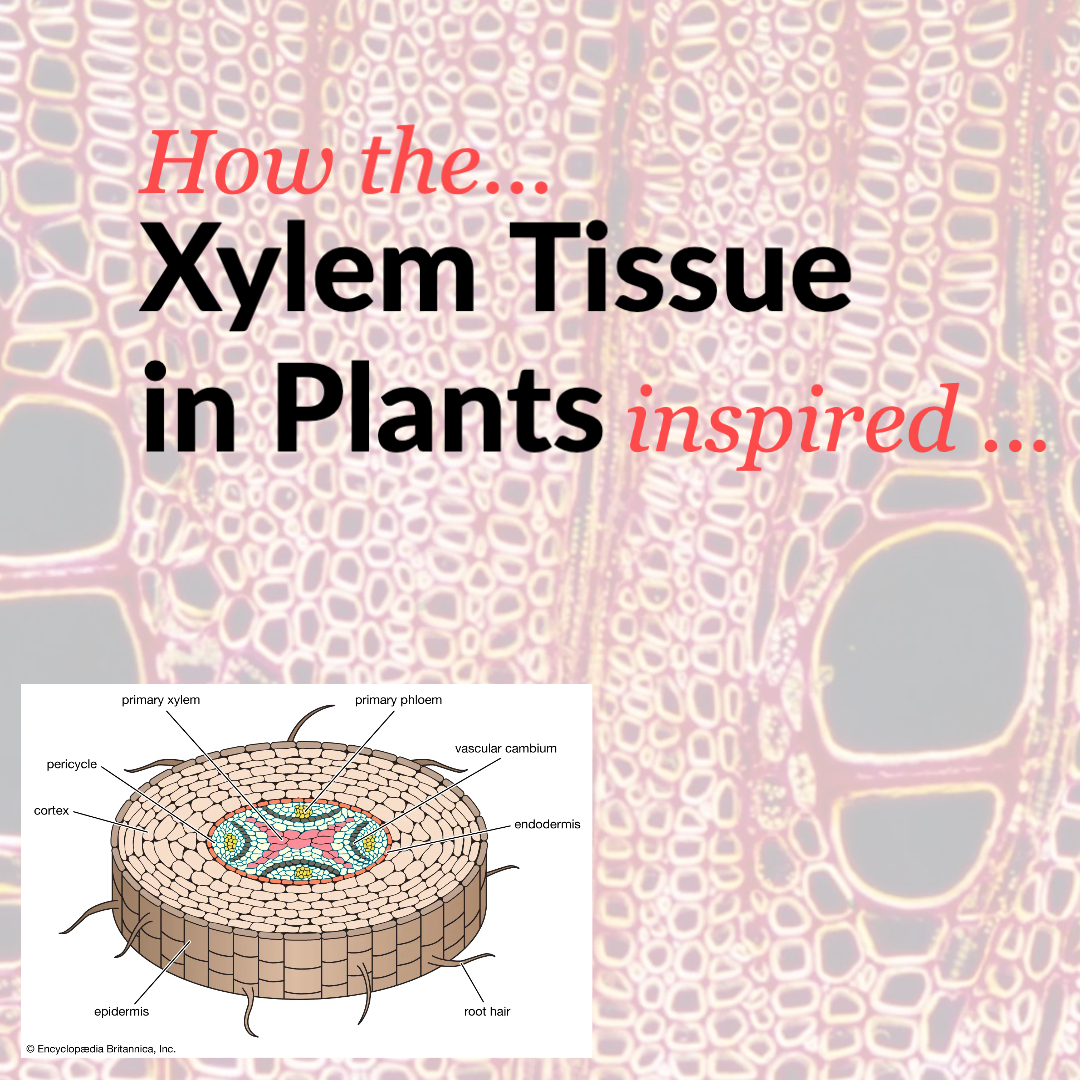
Biological inspiration for Aquaporins: Reverse Osmosis Water Filtration
Human application for Aquaporins: Reverse Osmosis Water Filtration
Engineering

Aquaporin water channel proteins (found in all organisms)

Aquaporins: Reverse Osmosis Water Filtration

Reverse osmosis water filtration systems inspired by aquaporin water channel proteins that enable selective, efficient water transport across membranes.

  • ✿Inspired by: Aquaporin water channel proteins (found in all organisms)
  • ⚡︎Function: Mimics aquaporin protein function for efficient water filtration.
  • ▣Company: Aquaporin A/S
  • ◉Where: Denmark
See full biomimicry example
Biological inspiration for Sweating Skin: Animal Thermoregulation Inspiring Hydrogel Cooling Layers
Human application for Sweating Skin: Animal Thermoregulation Inspiring Hydrogel Cooling Layers
Engineering

Warm-blooded mammals (eccrine sweating thermoregulation)

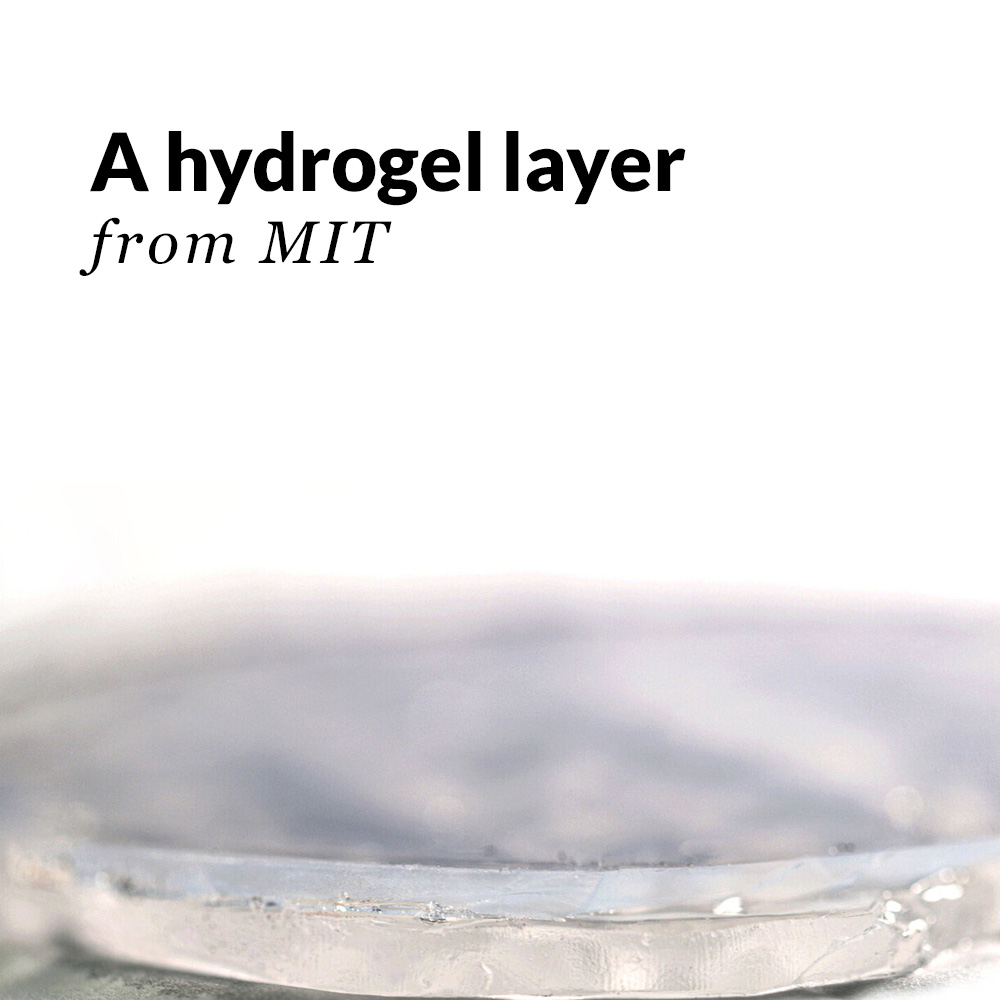
Sweating Skin: Animal Thermoregulation Inspiring Hydrogel Cooling Layers

Inspired by how warm-blooded animals cool themselves through sweat evaporation, researchers at MIT developed a temperature-sensitive hydrogel layer that passively releases water when surfaces overheat. The hydrogel acts as an artificial sweating skin — dissipating heat through evaporation with more than twice the cooling efficiency of natural convection, without any energy input or moving parts.

  • ✿Inspired by: Warm-blooded mammals (eccrine sweating thermoregulation)
  • ▣Company: MIT (Massachusetts Institute of Technology)
See full biomimicry example
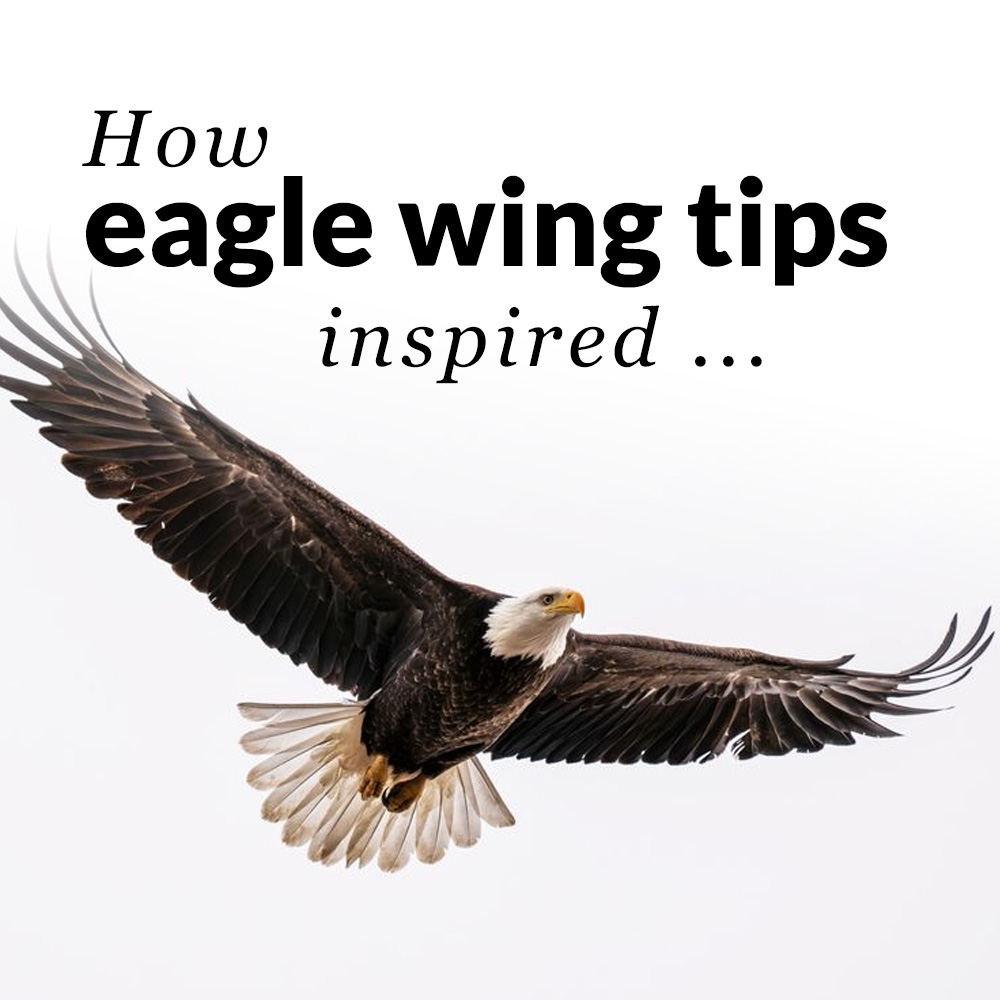
Biological inspiration for Boeing 787 Winglet Design: Eagle Wing Tips
Human application for Boeing 787 Winglet Design: Eagle Wing Tips
Engineering

Soaring birds (Buteo and Aquila species)

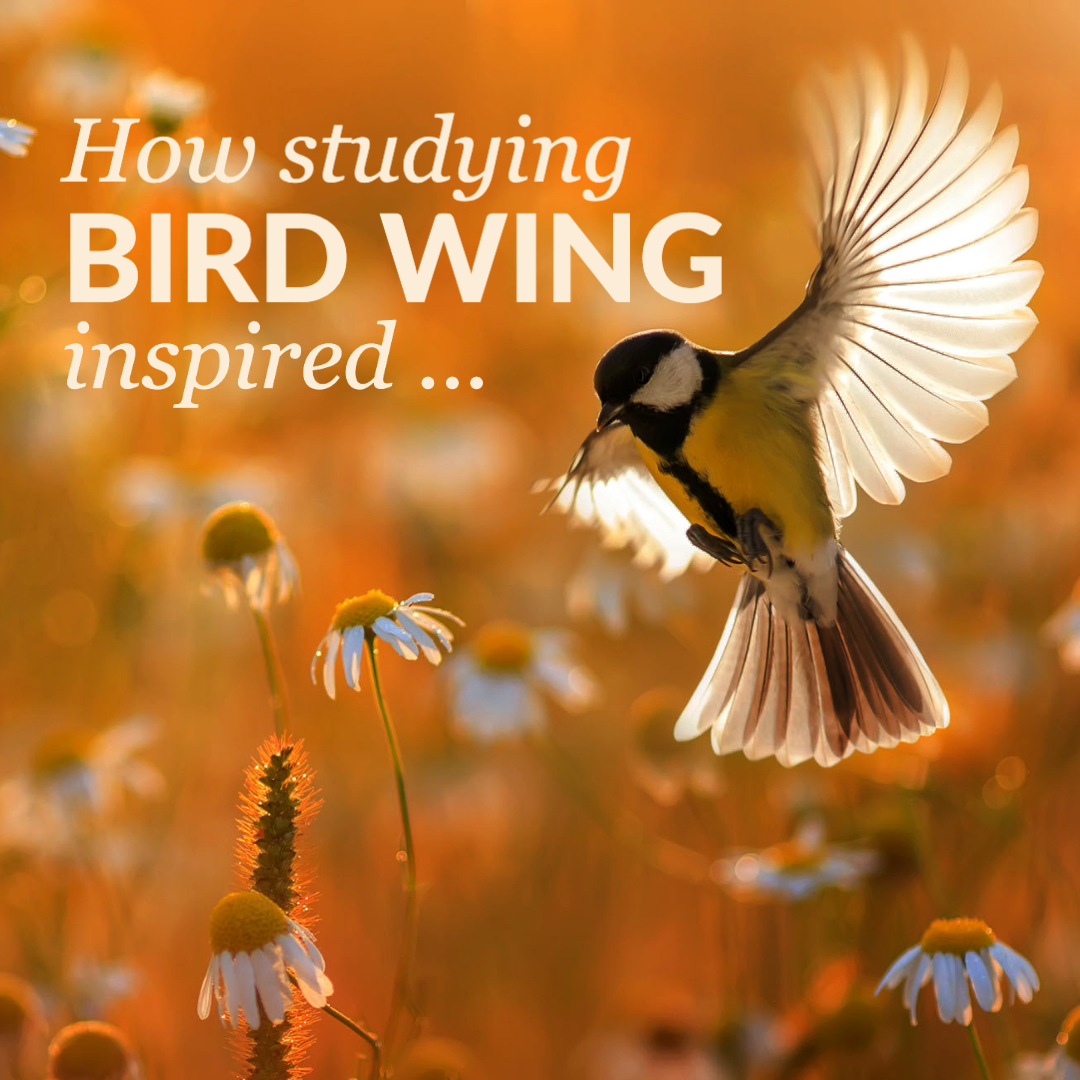
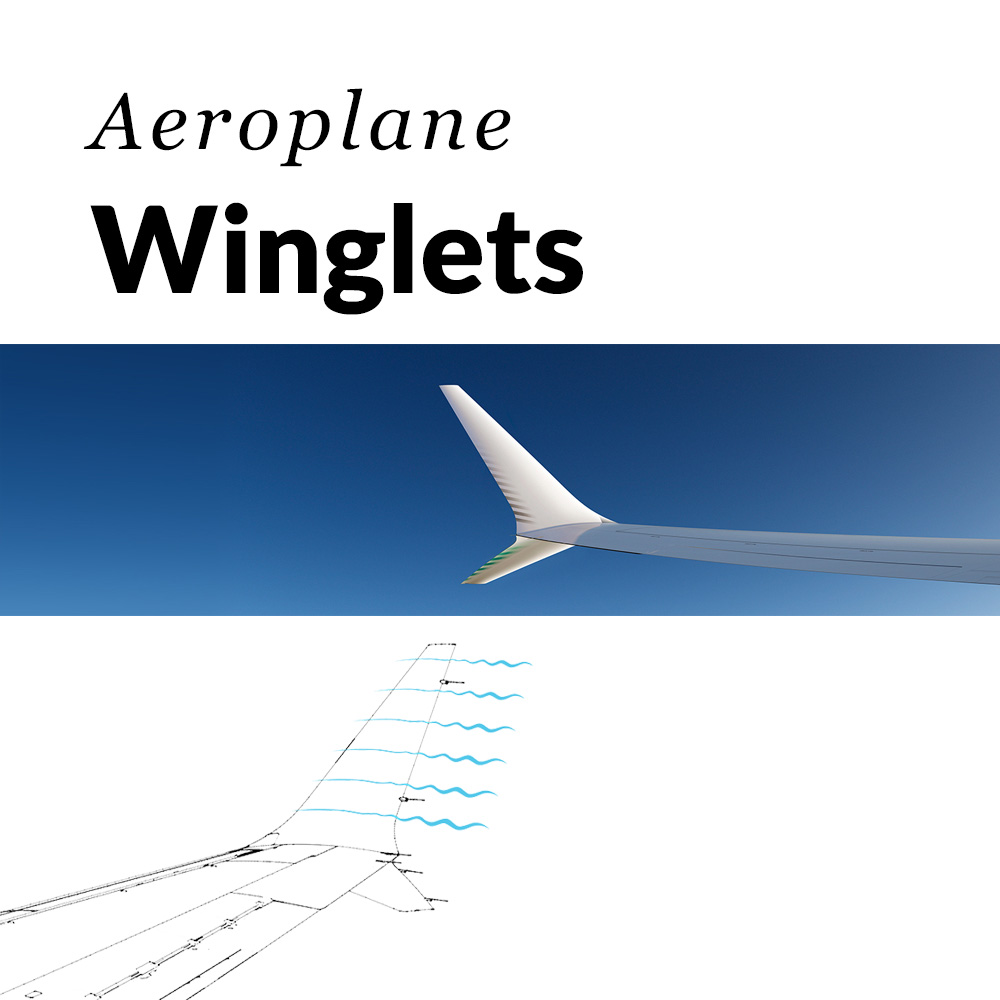
Boeing 787 Winglet Design: Eagle Wing Tips

Large soaring birds like eagles and vultures spread their primary feathers into finger-like tips to reduce induced drag during soaring. Aircraft designers have mimicked this with winglets that reduce drag by 5–7%, saving airlines billions of litres of fuel per year.

  • ✿Inspired by: Soaring birds (Buteo and Aquila species)
  • ⚡︎Function: Reduce induced drag from wing tip vortices during flight
  • ▣Company: Boeing / NASA (Richard Whitcomb)
  • ◉Where: USA

See full biomimicry example
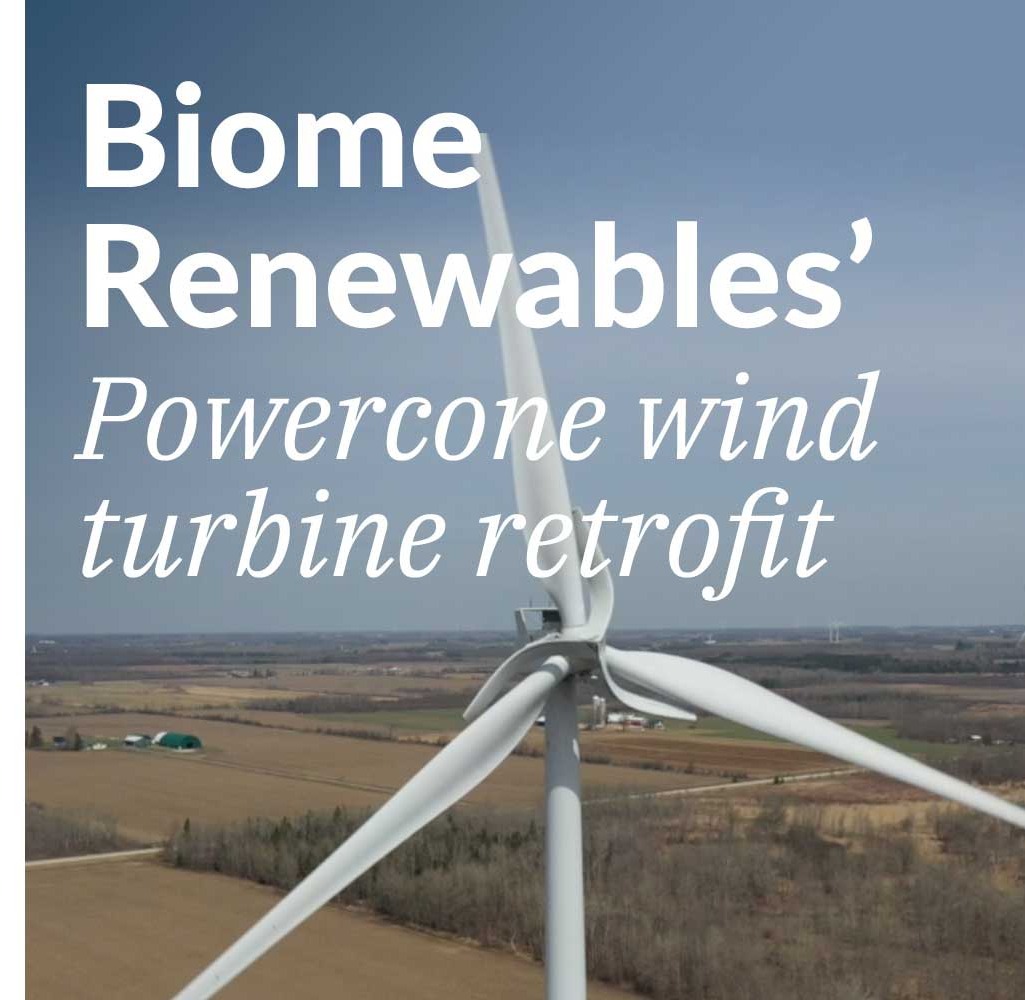
Biological inspiration for Biome Renewables - Maple Seed Wind Turbine
Human application for Biome Renewables - Maple Seed Wind Turbine
Engineering

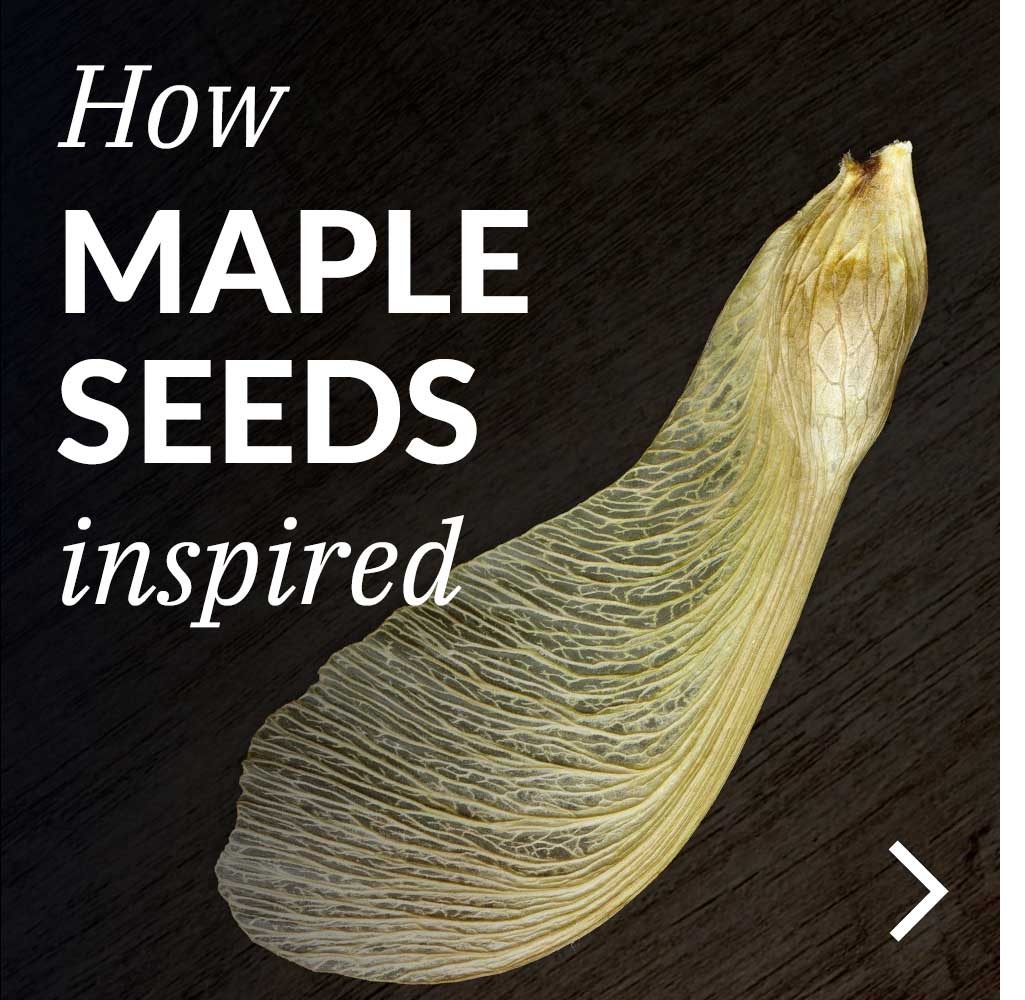
Maple seed (Acer) autorotation; Barn owl (Tyto alba) silent flight feathers

Biome Renewables - Maple Seed Wind Turbine

Maple seed spinning descent inspires PowerCone retrofit for wind turbine blades, increasing energy capture by 10-13%.

  • ✿Inspired by: Maple seed (Acer) autorotation; Barn owl (Tyto alba) silent flight feathers
  • ⚡︎Function: Maple seeds must descend slowly enough to disperse far, despite being dense objects. They overcome high settling velocity through rotatio...
  • ▣Company: Biome Renewables
  • ◉Where: Canada
See full biomimicry example
Biological inspiration for Shinkansen Bullet Train: Kingfisher Beak
Human application for Shinkansen Bullet Train: Kingfisher Beak
Engineering

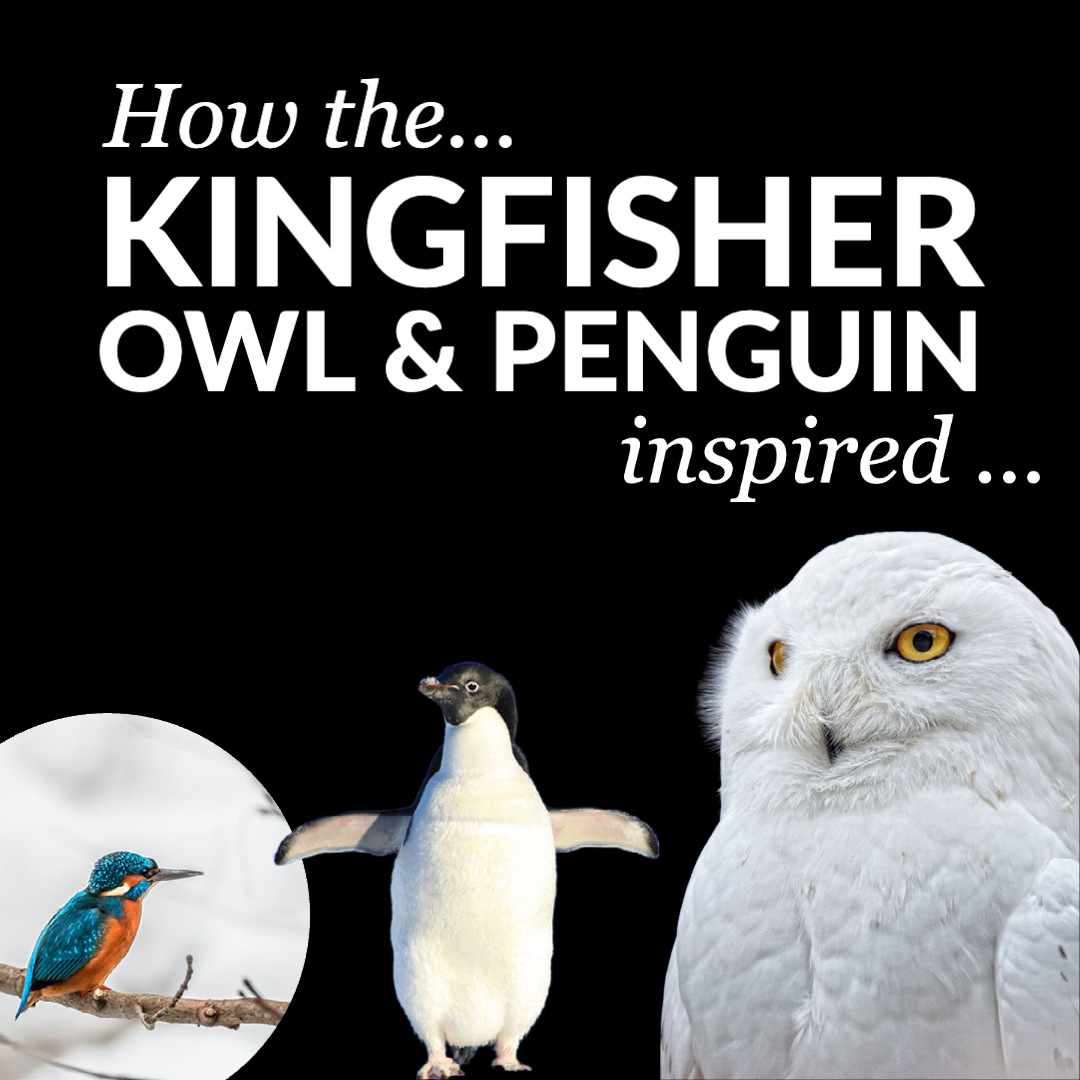
Common kingfisher (Alcedo atthis)

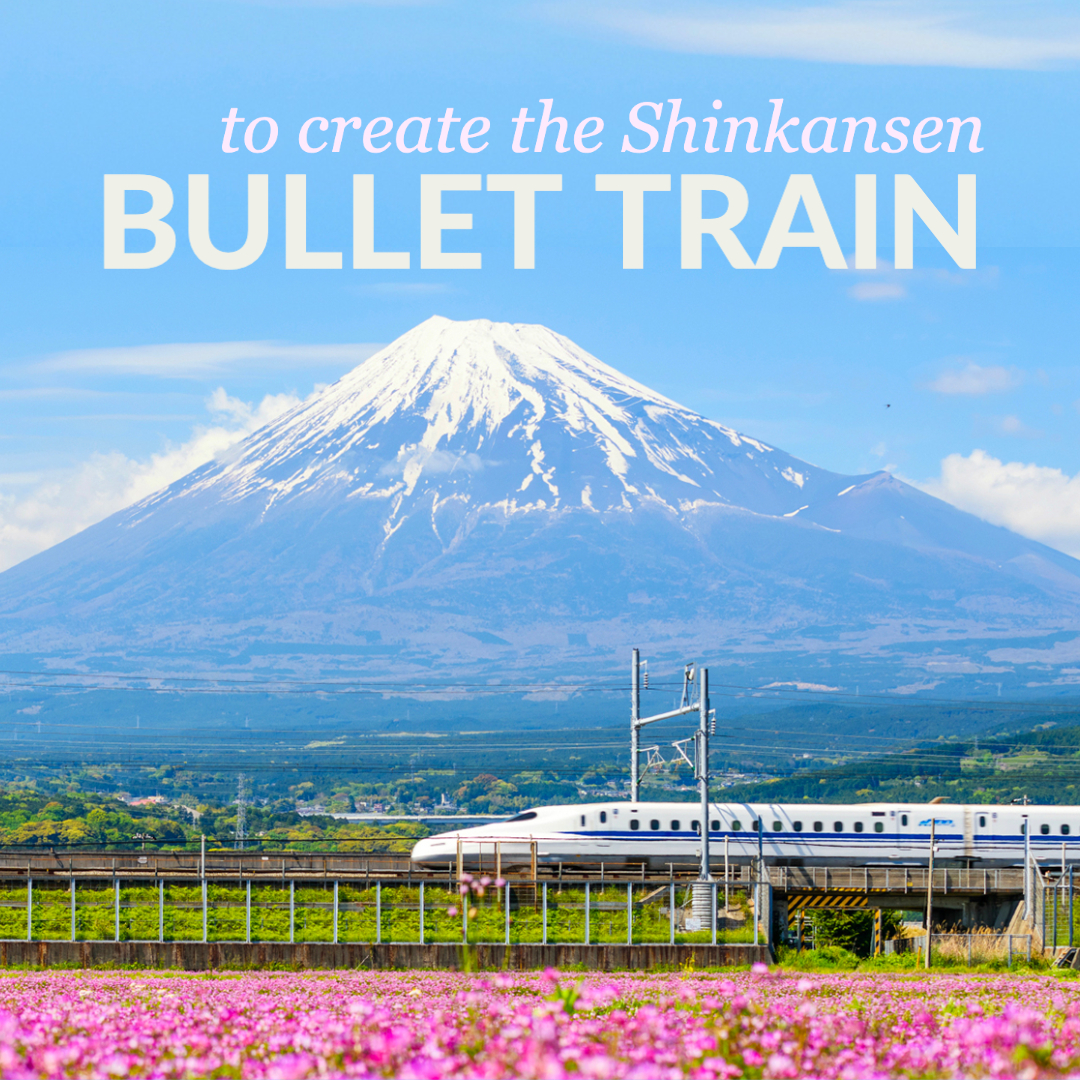
Shinkansen Bullet Train: Kingfisher Beak

Engineer Eiji Nakatsu re-designed the nose of Japan's Shinkansen 500 series bullet train based on the kingfisher's beak — eliminating the sonic boom when exiting tunnels, reducing energy use by 15%, and increasing speed by 10%.

  • ✿Inspired by: Common kingfisher (Alcedo atthis)
  • ⚡︎Function: Mimics kingfisher beak for improved train aerodynamics.
  • ▣Company: Japan Railways, Engineer Eiji Nakatsu
  • ◉Where: Japan
See full biomimicry example
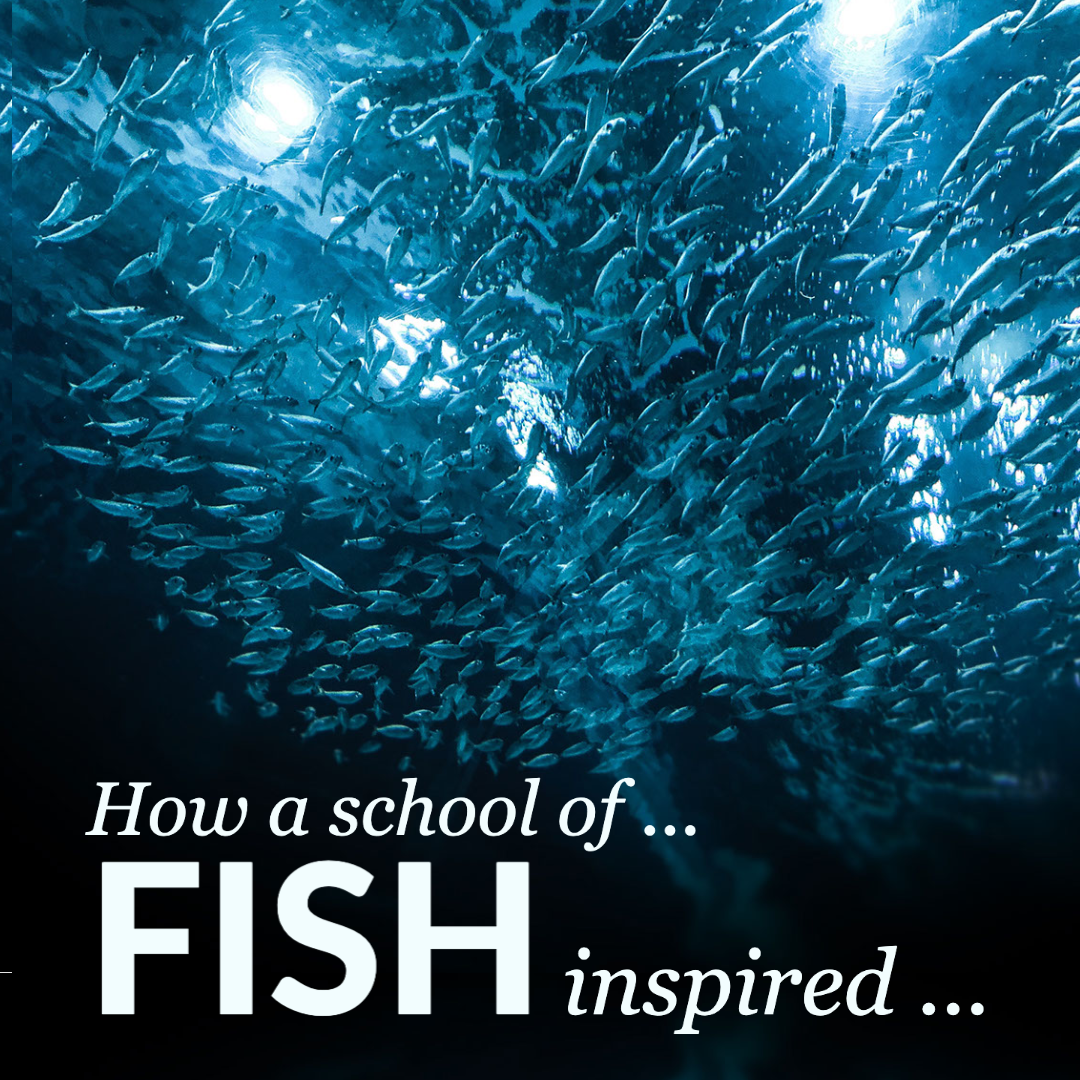
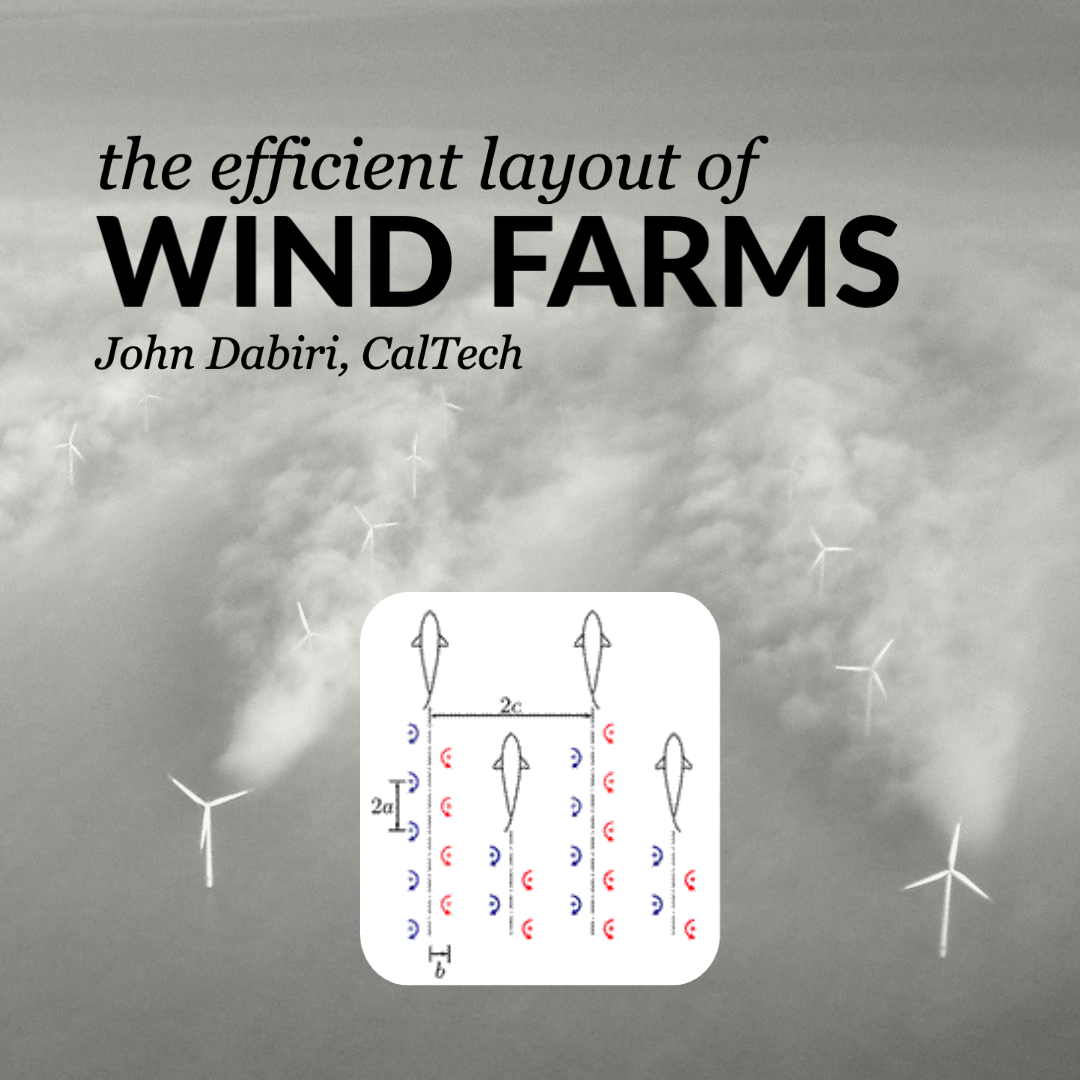
Biological inspiration for Vertical Axis Wind Turbine Placement Inspired by Schooling Fish
Human application for Vertical Axis Wind Turbine Placement Inspired by Schooling Fish
Engineering

Schooling fish (mackerel and other species)

Vertical Axis Wind Turbine Placement Inspired by Schooling Fish

Vertical axis wind turbines arranged using principles of fish schooling to improve efficiency and reduce energy costs in wind farms.

  • ✿Inspired by: Schooling fish (mackerel and other species)
  • ⚡︎Function: Improve the energy density and efficiency of wind farms through biomimetic spatial arrangement
  • ▣Company: Caltech (John Dabiri laboratory)
  • ◉Where: California, USA
See full biomimicry example
Biological inspiration for Cactus Spine Water Collection for Building Skins
Human application for Cactus Spine Water Collection for Building Skins
Engineering

Saguaro cactus (Carnegiea gigantea)

Cactus Spine Water Collection for Building Skins

Cactus spines collect water from morning fog by using a gradient of surface chemistry and microstructure from tip to base, directing water droplets toward the stem. Researchers are now incorporating this principle into building facade cladding panels that harvest atmospheric water in arid climates.

  • ✿Inspired by: Saguaro cactus (Carnegiea gigantea)
  • ⚡︎Function: Collect and transport atmospheric water directionally without energy input
  • ▣Company: MIT (Kyoo-Chul Park) / Xi'an Jiaotong University
  • ◉Where: USA
See full biomimicry example
Biological inspiration for Mangrove Roots: Offshore Wind Foundation Design
Human application for Mangrove Roots: Offshore Wind Foundation Design
Engineering

Red mangrove (Rhizophora mangle)

Mangrove Roots: Offshore Wind Foundation Design

Mangrove root systems stabilise trees in shifting tidal sediments by spreading loads across dozens of branching roots rather than concentrating force in a single trunk. Engineers are applying this branching foundation principle to offshore wind turbines to dramatically reduce steel use and installation cost.

  • ✿Inspired by: Red mangrove (Rhizophora mangle)
  • ⚡︎Function: Stabilise large structures in soft, shifting substrates while resisting lateral forces
  • ▣Company: Arup / MIT
  • ◉Where: Denmark
See full biomimicry example
Biological inspiration for Box Fish Car: Mercedes-Benz Bionic Concept
Human application for Box Fish Car: Mercedes-Benz Bionic Concept
Engineering

Yellow boxfish (Ostracion cubicus)

Box Fish Car: Mercedes-Benz Bionic Concept

Despite its square shape, the boxfish is one of the most hydrodynamically efficient swimmers in the ocean. Mercedes-Benz engineers discovered it has a drag coefficient of just 0.06 — and designed a concept car based entirely on its body plan that achieves unprecedented aerodynamic efficiency.

  • ✿Inspired by: Yellow boxfish (Ostracion cubicus)
  • ⚡︎Function: Move efficiently through fluid while maintaining structural rigidity with minimal material
  • ▣Company: Mercedes-Benz / Daimler
  • ◉Where: Stuttgart, Germany
See full biomimicry example

For R&D and product teams

Find the problems worth solving in your own products