The Problem
Biofouling, adhesion, and drag are costly and damaging across marine, medical, and industrial applications; conventional coatings degrade and require replacement
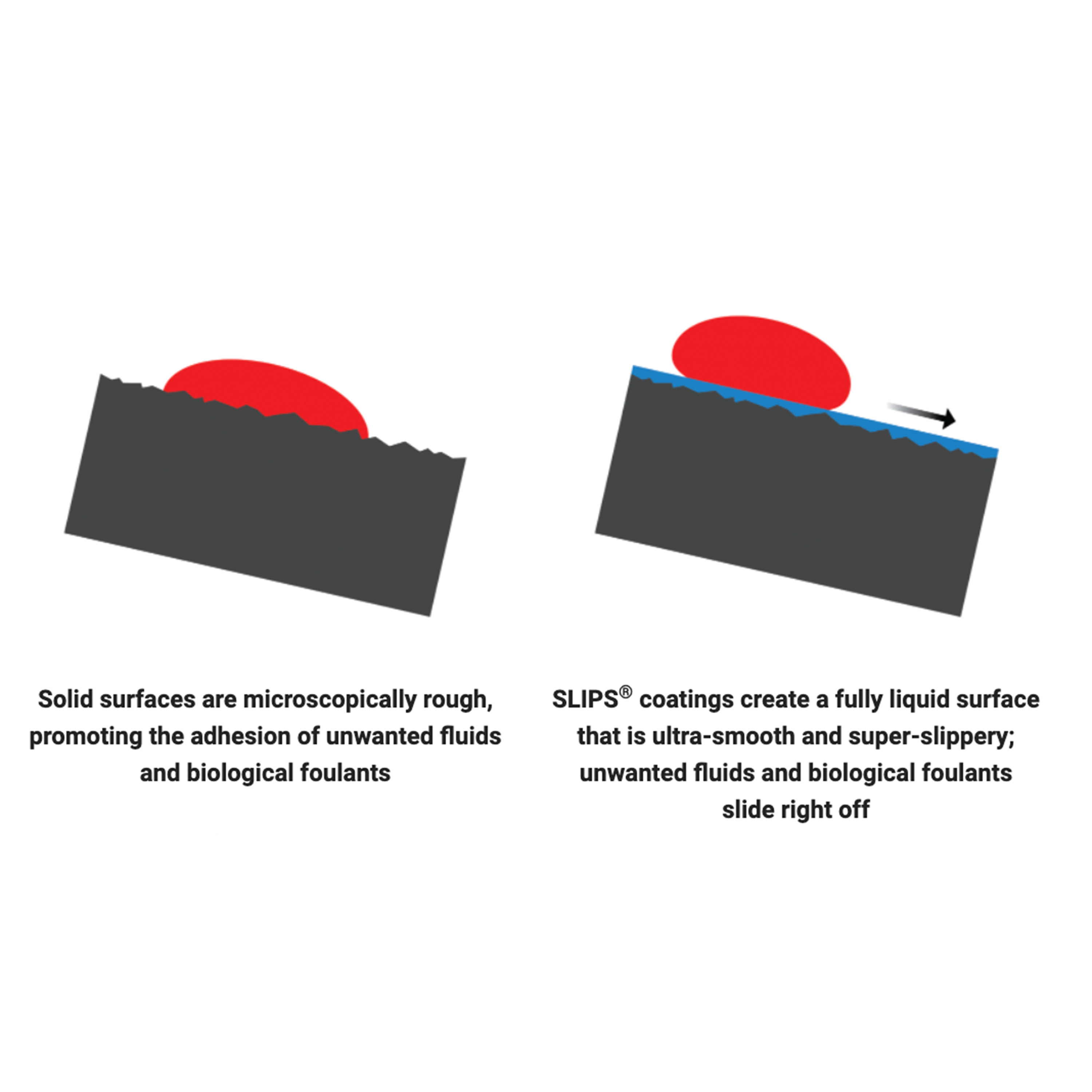
Adaptive Surface Technologies developed SLIPS (Slippery Liquid-Infused Porous Surfaces) inspired by pitcher plant slip properties. These surfaces are extremely slippery, self-healing, and prevent adhesion of virtually any material without fouling or degradation.
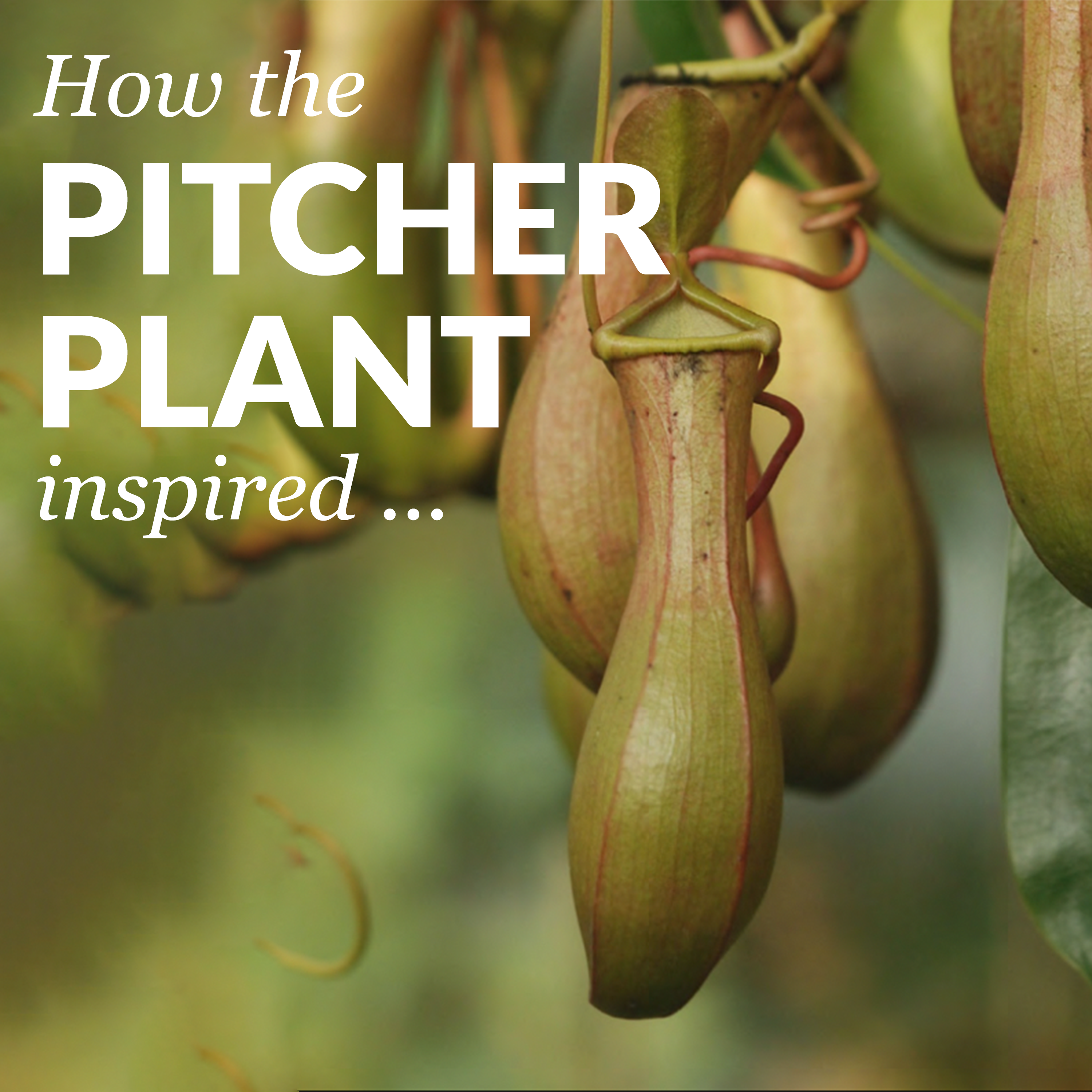
Pitcher plants are carnivorous plants that trap insects in slippery cups filled with digestive liquid. The trap works because the inner surface is covered with a thin liquid film that makes the surface extraordinarily slippery—insects cannot gain traction and slide to their doom. The liquid film is retained by a nano-textured surface that wicks liquid into microscopic structures. Researchers at Harvard (working with Adaptive Surface Technologies) reverse-engineered this mechanism into SLIPS—synthetic surfaces infused with a liquid film locked into a nano-textured substrate. The result is a surface that is as slippery as ice (or more so), works with virtually any substrate, and continuously self-heals if scratched. Unlike conventional coatings, SLIPS doesn't degrade because new liquid continuously flows from the porous substrate to repair surface damage. Applications are extraordinarily diverse: preventing ice formation on power lines and aircraft, stopping biofouling on ship hulls and medical devices, reducing drag on pipes transporting viscous fluids, and preventing sticky substances from adhering (from honey to blood to pesticides). A single prototype SLIPS-coated petri dish has been reused hundreds of times with no performance degradation. The technology addresses critical problems in marine transport (preventing barnacle and algae adhesion), medical devices (preventing biofilm), and industrial fluid transport. SLIPS represents one of the most biomimetic innovations: it copies not just the surface structure but the entire functional system (porous substrate + liquid layer) that makes pitcher plants effective predators.