Materials
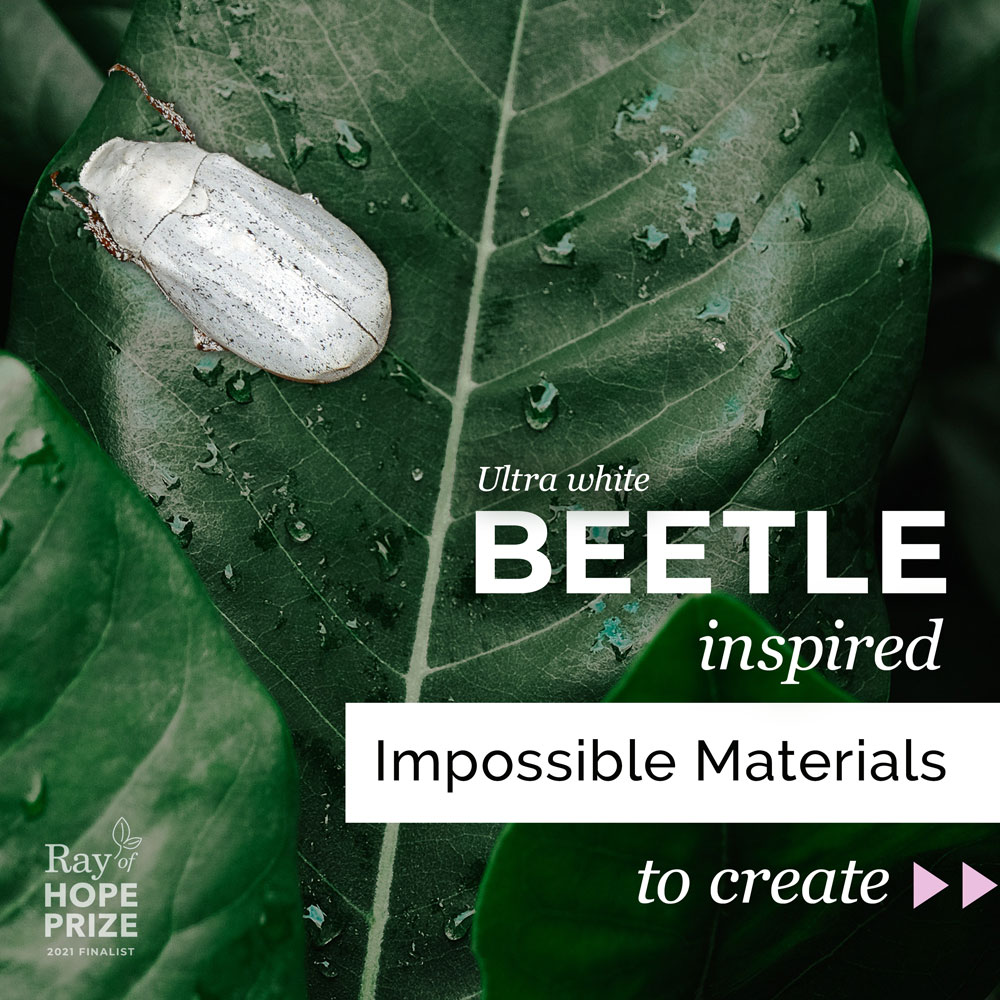
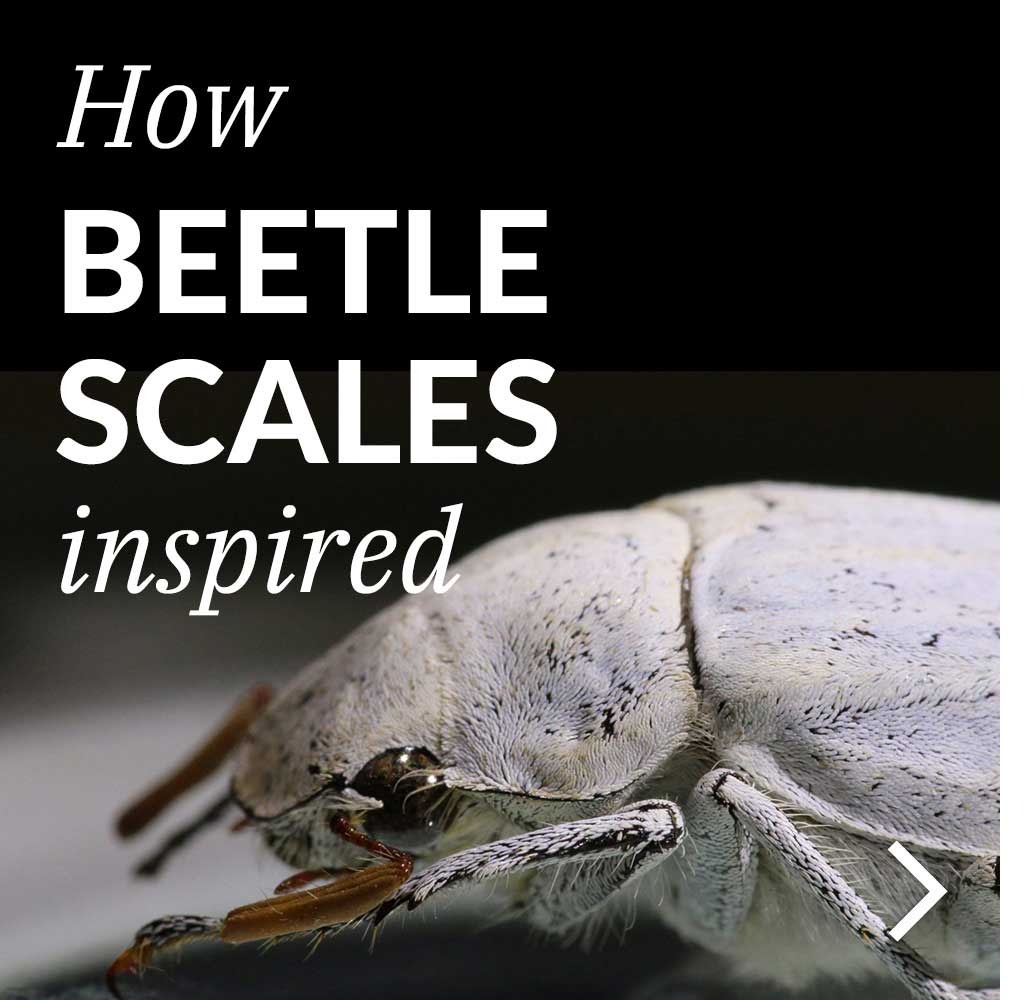
White beetles (Cyphochilus species), the natural model for White Beetle: Eco-Friendly White Pigments
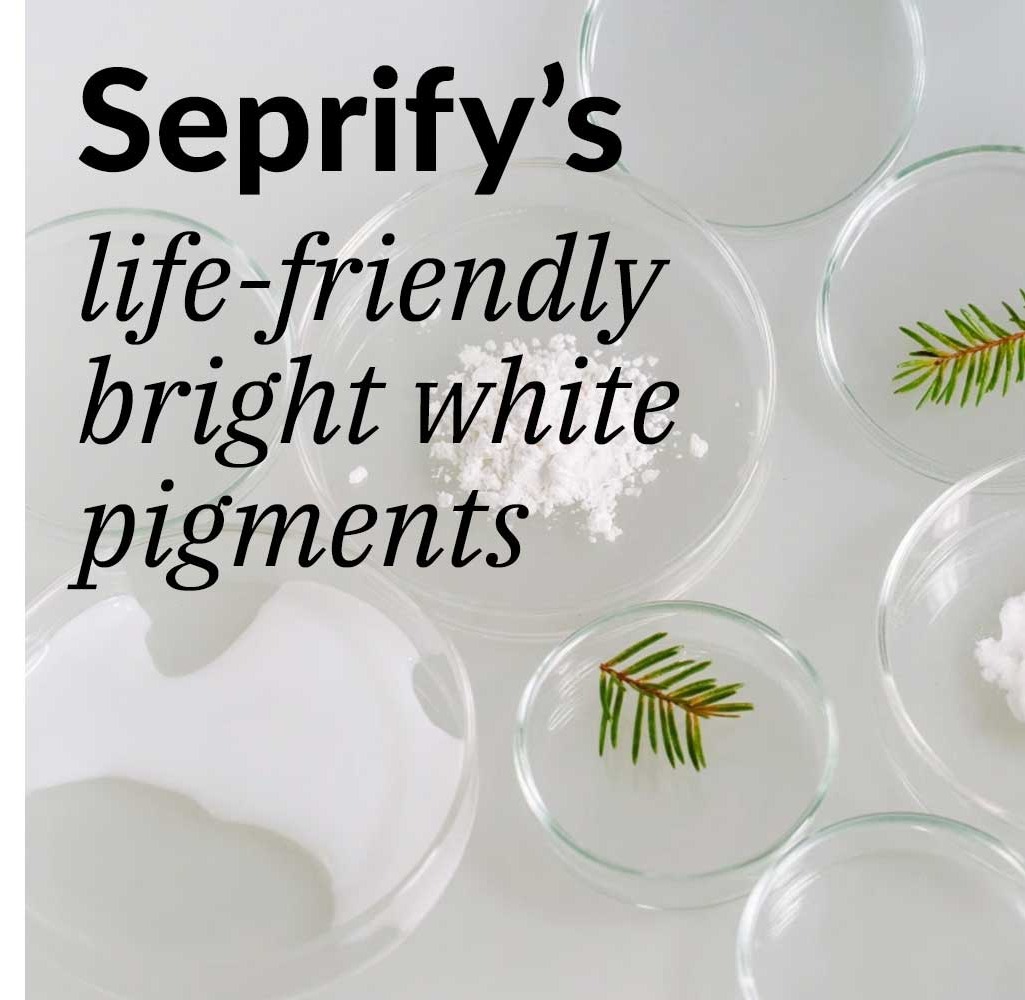
White Beetle: Eco-Friendly White Pigments: the human application

Inspired by: White beetles (Cyphochilus species)

White Beetle: Eco-Friendly White Pigments

Impossible Materials

The Problem

Titanium dioxide whitening pigments are toxic and problematic for environment and human health; alternative eco-friendly white pigments needed.

Development of eco-friendly white cellulose pigments inspired by the structural color of white beetles.

White beetles achieve their brilliant white coloration through structural organization of chitin nanofibers rather than pigmentation. Impossible Materials applied this principle to develop white cellulose-based pigments that replace toxic titanium dioxide. The pigments use hierarchical fiber structures to achieve whiteness through light scattering.

Biomimicry Breakdown

The Biomimicry Analysis

How White beetles (Cyphochilus species) translates into White Beetle: Eco-Friendly White Pigments

Term
Applied to White Beetle: Eco-Friendly White Pigments
Function
Mimics beetle structural color to create non-toxic white pigments.
Mechanism
Hierarchical arrangement of cellulose fibers scatters light for whiteness.
Design Principle
Use structure instead of chemistry to achieve material properties.
Resulting Design
Eco-friendly white pigments replacing toxic alternatives.

Find your own nature-inspired opportunities

Inspired by White Beetle: Eco-Friendly White Pigments? The Biomimicry Opportunity Map scans your company website and suggests challenges worth solving the way nature would.

Get started →

Apply This

Design Application Prompts

There's a natural world to explore

Learn to find strategies like this yourself