All Examples

Industry · 4 examples

Biomimicry examples in
Energy

4 nature-inspired innovations in energy, each traced from the organism to the design principle behind it.

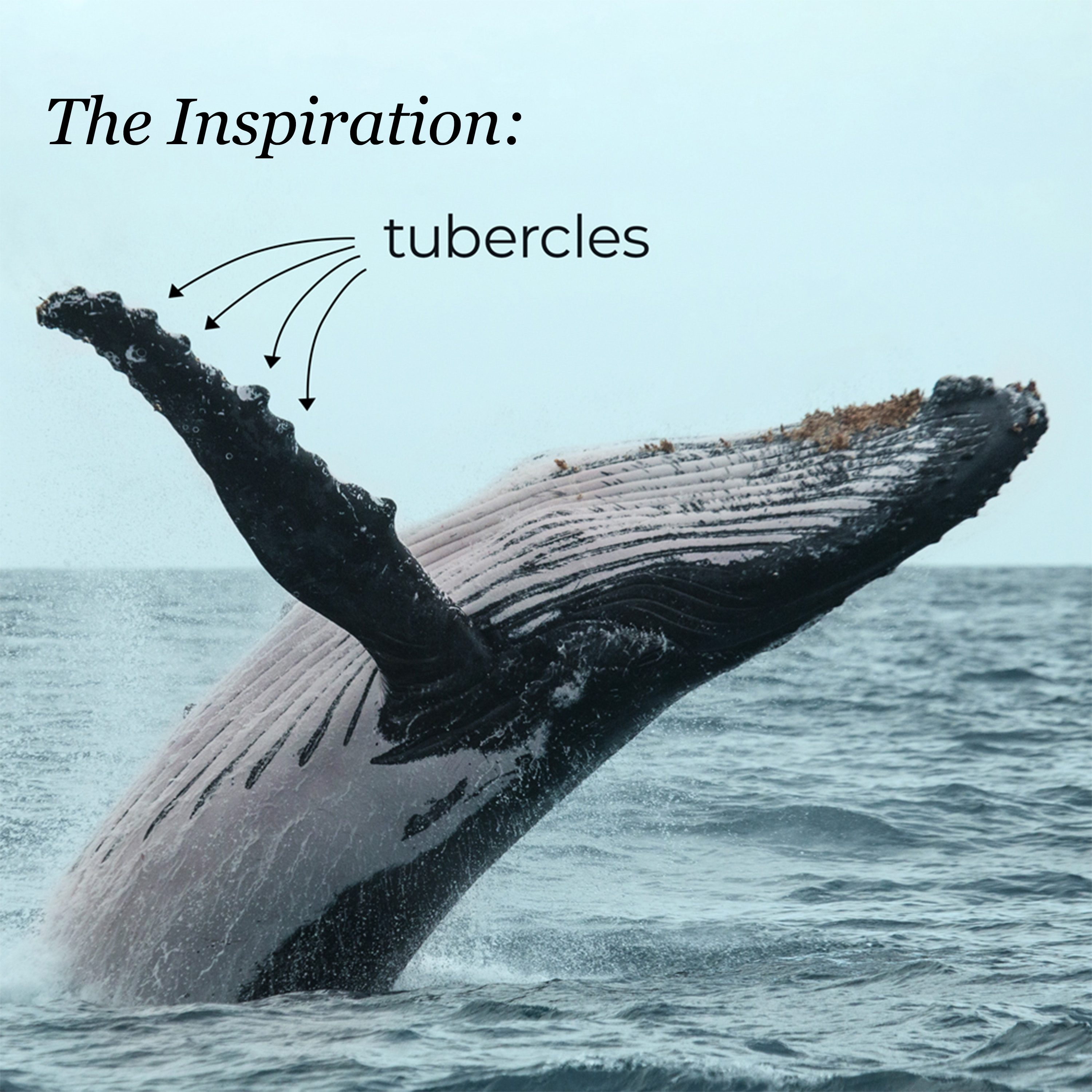
Biological inspiration for Whale Fin Wind Turbines: Humpback Tubercles
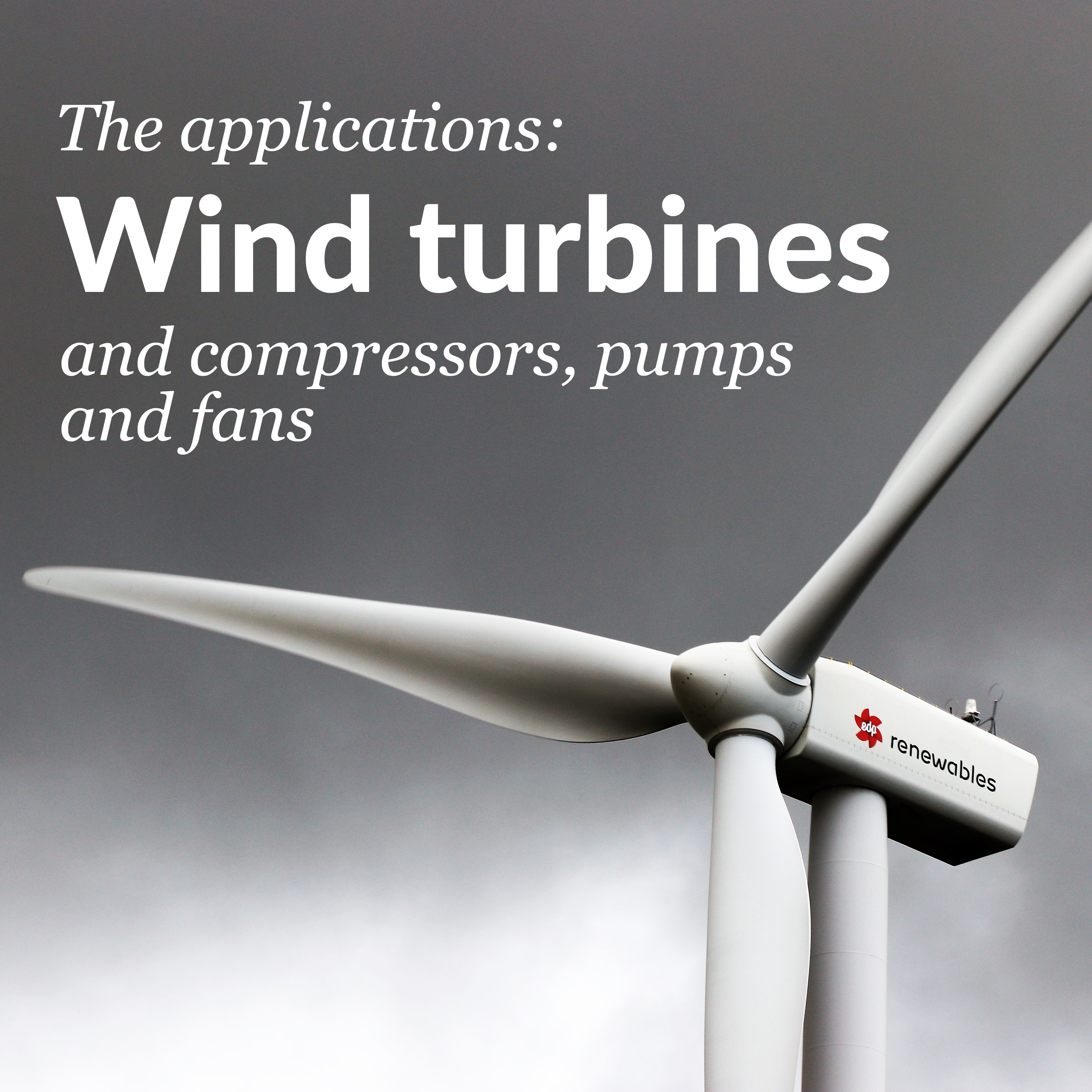
Human application for Whale Fin Wind Turbines: Humpback Tubercles
Product Design

Humpback whale (Megaptera novaeangliae)

Whale Fin Wind Turbines: Humpback Tubercles

The bumps (tubercles) on humpback whale fins turn out to be a breakthrough aerodynamic innovation. WhalePower Corporation's turbine blades, modelled on these tubercles, generate 20% more power, operate in 40% lower wind speeds, and stall less — transforming wind energy economics.

  • ✿Inspired by: Humpback whale (Megaptera novaeangliae)
  • ⚡︎Function: Mimics whale fin tubercles to reduce drag and improve aerodynamic performance.
  • ▣Company: WhalePower Corporation
  • ◉Where: Canada
See full biomimicry example
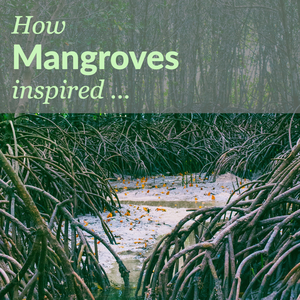
Biological inspiration for Mangrove Roots: Offshore Wind Foundation Design
Human application for Mangrove Roots: Offshore Wind Foundation Design
Engineering

Red mangrove (Rhizophora mangle)

Mangrove Roots: Offshore Wind Foundation Design

Mangrove root systems stabilise trees in shifting tidal sediments by spreading loads across dozens of branching roots rather than concentrating force in a single trunk. Engineers are applying this branching foundation principle to offshore wind turbines to dramatically reduce steel use and installation cost.

  • ✿Inspired by: Red mangrove (Rhizophora mangle)
  • ⚡︎Function: Stabilise large structures in soft, shifting substrates while resisting lateral forces
  • ▣Company: Arup / MIT
  • ◉Where: Denmark
See full biomimicry example
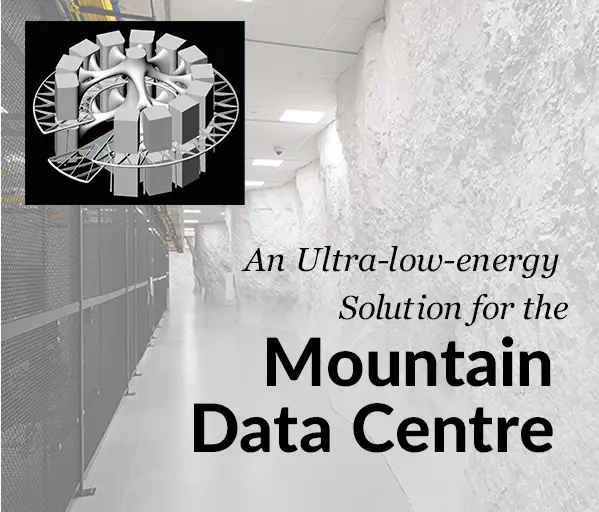
Biological inspiration for Mountain Data Centre: Biological Branching Cooling
Human application for Mountain Data Centre: Biological Branching Cooling
Architecture

Branching biological systems (Murray's Law)

Mountain Data Centre: Biological Branching Cooling

This data centre eliminates energy-intensive cooling by locating in a mountain tunnel and using Murray's Law of biological branching to optimise duct networks for thermal distribution.

  • ✿Inspired by: Branching biological systems (Murray's Law)
  • ⚡︎Function: House energy-intensive data servers while minimising operational energy consumption through cooling systems.
  • ▣Company: Exploration Architecture
  • ◉Where: Norway
See full biomimicry example

For R&D and product teams

Find the problems worth solving in your own products